

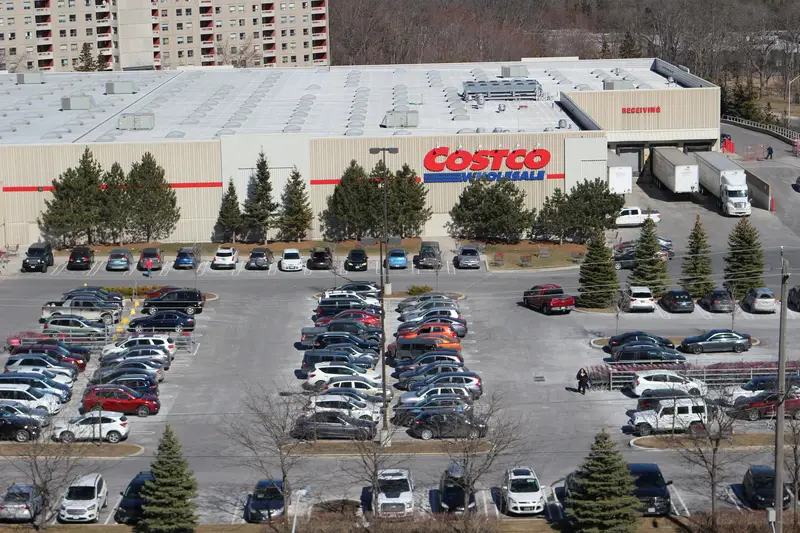
Nobody walks into Costco expecting trouble. You are there for the $1.50 hot dog, a cart full of stuff you did not plan on buying, and maybe a few free samples on the way to the checkout. But police departments in a bunch of states have been putting out warnings lately, and they all point at the same place: your local Costco.
Some of it happens in the parking lot while you are loading groceries into the trunk. Some of it lands in your email inbox looking so real you would swear it came straight from Costco. The people behind this are not amateurs, and they are counting on you being distracted, tired, and in a hurry to get home. Here is what the warnings actually say, and what you can do so you are not the next name in a police report.
The Crews That Work the Lot in Teams
Suffolk County Police on Long Island put out a warning after a group of thieves hit shoppers at least ten times, mostly at Costco stores in Melville and Commack. Investigators identified four suspects, two men and two women, who worked as a team. One person walks up and asks the victim for directions. While she is busy pointing and explaining, a second person slips into her car and lifts the wallet right off the passenger seat.
Every victim so far has been a woman, and police said that was no accident. Similar thefts popped up at Costco lots in Holbrook, Nesconset, and even a nearby Bed Bath & Beyond parking lot. These crews pick big, busy lots on purpose. When you are wrestling a 48-pack of water bottles into your trunk with the passenger door hanging open, you are not exactly watching your purse. That is the whole plan.
They Will Take the Necklace Right Off Your Neck
Over in Waterloo, an 85-year-old man was standing in the Costco parking lot around lunchtime when a man and woman walked up and started chatting with him. It seemed friendly enough. During the conversation, the woman quietly slipped the necklace off his neck. By the time he understood what had happened, the pair had already sped off in a white SUV. He was not hurt, but the jewelry was gone.
Police in Calgary described the exact same playbook after a spike in these thefts. Sometimes the crooks offer to sell you gold or jewelry. Sometimes they drape a fake piece on you as a “gift” and use that half-second of close contact to grab the real thing you are already wearing. Older shoppers get targeted the most, and police say that is deliberate. The crews bet that a polite older person will keep the conversation going and be slow to react. These are not random smash-and-grabs. They are organized and rehearsed.
The Pickpocket Ring Following Carts to the Car
Out in Oregon, Portland detectives have been chasing what looks like an organized ring hitting Costco parking lots up and down the I-5 corridor. They confirmed thefts in Portland and Tigard, plus Washington towns like Kirkland, Puyallup, Tukwila, and Lynnwood. That is a lot of ground for one crew to cover, which tells you how much money they are pulling in.
One surveillance clip showed a 93-year-old man pushing his cart out of the store when three men started trailing behind him and snatched his wallet right out of his back pocket. He described how brutal it is to lose everything at once and then start the slow grind of replacing your license and every card. Detective Jordan Zaitz said the same crew also got a woman while she loaded her car, with her purse sitting inside. His advice was blunt: have your head on a swivel in the lot and inside the store. The suspects were described as three well-dressed men, one around 18 and two in their 30s, driving a 2005 Toyota Sienna with a temporary Texas plate.
The Fake Order Email That Looks Completely Real
Not all of it happens in person. One of the sneakier tricks showing up in inboxes takes a real Costco order confirmation and turns it against you. The formatting is official, the branding is legit, and the purchase details look normal. Nothing about it screams fake, which is exactly why it works.
Here is the twist. Scammers mess with the shipping name or address field and drop in an alarming message like “Order in transit, call to cancel,” along with a phone number they control. Call it, and you reach someone pretending to be Costco support. From there they try to talk you into installing software that hands them control of your screen, then walk you through fake “refunds” until they pressure you to send back money you never actually received, usually by wire transfer or gift card. Burn this into your memory: a real Costco email will never tell you to call some random number to fix an urgent problem.
The $500 Gift Card Survey You Should Ignore
Then there is the survey bait. You get a text or email that looks like it came from “Costco Rewards” or “Costco Member Services,” congratulating you and dangling a prize if you fill out a quick two-minute survey. Click through and you land on a page dressed up in Costco red and white, so it feels safe.
The most common bait is a $500 gift card. After a few easy questions, the page wants your name, home address, and credit card number so it can “ship your reward.” Buried in the fine print is language that quietly signs you up for a recurring monthly charge for some club or savings program you never asked for. The dead giveaway is the web address. Crooks register lookalike domains like “costco-rewards” or “costco-survey-claim” that have nothing to do with the real site. No reward card is coming. The card, in this case, is your card.
The Panic Email About Your Membership
Another version leans on fear instead of prizes. You get an email saying your Costco membership will be canceled unless you update your payment info right now, or that you have unclaimed cashback about to expire. Both are built to make you panic and click before your brain catches up.
Phrases like “your account will be suspended” or “update your payment information immediately” are classic pressure tactics. Security researchers who track these phishing waves say the fake emails have gotten polished, with real logos and clean formatting that make them hard to catch at a glance. The one thing the crooks cannot fake is the sender address. Real Costco messages come from addresses ending in @costco.com. Anything else, no matter how good it looks, is not Costco.
What Actually Keeps You Safe
None of this is complicated, and a handful of habits shut down almost all of it. Start in the parking lot. If a stranger walks up asking for directions or trying to sell you jewelry, keep your distance and keep an eye on your vehicle. Load your purse or wallet into the car and lock the door before you start hauling groceries, or just keep it on you the whole time. Do not leave it sitting on the passenger seat while you circle to the trunk.
Inside the store and at the food court, do not hang your purse on the back of your chair. Keep it in your lap or right in front of you. Guys, if your wallet lives in your back pocket, button that pocket shut and stay aware of who is standing close behind you in line.
For the email and text stuff, the rule is simple: never click a link or call a number from a message that reached out to you first. If something seems off with your order or account, open the Costco app or type costco.com into your browser yourself. Costco keeps an official list of active scams you can check anytime, and you can compare any suspicious email against its real @costco.com domains. Turning on account alerts through your bank helps too, so you get pinged the second something weird hits your card. When in doubt, report it to the FTC and delete it.
Costco is not the problem here, and none of these fake emails actually come from the company. The people running these schemes just know that millions of us roll through those stores every week, distracted and loaded down with bulk everything. A little awareness in the parking lot and a healthy dose of suspicion in your inbox is really all it takes to keep yourself off their list.
