

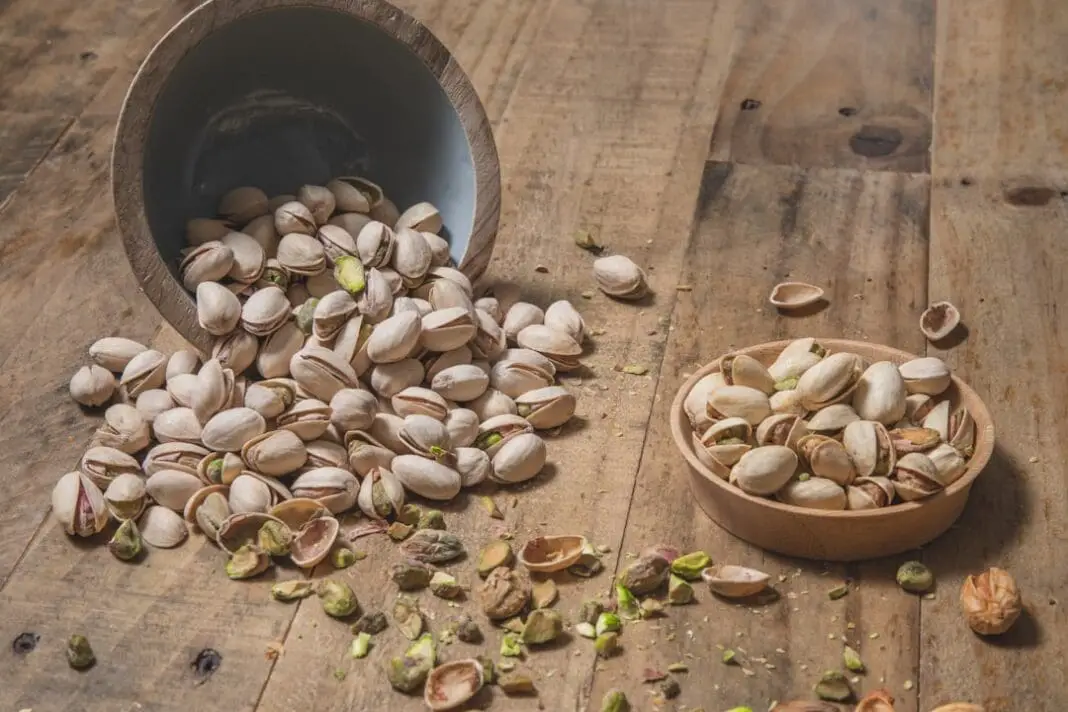
Here’s a confession. For most of my adult life, that little bowl of pistachio shells next to the couch went straight into the trash the second I was done snacking. Empty, useless, done. Turns out I was tossing out one of the handiest little leftovers in the kitchen, and I didn’t even know it.
Pistachio shells are basically tiny scraps of wood. They’re porous, tough, oddly shaped, and they hang around for years before breaking down. That combination makes them shockingly good at a bunch of jobs around the house and yard. Once you start saving them in an old jar or coffee can, you’ll wonder why you ever threw them out. Let me walk you through it.
They Get a Fire Going Fast
This is my favorite use, hands down. They are thin, dry and woody, which is exactly what makes good kindling. Use unsalted shells for this, since salt and a fire are not friends. If your fire is dying down, toss in a handful or two and watch it perk right back up. They work great in a wood stove or an enclosed fire pit too.
The old-school trick is to crumple a few shells inside a sheet of newspaper before you light it. That keeps them from popping out and rolling across your floor once things heat up. One heads-up around an open campfire: they can pop and throw the odd spark when they hit high heat, so give them some room and don’t lean in close while they catch. In a contained stove it’s a non-issue. Save up a jar through the winter and you’ll never scramble for kindling again.
The Drainage Trick That Does Not Work
Here is the one I have to talk you out of, because it is all over the internet and I nearly put it in this list. You know those pretty decorative planters with no drainage hole? People will tell you to drop an inch of shells in the bottom before the soil goes in, the same way they say to use pebbles or broken crockery.
It does not work, and extension services have been trying to kill this one for years. Water does not cross from fine soil into a coarse layer until the soil above is already saturated, so all you have done is raise the soggy zone closer to the roots. In a pot with no hole at all, the water cannot leave regardless. What actually works is double potting: plant into a cheap nursery pot that has holes, sit it inside the decorative one, and lift it out to water so it can drain before it goes back.
A Long-Lasting Mulch That Actually Looks Nice
Most organic mulch you spread breaks down in a season, so you’re back out there buying more every spring. Pistachio shells are stubborn. They can take a year or more to decompose, so they stick around as a lasting cover that holds in moisture, keeps weeds down, and helps insulate roots. They keep the ground cooler in summer and a touch warmer in winter. One caveat worth knowing: pistachio shell is high in phenolic compounds, and there is research suggesting it can hold back growth in some plants, so try a patch before you commit a whole bed to it.
They also just look good doing it. That natural blonde color reads as clean and rustic, and unlike some mulches, the shells don’t give off a funky smell. One thing to remember: rinse the salt off first if you bought salted pistachios, since salt isn’t great for your plants. Layer the shells on their own or mix them into bark or leaf mulch. If you want them to break down faster and blend in, crush them up before you spread. A little goes a long way as a budget mulch alternative.
Free Carbon for Your Compost Pile
If you compost, you already know the balancing act. You need nitrogen-rich “greens” like coffee grounds, veggie scraps, and grass clippings, and you need carbon-rich “browns” to balance them out. Pistachio shells are pure brown material, and they add bulk and structure to the pile.
The catch is patience. Whole shells tossed in the bin take years to break down. Crushing them first speeds that up considerably, though nobody has put a reliable number on it. Either way, use unsalted shells, give them a rinse, and mix them in evenly so they don’t clump up. They’ll pull their weight eventually.
They Keep Pests Out of the Garden
This is the other one worth being honest about. The theory is that slugs won’t cross anything sharp, so a ring of crushed shells keeps them off. The Royal Horticultural Society actually tested it in 2023, on eggshells, grit, bark, copper tape and wool, and none of them reduced slug damage. Slugs will cross broken glass. Abrasive barriers also stop doing anything once they are damp, which in a garden is most of the time.
What shells genuinely do, as mulch, is cut down the damp hiding places slugs and insects shelter in during the day. That is a real effect and worth having. It is just not a barrier. One firm rule either way: rinse salted shells before they go anywhere near a bed. Sodium damages roots directly and wrecks soil structure, and once it is in a container there is no getting it back out.
An Easy Way to Aerate Hard Soil
Got dense, clay-heavy dirt that turns into a brick when it dries? Those rough shells can help loosen it up. Work them into the top few inches and they add bulk and rough edges. Be realistic about the scale, though. A scattering of coarse bits through heavy clay behaves much the way sand does, which extension services will tell you makes something closer to concrete than to good tilth. The thing that actually loosens clay is organic matter, in quantity, year after year.
There are all kinds of fancy tools sold for aerating soil, but sometimes the answer is sitting in your snack bowl. You can even skip the plants entirely and use whole shells as a rustic stand-in for gravel on a garden path. They crunch underfoot and give a footpath a warm, natural look while putting your snack scraps to work.
A Scrubbing Powder for Grimy Jobs
Here’s one I never saw coming. Grind clean, dry shells into a coarse powder and you’ve got yourself a gritty scrubbing agent. Use clean, dry, unblemished shells only, and skip anything discolored or musty, because pistachios are a high-risk crop for mould and grinding sends the spores into the air. Mix that powder with a little baking soda and a few drops of oil and you get a scouring paste. Keep it off acrylic and fiberglass tubs, though. Ground shell is harder than both and will haze the finish, and home-ground grit has no consistent particle size the way commercial media does. Porcelain and enamel can take it.
The same idea works outside the bathroom. Mix the ground shells with a splash of soapy water and go after stubborn build-up on crusty garden tools, patio furniture, and a grimy grill. It’s a natural abrasive that costs you nothing, and it’s oddly satisfying to clean your grill with the same nuts you were snacking on last weekend.
Homemade Potpourri and Drawer Fresheners
Remember that rough, ridged surface? Oil clings to it, which is all this needs. Let a handful sit in a few drops of scented oil for a couple of hours, mix them with dried flowers in a decorative dish, and you’ve got cheap potpourri that smells however you want it to.
Want it out of sight? Fill a small muslin bag with crushed shells and a little oil, then tuck it in a closet or a dresser drawer. It works like a quiet air freshener that also pulls in stale odors. Because the shells absorb fragrance so well, one round of oil lasts a good while before you need to refresh it.
Crafts, Decor, and Filler for Big Planters
The shape of a pistachio shell looks a lot like a flower petal or a tiny seashell, which is why crafters love them. Glue them onto a canvas in patterns, build little mosaics on picture frames and vases, or paint them in festive colors and hang them as ornaments. You can leave them their natural blonde color for a boho look or paint and stain them to match whatever you’re making. People have used them for wreaths, wall art, jewelry, and holiday decorations, and they pair nicely with burlap and twine.
One more practical trick for the big planters on your porch. Potting soil is expensive, and most plants don’t use the deep bottom of a giant pot anyway. Herbs and lettuce are happy with six to eight inches of soil, and tomatoes want about a foot, or eighteen inches to two feet for the big sprawling types. Fill the dead space at the bottom with a layer of pistachio shells, top it with soil, and you save money on dirt. Call it what it is, though. That is filler, not drainage, for the reason a few sections up. And if you’ve got fragile stuff to ship, dried shells even work as a natural stand-in for foam packing peanuts.
So Where Do You Start?
You don’t have to do all of these. Start with one. Keep an old jar by the couch and dump your shells in it instead of the trash. Once it’s full, you’ve got kindling ready for the next cold night, cheap filler for the bottom of an oversized planter, or a head start on next spring’s mulch.
The whole point is that this stuff you’ve been throwing away for years is genuinely useful. It just needed a jar and a second look. Rinse off the salt when it matters, crush them when you want them to work faster, and let those little wooden scraps earn their keep.
