

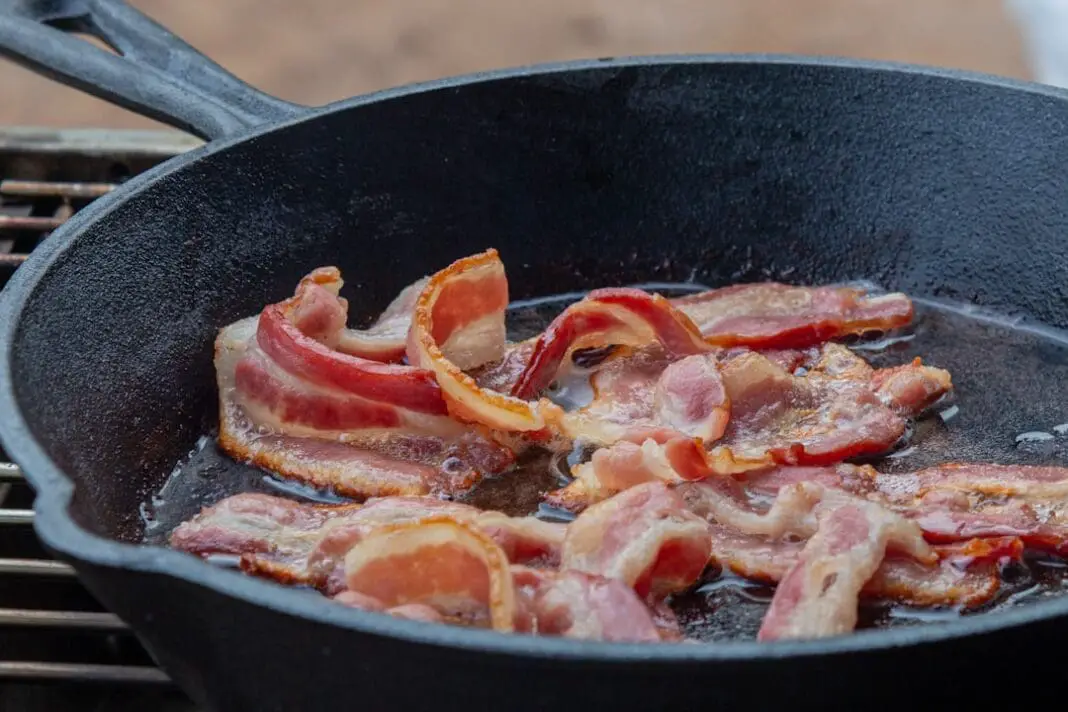
Everybody thinks they know how to cook bacon. You rip open the pack, slap the strips into a screaming hot pan, and wait for that sizzle. That’s how your dad did it. That’s how the diner does it. That’s how you’ve done it your whole life. And that’s exactly why your bacon keeps curling into sad little shrimp shapes with burnt tips and rubbery, half-cooked middles.
Here’s the thing nobody tells you. The single most important step in cooking great bacon happens before the bacon ever touches heat. It costs you nothing, it takes about ten minutes, and once you start doing it you’ll never go back. Let me walk you through it.
Take The Chill Off First
Bacon is two different things smashed together: lean meat and fat. They don’t behave the same way when heat hits them. The fat holds onto cold way longer than the meat does, so when you pull a slab straight from the fridge and drop it on the stove, the meat starts cooking while the fat is still stiff and cold. That mismatch is where most of your problems come from.
The fix is stupidly simple. Pull the bacon out and let it sit on the counter for five to ten minutes before you cook it. You are not trying to get it to full room temperature. You’re just knocking the deep fridge chill off so the fat and the meat start closer to the same temperature. Chef Billy Parisi is honest about how much this buys you. The temperature of the bacon beforehand does not really matter, he says, but a short rest gives you a more uniform, even cook. Not everyone goes even that far. Chris Mattera of North Country Smokehouse reckons the difference between a cold slice and a room-temperature one is virtually nonexistent, and that cold bacon may render a shade crisper. Ten minutes on the counter sits well inside food safety limits, but this is for refrigerated bacon only. Never thaw frozen bacon on the counter.
There’s a bonus here too. Cold bacon straight from the pack tends to stick together, and when you peel the slices apart they tear. Let the package warm up for a few minutes and the slices separate cleanly instead of ripping in half. You end up with whole, good-looking strips on the plate instead of a pile of shredded pieces.
Now The Big Secret: Start With A Cold Pan
This is the part that feels wrong. Every instinct in your body says preheat the pan. Resist it. The best bacon starts in a cold, dry skillet, and then you turn the heat on. Two chefs, asked separately, landed on the same warning: never drop bacon into a hot pan.
The reasoning is airtight. When bacon hits a hot pan, the fat heats up fast and starts smoking before the meat has had any chance to cook. The fat renders too quickly and burns while the meat is still lagging behind. You get that classic disaster: scorched edges, chewy center, and a kitchen full of smoke.
Start cold and the fat gets time to melt slowly and gently as the pan warms up. By the time things get hot, the bacon is basically frying in its own rendered fat. That’s how you get a strip that’s crispy on the outside and still has a little tenderness to it. No oil needed, by the way. The bacon makes plenty of its own grease.
Why Your Bacon Keeps Curling Up
If your strips shrivel into tight little curls, blame the hot pan again. Celebrity chef Geoffrey Zakarian keeps it short. Start cold and low, he says: “Low and slow for bacon.” Bacon is a very thin, fatty product, so if you hit it in a hot pan, it’ll just seize up and shrink.
Think about what’s actually happening. The lean meat cooks and contracts fast, but the fat needs way more time to render. When the meat shrinks before the fat catches up, the whole strip pulls itself into a curl. Once it curls, it cooks even more unevenly because now parts of it are lifting off the pan. Cold start, low heat, and you break that whole chain reaction before it starts.
Pat The Strips Dry Before They Hit The Pan
Here’s a small step that punches above its weight. Before you lay the bacon down, blot it with a paper towel. There’s surface moisture on those strips, and that is what causes half the splatter that ends up all over your stovetop and your arm.
Use paper towels for this, not a dish rag or a microfiber cloth. Those can leave little bits of lint stuck to the meat, which is the last thing you want. A quick blot on each side is all it takes. Combine that with taking the chill off, and you cut way down on the smoke and popping grease, because going from extremely cold to blazing hot is what makes the pan spit at you in the first place.
Give The Bacon Room To Breathe
I know you want to cook the whole pound at once. Don’t. When you cram strips into the pan and let them overlap, they steam instead of fry. Steam is the enemy of crisp. You’ll be standing there for 20 minutes wondering why the bacon is still floppy, and the answer is that it’s basically boiling in its own trapped moisture.
Leave about an inch between strips. They can touch when you lay them down since they shrink as they cook, but they should never pile on top of each other. Crowding the pan is one of the most common mistakes people make, and it leaves you with a tangled mess of soft, sad bacon instead of clean crispy strips. Cook in batches. It’s worth the extra few minutes.
Cooking For A Crowd? Use The Oven
When you’ve got a house full of people and a pan can only handle six strips, the oven is your best friend. It’s hands-off, it cooks a big batch all at once, and you skip the grease splatter cleanup entirely. Lay the strips flat on a sheet pan, ideally on a wire rack so the fat drips down and away, keeping the bacon out of the puddle.
Live-fire cooking expert Jess Pryles, who founded Hardcore Carnivore, swears by 375 degrees Fahrenheit, while noting that is already a pretty high temperature. It is hot enough to render the fat and crisp the meat without scorching the strips before the fat melts out. Thin, regular-cut bacon runs about 12 to 15 minutes. Thick-cut needs longer, closer to 20 to 25 minutes. And yes, the same rule applies: start with room-temperature bacon so it cooks evenly instead of tough.
The Cold Oven Trick That Sounds Crazy But Works
Same idea as the cold pan, just scaled up. Instead of preheating the oven, put the bacon in while it’s cold and turn it on. As the oven climbs to temperature, the fat renders gradually and the whole strip cooks evenly. Chef Michelle Wallace, the Houston pitmaster behind B’Tween Sandwich Co., says this creates an even cook and crisp to the bacon.
The logic holds up. Fat needs time and steady heat to render out, while the lean meat cooks and sets fast. Put bacon into an already hot oven and the lean parts race ahead before the fat has melted, which is what makes strips curl and cook unevenly. A cold start gives the fat the head start it needs.
The Splash Of Water Method
This one gets passed around as a TikTok hack, but it started at Cook’s Illustrated. Lay your strips in a cold pan, add about a quarter cup of water, just enough to cover them, and set it over medium heat. The water keeps the early cooking gentle so the fat renders slowly while the meat cooks through. As the water boils off, the temperature climbs, the rendered fat takes over, and the bacon finishes by frying in its own fat.
The payoff is bacon that’s crisp from edge to edge with no soft fatty bits and no burnt corners. It works best with streaky American-style bacon because it has the most fat running through it, which is exactly what melts down and crisps up. Whichever method you pick, notice the theme running through all of them: start cold, go slow, and let the fat do its thing before any real heat shows up.
The Whole Thing In One Breath
Pull the bacon out five to ten minutes early to take the chill off. Pat it dry. Lay it in a cold, dry pan without crowding, and turn the heat to low or medium-low. Let it render slowly, flip it a few times with tongs, and pull it when it looks right, which depends on thickness more than on the clock. Drain it on paper towels for a minute before you dig in.
That’s it. No fancy gear, no weird ingredients, no secret restaurant equipment. The difference between amateur bacon and the good stuff comes down to what you do in the ten minutes before the heat ever comes on. Do this once and you’ll wonder why you spent years fighting curled, burnt strips like some kind of chump.
