

Grocery prices have climbed more than 30 percent on many items since 2020, and if you’re shopping at the wrong store, you’re bleeding money without even realizing it. A recent study by Consumer Reports and Strategic Resource Group found that the gap between the cheapest and most expensive grocery stores in any given city is more than 33 percent. That’s not a rounding error. For a household spending $200 a week on groceries, picking the wrong chain could cost you thousands of extra dollars a year.
So which stores are the biggest offenders? I went through the data, price comparisons, and real product costs to rank the eight most expensive grocery chains in the country — from expensive to downright absurd. Some of these you already suspect. One of them sells a single strawberry for $19.
8. Giant Eagle
If you live in Pittsburgh, you already know the pain. Giant Eagle has a near-stranglehold on the grocery market in western Pennsylvania, and customers have been complaining about its prices for years. The issue isn’t just that it’s expensive — it’s that in many neighborhoods, there aren’t a lot of alternatives. When a chain has that kind of regional dominance, there’s not much incentive to lower prices. Shoppers in Pittsburgh have been vocal about their frustration with the chain’s pricing, but without real competition moving in, the situation hasn’t changed much. Giant Eagle doesn’t have the organic cachet or gourmet appeal of some other stores on this list — it’s just plain old expensive for what you get.
7. Harris Teeter
Harris Teeter was founded in 1960 in North Carolina and now operates over 250 stores across eight states in the Southeast. According to the Consumer Reports study, Harris Teeter’s prices sit about 23.5 percent above Walmart’s baseline — which places it firmly in expensive territory. Some loyal shoppers blame the 2014 acquisition by Kroger Co. for the price creep, but honestly, Harris Teeter was never a bargain brand to begin with. The prepared food section rivals Whole Foods in pricing, and the meat and seafood counters are top-quality but come at a premium. The VIC (Very Important Customer) card can help — it’s free, and the digital coupons through the eVIC program do offer real savings. But if you walk in without a plan, you’re going to feel it at checkout. On the upside, Harry the Happy Dragon mascot hands out free cookies to kids, which is worth approximately one cookie per visit in savings.
6. Wegmans
Here’s the weird thing about Wegmans: people love it so much that they almost don’t care about the prices. The chain has a cult following in the Northeast, and shoppers consistently praise the quality and the experience of being inside the store. But the numbers don’t lie. Wegmans’ prices often match those at Harris Teeter or Whole Foods, according to Consumers’ Checkbook. The Consumer Reports data actually pegged Wegmans at just 7.6 percent above Walmart, which is lower than many stores on this list, but the problem is what happens when you get inside. The store is designed to tempt you. The selection is so wide and so well-presented that even disciplined shoppers tend to throw their budget out the window. You go in for bread and leave with artisan cheese, imported olives, and a $14 container of soup you didn’t know you needed. Wegmans earns its spot here not just on sticker price, but on the total damage done to your wallet by the time you leave.
5. The Fresh Market
The Fresh Market was launched in 1982 with a concept inspired by European open-air markets, and today it operates over 150 stores across 22 states. It was voted the best grocery store in America by USA Today readers in 2025, which tells you people are willing to pay for the experience. And pay they do. A half gallon of Organic Valley Whole Milk runs $6.49 at The Fresh Market — that’s 50 cents more than the same product at Whole Foods. A 20-ounce loaf of Nature’s Own Whole Wheat Bread costs $4.89 compared to $4.29 at Whole Foods. When you’re more expensive than Whole Foods on everyday staples, you’ve earned a spot on this list. CEO Larry Appel has been pretty upfront about the strategy, saying the company isn’t trying to be a natural grocery store but a specialty store — one aimed at high-income consumers in wealthy neighborhoods “who don’t blink at $20 cheese or a $50 roast.” Their freshly ground honey-roasted peanut butter is genuinely good, though. Small consolation when you see the receipt.
4. Natural Grocers
Natural Grocers flies under the radar compared to some of the bigger names here, but it has over 150 stores in nearly two dozen states, and it’s committed to a simple rule: all produce is certified organic. No conventional options. That commitment drives prices up. A gallon of Organic Valley Milk costs $10.39 at Natural Grocers. Per ounce, that’s actually slightly less expensive than what you’d pay at Whole Foods, The Fresh Market, or Gelson’s — but $10.39 for a gallon of milk still stings. The upside is that Natural Grocers does put money back into the community in interesting ways. They offer free 60-minute sessions with nutritional health coaches, and every employee gets complimentary nutrition education. That’s a nice perk, but it doesn’t make the checkout line any less painful.
3. Gelson’s Markets
Gelson’s started in 1951 in Burbank, California, and has been quietly overcharging Angelenos ever since. The chain prides itself on top-shelf produce, picture-perfect meat displays, and white-glove service — and the prices reflect all of that. Eggs cost $6.99 or more per dozen. A gallon of the least expensive milk? Also $6.99. A half-gallon of Organic Valley Whole Milk goes for $6.99, the highest price for that product among the chains examined. A 20-ounce loaf of bread typically costs between $6 and $7 at Gelson’s. Prepared food meals range from $15 to $25, which is steep for grocery store takeout. The chain is also one of the only grocers besides Erewhon where you can buy Wagyu beef, which tells you exactly who they’re marketing to. Gelson’s is the kind of place where the produce is gorgeous, the lighting is flattering, and your credit card weeps quietly in your pocket.
2. Whole Foods Market
The reigning champion of the “Whole Paycheck” nickname. Founded in 1980 and now operating 532 stores across the country, Whole Foods has been synonymous with expensive groceries for decades. The Consumer Reports study confirmed what everyone already suspected: Whole Foods prices are 39.7 percent higher than Walmart’s on average, making it the most expensive mainstream grocery chain in the country. In some regions, the gap is even wider — 48 percent higher in Dallas-Fort Worth and a staggering 57 percent higher in Virginia Beach. Only six states don’t have a Whole Foods: Alaska, Delaware, North Dakota, South Dakota, Vermont, and West Virginia.
Amazon bought the chain in 2017, and there have been genuine efforts to bring prices down. Whole Foods told Consumer Reports that it has reduced prices on 25 percent of its items in the last 18 months without compromising quality. And that’s true — private label items have gotten more affordable. But the store still stocks trendy, higher-end products like Purely Elizabeth Granola, MALK Plant-based Milk, and Raaka Chocolate that keep the average basket price elevated. The best strategy here is old-fashioned discipline: go in with a list and don’t deviate. Their scallops, saffron threads, and vanilla extract are actually well-priced for the quality. Everything else? Buyer beware.
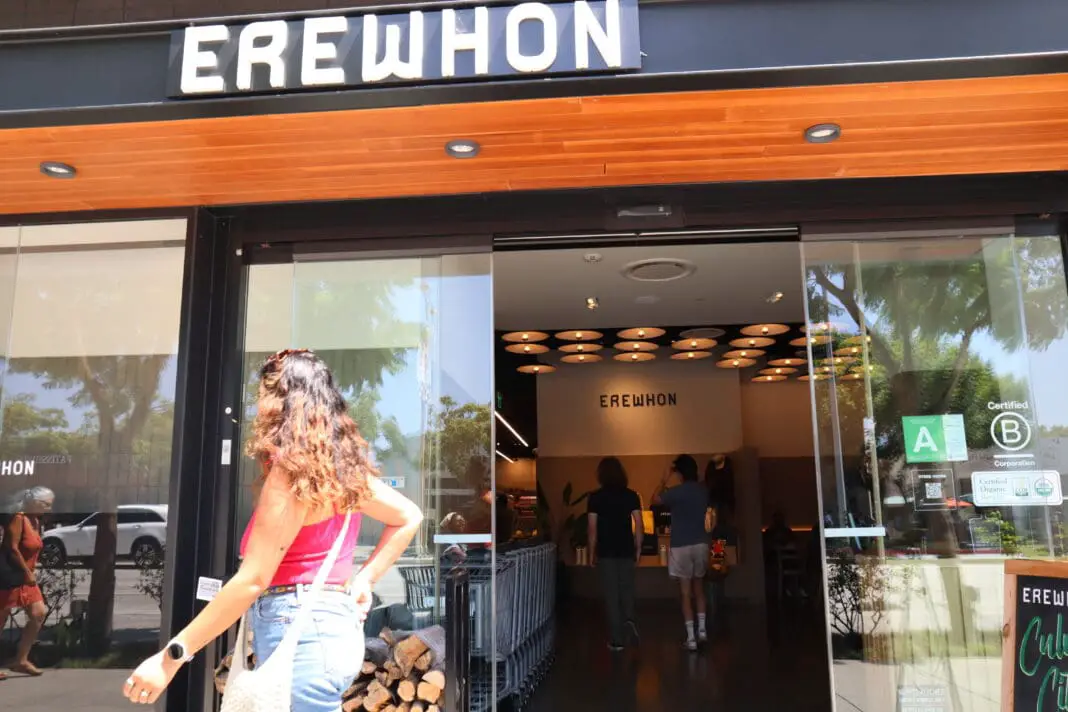
1. Erewhon
Nothing else comes close. Erewhon is, without question, the most expensive grocery store in the United States, and it operates in a different universe from every other name on this list. Founded in 1966 in Boston by Aveline and Michio Kushi — the name comes from Samuel Butler’s utopian novel — the store moved to Los Angeles in 1968 and has become ground zero for celebrity wellness culture. It currently has nine locations, all in the LA area, though it ships nationwide via UPS.
The prices are genuinely hard to believe. A 12-ounce jar of NutMutt Organic Pistachio Butter that sells for $24.99 on NutMutt’s own website costs $45.99 at Erewhon. A carton of Vital Farms pasture-raised organic eggs is $9.99, compared to $8.49 at Whole Foods. The Neptune Blue Sea Moss Gel goes for $44 for a 16-ounce bottle. A branded denim tote bag costs $135. Hailey Bieber’s Strawberry Glaze Skin Smoothie is $20. A single imported luxury strawberry from Japanese fruit vendor Elly Amai will run you $19.
The hot bar is its own category of sticker shock. Items are priced individually, not by the pound in a buffet style. Organic jasmine rice — the cheapest option — costs $11 per pound. Korean short ribs and miso black cod hit $40 per pound. Most hot bar items fall between $20 and $30 per pound, which means a standard plate of food easily approaches $40. For context, the Whole Foods hot bar in downtown LA charges a flat $11.99 per pound, and Safeway’s hot bar runs about $9.99.
Vanity Fair reported that a full grocery haul at Erewhon can easily top $1,000. The store offers free valet parking and a membership program, and the clientele is a parade of celebrities and influencers who show up well-dressed to buy $24 beef bone broth. Over the past 15 years, Erewhon has expanded rapidly on the back of influencer partnerships and social media hype, turning grocery shopping into a lifestyle brand. It’s less a supermarket and more a status symbol with a checkout counter.
How To Actually Save Money on Groceries
According to U.S. government data, Americans spent 11.2 percent of their total income on groceries in 2023. Where you shop matters more than most people think. The Consumer Reports study found that the cheapest options in America are Costco (21.4 percent below Walmart), BJ’s Wholesale (21 percent below), Lidl (8.5 percent below), Aldi (8.3 percent below), WinCo, and H-E-B. Most Americans already buy food from at least two stores per week. If one of your regular stops is on this list, it might be time to rethink the rotation. Nobody’s saying you can’t treat yourself to a nice cheese now and then. Just maybe don’t do it at a place that charges $19 for a strawberry.
