

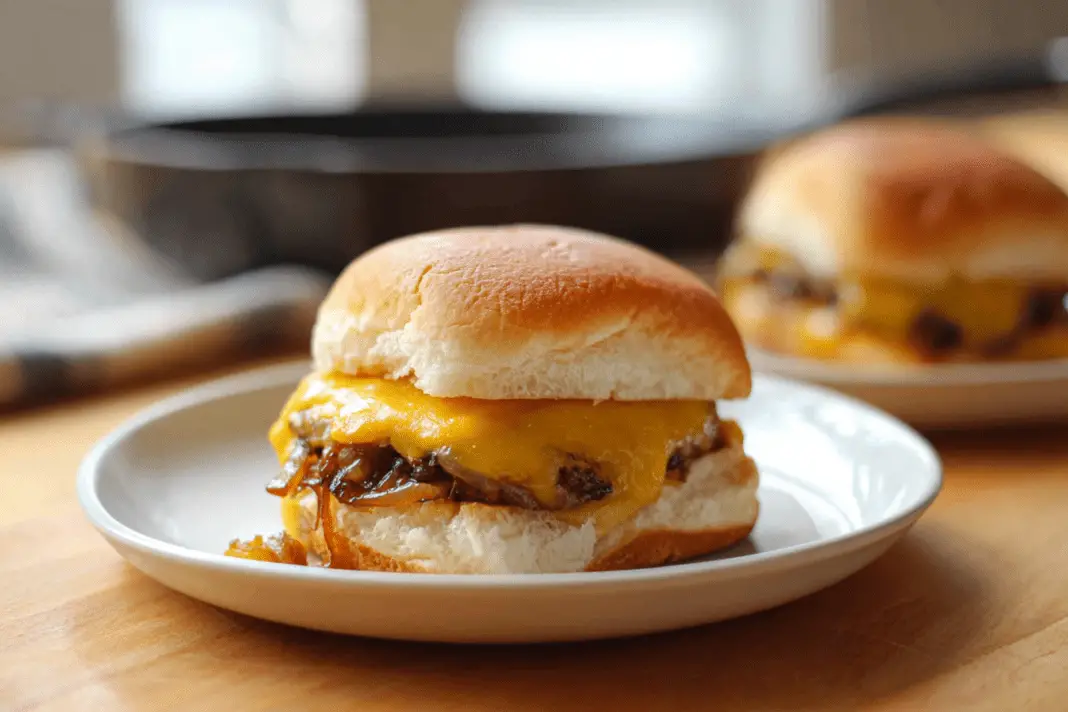
Here’s something that might mess with your head: the average hamburger in the 1950s weighed 3.9 ounces. That’s it. Not even a quarter pound. Today’s average fast-food burger clocks in at 12 ounces — more than triple the size. If you handed someone from 1955 a modern restaurant burger, they’d probably think it was meant for the whole table.
But the size difference isn’t even the most interesting part. It’s what went into those burgers — or rather, what didn’t. No eggs. No breadcrumbs. No Worcestershire sauce. No garlic powder. No seasoning blends with 14 ingredients you can’t pronounce. A 1950s homemade burger was ground chuck, butter, onions, salt, and pepper. That’s the whole recipe. And honestly? After making these dozens of times, I think those old home cooks were onto something we’ve completely lost track of.
Why 1950s Burgers Were So Different
The 1950s were the decade when America truly fell in love with the hamburger. Drive-ins were popping up everywhere. Both McDonald’s and In-N-Out had already opened by the end of the 1940s, and Burger King launched in 1954 with its flame-broiled Whopper priced at just 37 cents. Teenagers could afford a burger and still have enough pocket change left for a milkshake. A full meal at McDonald’s — hamburger, cheeseburger, fries, and a shake — ran you 64 cents.
At home, the approach was just as stripped down as the diners. Cookbooks from that era kept burger recipes dead simple. One popular patty-making gadget, the Bun-Burger Patty Maker, came with recipes calling for one pound of hamburger divided into six patties — roughly 2.6 ounces each before cooking. That’s barely bigger than a White Castle slider, which weighs about 2.2 ounces. These were thin, quick-cooking little disks of beef that you could eat in a few bites.
The thinking was completely different from today’s burger mentality. Nobody was trying to build a tower. Nobody was stuffing cheese inside the patty or stacking avocado and sriracha mayo and a fried egg on top. The beef was the point. Everything else just stayed out of its way.
The Case For A Smaller, Simpler Burger
I know what you’re thinking. “A 2.6-ounce patty? That’s a snack, not a meal.” And look, I get it. We’ve been conditioned to think a burger should be a two-handed, napkin-destroying event. But there’s a real argument for going small.
Thin patties mean more surface area hitting the hot pan. More surface area means more of that brown, crispy crust — the Maillard reaction that makes a burger taste like a burger. When you smash a thick half-pound patty down, you get crust on the outside and a gray, steamed interior. When you start with a thin patty, the whole thing is basically crust. Every bite has that seared, caramelized flavor that people chase with much bigger, more complicated burgers.
There’s also the bun-to-meat ratio. A thin patty on a soft white bun means you taste everything together in balance. The bread isn’t just a handle — it’s part of the experience. It soaks up the butter from the pan and the juices from the meat. With modern oversized burgers, the bun is usually an afterthought that falls apart three bites in.
The Right Meat Makes All The Difference
Ground chuck. That’s what 1950s recipes called for, and it’s still the right call. You can find it at any grocery store — Kroger, Walmart, Publix, whatever is near you. Look for 80/20 ground chuck, which means 80% lean and 20% fat. That fat content matters enormously when you’re making a thin patty because there’s nowhere for the flavor to hide. Lean ground beef like 93/7 will give you a dry, crumbly little hockey puck.
Don’t buy the pre-formed frozen patties for this recipe. You want fresh ground chuck that you portion and shape yourself. And here’s the important part — don’t overwork the meat. Grab about 2.5 to 3 ounces, gently roll it into a ball, and that’s it. You’re going to flatten it in the pan, not on the counter. Handling it too much makes the proteins bind together and you end up with a dense, tough patty instead of a loose, beefy one.
How To Cook A 1950s-Style Smash Burger
The cooking method is almost stupidly simple, which is exactly the point. You need a heavy skillet — cast iron is ideal, but any thick-bottomed pan will work. Set it over medium-high heat and add about a tablespoon of butter. Not olive oil, not cooking spray. Butter. That’s what they used in the 1950s, and the flavor it adds is non-negotiable.
While the butter melts, slice a yellow onion into thin rings. Once the butter is hot and starting to foam, lay the onion slices in the pan. Let them cook for about two minutes until they start to soften and pick up some color. Now push them to the side or pull them out temporarily.
Drop your ball of ground chuck into the hot pan. Using a sturdy spatula or a burger press, smash it flat — you want it thin, maybe a quarter inch thick. Season the top with salt and pepper right there in the pan. Let it cook without touching it for about two minutes. You’ll see the edges start to turn brown and get crispy. Flip it once. If you’re adding cheese, lay a slice of American cheese on top immediately after flipping. Cook another minute to minute and a half. That’s it. Pull it off.
The whole cooking process takes about four minutes per patty. You can knock out eight patties in under twenty minutes, which makes this a real weeknight dinner, not a weekend project.
The Bun Situation
This is where people overthink things. You do not need brioche buns. You do not need pretzel buns. You do not need anything artisanal. You need plain white hamburger buns — the soft, squishy kind. No seeds. Think the standard bag you grab at the grocery store without even looking at it. That’s the one.
And here’s a detail most modern recipes get wrong: don’t toast the bun. I know, I know. Every burger recipe written in the last fifteen years tells you to toast your buns. But a 1950s burger used an untoasted bun specifically so it could absorb the juices from the patty and the butter from the pan. The soft bread becomes part of the whole greasy, salty, beefy package. Toasting creates a barrier. You don’t want a barrier.
Toppings: Keep It Period-Correct
In the 1950s, you had three options at most burger joints. Plain meant a patty on a bun and nothing else. With cheese meant one slice of American cheese — no cheddar, no pepper jack, no gouda. Deluxe got you shredded lettuce, a slice of onion, and a tomato slice, all piled on top of the meat.
For condiments, the standard was ketchup, mustard, and pickles. That was the classic trio that dominated burger joints across the country. Some more progressive spots offered caramelized onions cooked soft in a little oil or butter, which is a move I highly recommend. Those soft, sweet onions against the salty, crispy patty are an incredible combination.
Good Housekeeping apparently started suggesting additions like fried eggs, flavored butters, and even apple slices during this era. But for an authentic everyday 1950s burger, stick to the basics. The simplicity is the whole point.
Common Mistakes To Avoid
The biggest mistake people make with this recipe is adding stuff to the meat. Your instinct is going to be to mix in garlic powder, or an egg, or some Worcestershire sauce. Fight that instinct. Every ingredient you add to the ground beef takes it further from what made these burgers work. The beef is the flavor. The butter and onions are the seasoning. Salt and pepper are all you need on the patty itself.
Second mistake: making the patties too thick. If your patty is thicker than a quarter inch after smashing, it’s too thick. These are supposed to be thin. Painfully thin by modern standards. That thinness is what creates the crispy edges and fast cooking time that define this style of burger.
Third mistake: flipping more than once. You put it down, you leave it alone, you flip it once. That’s it. Every time you lift and press and fiddle with the patty, you’re squeezing out juice and breaking up the crust. One flip. Walk away between flips if you have to.
Fourth mistake: using the wrong cheese. American cheese isn’t trendy. I don’t care. It melts like nothing else on earth. It turns into this creamy, almost sauce-like layer on top of the patty. Sharp cheddar is great on many things. This is not one of them. Get the Kraft singles or the deli-sliced American from the cheese counter. Either works.
Why This Recipe Still Works In 2024
There’s a reason smash burgers have made a massive comeback. Every trendy burger spot in America is basically doing a version of what home cooks were doing seventy years ago — thin patties, hot griddle, simple toppings. The technique never stopped working. We just got distracted for a few decades by bigger-is-better thinking.
The other beautiful thing about this recipe is the cost. A pound of ground chuck gives you six patties. A pack of buns costs a couple bucks. Butter, an onion, a pack of American cheese, and some condiments you already have in the fridge. You’re feeding a family of four for under ten dollars, and the whole thing takes less than thirty minutes from start to finish. Try getting that deal at any drive-through today.
Make these once and I promise you’ll question why you’ve been spending years wrestling with thick, overstuffed burgers that fall apart in your hands. Sometimes the old way really was the better way.
Frequently Asked Questions
Q: Can I use ground beef instead of ground chuck?
A: You can, but make sure it’s 80/20 lean-to-fat ratio. Ground chuck is just beef from the shoulder area, and it naturally has good fat content and beefy flavor. If your store only has generic “ground beef,” check the label for the fat percentage. Anything leaner than 80/20 will dry out fast with patties this thin.
Q: How many burgers should I plan per person?
A: Plan on two to three patties per adult. Remember, these are small — about 2.5 to 3 ounces each. That’s how people ate them in the 1950s too. You’d order one, and if you were still hungry, you’d order another. Kids will probably be happy with one or two.
Q: Can I make these on a grill instead of a skillet?
A: A flat-top griddle or griddle grate works, but a regular grill with grates isn’t ideal. The patties are so thin they’ll fall through or stick. The whole method depends on the flat, hot surface of a skillet or griddle to create that crispy crust. Cast iron on the stovetop is really the best tool for this one.
Q: Why American cheese specifically? Can I use something else?
A: American cheese melts into a smooth, creamy layer that coats the patty perfectly. Most other cheeses don’t melt the same way on a thin patty in under two minutes. You can use whatever you like, but the texture and flavor won’t be the same. For an authentic 1950s experience, American was the only option at most burger counters, and there’s a good reason it stuck around.
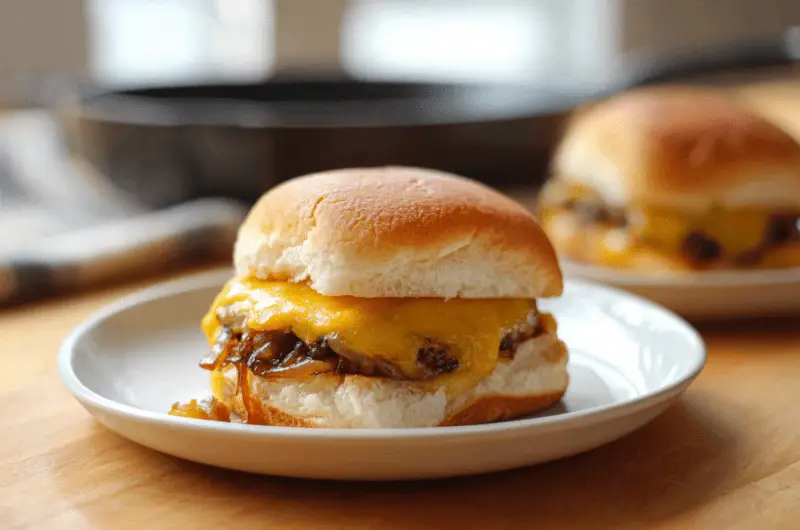
1950s-Style Smash Burgers
Course: Dinner4
servings10
minutes20
minutes280
kcalTiny, crispy, buttery burgers made exactly the way home cooks did it in the 1950s — just five ingredients and four minutes of cooking per patty.
Ingredients
1 pound 80/20 ground chuck
3 tablespoons unsalted butter
1 medium yellow onion, sliced into thin rings
Kosher salt to taste
Black pepper to taste
6 slices American cheese
6 plain white hamburger buns (no seeds)
Ketchup, yellow mustard, and dill pickle slices for serving
Shredded lettuce and tomato slices (optional, for deluxe style)
Directions
- Divide the ground chuck into six equal portions, about 2.5 to 2.7 ounces each. Gently roll each portion into a loose ball — do not pack them tightly or overwork the meat. Set them on a plate and keep them at room temperature while you prep the onions.
- Place a cast iron skillet over medium-high heat and add 1 tablespoon of butter. Once the butter melts and begins to foam, add the sliced onion rings to the pan. Cook for about 3 to 4 minutes, stirring occasionally, until they soften and turn golden. Remove the onions to a small bowl and set aside.
- Add another half tablespoon of butter to the same skillet and let it melt over medium-high heat. Place two or three meat balls in the pan, leaving a few inches of space between them. Immediately press each ball flat with a sturdy metal spatula or burger press until the patty is about a quarter inch thick.
- Season the top of each smashed patty with a pinch of kosher salt and a crack of black pepper. Let the patties cook undisturbed for about 2 minutes, until the edges turn deep brown and you can see the crust forming on the bottom. Do not press down on them again or move them around.
- Flip each patty once. Immediately place a slice of American cheese on top of each patty if making cheeseburgers. Cook for another 1 to 1.5 minutes until the cheese is melted and the bottom side has a nice crust. Remove patties to a plate.
- Repeat with the remaining meat balls, adding another half tablespoon of butter to the skillet before each batch. Keep already-cooked patties warm on a plate loosely tented with foil while you finish the remaining batches.
- Place each patty on the bottom half of an untoasted white bun. Spoon some of the caramelized onions on top of the cheese. Add ketchup, yellow mustard, and pickle slices. For deluxe style, add shredded lettuce, a tomato slice, and a thin onion ring on top.
- Place the top bun on and serve immediately. The soft bun will start soaking up the butter and meat juices right away, which is exactly what you want. Serve with a side of fries or potato chips to keep it era-appropriate.
Notes
- Use a metal spatula, not a silicone one, for smashing the patties. You need firm, even pressure and silicone spatulas flex too much to get the patties thin enough.
- Don’t skip the butter in the pan. It’s not just for preventing sticking — it adds a rich, slightly nutty flavor to the patty and onions that oil simply can’t replicate.
- If you want to make these for a crowd, use a large flat griddle over two burners so you can cook all six patties at once instead of working in batches.
