

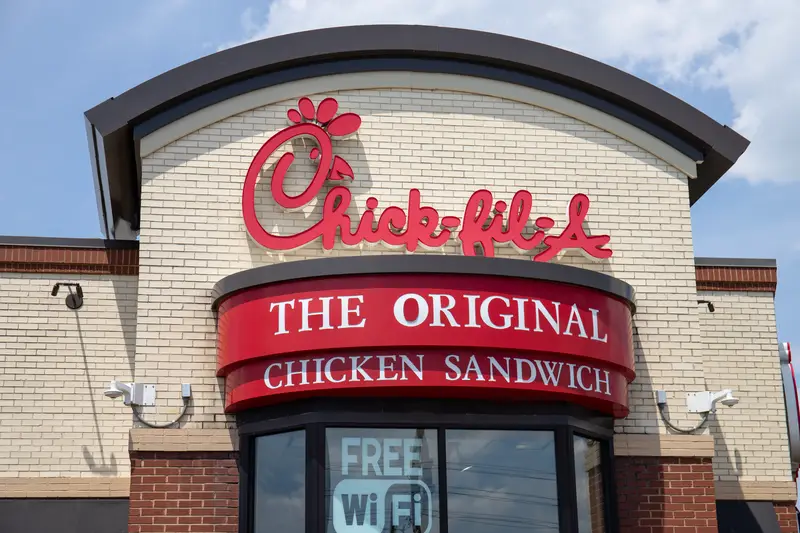
When you see a Chick-fil-A drive-thru wrapped around the building with cars spilling into the street, your first thought is probably that you’ll be waiting forever. But here’s something wild: despite having the longest wait times in the fast food industry at over 5 minutes, nearly 95 percent of customers leave satisfied. A recent study found that while the average drive-thru takes about 4 minutes, Chick-fil-A clocks in at 322 seconds from order to food. That hasn’t stopped them from serving more cars per hour than almost anyone else. What’s actually happening in those lines isn’t what most people think.
Those lines are actually moving faster than they look
When you pull up to a Chick-fil-A and count 10 cars ahead of you, it feels like you’ve made a terrible mistake. Here’s the thing though: 77 percent of Chick-fil-A drive-thrus have three or more cars in line at any given time, and more than a third have six or more cars waiting. Compare that to McDonald’s, where only about 42 percent of locations have three or more cars lined up. The difference isn’t that Chick-fil-A is slower at making food. It’s that way more people are choosing to eat there, which means the lines look intimidating even when they’re moving quickly.
Despite the backed-up appearance, mystery shoppers rated 56 percent of Chick-fil-A drive-thru experiences as “fast,” which is actually above the industry average of 54 percent. The company also scored best in the industry for order accuracy at 94 percent, beating the second-place chain by 4 percentage points. So while you might feel like you’re stuck in traffic, the reality is that each car ahead of you is getting exactly what they ordered and moving through at a decent pace. The sheer volume of customers creates the illusion of slowness when the operation is actually pretty efficient.
People with tablets are taking your order before you reach the speaker
If you’ve been to a busy Chick-fil-A lately, you’ve probably noticed employees walking between cars with tablets in hand. This isn’t just someone checking if you need extra napkins. About 60 percent of the time, Chick-fil-A uses what they call “Face-to-Face Ordering,” where team members take your order directly on a tablet before you even get to the speaker box. They’re equipped with mobile card readers and even Bluetooth cash drawers, so they can complete your entire transaction right there in line. This system started when clever restaurant operators realized they could speed things up by having employees write orders on paper and call them in on cell phones.
The genius of this approach is that it gives the kitchen more time to prepare your food. While you’re still waiting behind other cars, your chicken sandwich is already being made. The technology also allows team members to walk upstream from the speaker box to greet you sooner when you arrive at the restaurant. During peak hours, some locations serve over 100 cars per hour using this method. The tablets connect directly to the kitchen, so there’s no delay between when you order and when the cooks start working on your meal.
The way they measure wait time makes them look slower
Industry studies measure drive-thru speed from the moment you place your order to when you receive your food. This creates a weird situation for Chick-fil-A because they’re taking orders so far back in the line. When someone with a tablet takes your order while you’re still six cars away from the window, the clock starts ticking immediately. Meanwhile, at a traditional drive-thru where you order at the speaker box much closer to the pickup window, the measurement period is shorter simply because of the layout. This makes Chick-fil-A’s numbers look worse even when the actual experience feels fine.
There’s another measurement called “total time” that tracks from when your car enters the drive-thru lane until you get your food. For Chick-fil-A, this comes out to 487 seconds compared to an industry average of 327 seconds. That’s a big difference on paper, but it reflects the fact that lines are longer and orders are being taken earlier in the process. Khalilah Cooper, who leads service and hospitality for the company, says the goal is getting guests in and out quickly while creating an experience they trust. The extra time spent ensures your food is fresh and your order is correct.
They literally fly drones to study how cars move
This sounds like something from a sci-fi movie, but Chick-fil-A actually hired drone pilots to record their California restaurant operations from above. They combined the aerial footage with inside surveillance cameras and ran everything through the same kind of software that professional sports teams use to analyze game film. Before drones, restaurant owners would climb on their roofs to watch traffic patterns. The company now has an entire Film Studies unit dedicated to reviewing this footage and finding ways to shave seconds off wait times. Every detail matters when you’re trying to serve that many cars per hour.
The drone program revealed bottlenecks that weren’t obvious from ground level. Sometimes a small change in where team members stand or how food runners move between cars can make a huge difference. Last year, the company opened a massive drive-thru-only restaurant in Atlanta that moves twice as fast as their regular locations thanks to insights from this research. The building has a kitchen on the second floor with a special elevator system that delivers orders to team members below. It’s a completely different design based on years of studying traffic flow from every possible angle.
The uniforms are designed for standing outside in any weather
When you see employees working the drive-thru line in July heat or January cold, they’re not wearing regular restaurant uniforms. Chick-fil-A partnered with companies that make military-spec cooling vests and moisture-wicking fabrics for summer conditions. For winter, they developed thermal options that keep team members warm without being bulky. Many locations also installed canopies over the drive-thru lanes with heaters and fans, so employees have some protection from the elements. Hand-washing stations are set up outside so workers don’t have to keep running inside. The company even provides frequent breaks for anyone working in extreme temperatures.
This attention to employee comfort matters because the face-to-face ordering system only works if people can actually stand outside for extended periods. During the pandemic, locations added extra safety measures including wellness checks and personal protective equipment for all outside workers. The investment in proper gear means team members can focus on taking orders and delivering food rather than worrying about being too hot or too cold. It’s one of those behind-the-scenes details that customers don’t think about but that makes the whole operation possible.
The building placement is designed around drive-thru traffic
Most fast food restaurants put the building in the center of the parking lot with the drive-thru wrapping around it in a circle. This creates chaos when drive-thru cars are trying to navigate around people backing out of parking spaces or looking for a spot. Chick-fil-A figured out that placing the building off-center creates what they call an “isolated drive-thru” where cars only flow in one direction. This separation means drive-thru traffic doesn’t interfere with people parking or leaving. It’s a simple change in layout that prevents a ton of confusion and close calls in the parking lot.
The company’s real estate decisions have to account for the fact that their drive-thrus cause more traffic than typical restaurants. In some cases, towns have actually denied building permits because officials worried about the impact on nearby roads. One location in Tennessee couldn’t expand to a bigger restaurant specifically because of traffic concerns. The company now looks for properties where the drive-thru won’t block main roads or create backups at intersections. Many newer locations have dual lanes that allow two lines of cars to order simultaneously, which doubles capacity without taking up more linear space.
They skip order confirmation screens on purpose
Pull up to most drive-thrus and you’ll see a screen showing your order with prices before you move forward to pay and pick up. Only 13 percent of Chick-fil-A locations have these order confirmation boards, compared to about half of all fast food restaurants industry-wide. This isn’t an oversight or them being cheap. The company deliberately chooses human interaction over screens. When you order from a person with a tablet, they can confirm your order verbally and answer questions on the spot. The company believes this personal touch is more valuable than a digital display.
That doesn’t mean they’re anti-technology. The company watches competitors like McDonald’s invest heavily in artificial intelligence and digital responsive menu boards. Khalilah Cooper says they want to bring human elements out in conjunction with technology, not replace people with machines. As customer comfort with technology increases, the company stays flexible about adding new tools. But for now, the focus remains on face-to-face interactions backed by tablets and payment systems rather than automated screens and speakers. The 94 percent order accuracy rate suggests this approach is working pretty well.
The pandemic made them completely rethink outside service
When dining rooms closed in 2020, Chick-fil-A had to handle even more drive-thru volume than usual. The company’s Drive-Thru Innovation Team pulled together quickly to reset most service practices for outdoor operations. They expanded to multiple drive-thru lanes at locations that had space. The face-to-face ordering system became even more important when traditional speaker boxes couldn’t handle the increased traffic. Many restaurants added extra lanes and more team members with tablets to manage the surge. Some locations were serving over 100 cars per hour during peak lunch times.
The team also developed something called “outside meal delivery” where employees bring food directly to multiple cars at once rather than handing orders through the window one at a time. This new process allowed restaurants to balance order-taking and food delivery at much higher volumes. Curbside pickup expanded significantly, and delivery became available at more than half of all locations nationwide. The company’s mobile app made it possible to order ahead and skip the line entirely. What started as emergency measures during the pandemic became permanent improvements that made the drive-thru experience faster for everyone.
Going inside is actually faster if you’re willing to park
Here’s a secret that some regular customers figured out: if the drive-thru line looks crazy, park your car and walk inside. At locations where the dining room is open, the inside counter often has little or no wait while dozens of cars are backed up outside. People are so conditioned to use the drive-thru that they’ll sit in a 10-minute line rather than walk 50 feet to an empty counter. The food comes from the same kitchen and takes the same amount of time to prepare, but you avoid all the time spent waiting for cars ahead of you to order and move forward.
The mobile app is another way to beat the line. You can order from your phone, pay ahead, and choose between curbside delivery or drive-thru pickup. When you arrive, your food is already ready and waiting. Some locations have designated spots for mobile orders where employees bring food directly to your car. Others have special drive-thru lanes just for mobile orders that move much faster than regular lanes. The app also saves your favorite orders so reordering takes about 30 seconds. During busy times, the difference between ordering ahead and joining the regular line can easily save 10 or 15 minutes.
Next time you see a Chick-fil-A drive-thru wrapped around the building, remember that those lines move faster than they appear. The company has spent years studying every second of the process and testing new approaches to keep things moving. Between face-to-face ordering, outside meal delivery, and drone-assisted traffic analysis, they’re constantly finding ways to serve more people without sacrificing accuracy or freshness. The average wait might be longer than other chains, but the satisfaction rate speaks for itself.
