

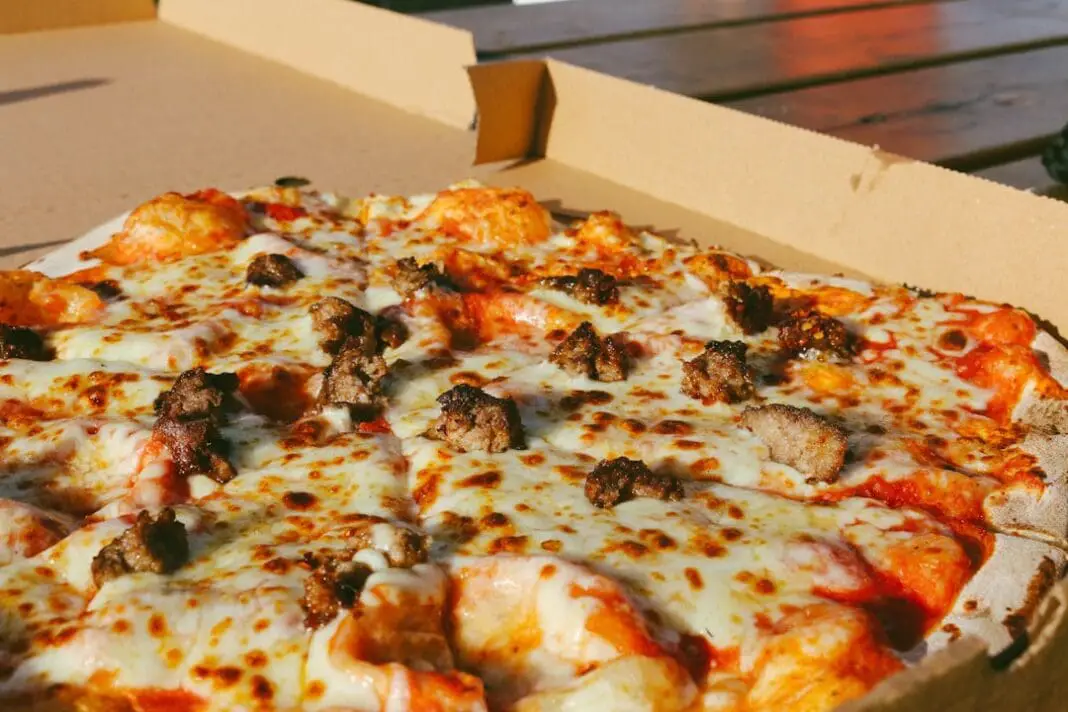
If you grew up in the 90s, Pizza Hut was the whole event. The red roof out front. The personal pan pizza you earned for reading books all summer. The sticky booths, the jukebox in the corner, and that thick pan crust that left a grease ring on your paper plate. So it stings a little to say this out loud: Pizza Hut is shutting down stores all over the country, and the company that owned it basically walked away from the whole thing.
Here is what is happening, why it happened, and which other pizza names are quietly doing the exact same thing right now.
The 250 stores going dark
On a February 2026 earnings call, Yum Brands (the parent company) said it would close about 250 Pizza Hut restaurants in the U.S. during the first half of the year. They gave the plan a name, “Hut Forward,” which sounds a lot more upbeat than “we are closing a bunch of stores.” The chain says it runs more than 6,700 U.S. locations, so 250 works out to roughly 3 to 4 percent of the whole map, according to the earnings report.
The reason is not complicated. Same-store sales in the U.S. dropped 3 percent in the last quarter of 2025 and 5 percent for the full year. When people stop walking in and stop ordering, the math stops working. The CFO flat out called the closings “the right answer for the brand.”
Way more may already be gone
Yum never put out a public list of which stores were getting cut. Three months after the announcement, one analysis using Yelp, Google Reviews, and Pizza Hut’s own store finder counted more than 50 locations that had already closed across the country, and the writers admitted the real number was probably much higher. You can see the running list of closures for yourself. The company said all the closings would be wrapped up by July 1, 2026.
So if your local Pizza Hut suddenly has a dark sign and a “for lease” banner in the window, you are not imagining it. That was very likely one of the 250.
How the biggest fell behind
Here is the part that explains everything. For decades, Pizza Hut was the biggest pizza chain on the planet. Then it made what one report called the biggest service model change in restaurant history. It moved away from the big sit-down dining rooms and pushed hard toward carryout and delivery, as broken down in this look at the service shift.
The problem is it did that slowly and awkwardly. Domino’s had already spent 20 years building fast delivery and slick ordering apps. Pizza Hut showed up to that race late and out of breath. Meanwhile, the old dine-in brand, the one with the salad bar and the birthday parties, got starved of marketing money. So neither side really won.
The numbers are rough. In 2024, Pizza Hut did $5.5 billion in system sales, up only about 5.6 percent since 2004. Its three biggest rivals, Domino’s, Little Caesars, and Papa John’s, grew an average of 211 percent in that same stretch. Pizza Hut ended up with about 1,000 fewer U.S. stores than it had 20 years earlier. That is not a slump. That is two decades of falling behind.
The $2.7 billion goodbye
By June 2026, Yum Brands stopped trying to fix it and sold the whole thing. The price tag was $2.7 billion. A private equity firm called LongRange Capital took the international business for $1.5 billion, and Yum China kept the mainland China stores for $1.2 billion, as laid out in this piece on the sale.
Sit with the origin story for a second. Pizza Hut started in Kansas in the late 1950s on a $600 loan. Two brothers borrowed pocket change and turned it into the world’s largest pizza chain. And it ended as a $2.7 billion sell-off after years of missed turns. That is the whole American business rollercoaster in one company.
China is the strange plot twist
Here is something most people have no idea about. While Pizza Hut is falling apart in America, it is thriving in China. Over there it is the biggest casual dining brand in the entire country, pulling in $2.3 billion in revenue in 2025, per the details on the strategic review.
In early 2026, the China side posted its 13th quarter in a row of growing transactions. In China, Pizza Hut is still a nice sit-down date-night spot with waiters and menus. In America, it became the place you drove past and forgot existed. Same red roof, totally opposite story.
It is not just Pizza Hut
If you think this is a Pizza Hut problem, look around the parking lot. The whole pizza-chain business is going through it.
Papa John’s is closing around 300 locations across North America through the end of 2027. In just the first quarter of 2026, 44 stores had already closed across 17 states, with the heaviest hits in Texas, California, Florida, and Arizona, according to this report on the Papa John’s closings. The CFO said most of the stores getting cut are franchise-owned, over a decade old, and not hitting the brand’s standards. They are also pulling menu items like Papadias and Papa Bites.
Then there is Papa Murphy’s, the take-and-bake chain where you grab an uncooked pizza and bake it in your own oven. Its parent company, MTY Group, is closing up to 50 of those. The stores tapped for closing lost more than $10 million combined over 12 months, based on this rundown of the Papa Murphy’s closures.
The same reasons keep repeating
Notice a pattern in all these announcements? It is the same short list every single time. Inflation pushed up food and labor costs. Leases got expensive. And people changed how they eat. Fewer families want to sit in a giant dining room. More want the food dropped at the door or ready to grab on the way home. The MTY Group boss said it straight in the details on its closings.
He even admitted Papa Murphy’s was “struggling more” than the company’s other restaurants, and that some of the markets it had bet on were “no longer viable.” That is corporate speak for “we picked the wrong spots and we are cutting our losses.”
What regular customers are saying
The mood online tells the story better than any earnings call. In one fast-food forum, someone wrote that this is “at least the middle of the end” for Pizza Hut, a comment pulled into this look at the chain’s biggest stumbles. Another person said Pizza Hut “doesn’t even pop into my mind” when they think about ordering from a national chain.
That last line is the real gut punch. It is not that people hate Pizza Hut. It is that they forgot about it. And for a brand that used to own Friday night, being forgotten is worse than being disliked.
What this means if you love a pan pizza
Good news first. Pizza Hut is not vanishing overnight. Even after 250 closings, thousands of U.S. stores are staying open, and closings like this usually push customers toward the nearest surviving location. If you have a favorite Hut that made the cut, it might actually get busier.
Now the not-so-fun part. The smaller, older, dine-in style spots are the ones most likely on the chopping block. That salad bar, the red plastic cups, and the whole sit-down nostalgia thing is the piece fading fastest.
So if you have been craving that stuffed crust and a basket of breadsticks, it might be smart to go while your local one is still standing. And keep an eye out, because with a new owner steering the ship, the Pizza Hut you order from next year could look pretty different from the one you remember climbing into the booth at as a kid.
