

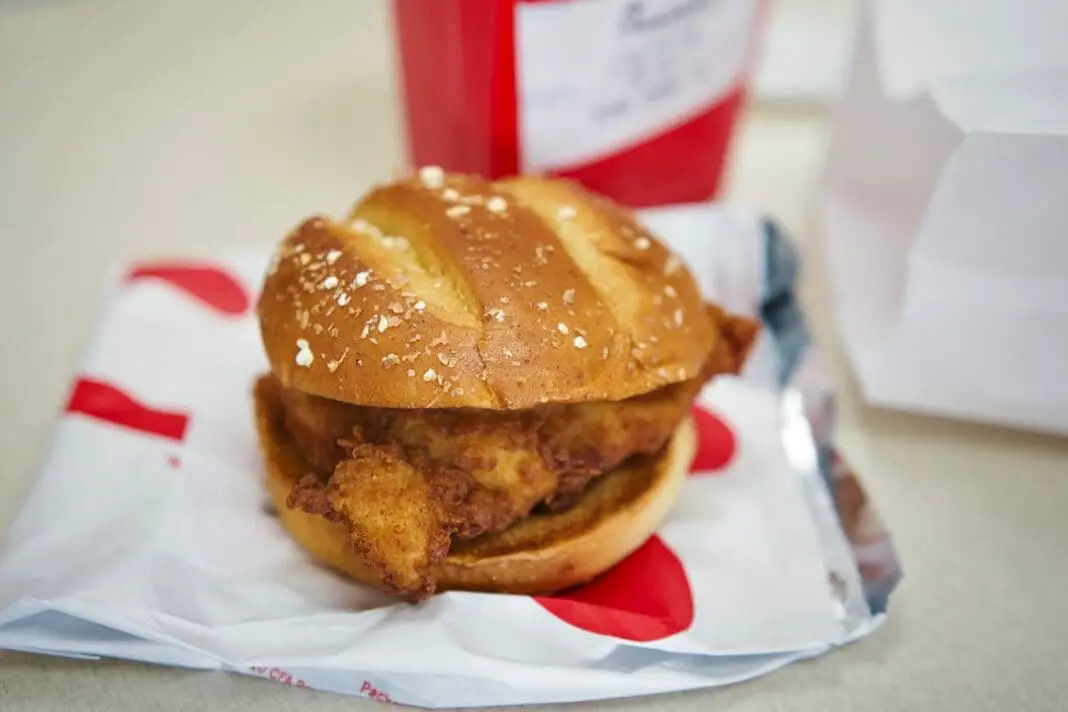
Fast food comes with a few small gambles. Maybe your fries show up cold. Maybe someone forgot the sauce you specifically asked for twice. Maybe the pickle situation is not what you ordered. Annoying, sure, but survivable. What you do not expect is to flip over your bun and find something that once had whiskers. That is the exact nightmare a Pennsylvania woman says she lived through, and it turned into one of the strangest fast food lawsuits in recent memory. The full story, first reported by local news, has all the details you would never want attached to your lunch order.
What actually happened that afternoon
Here is how the day went sideways. On November 25, 2016, a woman named Ellen Manfalouti, who was 46 at the time and lived in the Holland area of Bucks County, wanted lunch. A coworker offered to grab it, swung through the drive-through at the Chick-fil-A on the 2400 block of East Lincoln Highway in Langhorne, and brought the food back to the office. Manfalouti settled into a conference room and started eating her chicken sandwich like it was any normal Tuesday.
Then something felt off. According to the court filing, she noticed something funny on the bottom of the bun. Her first thought was not dramatic at all. She figured the kitchen had just torched her roll and burned the bread badly. She even said as much out loud to her coworker, complaining that they had ruined her bread. The problem is she had already taken a bite before she flipped the sandwich over to inspect it.
The coworker gave the line everyone remembers
Every wild story has one quote that sticks, and this one belongs to the coworker who was sitting right there. Her name was Cara Phelan, and she watched the whole thing unfold from a front-row seat. When Manfalouti tossed the sandwich down on the table in frustration, Phelan realized this was not burned bread at all.
As Phelan told the reporters covering the case, she immediately saw it was a small rodent of some sort. She said she could make out the whiskers and the tail. That is the kind of detail that turns a bad lunch into a story people repeat for years. It is also the kind of detail that makes you never want to look at the underside of a bun again.
The lab report was the real twist
Plenty of gross fast food claims fall apart because there is no proof. A blurry photo and a strong opinion usually do not win a lawsuit. This case was different, and the reason is the piece most people skip over.
The sandwich got sent off to a laboratory for testing. Here is the part that matters. According to Manfalouti’s lawyer, the lab that ran the analysis was actually chosen by the bakery that supplied the buns. In other words, the testing was not run by some outfit her side hand-picked to get the answer they wanted. It was the other side’s own pick. And that lab, as the filing describes it, confirmed the presence of a rat or mouse baked right into the bread. When the lab picked by the people you are fighting agrees with your claim, the whole thing gets a lot harder to laugh off.
The blame started bouncing around fast
Once the complaint got serious, so did the finger-pointing. This is where the franchise setup becomes a big deal. Chick-fil-A runs mostly on a franchise system, which means most locations are owned and operated by an individual, not directly by the company headquarters down in Atlanta.
According to her attorney, the chain tried to push responsibility onto the franchise owner. The franchise owner then suggested the bakery might be the one to blame. The bakery’s insurance company turned around and denied responsibility entirely. So you had three parties in a circle, each one pointing at the next, and a customer stuck in the middle with a sandwich nobody wanted to own. The coverage at the time described it as a classic case of responsibility-shifting, the kind that happens all the time in these food safety disputes.
Why she finally sued
People do not usually run straight to a courthouse. Manfalouti’s lawyer, William Davis, said she only filed after months of trying to settle the matter quietly and getting nowhere. He described the other side as having stonewalled every attempt to work things out. When the bakery’s insurance company denied liability, that was the point where his client felt she had no choice left.
The lawsuit landed in Bucks County Court in August 2017, roughly nine months after the sandwich incident. It named the franchise owner, Dave Heffernan, and the Langhorne store itself, and it sought more than $50,000. The complaint argued the defendants failed to supervise employees who served a sandwich with a dead rodent baked into the bun, and that they failed to have proper procedures in place to inspect their own food before selling it. Her side listed damages including pain and suffering, emotional distress, sleeplessness, and anxiety, and her lawyer noted she was treated at a local hospital for extreme nausea and given medication through an IV later that same day.
What the franchise owner said
Heffernan, the franchise owner named in the suit, did not say much. That is pretty standard once lawyers get involved. In a statement he offered at the time, he said he was aware of the situation and that the guest’s allegations were being investigated. Then he added the line every business says in these moments, that because it was an ongoing legal matter, he could not comment any further.
That is not evasive exactly. It is just what companies do when a case is live. Anything they say can end up quoted back at them in a courtroom, so they keep it short and safe. Still, if you were hoping for a big dramatic response, there was not one.
How the whole thing wrapped up
Here is the anticlimactic ending. The case settled in 2019. Neither the franchise nor Chick-fil-A corporate was ever formally found liable for anything. They settled, the case closed, and nobody had to officially admit fault. On paper, there was no clear winner or loser.
That is how a giant share of messy lawsuits actually end. Not with a shouting-match verdict, but quietly, with a settlement and a closed file. Because of that, the incident stays technically unproven in a strict legal sense, even though there was a photo and a lab result. And the franchise reportedly never revealed which bakery supplied its buns, so the exact spot in the supply chain where a rodent could possibly end up baked into bread stayed a mystery that never got solved in public.
This was not the chain’s only courtroom trip
A brand this size ends up in legal fights over all sorts of things, and this rodent case was not the only one. In 2023, the company faced a class action over how it priced delivery orders. That one ended in a $4.4 million settlement, paid out to affected Georgia customers in a mix of cash and gift cards. Different problem, different customers, but proof that even a chain with a squeaky-clean reputation racks up a legal file over time.
None of that changes the fact that Chick-fil-A has been around since 1946 and is still one of the most successful chicken chains in the country. People line up for the sauce and the drive-through service. One bad bun in Langhorne did not dent that. It just made for a story that stuck around long after the lunch rush ended.
Should you actually worry about this
Honestly, not much. An animal ending up baked into a bun is the kind of thing that makes national news precisely because it almost never happens. Most complaints about stuff in fast food are way more boring than this. Think a stray corner of wrapper, a bit of packaging, or a piece of paper that got where it should not be. Those are the everyday gripes.
Even other high-profile foreign object cases tend to involve manufactured stuff rather than critters. In 2025, McDonald’s got sued by a customer who said they found a clump of hair and a piece of metal inside a burger, a case laid out by food news outlets. Unpleasant, yes. But a rodent baked into bread is in a category of its own. So flip your bun over if it makes you feel better, then go enjoy your sandwich. The odds are extremely, overwhelmingly in your favor.
