

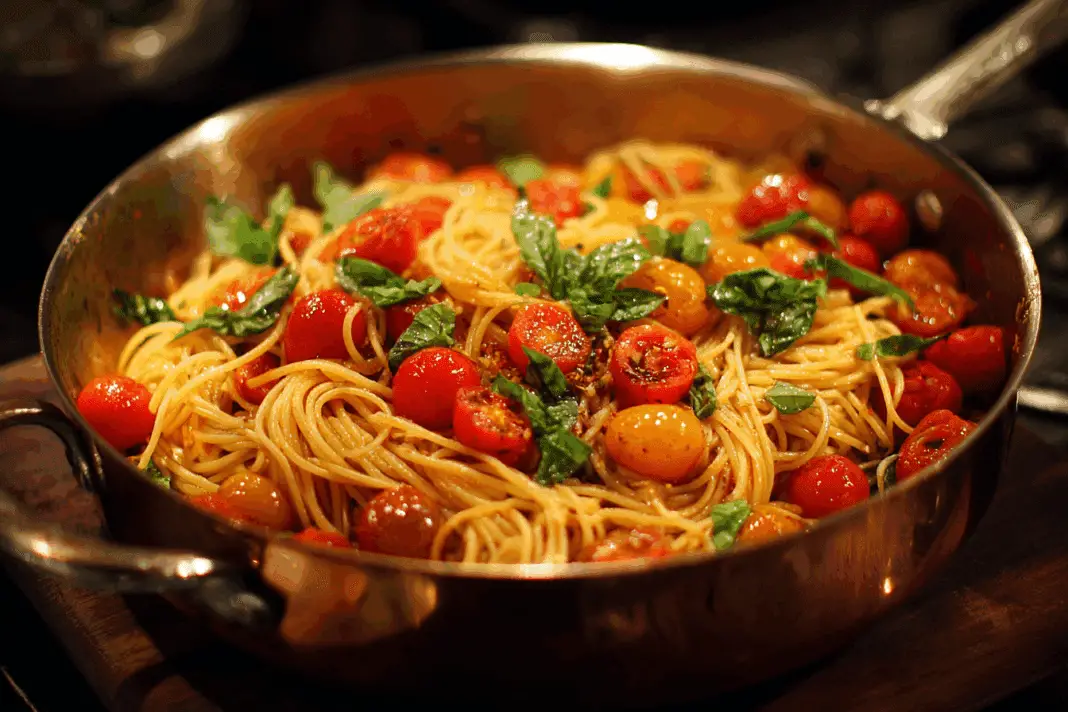
Most pasta recipes require multiple pots, constant stirring, and perfect timing to get everything right. But what if there was a way to cook pasta that created its own rich, restaurant-quality sauce while the noodles cooked? This revolutionary one-pan method breaks every traditional pasta rule, yet produces incredible results that taste like they’ve been simmering for hours when they only take 20 minutes to make.
Why this technique changes everything about pasta night
Traditional pasta cooking means boiling water in one pot, making sauce in another, and hoping everything comes together perfectly at the end. This method throws all those rules out the window. Instead of cooking pasta in gallons of boiling water, everything goes into one shallow pan with just enough liquid to cook the noodles. The pasta releases its starch directly into the cooking liquid, creating a silky sauce that clings to every strand.
The magic happens because the pasta water doesn’t get drained away. As the noodles cook, they absorb most of the liquid while releasing starch that naturally thickens what remains into a glossy sauce. This revolutionary approach means no more timing multiple pots or wondering if the sauce will stick to the pasta. Everything cooks together, creating deeper integration of all the ingredients than traditional methods ever could.
The essential ingredients that make it work
This recipe succeeds because of its carefully balanced ingredient list. Fresh cherry tomatoes break down during cooking to create the sauce base, while thinly sliced onions and garlic add aromatic depth. The key is using enough garlic and red pepper flakes to build real substance in the sauce. Many people worry four cloves sounds like too much garlic, but it’s absolutely necessary for the right intensity since everything cooks together.
Fresh basil sprigs cook right in the pan, infusing their essence throughout the dish, while olive oil helps everything meld together. The water amount is crucial – exactly 4½ cups provides enough liquid to cook the pasta while leaving just enough behind to form the sauce. Using high-quality ingredients makes a noticeable difference here since each component plays such an important role in the final result. Fresh basil cannot be substituted with dried, and freshly grated Parmesan beats pre-grated every time.
Choosing the right pan makes all the difference
The pan choice determines whether this technique succeeds or fails. A straight-sided skillet or wide, shallow pan works best because it allows the pasta to lie relatively flat while providing enough surface area for proper evaporation. Deep pasta pots don’t work because they prevent the liquid from reducing properly. The ideal pan should be wide enough that the linguine fits without too much overlap, but shallow enough that the liquid level stays relatively low.
A paella pan actually works perfectly for this recipe, though any wide skillet will do the job. The pan doesn’t need a lid since evaporation is part of the process. Cast iron, stainless steel, or even a large nonstick pan all work well. What matters most is having enough surface area for the pasta to cook evenly and for the liquid to reduce at the right rate. Too narrow and the pasta won’t cook properly; too deep and the sauce won’t form correctly.
The surprising technique that breaks pasta rules
Everything goes into the cold pan at once – pasta, vegetables, herbs, oil, and water. This feels completely wrong if traditional pasta cooking is ingrained in muscle memory. Raw linguine sits next to fresh tomatoes and onion slices, covered with what seems like too little water. The temptation to add more liquid is strong, but resist it. The exact measurements create the perfect balance between cooking the pasta and forming the sauce.
Once the heat goes on, frequent stirring becomes essential. Tongs work better than a spoon for moving the long pasta around and ensuring even cooking. The technique requires constant attention during the first few minutes as everything heats up and the pasta begins to soften. Unlike traditional boiled pasta that cooks mostly unattended, this method needs regular stirring to prevent sticking and ensure everything cooks evenly.
What happens during those crucial 20 minutes
The first few minutes look chaotic as rigid pasta noodles slowly soften and sink into the liquid. The tomatoes begin releasing their juices, adding to the cooking liquid while the onions start becoming translucent. Around the halfway point, everything begins looking more like actual pasta as the noodles become pliable and the vegetables start breaking down into sauce components.
By minute fifteen, the transformation becomes obvious. The tomatoes have mostly broken apart, creating a chunky sauce base, while the pasta has absorbed much of the liquid. The final few minutes require the most attention as the remaining liquid reduces to just enough sauce to coat the noodles. Testing pasta doneness becomes crucial here – it should be tender but still have a slight bite, just like traditionally cooked al dente pasta.
Why long pasta works best for this method
Linguine and spaghetti are ideal because they take about ten minutes to cook, giving the sauce ingredients enough time to break down and meld together. Short pasta like penne or farfalle won’t work because the cooking time doesn’t align with sauce development. Angel hair pasta cooks too quickly, finishing before the vegetables can properly soften and create the sauce base.
The long, thin shape also allows the pasta to absorb the developing sauce more effectively. As the noodles cook, they create more surface area for the sauce to cling to, while their starch release helps thicken the liquid naturally. Different brands may have slightly different cooking times, so testing doneness becomes important. The pasta should finish cooking just as the liquid reduces to the perfect sauce consistency – too much liquid means undercooked pasta, while too little might mean overcooked noodles.
The magic moment when everything comes together
When the pasta reaches perfect doneness, something beautiful happens – there’s no liquid left to drain. The cooking water has been absorbed by the pasta or evaporated, leaving behind just enough silky sauce to coat every strand. This moment requires experience to recognize, but once seen, it becomes unmistakable. The pasta looks glossy and well-coated, while the vegetables have melded into a cohesive sauce.
No colander appears, no hot water gets poured down the drain, and no separate sauce pot needs attention. The pasta goes straight from cooking pan to serving bowls, already perfectly sauced and ready for its final touches. This streamlined process eliminates the usual pasta-cooking chaos of timing multiple elements and trying to keep everything hot while combining components.
Essential finishing touches that complete the dish
Fresh Parmesan cheese, grated with a microplane for the finest texture, gets scattered over the hot pasta where it begins melting immediately. This creates additional richness and helps bind the sauce even more. Fresh basil leaves, torn rather than chopped, add bright color and intense herb notes that complement the cooked basil flavors already developed in the sauce.
Coarse salt and freshly cracked black pepper provide the final seasoning adjustments. Since everything cooked together, the dish develops well-integrated seasoning throughout, but these final touches allow for personal preference adjustments. The combination of melted cheese, fresh herbs, and proper seasoning transforms what started as simple ingredients into a restaurant-quality dish that tastes far more complex than its ingredient list suggests.
Common mistakes that ruin the technique
Adding extra water seems logical when the initial amount looks insufficient, but this destroys the delicate balance needed for sauce formation. Too much liquid means the pasta finishes cooking while excess water remains, creating a soupy mess instead of a silky sauce. Similarly, using the wrong pasta shape or substituting dried herbs for fresh completely changes the outcome.
Insufficient stirring causes pasta to stick together and cook unevenly, while inadequate garlic or red pepper flakes results in bland sauce lacking depth. Using pre-grated cheese instead of freshly grated Parmesan reduces the final dish quality significantly. The technique works beautifully when followed precisely, but small deviations can cause major problems since everything depends on the exact balance of ingredients and timing.
This one-pan method proves that sometimes breaking traditional cooking rules leads to better results. The technique creates pasta with more integrated sauce and deeper combined taste than conventional methods, all while using just one pan and taking only 20 minutes. Once mastered, this approach becomes the go-to weeknight dinner solution that consistently impresses without requiring advanced cooking skills or expensive ingredients.
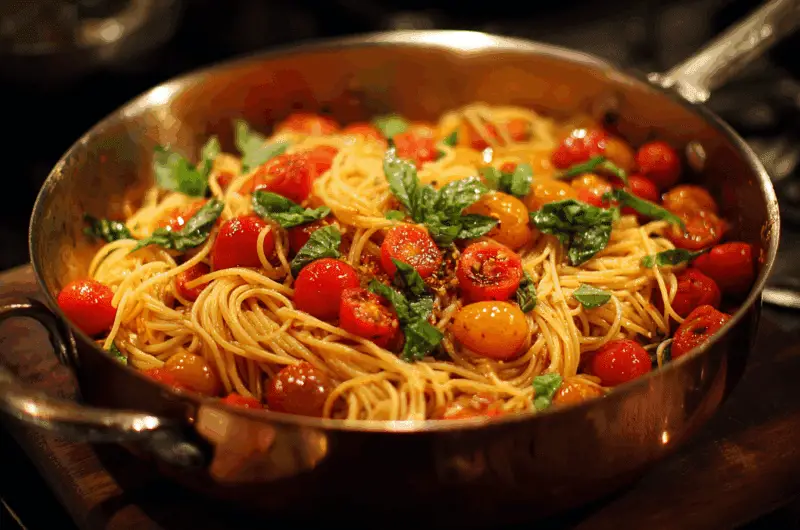
One Pan Pasta with Cherry Tomatoes and Basil
Course: Dinner Recipes4
servings5
minutes20
minutes380
kcalRevolutionary pasta technique that creates rich, restaurant-quality sauce while the noodles cook in just one pan.
Ingredients
1 pound linguine pasta
1 pint cherry or grape tomatoes, halved
1 medium yellow onion, thinly sliced
4 garlic cloves, thinly sliced
1/2 teaspoon red pepper flakes
2 tablespoons olive oil
2 large fresh basil sprigs, plus more for serving
4 1/2 cups water
Freshly grated Parmesan cheese for serving
Directions
- Place linguine, halved cherry tomatoes, sliced onion, sliced garlic, red pepper flakes, olive oil, basil sprigs, and water in a large straight-sided skillet or wide shallow pan. Make sure the pasta lies as flat as possible in the pan, though some overlap is fine.
- Bring the mixture to a boil over high heat, then reduce heat to medium-high to maintain a steady simmer. Use tongs to frequently stir the pasta, ensuring it cooks evenly and doesn’t stick together. The pasta will gradually soften and become easier to move around.
- Continue cooking and stirring for 10-15 minutes until the pasta is al dente and most of the liquid has been absorbed or evaporated. The tomatoes should break down and create a chunky sauce, while the onions become soft and translucent.
- Test the pasta for doneness by tasting a strand – it should be tender but still have a slight bite. If the pasta needs more time but liquid has evaporated, add a splash more water. The goal is to finish with pasta perfectly cooked and just enough liquid to coat the noodles.
- Remove the cooked basil sprigs and discard them, as they have already infused their essence into the dish. Season the pasta with salt and freshly ground black pepper to taste, stirring gently to distribute the seasoning.
- Serve immediately in warmed bowls, topped with freshly grated Parmesan cheese and torn fresh basil leaves. The pasta should be glossy and well-coated with the natural sauce created during cooking. Pass additional cheese and red pepper flakes at the table if desired.
Notes
- Use only linguine or spaghetti – short pasta or angel hair will not work with this technique
- Fresh basil is essential and cannot be substituted with dried herbs
- Grate your own Parmesan cheese for the best texture and taste
- The exact water measurement is crucial – don’t add extra even if it looks like too little
- Stir frequently with tongs to prevent sticking and ensure even cooking
Frequently asked questions
Q: Can I use different pasta shapes for this recipe?
A: No, this technique only works with long pasta like linguine or spaghetti that takes about 10 minutes to cook. Short pasta cooks too quickly and doesn’t allow time for the sauce to develop properly.
Q: What if there’s still liquid left when the pasta is done cooking?
A: Increase the heat slightly and continue stirring to help the remaining liquid evaporate. The pasta should finish cooking just as the liquid reduces to a sauce consistency.
Q: Can I substitute dried basil for fresh basil?
A: Fresh basil is essential for this recipe and cannot be substituted with dried. The fresh herbs infuse properly during the cooking process while dried herbs won’t provide the same depth of taste.
Q: How do I know when the pasta is ready to serve?
A: The pasta is ready when it’s al dente (tender but still has a slight bite) and there’s just enough liquid left to create a silky coating on the noodles. There should be no excess liquid to drain.
