

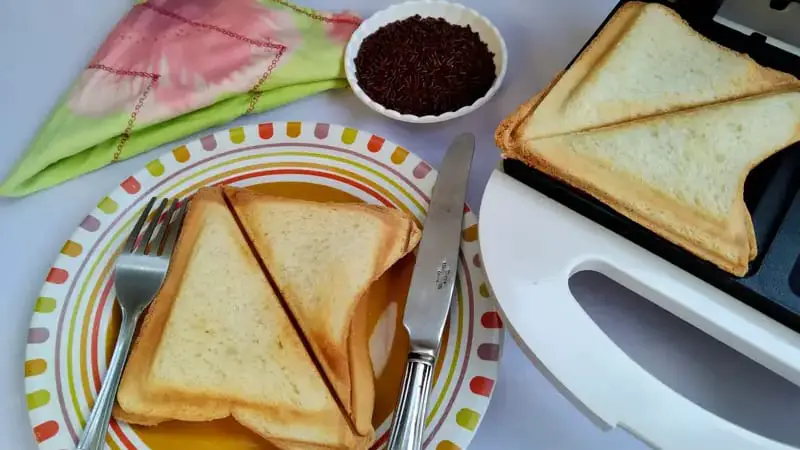
Pull a loaf out of the freezer, drop two slices straight into the toaster, and you already know how that ends. One corner goes dark. The middle stays pale and a little damp. Butter sinks in and the whole slice slumps. Most people blame the toaster, buy a nicer toaster, and get the same breakfast. The problem happened before the lever went down, and the fix costs nothing except patience: take the bread out of the fridge or freezer and let it sit on the counter for 15 to 30 minutes before it goes anywhere near heat.
Americans eat a lot of toast, so this is not a small thing.
Cold Bread Is Why One Side Burns and the Other Stays Soft
When cold bread hits warm air, water vapor condenses on it, and that moisture lands unevenly across the slice. Some patches hold more water than others. Run that through a toaster and the dry spots scorch while the wet spots stay floppy, which is exactly the half-and-half slice you have been eating. Letting the bread rest uncovered or on a paper towel at room temperature, around 68 to 72 degrees Fahrenheit, gives that moisture time to even itself out through the crumb.
Bread that never saw the fridge benefits too. Humidity in your kitchen, how the loaf was stored, and the flour it was made with all push moisture around inside the slice. Fifteen to 30 minutes on the counter is the general guideline. Dense loaves on a damp day may want the longer end of that.
Day-Old Bread Beats Fresh Bread for Toasting
A loaf still warm from the bakery makes mediocre toast. The sweet spot is bread that has rested a day after coming out of the oven, and the window closes around the three-day mark. A day-old slice has given up some surface moisture, so it browns instead of steaming itself pale.
Cooks who toast under a broiler have said the same thing for decades: bread a couple of days old is preferable to fresh, and the better the loaf, the better the toast. That is the one place where spending more actually shows up on the plate. Sourdough brings tang, rye brings richness, multi-grain brings chew, and plain white sandwich bread is still perfectly fine on a Tuesday.
Half an Inch Is the Thickness You Want
Around a half inch handles most breads. Thin enough that the heat reaches the center before the outside goes too far, thick enough to stay tender in the middle. Thinner slices crisp faster and eat more like a cracker. Thicker ones hold a soft interior under a crunchy shell, which is why French toast usually gets cut closer to a full inch so it can soak up the egg without falling apart.
Pre-sliced bread takes this decision away from you. Buy a whole loaf and cut it yourself and you control it. Thin-cut challah or rye turns light and glassy. Thick-cut ciabatta or whole wheat comes out chewier with a much stronger bread flavor. Keep the slices the same thickness or they will finish at different times.
The Laboratory Version of Perfect Toast Is Absurd
Food consultant Dom Lane and his team spent a week toasting and tasting 2,000 slices of bread for a 2011 study commissioned by the bread brand Vogel’s, and the Daily Mail published the resulting formula. It calls for a pale, seeded loaf refrigerated at 37.4 degrees Fahrenheit, sliced to 14 millimeters, toasted at 154 degrees Celsius (309 Fahrenheit) for exactly 216 seconds. That combination, according to the research, produces an exterior 12 times crunchier than the middle.
The butter was measured too. The ideal amount came out to 0.44 grams per square inch. Bronek Wedzicha, a food science professor at Leeds University, put it in terms you could actually eyeball in a separate study: “The amount of butter should be about one-seventeenth the thickness of the bread.”
None of that survives contact with a $30 pop-up toaster, whose shade dial mostly just sets a timer. The useful part is the principle underneath it: bread needs real heat to turn golden and develop flavor, which is why slow, low toasting gives you dry, sad, beige bread.
Preheat the Toaster With a Slice You Will Not Eat
Pop-up toasters have no preheat button. They start cold and heat the bread as they heat themselves, which is why the first slice of the morning always comes out lighter than the second one on the same setting. You can fake a preheat. Set the shade selector a notch above your target, push the lever down empty, and watch for the elements to glow.
If you would rather not run it empty, load a starter piece, usually the heel of the loaf that nobody wanted anyway. When it pops, drop your shade setting back to where you want it and load the real bread right away. Cold kitchens matter here. In January, your toaster takes longer to get where it needs to be than it does in July.
Butter It Before It Goes In, Not After
Buttering cold bread before it hits heat is the single biggest flavor upgrade available, and almost nobody does it. The fat soaks into the crumb instead of sitting on top of it. The milk solids in the butter brown along with the surface. You get tender buttered patches next to darker burnished spots where the butter did not reach, and no tearing, because you are spreading on soft bread rather than fighting a hot slice with a cold pat. A pinch of salt at this stage goes further than salt sprinkled on at the table.
One hard limit: this is for a skillet, an oven, a grill, a broiler, or an air fryer. Never put buttered bread in a slot toaster. Grease plus exposed heating elements inside a sealed box is a fire you do not want to deal with before coffee. In a toaster oven, buttered side down on a tray with garlic powder and dried oregano takes about four to six minutes and tastes like something from a restaurant bread basket.
Your Toaster Is Not the Best Tool You Own
A skillet or grill pan over medium heat does one to two minutes per side and gives you a crust a toaster cannot match. A broiler does one to two minutes per side with the bread on a sheet pan directly under the element, and it will burn the second you walk away. An air fryer preheated to 350 degrees Fahrenheit runs about three to five minutes, and because the hot air moves around the slice, it browns evenly instead of leaving stripes. Big air fryer baskets do not need a flip. Small ones do.
For a crowd, set a wire rack on a baking sheet, lay the slices out in one layer, and bake 10 to 15 minutes with a flip halfway through. On a grill, brush both sides with olive oil first so the bread releases, then one to two minutes per side until the marks show.
Oven Toast Lives Between 350 and 400 Degrees
Soft sandwich bread does best at 350. Dense loaves and thick cuts want 400, which builds a harder crust before the inside dries out. Go hotter than that and the edges burn while the centers stay pale. Keep the rack in the middle or upper-middle, and if you are finishing under the broiler, the tray sits three to four inches below the element for the last minute or two.
Space the slices at least half an inch apart. Crowded bread steams. Set a timer for five to eight minutes but check at three. Then throw the timer out and go by color, because every oven runs differently and bread freshness shifts the timing. One more thing worth knowing: once you flip, the second side finishes much faster than the first, since the slice is already hot and dried out.
Toppings Have an Order, and Most People Get It Backward
Butter, garlic, and thin slices of cheese go on before the heat so they melt into the bread. Anything wet goes on after. Tomato and avocado added before toasting will soak straight through and leave you with a soggy middle no matter how hot the oven was. Nuts and seeds also go on at the end.
Have everything sliced and ready before the bread goes in. Toast has a short window where it is genuinely good, and standing at the counter opening a jar while it cools is how you waste it.
Do Not Lay Hot Toast Flat on a Plate
Fresh toast is full of steam. Set it flat and that steam has nowhere to go but into the plate, where it condenses and turns the underside damp within a minute. That is the real reason British kitchens use toast racks, and they have been right all along. Stand the slices upright, leaned against a jar if you have nothing else, for at least a minute so the air can carry the steam off. Do not wrap it in a napkin or cover it.
Warming the plate helps for the same reason, and the toast researchers put a number on it: 113 degrees Fahrenheit, hot enough to stop condensation, not hot enough to keep cooking the bread. Cut it immediately, on the diagonal, and eat it right away. Toast made ahead is never as good as toast made now.
Skip every other tip here if you want. Keep the first one. Bread that has sat on the counter and evened itself out will toast better in a cheap toaster than cold bread will in a $300 one.
