

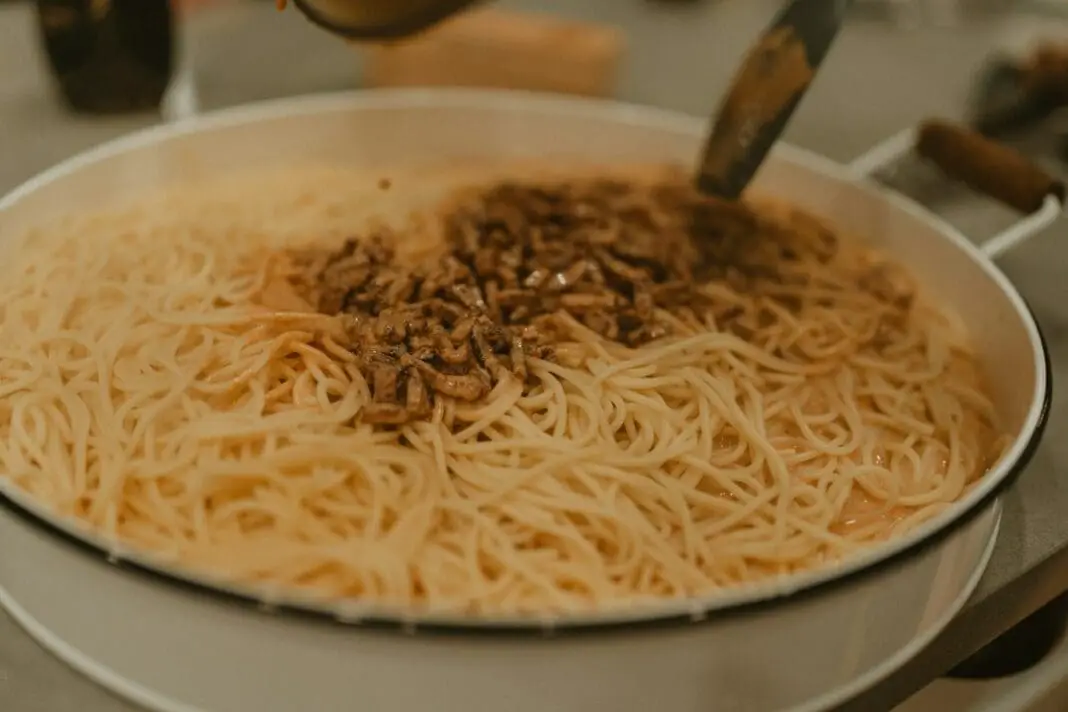
The colander is sitting in the sink. You tip the pot, steam blasts your face, and a few quarts of cloudy water vanish down the drain in about two seconds flat. Nobody thinks twice about it. That water is also the only reason restaurant pasta looks glossy and yours looks like noodles with sauce sitting on top of them.
Pasta sheds starch while it boils, and that starch is what lets fat and water hold together instead of splitting into an oily puddle at the bottom of the bowl. Save a cup before you drain. That single habit does more for your spaghetti than a better jar of sauce ever will.
Cloudy Is Not Dirty, It Is The Whole Point
As pasta cooks, starch from the surface dissolves into the pot and turns the water milky and slightly thick. Add a splash of that to a pan of butter, olive oil, cheese or rendered fat, and the starch bridges the gap between the fat and the liquid. The technical name is emulsification, the same chemistry behind mayonnaise and hollandaise, except here it happens in your skillet in about 30 seconds.
Cloudier water is better water. If you want more starch in the pot, use less water. A big rolling cauldron of eight quarts dilutes the starch you are trying to collect, so a smaller pot works in your favor here. Professional kitchens call the stuff liquid gold, which is a little dramatic for boiled water, but they are not wrong about what it does.
Save A Cup, Not A Splash
One cup is the number to remember for most dinners. You will probably use a few tablespoons of it, maybe a quarter cup, but a full cup means you can adjust as you go instead of guessing before you even see the sauce. For a single serving, half a cup covers it. For a big batch or a sauce that needs real loosening, reserve 1 to 2 cups.
Scoop it right before you drain, when the starch concentration is at its highest. A heat-safe measuring cup or a coffee mug dipped into the pot does the job. The reliable trick for people who forget every single time (most of us) is to set the mug inside the empty colander before you start cooking, so you physically cannot dump the pot without moving it first.
Better yet, skip the colander. Lift the pasta out with tongs or a spider strainer and drop it straight into the sauce pan, and the water never leaves the pot. The other clean solution is draining the pasta into a colander set inside a large bowl, which catches everything without you thinking about it.
Start With Two Tablespoons, Not Two Cups
The most common mistake after throwing the water out is dumping too much of it in. Start with 2 to 4 tablespoons, toss the pasta with the sauce, then add more only if the sauce is still tight. A quarter cup finishes most recipes. Thicker sauces and bigger batches take more, but it goes in gradually, never all at once.
Getting the amount right matters more than it sounds. Too little and the sauce breaks and turns greasy; too much and it goes thin and watery, which is how America’s Test Kitchen describes the two ways this goes wrong. Their verdict on the traditional method is blunt: it is “more art than science.”
Toss, do not stir. The movement is what builds the emulsion, and a gentle shake of the pan does more than a spoon scraping the bottom. Keep the heat moderate while you do it.
Pull The Pasta Early And Let It Finish In The Pan
Boiling pasta to perfection and then spooning sauce over it is the home cook move. Italian cooks pull the noodles about a minute shy of al dente and let them finish inside the sauce with a splash of the cooking water. The pasta absorbs some of that seasoned liquid, releases more starch on the way, and the sauce tightens around every strand instead of pooling underneath.
The Italian name for that last step is mantecare. Traditionally the pasta goes in even earlier, cooked only halfway, a stage called al chiodo, or “to the nail,” then it simmers in the pan with fat and a lot of starchy water until the liquid reduces into a creamy sauce. Al dente, by comparison, means “to the tooth.”
There is a shortcut that removes the guesswork. Cook 1 pound of pasta in 2 quarts of water instead of the standard 4 quarts, and you get the same amount of starch in half the liquid, which means the water you reserve is twice as useful. Keep the burner at medium once the pasta hits the pan. High heat separates butter and olive oil and turns melting cheese into clumps, so get the sauce glossy first and add the Parmesan or Pecorino second.
The Salt Argument Nobody Wins
You have heard that pasta water should taste like the sea. The common rule of thumb runs about a tablespoon of salt per quart, added once the water is already boiling so it dissolves evenly. Plenty of cooks swear by it.
Our take: ease off. If you are reserving a cup of that water and tipping it into a pan that already holds Pecorino Romano, Parmesan, pancetta or anchovies, seawater-level salt will wreck the finished plate. Season the water enough to season the pasta and no more, then taste the sauce before you reach for the salt again. Most of the salt stays behind in the pot anyway, since the noodles only pick up a small amount while they cook.
While we are at it, leave the oil out of the boiling water. It does not stop pasta from sticking, and it coats the noodles so sauce slides right off. Stir the pot during the first couple of minutes instead, which is when sticking actually happens.
The Dishes That Collapse Without It
Cacio e pepe is pasta, Pecorino Romano, black pepper and cooking water. That is the entire recipe. The starch in the water is what lets the cheese melt into a smooth cream rather than seizing into grainy lumps, which is why the dish fails so often for people who drain the pot without thinking.
Aglio e olio is the other proof. Spaghetti, garlic, olive oil, and a cup or more of starchy water tossed together turns into something creamy with no cream and no cheese in sight. Carbonara leans on the same trick. So does pasta alla gricia, with its pancetta and Pecorino.
Everyday sauces benefit just as much. A ladle or two makes a tomato sauce silkier and helps it grab the noodles, and a small splash loosens stiff pesto so it spreads instead of clumping in one corner of the bowl.
It Keeps In The Fridge For Three Days
Extra water does not have to go down the drain either. Cool it promptly, pour it into a covered jar, and it holds in the refrigerator for up to three days. Freeze it in ice cube trays and it keeps longer, ready to be dropped into a hot pan where it melts and thickens a sauce on the spot.
Stored water gets noticeably thicker as it chills, so stir it and thin it slightly when you reheat. Label the container if you keep both salted and unsalted batches, because you will not be able to tell them apart later.
Five More Places It Earns Its Keep
Soup is the easiest second act. Swap some of the water or stock for pasta water and the broth gains body without any extra fat. Use it as part of the liquid rather than all of it, especially if you salted the pot heavily.
Bread and pizza dough take it well. Cooled pasta water can replace some or all of the plain water in a dough, and one guide suggests going up to half the liquid for pizza or sourdough. Cut the salt in the recipe to compensate, keep the liquid lukewarm rather than hot, and use unsalted water if you are feeding a starter or active yeast.
Leftover pasta goes dry in the fridge and dries out further in the microwave. A splash of reserved water brings it back. You can also cook the next thing in it while it is still hot, boiling potatoes or simmering greens in a lightly seasoned liquid, and hold off on adding salt until you have tasted the result.
Where It Does Not Belong
Watering the houseplants with it is the advice that circulates every spring, and salted water is the wrong move. Salt accumulates in soil over repeated waterings and interferes with the plant’s ability to take up water. Unsalted water that has fully cooled is the only version worth pouring on dirt, and even then there is no evidence the starch does anything for growth. Never pour it on hot, and never pour it on if there is oil, butter or sauce in it.
The hair rinse trend is a stretch too. Claims that pasta water strengthens hair or boosts growth have nothing solid behind them, and salted water leaves residue. Drinking it straight does nothing for you either. This is a cooking ingredient and nothing else.
So the whole thing comes down to one mug set in one colander. Scoop a cup before you drain, pull the noodles a minute early, and toss them in the pan with a few tablespoons of that cloudy water until the sauce turns glossy. It costs nothing, adds maybe ten seconds to dinner, and it is the difference between pasta that holds together and pasta swimming in a thin red pool you scrape off the plate.
