

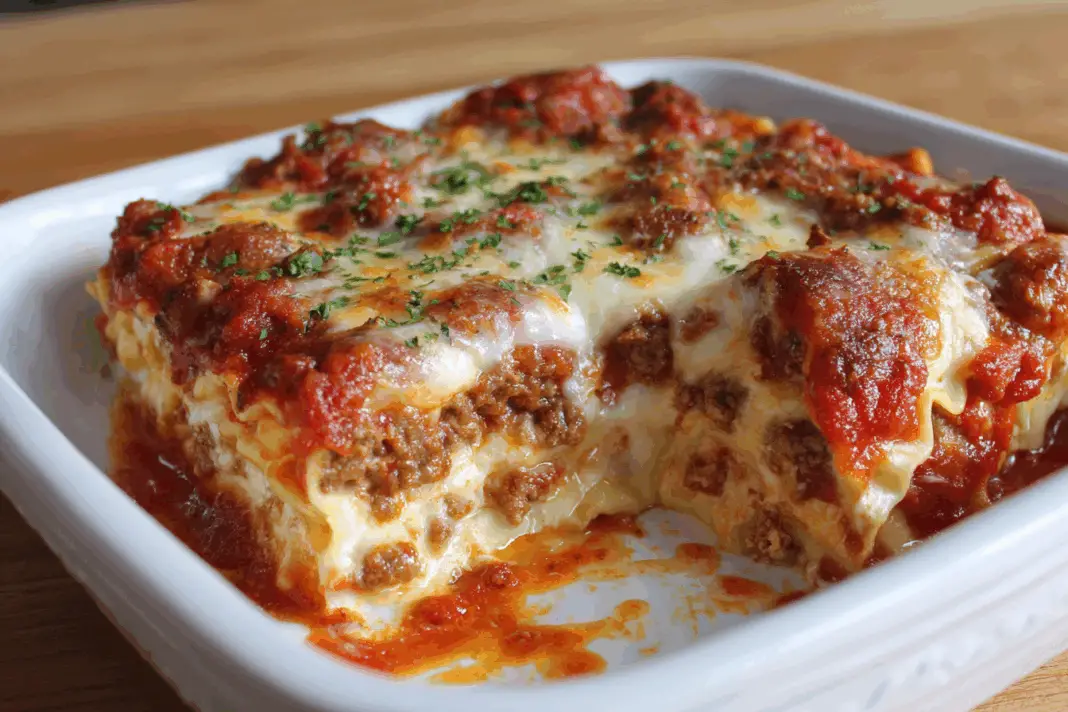
Making traditional lasagna feels like running a marathon when all you want is a quick dinner sprint. Between boiling noodles, layering ingredients with precision, and washing a mountain of dishes afterward, it’s enough to make anyone order takeout instead. But what if someone told you that you could get all those rich, cheesy lasagna flavors by literally dumping everything into one dish and calling it a day? This revolutionary approach to lasagna eliminates the fussy layering while delivering the same comfort food satisfaction that makes regular lasagna so beloved.
Frozen ravioli replaces traditional noodle layering completely
Traditional lasagna noodles require perfect timing – too soft and they turn mushy, too firm and they stay chewy after baking. Frozen cheese ravioli eliminates this guesswork entirely. Each ravioli acts like a self-contained pasta pocket that holds its shape during baking while adding an extra layer of cheese filling that regular noodles can’t provide. The pasta cooks perfectly from frozen, absorbing just enough sauce to become tender without falling apart.
A standard 24-ounce bag of frozen ravioli feeds about six people when layered in a 9×13 baking dish. The beauty lies in the variety – cheese ravioli provides classic comfort, while meat-filled versions add extra protein. Some cooks even mix different ravioli types in the same dish, creating flavor surprises in every bite. The frozen state actually works better than fresh because it prevents overcooking during the 45-minute baking process.
Store-bought sauce saves hours without sacrificing taste
Homemade sauce purists might cringe, but quality jarred marinara has come incredibly far in recent years. Brands like Rao’s and Classico offer restaurant-quality sauces that would fool most dinner guests. The key advantage goes beyond convenience – jarred sauces have consistent thickness that prevents the watery mess that often plagues homemade versions. This consistency becomes crucial when the sauce needs to penetrate frozen pasta during baking.
Most dump lasagna recipes call for about 24-25 ounces of sauce, which equals roughly one large jar. The sauce gets divided between layers, with some spread on the bottom to prevent sticking and the remainder mixed throughout. Smart cooks keep an extra jar in the pantry since this dish reheats beautifully and sauce can dry out during storage. Adding a splash of extra sauce when reheating brings back that fresh-from-the-oven moisture.
Cheese combinations create restaurant-quality results at home
The cheese mixture makes or breaks any lasagna, and dump versions offer more flexibility than traditional recipes. Fresh mozzarella, torn into irregular pieces, melts into those Instagram-worthy cheese pulls that make everyone’s mouth water. Pre-shredded mozzarella works fine but lacks the creaminess of fresh. Many recipes combine mozzarella with ricotta for richness, while others add cottage cheese for extra protein and a lighter texture.
Parmesan cheese acts as the flavor amplifier that transforms good lasagna into great lasagna. A half-cup of freshly grated Parmigiano-Reggiano adds that sharp, nutty complexity that makes people ask for your secret ingredient. Some cooks mix the cheeses together before adding them, while others prefer layering different cheeses separately. The cottage cheese variation appeals to health-conscious families since it bumps up protein while cutting calories compared to all-ricotta versions.
Ground meat additions transform this into a complete meal
While three-ingredient versions satisfy vegetarians perfectly, adding ground meat creates a hearty dinner that satisfies the biggest appetites. Ground beef remains the classic choice, but turkey, chicken, and Italian sausage all work beautifully. The key involves browning the meat completely before mixing it with sauce – any remaining pink areas will create an unappetizing gray color during baking. Draining excess fat prevents the finished dish from becoming greasy.
Seasoning the meat during browning makes a noticeable difference in the final result. Salt, pepper, and Italian seasoning create the foundation, while garlic powder and onion powder add depth without requiring fresh ingredients. Some cooks brown onions alongside the meat for extra sweetness, though this adds prep time. The meat-sauce mixture should simmer together for at least five minutes so the flavors can meld before assembly begins.
Proper layering technique ensures even cooking throughout
Even dump recipes benefit from strategic layering to ensure every bite tastes balanced. Start with a thin layer of sauce on the bottom of a greased 9×13 pan – this prevents the bottom ravioli from sticking and burning. Half the ravioli goes down next, arranged in a single layer with minimal overlap. The remaining sauce and half the cheese follow, then the process repeats with remaining ingredients.
The top layer requires special attention since it’s most vulnerable to drying out during baking. Reserve the best-melting cheese for the surface, and make sure sauce peeks through in several spots. Covering tightly with aluminum foil for the first 30 minutes traps steam that cooks the pasta evenly. Removing the foil for the final 15 minutes allows the top to brown attractively while preventing the interior from overcooking.
Baking temperature and timing prevent mushy disasters
Temperature control separates successful dump lasagna from soggy disappointment. Most ovens should be set to 375°F, which provides enough heat to cook frozen pasta without scorching the cheese. Higher temperatures risk burning the top before the center heats through, while lower temperatures extend cooking time unnecessarily. Preheating becomes essential since the dish goes straight from assembly to oven.
Total baking time typically ranges from 35-45 minutes depending on the specific ingredients used. Frozen ravioli needs the full time, while fresh pasta cooks faster and may require 5-10 fewer minutes under foil. The dish is done when the center bubbles vigorously and a knife inserted in the middle comes out hot. Letting it rest for 10 minutes before serving allows the layers to set up for cleaner slicing.
Make-ahead strategies turn busy weeknights into easy wins
Smart cooks assemble dump lasagna during weekend prep sessions, then freeze or refrigerate until needed. Assembled dishes keep in the refrigerator for up to two days before baking, making Monday night dinners effortless after long work days. For longer storage, wrap the entire pan tightly in plastic wrap, then foil, and freeze for up to three months. Label with contents and date to avoid freezer mystery meals.
Baking from frozen requires patience and slight technique adjustments. Add 15-20 extra minutes to the covered baking time, keeping the foil on longer to ensure even heating. The internal temperature should reach 165°F in the center before removing the foil for final browning. Glass baking dishes need special attention when going from freezer to hot oven – let them sit at room temperature for 30 minutes first to prevent cracking from thermal shock.
Leftover storage extends this meal for several days
Dump lasagna leftovers often taste better the next day as all the ingredients have more time to meld together. Individual portions reheat beautifully in the microwave – about 2 minutes on medium power prevents the cheese from becoming rubbery. For larger portions, cover with damp paper towels to maintain moisture during reheating. Oven reheating at 350°F takes longer but provides more even results.
Proper storage becomes crucial for food safety and quality retention. Cool completely before refrigerating, and use within 4-5 days for best quality. Portion leftovers into individual containers for grab-and-go lunches that beat any frozen meal option. The dish freezes well after cooking too – wrap individual portions for easy future meals that taste homemade because they are.
Creative variations keep this recipe from getting boring
The basic dump lasagna formula adapts easily to different tastes and dietary needs. Spinach artichoke versions substitute white sauce and add frozen spinach for a restaurant-inspired twist. Mexican variations use salsa instead of marinara, pepper jack cheese, and seasoned ground beef for south-of-the-border appeal. Buffalo chicken versions combine shredded rotisserie chicken with buffalo sauce and ranch-seasoned cheese.
Vegetarian options shine when loaded with extra vegetables like zucchini, bell peppers, or mushrooms. These additions should be pre-cooked to remove excess moisture that could make the final dish watery. Meat substitutes like crumbled plant-based protein work well when seasoned properly. The key involves maintaining the basic structure while swapping primary ingredients to create completely different meal experiences from the same simple technique.
This simplified approach to lasagna proves that sometimes the best recipes come from breaking traditional rules rather than following them blindly. With minimal prep work and maximum comfort food payoff, dump lasagna earns its place in the weeknight dinner rotation alongside other family favorites that actually get made regularly instead of just admired in cookbooks.
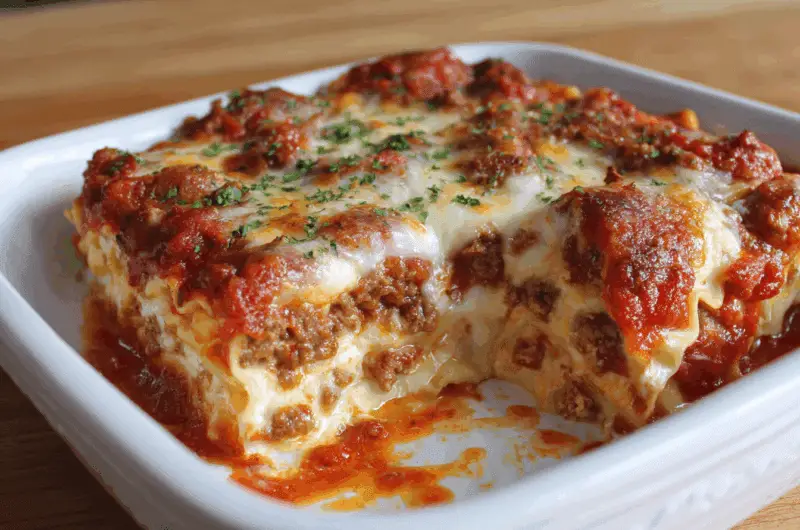
Easy Dump and Bake Lasagna
Course: Dinner6
servings15
minutes45
minutes450
kcalAll the cheesy, saucy goodness of traditional lasagna without the tedious layering and complicated prep work.
Ingredients
1 (24 oz) bag frozen cheese ravioli
1 (24 oz) jar marinara sauce
2 cups shredded mozzarella cheese
1 cup ricotta cheese
1/2 cup grated Parmesan cheese
1 lb ground beef (optional)
2 cloves garlic, minced
1 tsp Italian seasoning
Salt and pepper to taste
Directions
- Preheat your oven to 375°F and lightly grease a 9×13 inch baking dish with cooking spray or olive oil. This prevents sticking and makes cleanup much easier later.
- If using ground beef, brown it in a large skillet over medium-high heat, breaking it up as it cooks for about 5-6 minutes. Drain any excess fat and season with salt, pepper, and Italian seasoning. Add the marinara sauce and let simmer for 3-4 minutes to blend the flavors.
- In a separate bowl, combine the ricotta cheese with minced garlic and a pinch of salt and pepper. Mix well until the garlic is evenly distributed throughout the ricotta. This creates a flavorful cheese layer that won’t be bland.
- Spread about 3/4 cup of the meat sauce (or plain marinara if not using meat) on the bottom of the prepared baking dish. This prevents the ravioli from sticking and adds moisture to the bottom layer.
- Arrange half of the frozen ravioli in a single layer over the sauce, slightly overlapping if necessary. Don’t worry about perfect spacing – they’ll expand during cooking. Top with half of the remaining sauce and half of the ricotta mixture, dolloping it in spoonfuls.
- Sprinkle half of the mozzarella cheese over the ricotta layer, then repeat with remaining ravioli, sauce, ricotta, and mozzarella. Finish by sprinkling the Parmesan cheese evenly over the top layer for extra flavor and browning.
- Cover tightly with aluminum foil and bake for 30 minutes. The foil traps steam which helps cook the frozen ravioli evenly while preventing the cheese from burning.
- Remove the foil and continue baking for 15 minutes more, or until the cheese is golden brown and bubbly. Let rest for 10 minutes before serving to allow the layers to set up for easier slicing.
Notes
- Frozen ravioli works better than fresh in this recipe because it holds its shape during the longer baking time
- This dish can be assembled up to 2 days ahead and refrigerated before baking – just add 5-10 extra minutes to the covered baking time
- For a vegetarian version, simply omit the ground beef and use the full jar of marinara sauce for layering
- Leftovers keep in the refrigerator for up to 5 days and reheat beautifully in the microwave or oven
Frequently asked questions
Q: Can I use fresh ravioli instead of frozen?
A: Yes, but reduce the covered baking time by 5-10 minutes since fresh pasta cooks faster. Fresh ravioli may also be more delicate and could burst during baking, so handle gently during assembly.
Q: What other pasta shapes work well for dump lasagna?
A: Penne, rigatoni, ziti, and cavatappi all work excellently. Avoid small pasta like macaroni or thin pasta like angel hair, as they don’t hold up well to the longer baking time and can become mushy.
Q: How do I prevent the lasagna from becoming watery?
A: Make sure to drain ground meat thoroughly, use good quality ricotta cheese, and avoid adding vegetables with high water content unless you pre-cook them first. Also, let the dish rest for 10 minutes after baking.
Q: Can this recipe be doubled for a crowd?
A: Absolutely! Use two 9×13 pans or one large roasting pan. You may need to increase the baking time by 10-15 minutes for a larger, deeper dish. Check that the center is hot and bubbly before removing the foil.
