

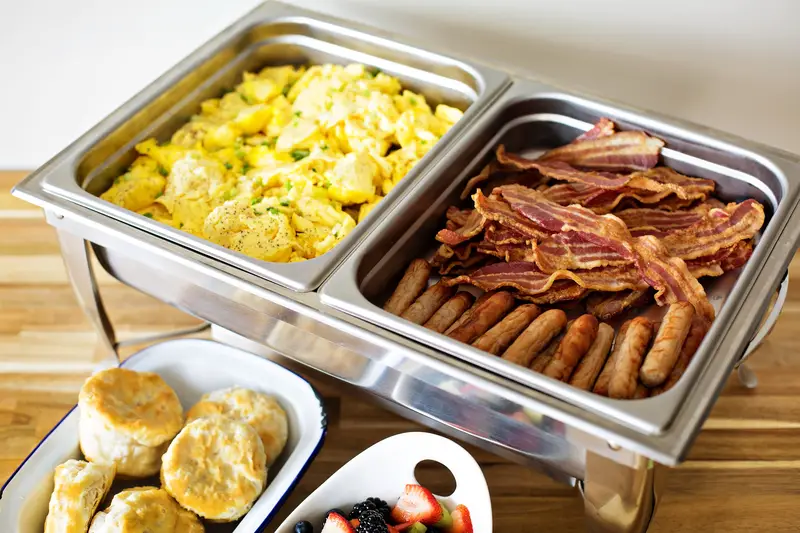
You wake up in your hotel room, stomach rumbling, and head downstairs for the free breakfast buffet. The scrambled eggs are sitting there in a big metal tray, looking sort of okay but also kind of weird. They’re a strange shade of pale yellow, and they seem a little rubbery. You’ve probably noticed this before and wondered what’s up with hotel eggs. Here’s the thing: those eggs aren’t what you think they are. Most hotels don’t crack fresh eggs for their breakfast buffets, and once you know what they’re actually serving, you might want to skip them entirely.
Hotels use powdered eggs instead of fresh ones
When you see a massive pile of scrambled eggs at a hotel buffet, there’s a good chance they started as a powder. Yep, powdered eggs are a real thing, and hotels love them. These eggs get made by breaking and mixing real eggs, then removing all the moisture and grinding them into a fine powder. The powder gets pasteurized to make it safe to eat and give it a super long shelf life. Some brands can last up to 25 years on a shelf, which is wild when you think about how fresh eggs only last a few weeks in your fridge.
The process of turning eggs into powder completely changes them. When all that moisture gets removed, it messes with the chemical structure of the egg. That’s why powdered eggs taste different from what you make at home. They’re denser, flatter, and way more bland. The color is off too because the high heat used during drying causes the egg proteins to oxidize and brown, giving them that weird yellowish-brown color instead of the bright yellow you’d expect. If you’ve ever eaten hotel eggs and thought something seemed wrong, this is why.
Liquid eggs from plastic bags are also common
If hotels aren’t using powdered eggs, they’re probably using liquid eggs. A viral video on TikTok showed hotel employees pulling out big plastic bags filled with liquid eggs and microwaving them. Once they’re heated up, the eggs get poured straight from the bag onto the serving tray. It’s honestly pretty gross to watch. These liquid eggs are preprocessed and come ready to heat, which makes them super convenient for hotels that need to feed hundreds of people every morning without spending too much time or money.
Both powdered and liquid eggs save hotels a ton of work compared to cracking fresh eggs. Think about how long it would take someone to crack, whisk, and cook enough eggs for 200 guests. With preprocessed egg products, they just add water or heat them up. Some corporate chefs have even said that local health departments require them to use pasteurized liquid eggs at buffets. So while it might seem like hotels are trying to cut corners, sometimes these regulations push them toward using these products instead of fresh eggs.
The texture and taste are noticeably worse
Anyone who’s eaten scrambled eggs at a hotel buffet knows they just don’t taste right. They’re either weirdly runny or dry and rubbery, and they almost always lack any real egg taste. Fresh eggs have this light, fluffy texture when you cook them properly, but buffet eggs feel heavy and dense in your mouth. A chef with 30 years of experience working at New York City hotels said you can tell right away when eggs are made from powder or liquid products because they always taste bland and have a strange texture.
The problem gets even worse because these eggs sit out for hours. Hotels cook everything before breakfast starts so it’s ready for early risers. Even with those heated trays underneath, food loses its quality the longer it sits there. Eggs that already start out subpar only get worse as they sit under heat lamps for two or three hours. By the time you’re getting breakfast at 9 or 10 AM, those eggs have been sitting there since 6 AM. They’re dried out, possibly cold in spots, and definitely not worth eating at that point.
Food safety becomes a real concern
The FDA says eggs need to be cooked to 160 degrees and kept above 140 degrees to prevent bacteria from growing. But how do you know if those hotel buffet eggs are staying hot enough? If the chafing dish doesn’t have a proper heat source or the cover is left off, the temperature can drop into the danger zone where bacteria multiply like crazy. Eggs should only sit out for a maximum of two hours before getting replaced with a fresh batch, but most hotel breakfasts run for three or four hours.
Getting food poisoning on vacation is absolutely terrible. You’re supposed to be relaxing and having fun, not stuck in a hotel bathroom feeling miserable. Eggs can carry salmonella if they’re not handled correctly, and buffet conditions aren’t exactly ideal for food safety. The eggs might have been cooked hours ago, they’ve been sitting out in open air where people are breathing and coughing near them, and the temperature might not be properly maintained. If you’re hitting the buffet late in the breakfast service, the risk goes up even more because those eggs have been sitting there longer.
Hidden ingredients you might not expect
Most powdered egg products contain more than just eggs. Manufacturers add powdered milk to the mix to make the texture better and add some nutrition. That’s a big problem if you’re lactose intolerant or have a dairy allergy. You’re thinking you’re just eating eggs, but you’re actually getting milk too. Some brands also add preservatives to extend that shelf life even longer. If you’re trying to avoid processed foods with a bunch of added ingredients, hotel buffet eggs are definitely not the way to go.
You could ask the hotel staff what’s in the eggs, but that’s not always easy at a buffet. In a restaurant, your server can check with the kitchen about ingredients, but at a buffet, the front desk person might not know what the kitchen uses. The breakfast attendant refilling the muffins probably doesn’t know either. If you have serious food allergies or dietary restrictions, buffet eggs are risky because you can’t be sure what you’re actually eating. It’s better to just skip them and go for something prepackaged where you can read the ingredients.
Why hotels choose convenience over quality
Hotels use powdered and liquid eggs mainly because of money and convenience. Fresh eggs cost about $4.50 per dozen right now, and prices keep jumping around because of bird flu outbreaks and supply issues. Powdered eggs don’t have the same price swings, so hotels can budget better. They also last way longer, which means hotels can buy in bulk and store them without worrying about eggs going bad. When you’re running a business and need to keep costs predictable, powdered eggs make more financial sense than fresh ones.
The time savings are huge too. Imagine being the cook who has to crack 500 eggs every single morning. That would take forever and cost more in labor. With powdered or liquid eggs, one person can prepare breakfast for hundreds of guests in a fraction of the time. Hotels care more about efficiency and keeping costs down than making sure the eggs taste amazing. They figure most guests will eat the eggs anyway, especially since breakfast is usually free. It’s not just hotels doing this either – cruise ships, college cafeterias, and hospitals all use the same processed egg products for the same reasons.
The omelet station is your best bet
If you really want eggs at a hotel breakfast, head straight to the omelet station if they have one. That’s where a cook makes eggs fresh to order, right in front of you. You can actually see them cooking, which means you know the eggs haven’t been sitting out for hours. Some omelet stations use liquid eggs from a container instead of cracking fresh ones, but even liquid eggs are better when they’re cooked fresh rather than sitting in a heated tray all morning.
Don’t be shy about asking the cook if they’re using fresh eggs or a liquid product. If you see them cracking actual eggs, you’re good to go. If they’re pouring from a carton or container, at least you know it’s being cooked right then instead of hours earlier. Made-to-order eggs will always taste better than the stuff in the buffet tray, even if they’re not made from farm-fresh eggs. Plus, you get to pick your own ingredients and have some control over how your breakfast turns out. Skip that sad pile of yellow stuff in the chafing dish and wait in line for the omelet station instead.
Better breakfast options at hotel buffets
Just because you should skip the scrambled eggs doesn’t mean you have to skip breakfast entirely. Prepackaged items are usually your safest choice at a hotel buffet. Individual yogurt cups, fruit cups, and pudding are all good options since they’re sealed and haven’t been sitting out in the open. Just check the expiration date before you eat anything because sometimes hotels don’t rotate their stock properly. Finding expired yogurt at a breakfast buffet is more common than you’d think.
Fresh fruit is generally fine, though you should avoid pre-cut melon because cantaloupe can carry salmonella. Bread items like bagels, toast, and pastries are usually safe bets too. If there’s a waffle station, that might seem fun, but apparently those also have issues. A former hotel employee on TikTok revealed that hotels often add new waffle batter to old batter instead of throwing out the old stuff, which means that batter could be sour. Honestly, your best move might be to grab some prepackaged items and maybe a pastry, then find a good breakfast spot nearby for future mornings. That free hotel breakfast isn’t such a great deal if it makes you sick.
At least the nutrition is the same
The one good thing about powdered eggs is that they’re not less nutritious than fresh eggs. Studies have found that powdered eggs keep most of the same nutrients as fresh ones, including protein, vitamin A, vitamin E, selenium, and zinc. The dehydration process doesn’t destroy the nutritional content, so if you do eat hotel buffet eggs, you’re at least getting the protein and vitamins you would from regular eggs. They might taste terrible and have a weird texture, but they’re not nutritionally empty.
That doesn’t mean you should eat them though. Nutrition isn’t everything – food should also taste good and be safe to eat. Powdered eggs might have the same vitamins and minerals, but they still taste bland and have that strange rubbery texture that makes them unappetizing. Plus, all those food safety concerns about temperature and how long they’ve been sitting out still apply. Just because something is technically nutritious doesn’t mean it’s a good choice. You can get your protein and vitamins from other breakfast foods that actually taste good and don’t come with the risk of food poisoning.
Next time you’re at a hotel breakfast buffet and see those pale yellow scrambled eggs sitting in their metal tray, you’ll know exactly what you’re looking at. Those aren’t fresh eggs that were just cooked – they’re powdered or liquid eggs that have probably been sitting there for hours. They don’t taste good, they have a weird texture, and they might not even be safe to eat depending on how long they’ve been out and what temperature they’re at. Your best bet is to skip them entirely and go for prepackaged items or hit up the omelet station if there is one. Or better yet, find a local breakfast spot and save yourself from disappointing hotel eggs altogether.
