

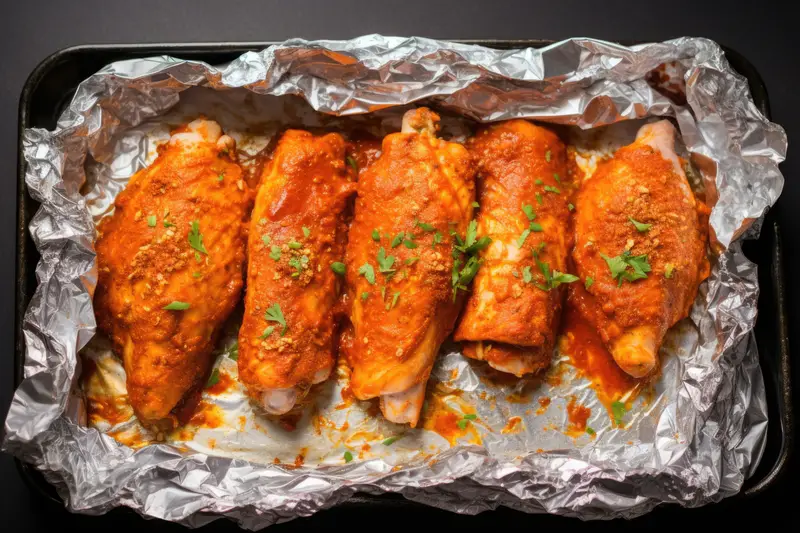
I used to go through aluminum foil like it was nothing. Wrapping baked potatoes, lining sheet pans, covering leftovers, making little foil packets for the grill. It was cheap, it was easy, and I never thought twice about it. Then I started reading the actual research, and honestly, I felt kind of dumb for not looking into it sooner.
Aluminum foil has been a kitchen staple in American homes since the 1940s. Reynolds Wrap alone sells enough of the stuff every year to wrap around the Earth multiple times. But just because something is everywhere doesn’t mean it belongs in your kitchen. Here’s what’s actually going on with that shiny silver roll in your drawer — and why you might want to think hard before reaching for it again.
Aluminum Leaches Into Your Food, Especially When It’s Hot
This isn’t some fringe conspiracy theory. A peer-reviewed study published through the National Institutes of Health confirmed that aluminum contamination of food occurs when you bake with aluminum foil. That means when you wrap your chicken thighs in foil and throw them in a 400°F oven, tiny amounts of aluminum are migrating from the foil directly into your dinner.
How much leaches out depends on a few things — temperature, cooking time, and what kind of food you’re cooking. Higher heat means more leaching. Longer cook times mean more leaching. And certain foods pull out way more aluminum than others, which we’ll get to in a second. The point is: foil doesn’t just sit there as an inert barrier. It’s reactive. It breaks down. And some of that breakdown ends up in you.
Acidic Foods and Aluminum Foil Are a Terrible Combination
If you’ve ever wrapped tomato-based leftovers in aluminum foil and noticed the foil looked weird the next day — pitted, discolored, or partially dissolved — you’ve already seen this problem with your own eyes. Acidic foods react aggressively with aluminum. Tomatoes, citrus, vinegar-based marinades, and anything with lemon juice will eat through foil and pull aluminum into the food at much higher rates than something neutral like plain rice.
This is one of the top things experts say you should never use aluminum foil for. Think about how often people wrap fish with lemon slices in foil, or cover a lasagna pan with it. Those are some of the worst possible uses. The acid accelerates the chemical reaction, and you end up consuming significantly more aluminum than you would otherwise. It’s not a small difference either — studies have shown that cooking acidic foods in foil can increase aluminum content in the food by several hundred percent compared to cooking without it.
Your Body Doesn’t Need Aluminum — At All
Here’s something most people don’t realize: aluminum has zero biological function in the human body. Your body doesn’t need it for anything. It’s not like iron or zinc or magnesium, where there’s a daily requirement. Aluminum is just… there. And when it gets in, your kidneys have to work to get it out.
The CDC has acknowledged that small amounts of aluminum from food and water do enter the body through the digestive tract. For most healthy people with functioning kidneys, the body can handle low levels. But here’s the thing — we’re not just getting aluminum from foil. It’s in antacids, it’s in some processed foods, it’s in certain cosmetics. Foil is just one more source stacking on top of everything else. And for people with kidney problems who can’t filter it out as efficiently, the stakes are even higher.
The Neurological Concerns Are Hard to Ignore
This is the part that really got my attention. Research has linked excessive aluminum exposure to neurological effects including memory decline, loss of coordination, and a potential connection to Alzheimer’s disease. Now — and I want to be honest here — the Alzheimer’s link is still debated in the scientific community. It’s not settled. Researchers have found elevated aluminum levels in the brains of some Alzheimer’s patients, but whether aluminum causes the disease or is just present because of it remains an open question.
But here’s how I think about it: if a substance has no benefit to my body, and there’s even a reasonable question about whether it contributes to brain disease, why would I voluntarily increase my exposure? That’s not paranoia. That’s just common sense risk management. There are easy alternatives. There’s no reason to keep gambling when the downside is that serious and the fix is that simple.
High-Temperature Cooking Makes Everything Worse
Grilling with foil packets. Broiling with foil-lined pans. Roasting vegetables on a foil-covered baking sheet at 450°F. These are some of the most common ways Americans use foil, and they’re also some of the worst. The higher the temperature, the more aluminum reacts with oxygen and with your food.
Aluminum foil starts becoming more reactive as temperatures climb above 300°F. By the time you’re at 400°F or above — which is standard for roasting — you’re in the zone where meaningful amounts of aluminum can transfer into food. Add salt, spices, and acidic ingredients to the mix, and the rate goes up even more. That foil packet of shrimp with garlic butter and lemon on the grill? It’s basically a chemistry experiment designed to maximize aluminum leaching.
It’s Also Terrible for the Environment
Put the health stuff aside for a second. Aluminum foil is a single-use product that most people throw straight in the trash. Yes, technically aluminum is recyclable. But most recycling facilities won’t accept foil that’s been contaminated with food, which is… almost all of it. That grease-stained sheet you pulled off the baking pan? Straight to the landfill.
Americans throw away roughly 3.5 billion pounds of aluminum foil and packaging every year. Mining bauxite (the ore aluminum comes from) is incredibly energy-intensive and environmentally destructive. It takes about 7 kilowatt-hours of electricity to produce a single pound of aluminum. That’s a lot of energy for something you use once and throw away. Even if the health arguments don’t move you, the waste angle alone is worth thinking about.
It Doesn’t Even Do What You Think It Does for Food Storage
A lot of people use foil to cover bowls or wrap leftovers for the fridge. But foil is actually a mediocre choice for long-term food storage. It doesn’t seal airtight the way a lid or plastic wrap does. It tears easily. It lets air in around the edges. Your leftovers dry out faster, absorb fridge odors more easily, and the foil itself can react with the food while it’s sitting there — especially if the food is acidic or salty.
Glass containers with lids, beeswax wraps, and silicone stretch lids all do a better job of actually keeping food fresh. They’re also reusable, which means you buy them once and stop spending $5 every few weeks on another box of Reynolds Wrap.
What To Use Instead
Okay, so you’re convinced. Now what? Here’s what actually works as a replacement, depending on what you were using foil for:
For lining baking sheets: Parchment paper. It’s nonstick, it handles temperatures up to 450°F, and it doesn’t leach anything into your food. A roll costs about the same as foil. This is the single easiest swap you can make.
For covering dishes in the oven: Use an oven-safe lid, an inverted baking sheet, or a silicone baking mat. If you’re covering a casserole dish, many of them come with lids now — just make sure it’s rated for oven use.
For grilling: Get a stainless steel grill basket or a cast iron skillet you dedicate to the grill. Cedar planks work great for fish. These options actually give you better results than foil packets because they allow for better heat distribution and some actual char.
For storing leftovers: Glass containers with snap-on lids. Pyrex and Anchor Hocking both make affordable sets you can get at Target or Walmart for under $20. They last for years, they’re microwave-safe, and they keep food fresher than foil ever will.
For wrapping sandwiches or snacks: Beeswax wraps or silicone bags. Brands like Bee’s Wrap and Stasher are widely available now and work perfectly for packing lunches.
The Habit Is Harder To Break Than You’d Think
I’ll be honest — even after learning all of this, I still catch myself reaching for the foil sometimes. It’s muscle memory. You’ve been doing it your whole life because your parents did it, and their parents did it. It feels normal because it is normal. But normal doesn’t mean smart.
I’m not saying you need to throw out your current roll and never touch foil again starting today. But start paying attention to when and how you use it. Are you cooking acidic foods in it? Are you using it at high heat? Are you wrapping food in it for hours or days? Those are the situations that matter most, and those are the ones to change first.
Small swaps add up. Parchment paper for your sheet pans. Glass containers for your leftovers. A grill basket for your vegetables. None of this is expensive or complicated. It’s just different. And different, in this case, is probably a lot better for you.
