

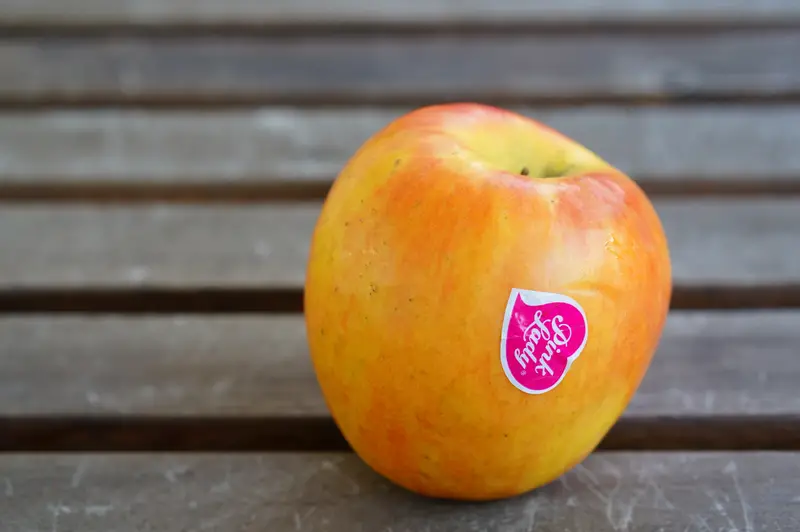
You come home from the store. You unload the bags. You grab an apple, peel off that little sticker, and toss it in the fruit bowl. Seems like the logical move, right? Peel the annoying thing off now so you don’t have to deal with it later. Turns out, that instinct is dead wrong — and it might be costing you money in wasted produce.
That tiny sticker removal sets off a chain reaction in the fruit that can turn it brown, mushy, and moldy days before it should be. And the sticker itself? It’s causing problems you probably never thought about — from your kitchen sink to composting facilities across the country. Here’s what you need to know before you peel.
Peeling Too Early Triggers a Chemical Reaction That Ruins Your Fruit
When you rip a sticker off a piece of fruit, there’s a decent chance you’re also ripping off a tiny bit of the skin underneath. Maybe you can see it, maybe you can’t. But even a microscopic tear is enough to kick off something called enzymatic browning. An enzyme called polyphenol oxidase (PPO) meets oxygen through that break in the skin, and it starts converting phenolic compounds into melanin. That’s the brown, soft, sad-looking spot that shows up on your fruit hours later.
The fruit is still safe to eat at that point — it’s not rotten. But the texture goes mushy in that area, and if you leave it long enough, it becomes a welcome mat for mold and bacteria. All because you peeled a sticker off three days before you actually ate the fruit.
Some Fruits Are Way More Vulnerable Than Others
Not all fruit handles sticker removal the same way. Peaches, nectarines, and plums have paper-thin skin that tears incredibly easily. Even if you think you peeled the sticker off cleanly, you might have left behind invisible damage that shows up as brown spots within hours. Apples and pears are also in the high-risk category.
Bananas are a special case. A green banana’s skin is thick enough to handle sticker removal without much drama. But as a banana ripens and gets those brown freckles, the skin gets thinner and more fragile. Trying to peel a sticker off a ripe banana is way more likely to cause damage than doing it when the fruit was still firm.
On the flip side, mangos, pineapples, and avocados have tough, textured exteriors that can take the abuse. You’re not going to puncture an avocado’s bumpy skin by removing a sticker. So if you absolutely can’t wait, those are the safer candidates for early sticker removal.
The Right Way to Remove a Fruit Sticker Without Wrecking Anything
When you’re finally ready to eat, don’t just yank. The adhesive on these stickers is engineered to survive cold storage and cross-country shipping. It uses adhesive polymers that don’t dissolve in water — which is why running the fruit under the tap does absolutely nothing.
Instead, gently lift one edge with your fingernail and peel slowly. If the sticker is stubborn, use the edge of a paring knife to get under it without gouging the fruit. There’s also the vinegar trick: soak a paper towel or cotton ball in white vinegar and lay it over the sticker for about 15 minutes. After that, the sticker should lift off easily without taking any skin with it. Give the fruit a quick rinse afterward so it doesn’t taste like vinegar.
One more tip: if you buy fruit that’s still unripe, that’s actually the ideal time to remove stickers if you need to. The firm skin is less likely to bruise or tear compared to a soft, ripe piece of fruit.
That Sticky Residue Isn’t Just Annoying — It’s Adhesive Polymer
Even when you get the sticker off cleanly, there’s often a film of glue left behind on the fruit. That residue can taste weird if you bite right into it. It’s not going to hurt you — the adhesive is food-grade and FDA-compliant — but it’s not exactly appetizing.
To get rid of it, scrub the area with a clean veggie brush under warm running water. That usually does the trick. If the residue is really caked on, a little baking soda paste works too. And if the sticker just won’t budge no matter what you try, it’s honestly safer to just peel the skin off that section of the fruit rather than fighting with it and causing more damage.
Yes, You’ve Probably Eaten a Fruit Sticker — And That’s (Mostly) Fine
If you’ve ever bitten into an apple and realized mid-chew that the sticker was still on it, relax. According to the FDA, the materials used in produce stickers — the paper or plastic film, the adhesive, and the ink — must all be approved for indirect food contact. They’re non-toxic in small amounts. The sticker will pass through your body undigested, pretty much the same way chewing gum does.
That said, “non-toxic” and “edible” are not the same thing. The sticker has zero nutritional value, your body can’t break it down, and it could be a choking hazard — especially for kids and older adults. The N.C. Cooperative Extension points out that the stickers are food grade, meaning the paper and glue are safe to contact food, but they’re not meant to be dinner. Eating a few by accident over the course of your life is not a problem. Deliberately leaving them on because “the FDA says they’re fine” is missing the point.
What Those Numbers on the Sticker Actually Mean
While we’re talking about these stickers, you might as well know how to read them. Those little numbers are called PLU codes — Price Look-Up codes — and they’ve been in use since 1990. There are over 1,400 different codes assigned by the International Federation for Produce Standards.
Here’s the cheat sheet: A four-digit code starting with 3 or 4 means the produce is conventionally grown. A five-digit code starting with 9 means it’s organic. So if your Fuji apple has a sticker reading 4131, it’s conventional. If it reads 94131, it’s organic. Numbers in the 83000-84999 range were originally reserved for GMO produce, but growers declined to use them, so they got opened up for general use. That’s right — there’s no reliable way to identify GMO produce from the sticker code anymore.
Don’t Put Them Down the Drain or in the Compost
Here’s where most people mess up after removing the sticker: they wash it down the sink or toss it in the compost bin with the banana peel. Both are bad ideas.
A plumber named Shaylin King has spoken about how stickers get tangled in garbage disposal mechanisms and stuck to the blades. Once there, they trap food bits and grease, creating clogs that could cost you a service call. The stickers are made to survive water and cold storage — they’re not going to dissolve in your pipes.
Composting is even worse. The EPA identified produce stickers as a major contributor to plastic contamination in compost in its 2021 report. At one composting facility in New Jersey, workers described white stickers dotting mountains of finished compost — still intact with readable barcodes after surviving a shredder, weeks of high temperatures, and screening. The facility owner called them “a total nightmare.” These stickers are mostly made of vinyl or polypropylene, and they don’t break down. They just become microplastics that contaminate the soil.
The Sustainable Packaging Coalition has reported that truckloads of off-spec produce from grocery stores have been turned away from composting facilities because of sticker contamination — sent straight to landfills instead, where it generates methane. All because of a sticker the size of a quarter.
The Future Might Involve Lasers Instead of Stickers
A physicist named Greg Drouillard invented a machine back in 1999 that uses a laser to etch labels directly onto produce by removing a very fine layer of skin. It works on everything — even potatoes and cucumbers, which won’t hold stickers. Dole started working with him because they were losing money on organic bananas. They could only label one or two bananas per bunch because too much handling turns them brown. With laser etching, nothing but light touches the fruit, so they could label every single banana.
Then the FDA called. Drouillard spent the next seven years and $2 million proving his method was safe. In 2012, the FDA finally approved it — but only for citrus. The technology exists. The approval process is just glacially slow.
In 2022, France became the first country to ban all plastic packaging on fruits and vegetables, including on imported goods. The USDA has been working on developing home-compostable PLU stickers, and some companies are experimenting with labels made from potato starch and rice paper. But none of these alternatives are widely available yet due to cost.
The Simple Rule to Follow
Leave the sticker on until you’re about to eat the fruit. When you’re ready, peel it gently and throw it in the trash — not the sink, not the compost, not the recycling. That’s it. It takes two seconds of patience and saves you from brown, mushy produce, plumbing headaches, and contaminated compost. The sticker was designed to stay on during storage. Let it do its job.
