

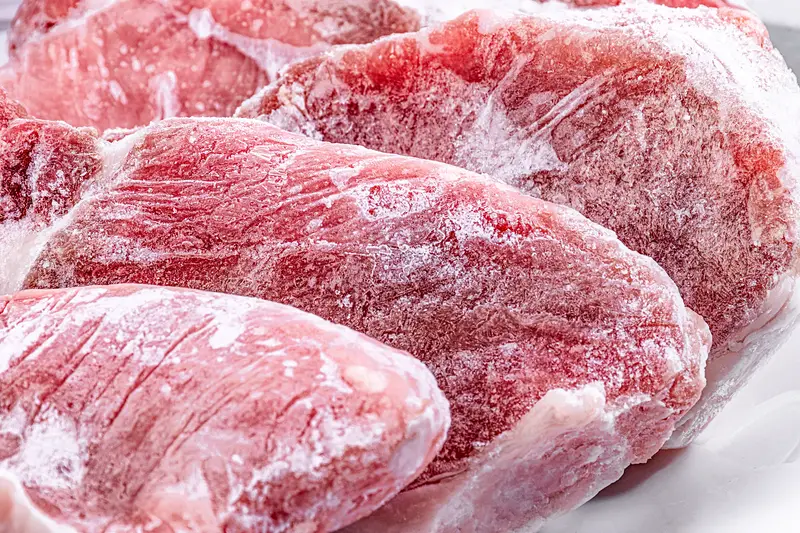
Most of us have been told our entire lives that frozen meat needs to thaw before it hits the pan or grill. You take it out of the freezer the night before, let it sit in the fridge, and wait patiently for dinner time. But what if that whole routine is actually working against you? Professional chefs and food scientists have been testing this theory, and the results might change how you cook steak forever. Turns out, throwing a frozen steak straight onto a hot surface can actually give you better results than one that’s been sitting around thawing. Sound crazy? The science backs it up.
Gordon Ramsay warns against microwaving frozen steak
When you’re in a hurry and forgot to defrost that beautiful ribeye, the microwave seems like the obvious solution. Just a few minutes on the defrost setting and you’re good to go, right? Wrong. Gordon Ramsay has made it clear that microwaving steak is one of the worst things you can do to it. The microwave causes discoloration and creates a rubbery texture that no amount of seasoning or sauce can fix. Even if you’re desperate for dinner, this shortcut will cost you way more than the time you save.
The problem gets even worse when you consider food safety. Microwaves push meat into what the USDA calls the danger zone, that temperature range between 40 and 140 degrees Fahrenheit where bacteria absolutely thrive. Your steak might look okay on the outside while dangerous bacteria multiply throughout. If you absolutely must use the microwave because there’s no other option, you need to cook that steak immediately after defrosting. Don’t let it sit around even for a few minutes because you’re basically asking for food poisoning at that point.
Frozen steaks actually cook better than thawed ones
Dan Souza from America’s Test Kitchen ran an experiment that shocked pretty much everyone who watched it. He took identical steaks, froze them all, then thawed half while keeping the other half frozen. Both batches got seared for 90 seconds per side in a hot skillet, then finished in a 275-degree oven until they reached medium-rare. The frozen steaks needed about 8 to 12 minutes longer in the oven, but that’s the only advantage the thawed steaks had. Everything else favored cooking from frozen.
The frozen steaks developed the same beautiful brown crust as the thawed ones despite being ice cold when they hit the pan. Even better, they had much thinner bands of overcooked grey meat under the crust. The frozen steaks also retained 9% more moisture during cooking compared to their thawed counterparts. When taste testers tried both versions, they unanimously preferred the steaks cooked directly from the freezer. That’s pretty much the opposite of what most home cooks have been taught their entire lives.
Room temperature thawing creates serious health risks
Leaving a frozen steak on your kitchen counter seems harmless enough. It’ll thaw faster than in the fridge, and you can get dinner started sooner. But this convenience comes with a hefty price tag in terms of food safety. Brian Smith from The Butchery explains that room temperature thawing allows dangerous bacteria to grow at alarming rates. Your steak might look fine, but invisible bacteria could be multiplying by the thousands every few minutes.
The safest method for thawing any meat is in the refrigerator where temperatures stay between 35 and 40 degrees Fahrenheit. This keeps bacteria from having a party on your dinner. If you’re in a rush, the cold water method works too. Put the steak in a sealed plastic bag and submerge it in cold water, changing the water every 30 minutes. This speeds things up to about an hour or two instead of overnight. Just never let that meat sit at room temperature, no matter how tempting it seems.
Hot water thawing ruins texture and promotes bacteria
If cold water works to speed up thawing, wouldn’t hot water work even better? That’s what a lot of people think when they’re trying to get dinner on the table fast. The reality is that hot water causes way more problems than it solves. Gabriel Llaurado from Meat N’ Bone points out that hot water partially cooks the exterior of your steak while the inside stays frozen. This creates uneven texture throughout the meat and pretty much guarantees a disappointing meal.
The bigger issue is food safety. Hot water raises the meat’s temperature too quickly, creating the perfect environment for bacteria to multiply. You might cut your thawing time in half, but you’ll also be serving up a potential case of food poisoning along with dinner. Cold water does the job almost as quickly without any of these risks. There’s simply no good reason to use hot water for thawing meat, no matter how much of a hurry you’re in.
The science behind why frozen steaks brown so well
You’d think a frozen steak would be too cold to develop a nice brown crust, but the opposite turns out to be true. When a frozen steak hits a hot pan, the exterior surface dries out and heats up quickly while the interior stays cold. This temperature difference is actually ideal for browning. The surface gets hot enough for the Maillard reaction to occur, creating that delicious brown crust we all love. Meanwhile, the frozen interior prevents the meat just below the surface from overcooking.
A thawed steak doesn’t have this advantage. The meat’s temperature is more uniform throughout, so when you sear it, heat penetrates deeper into the steak. This creates those thick bands of grey, overcooked meat between the crust and the pink center. With a frozen steak, you get a better crust and less overcooking in one simple step. The only trade-off is waiting a few extra minutes for the center to reach the right temperature in the oven.
Proper freezing technique makes all the difference
If you’re going to cook steaks from frozen, how you freeze them matters just as much as how you cook them. Dan Souza recommends placing steaks uncovered on a parchment-lined baking sheet in the freezer overnight first. This dries out the surface and prevents ice crystals from forming on the meat. Those ice crystals will turn to water when the steak hits the hot pan, creating steam instead of the dry surface you need for a good sear.
After that first night, wrap each steak tightly in plastic wrap and put them in an airtight freezer bag. This prevents freezer burn and keeps the meat fresh for up to three months. When you’re ready to cook, don’t bother unwrapping them to thaw. Just pull a steak out of the freezer, remove the wrapping, pat it dry if needed, and throw it straight into a hot, oiled pan. The whole process becomes simpler and produces better results than traditional thawing methods.
You need more oil when cooking frozen steaks
Cooking a frozen steak requires adjusting your usual technique slightly. You’ll need more oil in the pan than you might think, about 1/8 inch deep according to America’s Test Kitchen testing. This seems like a lot, but it ensures even contact between the frozen meat and the heat source. Without enough oil, the steak won’t sear properly and you’ll end up with uneven browning. Use a neutral oil with a high smoke point like vegetable or canola oil.
A larger skillet also helps reduce splattering when that frozen meat hits the hot oil. Give yourself plenty of room to work and don’t crowd the pan if you’re cooking multiple steaks. The searing process is the same as with thawed meat, about 90 seconds per side over high heat. After searing, transfer the steaks to a 275-degree oven and use a meat thermometer to check for doneness. Plan on 18 to 22 minutes for a frozen steak versus 10 to 15 minutes for a thawed one.
Damaged packaging leads to contamination problems
Before you start thawing or cooking any frozen meat, take a close look at the packaging. Rips, tears, or holes in the wrapping allow bacteria to enter and contaminate your food. This is especially important if you’re using the cold water thawing method because water can seep into damaged packaging and create a soggy mess. Gabriel Llaurado emphasizes that vacuum-sealed packaging is ideal because it stays intact and keeps everything fresh.
If your steak came in paper or Styrofoam packaging from the grocery store, transfer it to a sealed plastic bag before freezing or thawing. These materials absorb moisture and fall apart easily, neither of which helps your situation. A good vacuum sealer is worth the investment if you buy meat in bulk or like to meal prep. It keeps meat fresh longer, prevents freezer burn, and makes both thawing and cooking from frozen much easier to manage.
Thawing in the fridge still requires planning ahead
Even though cooking from frozen works great, sometimes you’ll want or need to thaw your steak first. Maybe you’re marinating it or your recipe specifically calls for room temperature meat. If that’s the case, refrigerator thawing is still the safest method. Plan on at least 24 hours for steaks and roasts, longer for larger cuts. Place the meat on a plate or in a container to catch any drips that could contaminate other food in your fridge.
The frustrating part about refrigerator thawing is that it requires thinking ahead, which is exactly what most of us forget to do. You can’t decide at 5 PM that you want steak for dinner if it’s still frozen solid. That’s actually one of the biggest advantages of learning to cook from frozen. You eliminate the planning step entirely and can have steak whenever the craving hits. Just remember that cooking from frozen works best for steaks that are one to one and a half inches thick.
Everything you’ve learned about thawing steak might need to be unlearned. Cooking from frozen isn’t just a shortcut for forgetful cooks. It’s actually a better method that produces juicier steaks with less overcooked meat and better crusts. The extra few minutes in the oven are a small price to pay for superior results. Next time you want steak for dinner, skip the thawing step entirely and throw that frozen meat straight into a hot pan. Your taste buds will thank you, and you’ll wonder why you ever bothered with thawing in the first place.
