

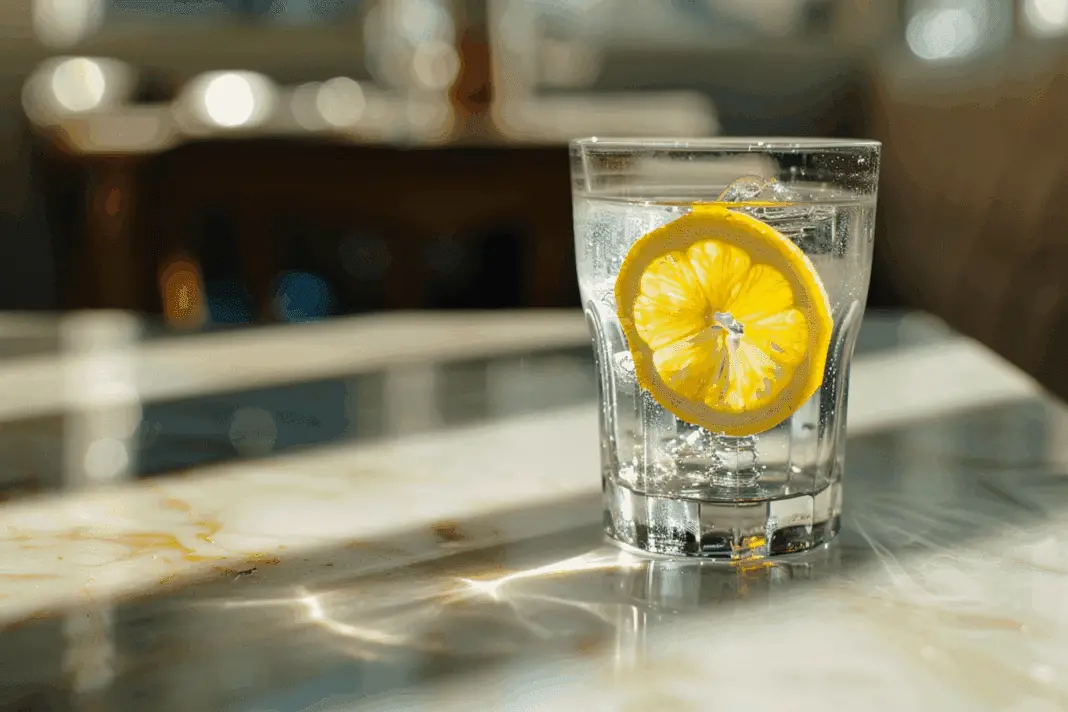
You sit down at a restaurant. The server brings water. There’s a lemon wedge perched on the rim of the glass, looking fresh and clean and civilized. You drop it in, maybe give it a little squeeze, take a sip, and feel like you’re making a slightly healthier choice than ordering a Coke. You’re hydrating. You’re being good. You’re also possibly dunking a little germ bomb into your drink.
I know. Nobody wants to hear this. The lemon wedge is one of those tiny luxuries that makes tap water feel like a spa experience. But the science on restaurant lemon wedges is genuinely unsettling, and once you know what’s actually going on behind the scenes, you’ll probably start saying “no lemon” without a second thought.
The Study That Ruined Lemon Water for Everyone
Back in 2007, researchers at the Journal of Environmental Health published a study that tested lemon slices served at 21 different restaurants. They swabbed both the rind and the flesh of 76 lemons. The results were the kind of thing you read and then immediately wish you hadn’t.
A total of 25 different microorganisms were found lurking on those lemon wedges. We’re talking bacteria like E. coli, along with various yeasts and other organisms you definitely don’t want floating in your beverage. Nearly 70% of the lemon samples produced some kind of microbial growth. That’s not a fringe finding. That’s most of the lemons, at most of the restaurants.
And this wasn’t some study conducted at sketchy, failing-inspection restaurants. These were normal, everyday places — the kind you and I eat at all the time.
Where the Contamination Actually Comes From
Here’s the thing people don’t think about: lemons aren’t peeled before they’re sliced. The rind stays on. And the rind is where the bulk of the contamination lives. That outer skin has been touched by farm workers, sat in shipping crates, rolled around on warehouse floors, gotten handled by stockroom employees, and then finally landed on a cutting board in a restaurant kitchen.
At that point, someone slices through the rind with a knife. If there’s E. coli or any other bacteria sitting on the outside of that lemon, the knife blade drags it straight through the flesh. Now the inside of your lemon — the part that’s about to soak in your water — is contaminated too. It’s the same principle that makes washing the outside of a cantaloupe important before cutting into it. The knife is the vehicle.
Then that sliced lemon sits on a prep surface or cutting board that may have been used for raw chicken, shrimp, or any number of things. In busy kitchens, cross-contamination happens fast. The lemon wedges get tossed into a container, and they sit there — sometimes for hours — at room temperature, waiting to garnish your glass.
Nobody Is Washing Those Lemons
This is the part that really gets me. Think about what you do at home when you’re going to use a lemon. Maybe you give it a rinse under the faucet. Maybe you don’t — because you’re going to squeeze the juice out and toss the rind anyway. But at a restaurant, the lemon rind goes directly into your drink. It sits in your water, steeping like a little tea bag of whatever was on its surface.
And restaurants often don’t wash their lemons thoroughly — or at all. There’s no FDA requirement specifically mandating how lemon garnishes need to be handled. The general food safety codes say produce should be washed, sure. But in the chaos of a Friday night dinner rush, how much attention do you think that bin of pre-sliced lemons is getting? The prep cook sliced 200 of them at 3 p.m., threw them in a container, and now it’s 8 p.m. and they’re still getting dropped into glasses with bare hands.
Speaking of bare hands — that’s another problem. In many states, food handlers are required to wear gloves when touching ready-to-eat foods. But lemon wedges often fall into a gray area. They’re a garnish, not an entrée. The level of care they receive reflects that.
The Hands Problem
Let’s talk about who’s touching your lemon. It might not be the cook. It’s often the server — and servers touch everything. They handle menus, clear dirty plates, take cash, swipe credit cards, wipe down tables, and then reach into a garnish tray with their fingers to grab a lemon wedge for your glass. Even servers with great hygiene habits are working in an environment that makes constant hand-washing nearly impossible during a rush.
A 2017 investigation by a local news station in New Jersey swabbed lemon wedges from several area restaurants and found bacteria on every single one. Some had fecal bacteria. On your lemon. In your water. At a restaurant you probably gave four stars on Yelp.
This isn’t meant to be an indictment of restaurant workers. They’re overworked and underpaid and juggling a thousand things. But the system isn’t designed to keep lemon garnishes sanitary. It’s designed to get food to tables fast.
Why Restaurants Still Do It
So if lemon wedges are a known hygiene issue, why do restaurants keep putting them in your water? A few reasons.
First, it makes tap water taste better. A lot of restaurant water comes straight from the tap and isn’t filtered before it hits your table. A lemon wedge masks any chlorine taste or mineral flavor that might make you go “eh” and order a $4 bottled water or a $12 cocktail instead. The lemon keeps you drinking the free stuff happily.
Second, it looks nice. A glass of water with a lemon wedge looks more intentional, more polished. It signals that the restaurant cares about the little details — which is ironic, considering the hygiene reality.
Third, customers expect it. People have been getting lemon in their water at restaurants for decades. If a place stopped offering it, some people would notice and feel like the experience was somehow lesser. It’s become part of the dining ritual.
Are You Actually Going to Get Sick?
Here’s where I’ll be honest: probably not. Most healthy adults have immune systems that can handle low levels of bacteria without any drama. The contamination found on restaurant lemons is real, but the amount of bacteria typically isn’t enough to make someone violently ill. Your stomach acid is pretty good at killing off small doses of the nasty stuff.
But “probably not” isn’t the same as “definitely not.” If you’re pregnant, elderly, immunocompromised, taking medications that suppress your immune system, or recovering from surgery, that contaminated lemon wedge is a much bigger gamble. And even for healthy people, all it takes is one particularly dirty lemon on a particularly unlucky day.
Food poisoning doesn’t always announce itself as food poisoning, either. Sometimes it’s just a mild stomachache you chalk up to eating too much bread. Sometimes it’s a weird 24-hour thing you blame on stress. There’s a decent chance that at least once, the culprit was a garnish you didn’t think twice about.
What to Do Instead
The simplest fix is the most obvious one: just say “no lemon, please.” It’s not weird. It’s not high-maintenance. Servers won’t bat an eye. You can also ask for lemon on the side so you can squeeze the juice in without putting the whole rind in your water — though this still involves the knife-through-the-rind contamination issue.
If you really love lemon water, make it at home. Buy your own lemons, wash them thoroughly with a produce brush under running water, and slice them yourself on a clean cutting board. You’ll get all the flavor without the risk.
Some people have started asking for a hot water with lemon, thinking the heat will kill bacteria. It helps, but restaurant “hot water” isn’t typically boiling — it’s warm to hot from a coffee machine or tap, which isn’t enough to sterilize much of anything.
This Applies to Limes and Oranges Too
Before you get clever and start asking for lime instead, the same rules apply. Limes, oranges, and any other citrus garnish go through the exact same handling process. Same cutting boards, same unwashed rinds, same hands. If anything, lime wedges might be worse because they’re smaller and harder to wash thoroughly. That lime in your Corona? Same deal. That orange slice on your Blue Moon? Yep.
Cocktail garnishes in general are a hygiene wild card. The olives in your martini, the cherry in your Manhattan, the mint in your mojito — they all pass through human hands and shared containers before landing in your drink. Lemon just happens to be the most studied and the most common.
The Bigger Picture
None of this means restaurants are filthy or out to get you. The American food system is remarkably safe for how many meals get served every day. Millions of people eat out daily and go home perfectly fine. But food safety is about managing risk, and the lemon wedge is one risk that’s incredibly easy to eliminate. You lose nothing by skipping it. You’re not missing out on any nutrition. You’re just drinking plain water — which is exactly what your body wanted in the first place.
Next time a server drops off your water with a cheerful lemon on the rim, think about those 25 microorganisms. Think about the cutting board, the unwashed rind, the bare hands in the garnish tray. Then politely fish it out and set it on a napkin. Your water will taste just fine without it.
