

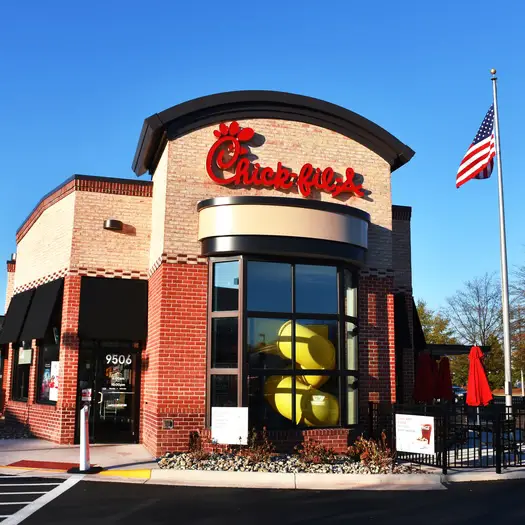
Ever driven up to Chick-fil-A on a Sunday, craving their famous chicken sandwich, only to find dark windows and locked doors? While every other fast-food chain fights for those Sunday dollars, this chicken giant voluntarily walks away from an estimated $1.2 billion in annual revenue. The reason behind this jaw-dropping decision goes back to 1946 and a completely exhausted restaurant owner who made a choice that would reshape an entire company forever.
The exhausted founder who worked 24/7
Picture running a restaurant that never closes, sleeping next to a hot grill, and using the sound of car tires on gravel as your alarm clock. That was S. Truett Cathy’s reality in 1946 when he opened The Dwarf Grill in Hapeville, Georgia. This tiny spot had just four tables and 10 counter stools, but it served customers around the clock. Cathy and his brother Ben pulled endless 12-hour shifts, barely getting any real rest between the constant stream of workers from the nearby Ford assembly plant and Atlanta airport.
The brutal schedule took a serious toll on both brothers. During one of those sleepless nights, Cathy had what he later called an epiphany. He realized that working seven days a week wasn’t sustainable for him or his future employees. The decision wasn’t complicated – he simply needed one day off each week to recover, spend time with family, and maintain his sanity. Sunday became that day, marking the birth of what would become one of the most famous policies in fast food.
More than just religious reasons
Many people assume Chick-fil-A closes on Sundays purely for religious reasons, but the real story is more practical. While Truett Cathy was indeed a devout Christian who wanted to honor the Sabbath, the decision started as a basic business need. According to Jodee Morgan, the company’s senior director of culture and talent operations, Cathy’s choice was driven equally by practical considerations and employee satisfaction. When someone works around the clock and sleeps next to restaurant equipment, taking a day off becomes a survival necessity rather than just a spiritual choice.
The practical approach resonated with workers regardless of their personal beliefs. Cathy understood that well-rested employees provide better service and stay with companies longer. His website even states that employees can “worship if they choose” but emphasizes the freedom to spend Sunday however they prefer. This isn’t about forcing religious beliefs on anyone – it’s about giving people a guaranteed day off in an industry known for demanding schedules and weekend work.
The staggering cost of staying closed
Imagine voluntarily giving up over a billion dollars every year. That’s exactly what Chick-fil-A does by keeping its doors locked on Sundays. Various estimates put the lost revenue between $47.5 million and $1.2 billion annually, depending on how you calculate the potential sales. Think about all those post-church family meals, Sunday football gatherings, and weekend shopping trips where people crave fast food. Every single Sunday, thousands of potential customers drive past closed Chick-fil-A locations and spend their money elsewhere.
The financial sacrifice becomes even more dramatic when considering prime locations. Chick-fil-A operates in airports, shopping malls, sports stadiums, and highway rest stops – places that see heavy Sunday traffic. During Super Bowl LIII in Atlanta, their Mercedes-Benz Stadium location remained closed despite over 70,000 fans in attendance. Instead of serving chicken sandwiches, they allowed “Fries Up” to operate temporarily, serving only French fries. Talk about sticking to principles when money is practically thrown at them!
How the policy affects every location
Whether a Chick-fil-A sits in a small town strip mall or a busy international airport, every single location follows the Sunday closure rule. This creates some interesting situations, especially in places where Sunday is the busiest day of the week. Airport travelers often find themselves disappointed when they spot the familiar red and white signs, only to realize they can’t grab their favorite chicken sandwich before their flight. Mall locations miss out on weekend shoppers, and highway rest stops lose travelers who need quick meals during Sunday road trips.
The company’s commitment extends to all 3,000+ locations across the country. Most operate Monday through Saturday with standard hours: 6-10:30 a.m. for breakfast and 10:30 a.m.-10 p.m. for lunch and dinner. The consistency means customers never have to guess or check individual store hours – if it’s Sunday, Chick-fil-A is closed, period. This universal application shows how deeply ingrained the policy has become in the company’s identity and operations.
Employees love the guaranteed day off
Fast-food workers rarely get guaranteed weekends off, making Chick-fil-A’s Sunday policy a huge selling point for potential employees. In an industry where weekend and holiday work is typically mandatory, knowing that every Sunday is free creates a better work-life balance. Parents can attend their kids’ Sunday activities, college students can focus on homework or social time, and everyone gets at least one day per week that’s completely their own. This predictability helps workers plan their personal lives without worrying about last-minute schedule changes.
The employee benefits extend beyond just having Sundays off. The policy attracts workers who value companies that prioritize employee welfare over maximum profits. Many fast-food chains struggle with high turnover rates, but Chick-fil-A’s approach to employee treatment, including the Sunday closure, helps them retain staff longer. When employees feel respected and valued, they provide better customer service, creating a positive cycle that benefits everyone involved in the business.
Rare exceptions prove the rule
Chick-fil-A has opened on Sundays only for extraordinary circumstances, and these rare exceptions highlight how seriously they take their closure policy. After the tragic Pulse nightclub shooting in Orlando, some locations opened to provide free food for blood donors and first responders. These weren’t normal business operations – employees volunteered their time, and no money changed hands. The company has also opened during natural disasters to help relief efforts, but again, these were community service situations rather than regular business.
These exceptional situations actually reinforce how committed the company is to its Sunday policy during normal times. When they do open, it’s for humanitarian reasons, not profit. The fact that these exceptions make national news shows how unusual it is for Chick-fil-A to operate on Sundays. People literally take photos and share social media posts when they see a Chick-fil-A open on Sunday, treating it like spotting a rare bird or witnessing a historical event.
Success despite operating six days
Operating one less day per week than competitors hasn’t hurt Chick-fil-A’s growth or profitability. In fact, analysts predicted the company would become the third-largest restaurant chain by sales, surpassing brands like Taco Bell, Subway, and Wendy’s – all while staying closed every Sunday. Their per-unit sales significantly exceed those of McDonald’s and Burger King, proving that quality and customer loyalty can overcome the disadvantage of limited operating hours. This success challenges the conventional wisdom that more hours automatically equal more profits.
The remarkable growth suggests that Chick-fil-A’s Sunday closure might actually help their brand rather than hurt it. The policy creates urgency and exclusivity – people can’t get Chick-fil-A whenever they want, so they value it more when it’s available. Monday through Saturday become more precious when Sunday is off-limits. Plus, the well-rested employees who benefit from guaranteed days off likely provide better service, creating customer experiences that keep people coming back throughout the week.
The Cathy family keeps the tradition alive
Even though Truett Cathy passed away, his children have committed to maintaining the Sunday closure policy for future generations. This isn’t just a business decision anymore – it’s become part of the company’s DNA and family legacy. The Cathy family understands that changing this policy would fundamentally alter what makes Chick-fil-A unique in the fast-food landscape. They’ve watched the policy work for over 75 years, turning a small Georgia diner into a national powerhouse while maintaining the founder’s original values.
The family commitment means customers can count on this policy continuing indefinitely. In his 2002 book “Eat Mor Chikin: Inspire More People,” Truett Cathy explained that he and his brother weren’t willing to abandon their priorities for financial success. That same philosophy continues today, with the next generation understanding that some things matter more than maximum profits. The Sunday closure has become as essential to Chick-fil-A’s identity as their chicken sandwiches or cow mascots.
What this means for Sunday cravings
If Chick-fil-A is part of regular meal rotation, planning around their Sunday closure becomes second nature. Smart customers stock up on sauces during the week, order extra nuggets on Saturday, or simply adjust their Sunday meal plans to include other options. Some people have even developed Sunday traditions that don’t involve fast food, using Chick-fil-A’s closure as a reminder to cook at home or try local restaurants. The policy forces a small change in routine that many customers have grown to accept and even appreciate.
The Sunday closure also creates interesting social media moments and running jokes among fans. People share photos of closed Chick-fil-A locations on Sundays, make memes about Sunday cravings, and count down until Monday morning. The company even maintains a “Sunday Stories” blog with family recipes and activities, acknowledging that their customers have Sunday needs while staying true to their closure policy. What started as one exhausted restaurant owner’s practical decision has become a cultural phenomenon that people plan around and respect.
The next time Sunday rolls around and those Chick-fil-A cravings hit, remember that closed sign represents more than lost sales – it’s a 75-year commitment to employee wellbeing and work-life balance that started with one man who was simply too tired to work seven days a week. Sometimes the most successful business decisions come from the most human moments.
