

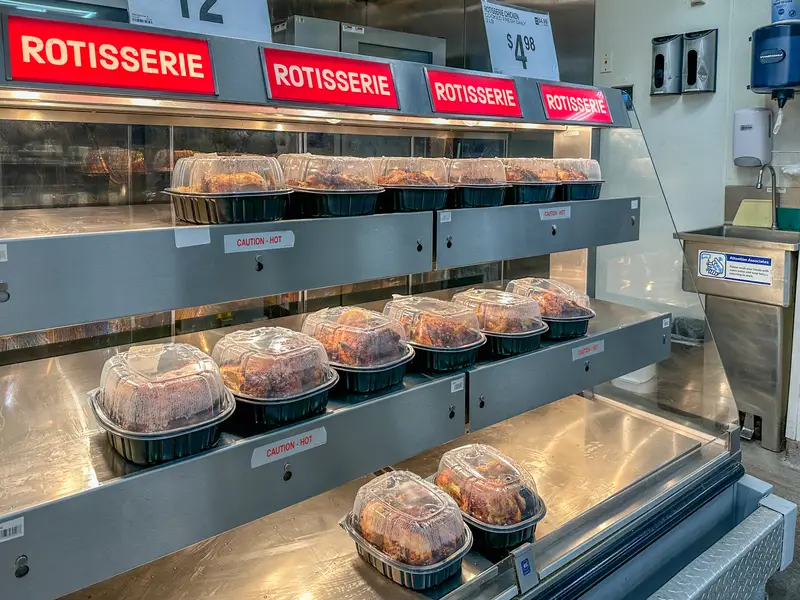
Rotisserie chickens are one of the greatest conveniences in American grocery shopping. For somewhere between five and eight bucks, you walk out with a fully cooked bird that can feed a family, stuff a week’s worth of sandwiches, or just get demolished standing over the kitchen counter at 9 p.m. on a Tuesday. No judgment.
But here’s the thing — not every rotisserie chicken deserves your money. Some of them have been sitting under heat lamps so long they’ve practically fossilized. Others were questionable before they even hit the rotisserie. And a few of them are flat-out telling you not to buy them, if you know what to look for. The signs are right there in front of you, printed on the skin, pooling in the container, wafting through the plastic. You just have to pay attention.
So before you autopilot one into your cart this week, here’s what should make you put it right back.
The Skin Color Is Off
This is the single easiest thing to check and the one most people ignore. A properly cooked rotisserie chicken should have a deep, golden-brown skin. That color tells you the bird spent enough time on the rotisserie to cook all the way through and develop that crispy, caramelized exterior everyone loves.
If the skin looks pale, pinkish, or just kind of… blond, that chicken may not have been fully cooked. And undercooked poultry isn’t just disappointing — it’s dangerous. We’re talking potential salmonella territory. On the flip side, if the skin looks dark brown to the point of being almost black in spots, that bird has been overcooking for a while and is going to taste like leather wrapped around sawdust.
The sweet spot is a rich, even golden-brown all over. If you can’t see the chicken well through the container, that’s its own kind of red flag — what are they hiding?
The Skin Is Cracking, Peeling, Or Hanging Loose
Good rotisserie chicken skin should be taut and intact, hugging the meat underneath. When you see skin that’s cracking, splitting apart, or sagging away from the body like a bad sunburn, that chicken has been sitting around way too long. The heat lamps and warming cases that stores use to keep these birds at serving temperature are slowly drying them out, and the skin is the first casualty.
Cracked skin also means dried-out meat underneath. The skin is supposed to act like a natural moisture barrier — once it gives up, the breast meat turns to chalk within an hour or two. If you’re at the store and the only chickens left have skin that looks like desert mud, you’re better off waiting for the next batch or making different dinner plans entirely.
There Is A Suspicious Pool Of Liquid In The Container
A tiny bit of liquid in the bottom of a rotisserie chicken container is normal. Chickens release juices — that’s just how meat works. But when you pick up that clamshell and see a concerning amount of liquid sloshing around, something isn’t right.
Excessive liquid can mean the chicken was injected with a salt solution or broth before cooking (a common practice to add weight and flavor), and it’s now weeping all that extra moisture out. It can also mean the chicken wasn’t cooked at the right temperature or was stored improperly. Either way, you’re paying for water weight and getting a bird that’s going to be soggy and bland instead of juicy and flavorful.
Here’s a quick test: tilt the container slightly. If the liquid moves like there’s a small pond in there, pass. A thin slick of juice is fine. A swimming pool is not.
It Smells Weird — Even A Little
A fresh rotisserie chicken should smell like exactly what it is: roasted chicken with herbs and seasoning. It should smell good enough to make you consider eating it in the car. If you crack open that container — or even just get close to it — and detect anything sour, funky, or just vaguely unpleasant, put it down immediately.
Off smells are your nose doing exactly what evolution designed it to do — warning you that this food has gone bad. The tricky part is that rotisserie chickens sit in sealed containers that can trap odors. Sometimes the smell hits you immediately. Other times you don’t notice until you get it home and open it up. If you’re in the store and you have any doubt, trust your nose over your hunger. An upset stomach isn’t worth the seven dollars you saved on dinner.
The Chicken Feels Slimy Or Sticky
This one requires you to actually handle the container a bit, but it’s worth checking. If you can feel through the packaging that the chicken has a slimy or sticky texture, that’s bacterial growth. Full stop. A fresh chicken should feel moist but clean to the touch. Sliminess is bacteria breaking down the surface of the meat, and stickiness often indicates the same process at a different stage.
Most people don’t think to check for this because the chicken is already cooked, so they assume it’s safe. But rotisserie chickens can absolutely go bad after cooking, especially when they sit in warming cases for hours on end. USDA guidelines say hot food should be kept above 140°F. If a store’s warming equipment isn’t up to spec — and let’s be honest, not every grocery store is running a tight ship — bacteria can start multiplying even on a cooked bird.
The Store Is Nearly Empty Of Chickens Late In The Day
If you walk into a grocery store at 7 or 8 p.m. and there are still several rotisserie chickens sitting in the warmer, ask yourself: how long have those been there? Most stores cook their chickens in batches throughout the day. The ones sitting there at closing time could easily be four, five, or even six hours old. That’s a long time for a cooked chicken to hang out under a heat lamp.
But here’s the flip side — if the store seems to have just one lonely chicken left at peak shopping time, like 5:30 p.m. on a weeknight, that bird has probably been picked over and passed up by other shoppers who saw something wrong with it before you did. The freshest chickens get grabbed fast. The sad, lone survivor in the warmer at rush hour is there for a reason.
There Is No Timestamp Or You Cannot Read It
Many grocery stores put a “prepared at” or “best by” sticker on their rotisserie chickens. This is your best objective tool for figuring out how fresh the bird actually is. If you can’t find a time stamp, or the label is smudged, torn, or conveniently covered by another sticker, be skeptical. A store that’s proud of its chicken turnover puts that time right where you can see it.
Generally, a rotisserie chicken is at its best within two hours of coming off the spit. After that, quality drops fast. After four hours in a warming case, you’re essentially buying dried-out chicken at fresh chicken prices. If the timestamp says 11 a.m. and you’re shopping at 6 p.m., do the math and walk away.
The Chicken Looks Too Small For The Price
Most rotisserie chickens at major chains like Costco, Walmart, and Kroger weigh around two to three pounds when cooked. If the bird in the container looks like it could be a Cornish game hen’s slightly older cousin, something’s up. Some stores use smaller birds to keep costs down while charging the same price, which means you’re getting less meat per dollar.
Also, a chicken that seems abnormally small may have lost a lot of moisture during an extended warming period. Chickens shrink as they dry out. So a small-looking bird might not have started small — it might have just been sitting there long enough to lose a significant percentage of its weight in evaporated juices. Either way, you’re paying more for less.
The Store Itself Gives You Pause
This goes beyond the chicken and into common sense territory, but it matters. Take a look around the deli area. Is the display case clean? Are the employees wearing gloves? Does the area smell reasonably appetizing, or does it have that stale, overworked fryer smell that suggests nothing back there has been fresh since the morning shift?
The conditions around the rotisserie chicken tell you a lot about how it was handled. A store with a grimy deli counter, sticky floors, and a general air of neglect is probably not rotating its chickens on a strict schedule or monitoring holding temperatures with any real diligence. If the deli section looks rough, your chicken was probably treated the same way.
When In Doubt, Just Ask
Seriously, this is the most underrated move in the grocery store. Walk up to the deli counter and ask when the next batch of chickens is coming out. Most stores will tell you, and some will even let you reserve one. You’ll get a bird that’s minutes out of the oven instead of hours, and the difference in taste and texture is enormous.
The rotisserie chicken is one of the best deals in any grocery store. But a bad one isn’t a deal at all — it’s dry, flavorless, and potentially unsafe. Spend an extra 30 seconds checking the skin, the liquid, the smell, and the timestamp. That tiny investment of attention is the difference between a great dinner and a regrettable one.
