

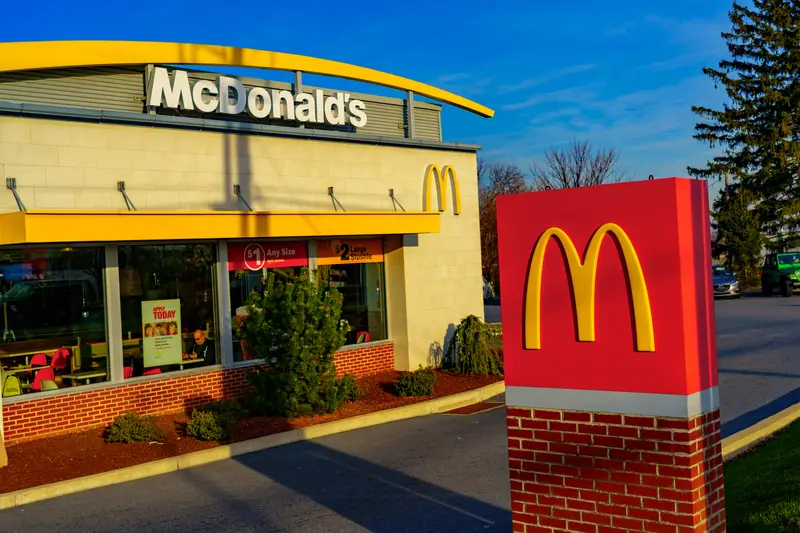
Imagine walking into McDonald’s for a quick bite and being asked to show your ID before ordering a burger. That’s exactly what’s happening at one location in Brooklyn, where anyone under 20 needs to bring a parent along just to get inside. The restaurant owner says it’s necessary because of ongoing problems with rowdy teenagers, but the policy has plenty of people wondering if this is really the right solution or just another confusing rule that doesn’t make much sense.
A Brooklyn McDonald’s now requires ID checks for young customers
The McDonald’s in Flatbush, Brooklyn has implemented what might be the strictest entrance policy ever seen at a fast food restaurant. Anyone who looks like they might be under 20 years old has to show identification before they can walk through the door. If they’re actually under 20, they can’t come in without a parent or guardian by their side. This means high school students who used to grab lunch there after class now need their mom or dad to tag along if they want those fries. The owner says this drastic step became necessary because groups of teenagers from nearby schools were causing serious trouble inside the restaurant.
According to the NYPD, police have been called to this location 29 times already this year. That’s a lot of incidents for one restaurant, and it explains why the owner felt something had to change. The franchise owner, who describes himself as a Brooklyn-born military veteran with over 30 years in the local business community, released a statement saying the ID requirement is meant to prioritize safety and security for everyone inside the restaurant. Three security guards now stand at the entrances, checking IDs and making sure the policy gets enforced.
Students were reportedly turning the restaurant into a fight club
The problems at this McDonald’s went way beyond typical teenage noise and rowdiness. Local customers described scenes that sound more like something from a movie than a place where families go to eat. One customer, Sania Bolasingh, told reporters that things got “very crazy” inside the restaurant, with teenagers jumping people, attacking delivery workers, and even going after the security guards. Another customer said she didn’t understand why people chose this particular McDonald’s as their fight location, but it made the whole experience unfair for regular customers who just wanted to eat their meals in peace.
Dorothy Brasier, another regular customer, painted an even more detailed picture of the chaos. She described teenagers as sneaky, snatching people’s belongings, and cursing constantly. She added that you couldn’t even say anything to them because the situation felt too unpredictable and potentially dangerous. The combination of theft, violence, and general mayhem created an atmosphere where paying customers felt threatened just trying to order a burger. It’s no wonder the owner decided something drastic needed to happen, even if the solution raised plenty of questions.
The policy isn’t actually being enforced consistently
Here’s where things get even more confusing. Despite all the signs posted about the age restriction and the presence of security guards at the doors, the policy doesn’t seem to get applied the same way every time. When reporters visited the location to see how things worked, they watched high school students walk right through the entrance without being stopped. One security guard even held the door open for a group of teenagers who clearly looked under 20. None of them were asked for identification, and none of them had parents with them. So much for the strict enforcement everyone was talking about.
The students themselves noticed the inconsistency too. One high schooler pointed out that they looked like regular customers just there to get food, so maybe that’s why nobody stopped them. Another student, Zehra Demrican, said it felt odd that the restaurant supposedly requires customers to be 20 or older, yet she walked right in without any questions. A third student mentioned that the age requirement started at 18 but then got raised to 20, which he noted isn’t even a significant age milestone for anything. The spotty enforcement makes the whole policy feel random and raises questions about whether it’s actually helping solve the problems or just creating confusion.
Most customers actually support the new restrictions
Despite the confusion about how and when the policy gets enforced, most of the regular customers who spoke with reporters said they think the age restriction is a good idea. They’ve witnessed the chaos firsthand and understand why the owner felt compelled to do something. These customers want a safe, peaceful place to eat their meals without worrying about fights breaking out or having their belongings stolen. They’re tired of the constant disruptions and appreciate that management is at least trying to address the problem, even if the solution isn’t perfect.
However, not everyone agrees that this approach is fair. One customer expressed concern that the policy punishes innocent teenagers who just want to come in and eat. She pointed out that it’s really only a few people choosing to cause trouble, but now all young people get treated like potential troublemakers. This tension between safety and fairness is at the heart of why so many people find the policy confusing and problematic. It raises bigger questions about how businesses should handle situations where a minority of customers create problems that affect everyone else.
Age restrictions at restaurants are extremely unusual
We’re all used to showing identification at bars, liquor stores, and places that sell age-restricted products. That makes sense because there are actual laws about who can buy alcohol and tobacco. But asking for ID at a fast food restaurant? That’s something most people have never encountered before. McDonald’s is supposed to be a family-friendly place where anyone can grab a quick meal. The idea that you might be too young to buy a Happy Meal without parental supervision sounds absurd on its face, which is exactly why this policy has so many people scratching their heads.
There’s no law that says restaurants can’t set their own age policies for entry. Private businesses generally have the right to decide who they serve, within certain legal limits. But that doesn’t mean the policy makes sense or that other McDonald’s locations will start copying it. This appears to be a unique response to a specific problem at one particular restaurant. Still, it sets an interesting precedent and raises questions about where we draw the line between safety measures and discrimination based on age. After all, plenty of responsible 18- and 19-year-olds would never dream of causing the kind of trouble that led to this policy.
Security guards at fast food restaurants signal bigger problems
The fact that this McDonald’s now employs three security guards just to monitor who comes through the door says a lot about how serious the situation became. Most fast food restaurants don’t need any security personnel at all, let alone three guards working at the same time. The presence of this much security transforms the whole experience of visiting the restaurant. Instead of a casual, welcoming atmosphere, it now feels more like entering a nightclub or a high-security building. That’s not exactly the vibe most people want when they’re just trying to grab lunch.
The security guards represent a significant expense for the franchise owner, too. Paying three people to stand at the doors and check IDs all day long costs serious money. The owner must have decided that this expense was worth it compared to the alternative of continuing to deal with constant fights, theft, and police calls. But it also means the restaurant is operating very differently from a typical McDonald’s. Customers who visit other locations and then come to this one are bound to notice the difference and wonder what’s going on. The heavy security presence itself sends a message that this place has had serious problems.
Other businesses might start copying this approach
If this Brooklyn McDonald’s succeeds in reducing problems with its age restriction policy, other restaurants and businesses dealing with similar issues might decide to try the same thing. There are plenty of locations around the country where groups of teenagers congregate and sometimes cause trouble. Mall food courts, pizza places near high schools, and other fast food restaurants could potentially implement similar policies if they’re struggling with the same kinds of problems. That would represent a significant shift in how these businesses operate and how young people experience public spaces.
On the other hand, if the policy proves ineffective or creates too much backlash, it might remain an isolated experiment that other businesses avoid. The inconsistent enforcement we’ve already seen suggests the policy might be harder to implement than it sounds. Security guards would need clear guidelines about who to stop and who to let through, and they’d need to be prepared for arguments and confrontations with customers who feel unfairly targeted. The potential for discrimination claims also exists if the policy gets applied unevenly based on how young someone looks rather than their actual age.
School administrators should probably get involved
Since the problems reportedly involve students from nearby schools, it seems like school administrators should play a role in addressing the situation. If students are leaving school grounds and causing havoc at a local business, that reflects poorly on the schools and creates problems for the whole community. Schools could potentially identify students involved in fights or theft at the McDonald’s and apply appropriate disciplinary measures. They could also work with the restaurant owner to find solutions that don’t require such a broad policy that affects all young people.
Some schools have policies about student behavior off campus, especially during school hours or at school-related events. While a McDonald’s visit after school might not fall directly under school jurisdiction, administrators still have an interest in how their students behave in the community. A collaborative approach between the school district, the restaurant owner, and local police might produce better results than just posting security guards at the door. Education and targeted consequences for actual troublemakers would address the root cause instead of just treating all teenagers as potential problems.
The real solution might need to be more creative
While the age restriction policy gets attention because it’s so unusual, it might not actually be the most effective way to solve the problem. Other approaches could include better camera systems to identify troublemakers, closer coordination with police to press charges against people who commit crimes on the property, or even redesigning the restaurant layout to reduce opportunities for fights and theft. Some restaurants have found success with policies like requiring all customers to place orders and leave rather than lingering in the dining area during certain hours.
The owner could also consider working with community organizations to understand why this particular location became such a problem spot. Are there tensions between different school groups that spill over into the restaurant? Is there a lack of other places for teenagers to hang out in the neighborhood? Understanding the underlying causes might lead to solutions that actually prevent problems instead of just trying to keep certain people out. A policy that makes innocent customers feel unwelcome probably isn’t the long-term answer, even if it provides some short-term relief from the chaos.
The Brooklyn McDonald’s age restriction policy shows how complicated it can get when businesses try to balance safety with fairness. While the owner clearly faced serious problems that needed addressing, the solution of keeping out everyone under 20 raises concerns about fairness and practicality. The inconsistent enforcement makes things even murkier. This situation will likely continue generating debate about the best ways to handle disruptive behavior without punishing people who haven’t done anything wrong. Whatever happens at this location could influence how other businesses approach similar challenges.
