

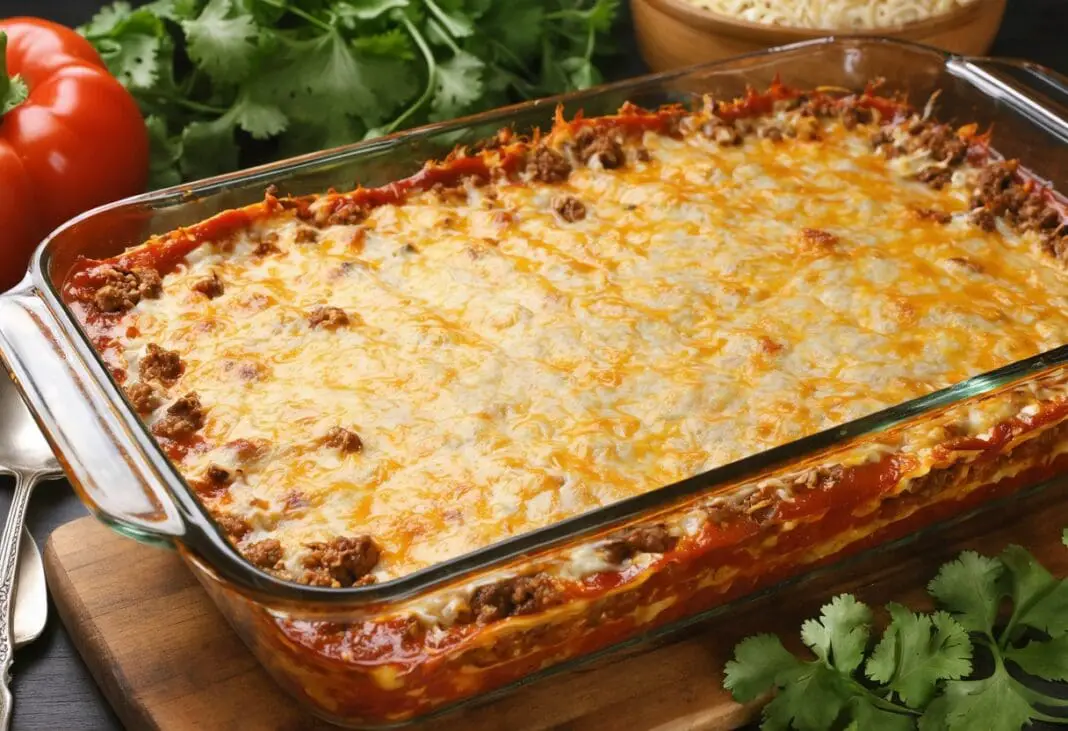
Picture this: it’s Tuesday night, everyone’s hungry, and the fridge is staring back at you with a few random ingredients that don’t seem to go together. Sound familiar? Most families face this exact scenario at least three times a week, yet we keep scrambling for solutions instead of having a reliable go-to recipe that actually works. This enchilada casserole changes everything because it transforms basic pantry staples into something that tastes like you spent hours in the kitchen when you really spent about ten minutes.
Everyone thinks enchiladas are too complicated
Traditional enchiladas require rolling each tortilla individually, which means standing at the counter for ages getting your hands messy and probably burning your fingers on hot tortillas. Most people avoid making them because the process feels overwhelming when you’re already tired from a long day. The rolling, the sealing, the careful placement in the pan – it’s enough to make anyone order takeout instead.
This casserole approach eliminates all that fussy work by treating it like lasagna instead. You simply layer everything – tortillas, filling, sauce, cheese – and let the oven do the work. The end result tastes exactly like traditional enchiladas but requires about one-tenth of the effort and cleanup.
Most people overthink the ingredient list
Walk down any grocery store’s Mexican food aisle and you’ll find dozens of different sauces, cheese blends, and specialty ingredients that seem essential for “authentic” Mexican food. The truth is, this recipe works perfectly with whatever you already have or can easily find at any regular supermarket. You don’t need to hunt down exotic ingredients or spend extra money on premium brands.
The basic version calls for corn tortillas, enchilada sauce, black beans, corn, and shredded cheese – ingredients most families keep on hand anyway. Even store-bought rotisserie chicken works perfectly if you want to add protein. The beauty lies in its flexibility rather than strict adherence to specific brands or specialty items.
The layering technique actually matters more than you think
Many home cooks assume layering is just throwing ingredients in a pan randomly, but the order and distribution make a huge difference in the final result. Starting with sauce on the bottom prevents sticking and ensures even moisture distribution throughout the casserole. Each layer needs to be spread evenly so every bite contains the same ratio of ingredients.
The tortillas should overlap slightly but not be stacked on top of each other, which would create soggy spots. Cutting them in half makes them easier to arrange and ensures better coverage. The cheese distribution is particularly important – save some for the top layer to get that golden, bubbly finish that makes the dish look as good as it tastes.
Corn tortillas beat flour tortillas every single time
Flour tortillas might seem like the obvious choice since they’re softer and more pliable, but they turn into a soggy mess when baked in a casserole. They absorb too much liquid and lose their structure completely, creating an unappetizing mushy texture that nobody wants to eat. Corn tortillas hold their shape much better and provide the right amount of chew.
The key is using regular corn tortillas, not the ultra-thin ones that fall apart when you look at them sideways. Standard grocery store corn tortillas work perfectly – they soften just enough to be tender but maintain enough structure to support all the other ingredients. Some recipes suggest lightly frying them first, but honestly, that’s just extra work for minimal benefit.
Green sauce works better than red sauce
Red enchilada sauce often contains more tomatoes, which can make the casserole watery as it bakes and the tomatoes release their liquid. Green enchilada sauce typically has a thicker consistency and more complex pepper-based flavor that holds up better during the longer baking time. The green sauce also doesn’t compete with other ingredients as much.
Many successful versions combine green enchilada sauce with salsa verde for extra depth and slight heat variation. This combination creates layers of flavor without overwhelming the other ingredients. If you absolutely must use red sauce, choose a thicker variety and consider reducing the liquid by simmering it on the stove for a few minutes before assembly.
The resting period is not optional
Every recipe tells you to let the casserole rest after baking, and most people ignore this step because they’re hungry and it looks ready. This is a mistake that results in a sloppy, sauce-everywhere mess when you try to cut and serve it. The resting time allows the layers to set and the excess liquid to redistribute properly.
Ten to fifteen minutes is the sweet spot – long enough for everything to settle but not so long that it gets cold. During this time, the cheese firms up slightly, the tortillas finish absorbing excess moisture, and everything holds together when you cut into it. Use this time to prepare your garnishes or side dishes instead of staring impatiently at the casserole.
Leftovers taste better than the original
Unlike many casseroles that turn soggy or lose their appeal after a day in the fridge, enchilada casserole actually improves with time. The flavors meld together overnight, creating a more cohesive taste throughout every layer. The tortillas absorb more sauce while maintaining their texture, and reheating is incredibly simple.
Individual portions reheat beautifully in the microwave for quick lunches, or you can warm larger portions in the oven covered with foil. Some people actually prefer eating it cold straight from the fridge, especially during hot weather. The casserole stays good for up to four days refrigerated, making it perfect for meal prep or feeding families throughout the week.
Doubling the recipe is easier than making two separate batches
If you’re going through the trouble of making this casserole, making a larger batch requires almost no additional effort but provides meals for days or an easy freezer option. Use a full-size lasagna pan instead of the smaller 7×11 dish, and simply double all the ingredients. The assembly process stays exactly the same.
A double batch feeds a large family dinner plus provides several days of leftovers, or you can split it between two pans and freeze one for later. Frozen casseroles keep for up to three months and can be baked directly from frozen – just add about 20 extra minutes to the cooking time and keep it covered until the last 10 minutes.
The toppings make or break the final dish
Plain enchilada casserole is good, but the right toppings transform it into something special that looks restaurant-quality. Fresh cilantro adds brightness and color, while diced tomatoes provide a fresh contrast to all the cooked ingredients. Avocado or guacamole adds richness and helps cool down any heat from the sauce.
Sour cream, lime wedges, and pickled jalapeños are classic additions that let each person customize their portion. Hot sauce fans can add extra heat, while kids might prefer just cheese and sour cream. Setting up a simple topping bar makes everyone happy and turns a basic weeknight dinner into something that feels more special and interactive.
This enchilada casserole proves that the best family recipes are often the simplest ones that work consistently every time. When you find something that uses common ingredients, comes together quickly, and actually tastes better as leftovers, you’ve found a keeper that will serve your family well for years to come.
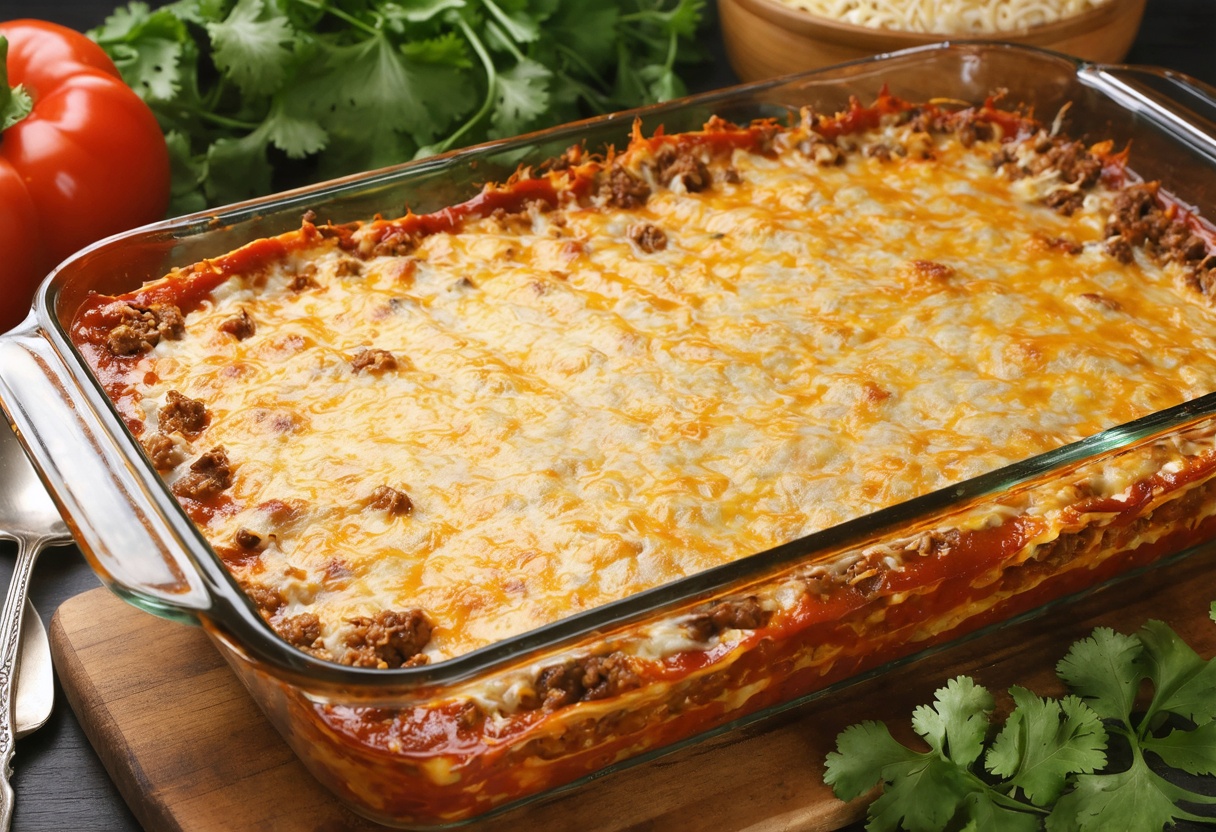
Easy Enchilada Casserole
Course: Dinner6
servings10
minutes40
minutes350
kcalThis layered enchilada casserole delivers all the flavors of traditional enchiladas with a fraction of the work – perfect for busy weeknight dinners.
Ingredients
Olive oil spray or olive oil for greasing
1½ cups green enchilada sauce
8 corn tortillas, cut in half
1 (15-ounce) can black beans, drained
1-2 cups corn kernels (fresh, frozen and thawed, or canned and drained)
10 ounces shredded cheese (cheddar, Monterey Jack, or Mexican blend)
Optional: 2 cups cooked shredded chicken
Fresh cilantro for garnish
Optional toppings: sour cream, diced tomatoes, avocado, lime wedges
Directions
- Preheat the oven to 375°F and grease a 7×11-inch baking dish with olive oil spray or oil. This smaller size ensures the layers stay thick and cohesive. If you only have a larger dish, consider doubling the recipe for better results.
- Prepare the tortillas by spraying or brushing each one with olive oil on both sides, then stack and cut in half. For extra flavor, you can lightly fry each tortilla in oil for 30 seconds per side, but the oil spray method works perfectly fine for busy weeknights.
- Pour ½ cup of enchilada sauce in the bottom of the prepared dish and tilt to distribute evenly. This prevents sticking and ensures every layer gets proper moisture distribution throughout the baking process.
- Arrange 5-6 tortilla halves to cover the bottom layer, overlapping slightly as needed. Don’t worry about perfect coverage – this isn’t an exact science. Distribute half the beans and half the corn over the tortillas, then sprinkle with one-third of the cheese.
- Add another layer of tortilla halves, then ½ cup of sauce, the remaining beans and corn, and half of the remaining cheese. If using chicken, divide it between this layer and the previous layer for even distribution.
- Top with the final layer of tortilla halves, remaining sauce, and remaining cheese. Cover tightly with foil that’s been sprayed with oil to prevent the cheese from sticking when you remove it later.
- Bake covered for 30 minutes, then remove the foil and bake for an additional 10 minutes until the casserole is bubbling around the edges and the cheese is golden brown. The total baking time ensures the tortillas soften properly while maintaining structure.
- Let the casserole rest for 10-15 minutes before cutting and serving. This crucial step allows the layers to set properly and prevents a saucy mess when serving. Garnish with fresh cilantro and serve with your favorite toppings.
Notes
- This recipe doubles easily – use a full-size lasagna pan and double all ingredients for a crowd-pleasing meal
- Canned corn works fine as a substitute for fresh or frozen – just drain it first
- Leftovers keep for up to 4 days in the refrigerator and reheat beautifully in the microwave
- For meal prep, assemble the casserole up to 8 hours ahead and refrigerate before baking
- Red enchilada sauce can be substituted, but green sauce typically has better consistency for layered dishes
Frequently asked questions
Q: Can I make this casserole ahead of time?
A: Yes, you can assemble the entire casserole up to 8 hours ahead and keep it refrigerated before baking. The tortillas will soften more than if baked immediately, but the taste remains excellent. You can also freeze the assembled casserole for up to 3 months – just thaw overnight in the refrigerator before baking and add 10-15 extra minutes to the cooking time.
Q: What’s the best cheese to use for this recipe?
A: A combination of Monterey Jack and cheddar works perfectly, but any good melting cheese will do the job. Mexican cheese blends from the grocery store are convenient and designed for this type of dish. Avoid using only mozzarella as it can make the casserole too stringy, and skip pre-shredded cheese if possible since it doesn’t melt as smoothly as freshly grated cheese.
Q: Why did my casserole turn out watery?
A: This usually happens when you skip the resting period after baking or use ingredients with too much moisture. Make sure to drain your beans and corn thoroughly, and if using canned corn, pat it dry with paper towels. Also, some enchilada sauces are thinner than others – if yours seems watery, simmer it on the stove for a few minutes to reduce before using.
Q: Can I use flour tortillas instead of corn tortillas?
A: While corn tortillas are strongly recommended because they hold their structure better, you can use flour tortillas in a pinch. Choose the thicker, burrito-size ones rather than thin sandwich wraps, and expect a softer, more bread-like texture. The casserole may need a few extra minutes of uncovered baking time to help excess moisture evaporate.
