

Ever crack an egg into your pan only to get hit with that unmistakable rotten smell? That moment when you realize you’ve just wasted perfectly good ingredients because you didn’t catch the warning signs earlier. Most people rely on expiration dates or basic sniff tests, but eggs can fool you with their opaque shells hiding what’s really going on inside. The good news is that eggs give off plenty of visual and physical clues before they reach that dreaded sulfur-bomb stage, and knowing what to look for can save you from some seriously unpleasant cooking disasters.
Floating eggs are definitely past their prime
The classic water test remains one of the most reliable methods for checking egg freshness without cracking the shell. When you place a fresh egg in a bowl of cold water, it sinks straight to the bottom and lies flat on its side. This happens because fresh eggs have very small air pockets inside. As eggs age, moisture evaporates through the porous shell, and the air pocket inside grows larger and larger.
If your egg floats completely to the surface, it’s definitely spoiled and should go straight into the trash. Eggs that stand upright or tilt at an angle are older but might still be usable for hard-boiling, though they won’t be great for scrambling or frying. The float test works because that expanding air bubble eventually becomes so large that it makes the entire egg buoyant enough to rise to the water’s surface.
Cracked shells with strange colors spell trouble
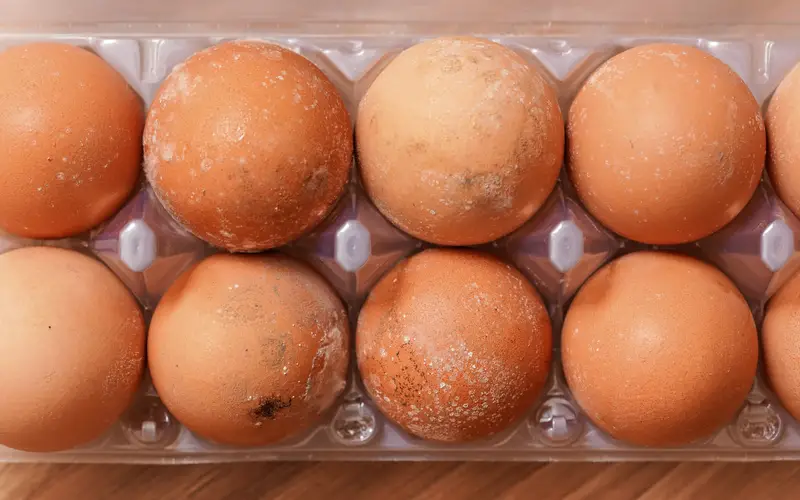
While it’s tough to judge an egg’s freshness just by looking at the shell, certain visual cues on the outside definitely signal problems. Cracks in the shell create perfect entry points for bacteria, and eggs with visible cracks should never be purchased or used. Even hairline cracks that seem minor can allow harmful bacteria like salmonella to penetrate the protective shell barrier.
Discoloration on the shell, especially dark spots, slimy patches, or unusual staining, indicates bacterial growth or contamination. Fresh egg shells should look clean and uniform in color, whether they’re white or brown. Any eggs showing these warning signs should be discarded immediately, as the risk of food poisoning simply isn’t worth taking. When shopping, always inspect eggs in the carton before buying to avoid bringing home potentially contaminated products.
Sloshing sounds when you shake them
Here’s a simple test that might surprise you – gently shake an egg near your ear and listen carefully. A fresh egg will be virtually silent because the thick whites hold everything in place, preventing movement inside the shell. The proteins in fresh egg whites are still strong and gel-like, creating a stable environment that doesn’t allow for much internal motion when the egg moves.
Old or spoiled eggs make a distinct sloshing or watery sound when shaken because the proteins have broken down over time. The shake test reveals this breakdown – you’ll hear the contents moving around freely inside the shell. Temperature fluctuations speed up this protein breakdown, which is why storing eggs in the refrigerator door (where temperatures change frequently) isn’t recommended. If you hear that telltale sloshing, the egg has definitely seen better days.
Flat yolks that spread everywhere
When you crack a fresh egg onto a plate, the yolk should stand up tall and proud, maintaining its round shape without spreading out. The yolk membrane in fresh eggs is strong enough to hold everything together, creating that perfect dome shape that’s ideal for frying or poaching. Fresh yolks also display vibrant colors – bright yellow to deep orange depending on the hen’s diet.
Spoiled eggs tell a completely different story when cracked open. The yolk will be flat, possibly discolored, and may even break apart immediately upon cracking. Instead of that beautiful dome shape, you’ll see a pancake-flat yolk that spreads across the plate. This happens because the protective membrane around the yolk weakens with age and bacterial action. If the yolk looks dull, grayish, or has any unusual colors, that egg needs to go in the garbage immediately.
Watery whites that won’t stay together
Fresh egg whites have a thick, almost gel-like consistency that stays relatively close to the yolk when cracked onto a flat surface. You should see two distinct layers – a thicker inner white that hugs the yolk, and a thinner outer layer that doesn’t spread too far. This thick consistency is what makes fresh eggs perfect for poaching, as the whites hold together nicely in the hot water.
Old or bad eggs have whites that spread out like water across your plate or pan. The proteins have broken down, losing their ability to maintain structure and thickness. These runny whites won’t whip properly for meringues or other recipes requiring beaten egg whites. When egg whites become this thin and watery, it’s a clear sign that the egg is past its prime and potentially unsafe to eat, even if it doesn’t smell bad yet.
Murky appearance when held up to light
The candling method involves shining a bright light through the egg to see what’s happening inside without cracking it open. Use your phone’s flashlight in a dimly lit kitchen, holding the egg up to the light source. Fresh eggs appear relatively clear with well-defined features – you can usually make out the air cell at the wider end and sometimes even see the yolk’s shadow.
Bad eggs look cloudy, murky, or completely opaque when candled, making it impossible to distinguish the yolk from the white. The contents appear mixed together or show dark spots that indicate bacterial growth or decomposition. This cloudiness happens because bacteria and decomposition create particles that scatter light, preventing you from seeing through the egg clearly. If the egg looks like muddy water when held up to light, it’s definitely time to toss it.
Sulfur smell hits before you even crack it
While most people think you need to crack an egg to smell if it’s bad, seriously spoiled eggs can actually emit odors right through the shell. Fresh eggs in their shells should have no smell whatsoever – if you’re picking up any scent from an uncracked egg, that’s already a red flag. The shell is porous, and strong odors from decomposition can seep through.
That classic rotten egg smell comes from hydrogen sulfide gas produced by bacteria breaking down the proteins inside. Even a faint whiff of this sulfuric odor means the egg is unsafe to eat. Some people describe it as smelling like sewage or natural gas. Trust your nose on this one – if something smells off about an egg, even slightly, it’s better to err on the side of caution and throw it away rather than risk food poisoning.
Expired dates tell the obvious story
The simplest way to avoid bad eggs is checking those dates printed on the carton before you buy and again before you use them. Most egg cartons show both a “best by” date and sometimes a Julian date – a three-digit number indicating the exact day the eggs were packaged. The best-by date is typically calculated as six weeks from the packing date, giving you a clear timeline for freshness.
Don’t assume eggs are automatically bad the day after the printed date – they might still be fine for a few days beyond if stored properly in the refrigerator. However, eggs that are weeks past their expiration date are definitely risky. Proper storage in the original carton, in the coldest part of your fridge (not the door), helps eggs stay fresh longer. When in doubt about older eggs, use the other tests mentioned to double-check before cooking.
Hard-boiled eggs show different warning signs
Hard-boiled eggs follow different rules than raw eggs because cooking removes the protective coating on the shell, making them more vulnerable to bacteria. A spoiled hard-boiled egg might develop a slimy or sticky feeling on the shell, or show discolored spots that weren’t there when freshly cooked. The shell might also feel unusually soft or have an off odor.
When you peel a bad hard-boiled egg, the white might appear grayish, slimy, or have an unusual texture instead of that firm, clean white you expect. The yolk could be discolored, have a chalky texture, or emit an unpleasant smell. Hard-boiled eggs only last about a week in the refrigerator when kept in their shells, or five days when peeled, so they spoil much faster than raw eggs. Always refrigerate them within two hours of cooking to prevent rapid bacterial growth.
Nobody wants to deal with spoiled eggs, but knowing these warning signs helps you catch problems before they ruin your recipe or make you sick. Keep your eggs properly stored in their original carton, check them using these simple tests when in doubt, and trust your senses – they’re usually right about food safety. The few seconds it takes to test an egg can save you from a very unpleasant cooking experience.
