

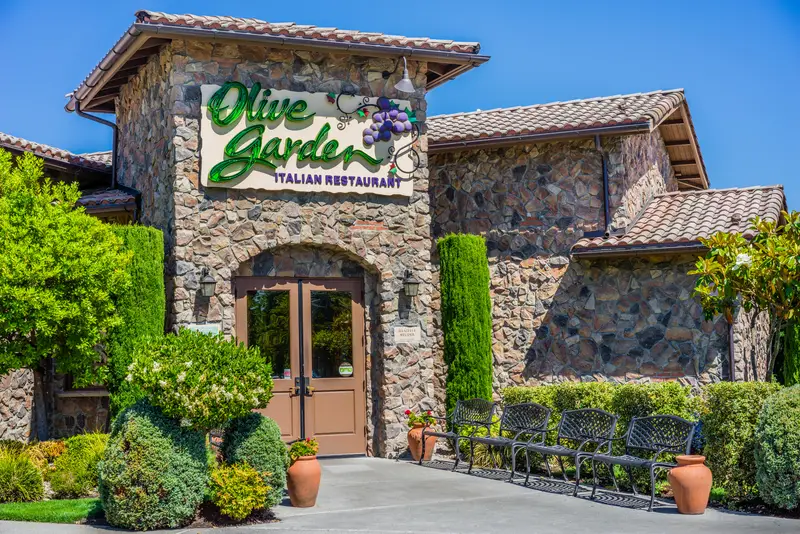
Olive Garden promises to treat customers like family, but some family members are more difficult than others. While most diners enjoy their pasta peacefully, a select few create moments so bizarre that servers share the stories for years. These aren’t your typical “hold the onions” requests – these are the dining experiences that make servers question reality itself and wonder if they’ve accidentally stepped into a restaurant simulation gone wrong.
Customers demand heated salad treatment
Picture this: a customer orders a fresh garden salad, takes one bite, and immediately complains that the lettuce is too cold. Not just chilly, but apparently arctic-level freezing according to their taste buds. What happens next defies all logic – the server reluctantly takes the salad to the kitchen and microwaves it until the greens wilt into submission.
The strangest part? Once other customers witness this warm salad phenomenon, they start requesting the same treatment. It spreads like a food trend nobody asked for, creating a small army of heated lettuce enthusiasts. Servers find themselves making regular trips to the microwave with perfectly good salads, watching crisp vegetables transform into soggy disappointment. It’s enough to make any food lover shed a single, perfectly temperature-controlled tear.
Never-ending deal creates endless problems
The famous unlimited soup, salad, and breadsticks sounds like a dream for hungry customers but becomes a nightmare for servers. These marathon eaters settle in for what feels like a competitive eating event, demanding constant refills while occupying tables for hours. They turn a quick lunch into an all-day affair, treating the restaurant like their personal kitchen with unlimited room service.
The financial reality hits hard when servers realize they’re earning pennies per hour of service. An $8 lunch tab with a standard 10% tip means 80 cents for potentially hours of constant refilling. Meanwhile, servers sprint between the kitchen and the table more times than a cross-country runner, all while maintaining that signature Olive Garden smile that’s starting to feel a bit forced.
Breadstick hoarding reaches new levels
Some customers treat the breadstick basket like a personal treasure chest, grabbing multiple pieces before others at their table get any. These breadstick hoarders stash extras in napkins like they’re stockpiling for an apocalypse. Others attempt elaborate negotiation tactics, offering to trade menu items or slip servers extra cash for additional baskets.
The official policy allows one breadstick per person plus one for the table, but some customers push every boundary imaginable. They ask for breadsticks before ordering anything, demand to-go containers filled with extras, or try claiming the “unlimited” policy extends to takeout. Servers become unwilling referees in breadstick battles, enforcing rules that somehow need explanation to grown adults who should understand basic restaurant etiquette.
Pasta substitutions turn completely bizarre
Olive Garden’s pasta dishes become launching pads for some truly creative customer interpretations. Servers report requests for fettuccine Alfredo served over French fries instead of noodles, or customers who insist on replacing spaghetti with strips of bell peppers. These “improvements” transform classic dishes into science experiments that would puzzle even the most adventurous chefs.
The deconstructed pasta movement takes things even further into strange territory. Customers request all components served separately – sauce in one bowl, pasta in another, cheese and toppings on individual plates. It’s like ordering a build-your-own pasta kit instead of a prepared meal. Servers wonder if they’re suddenly working at an interactive cooking class rather than a traditional restaurant.
Table checking becomes major complaint
Olive Garden requires frequent table visits, but some customers find this attention overwhelming rather than helpful. One viral complaint featured a customer upset about eight check-ins during her meal, calling the service excessive and intrusive. She filmed her frustration without realizing servers face strict corporate mandates about table visits or risk disciplinary action.
Company policy demands 7-8 table touches during lunch and 9-10 during dinner shifts. Servers must stop at every table in their section during each pass through the dining room, regardless of whether customers appear busy or engaged in conversation. It’s not a personal choice but survival – failing to meet these requirements results in write-ups and potential job loss. The system creates a lose-lose situation where servers annoy customers by following rules or face punishment for ignoring them.
Finger snapping and demands escalate
Nothing destroys a server’s mood faster than customers who snap their fingers for attention or treat staff like personal servants. These behaviors communicate that someone believes their needs trump everyone else’s dignity. Servers juggle multiple tables simultaneously while maintaining professional composure, even when customers act like they’re the restaurant’s only occupants.
The single-request marathon makes things exponentially worse. Customers send servers on separate trips for ranch dressing, extra napkins, different utensils, more ice, and whatever else randomly occurs to them throughout the meal. Each individual journey could have been combined into one efficient trip, but that would require basic consideration for another person’s time and energy – concepts apparently foreign to some diners.
Free food attempts get shut down
Some customers attempt to game the system by sitting down and expecting free breadsticks without ordering actual food. Servers must explain that unlimited policies require purchasing an entree, not just occupying space. These freeloading attempts happen frequently enough that restaurants maintain strict enforcement policies to prevent exploitation.
When servers enforce these basic business rules, some customers become indignant and refuse to tip entirely. They act shocked that restaurants expect payment for food and service, creating awkward confrontations where servers must explain elementary economics to adults. The situation becomes especially absurd when these same customers never intended to order legitimate meals anyway, making their outrage purely performative.
False praise leads to terrible tips
The most emotionally damaging customers are those who heap praise while delivering insulting tips. One server shared how customers gushed about her excellent service, promising to “take good care” of her before leaving $6 on a $134 bill. These false promises cut deeper than honest stinginess because they add mockery to financial injury.
Servers depend on tips to survive since most states allow restaurants to pay tipped workers around $2.13 per hour. When customers tip based on discounted meal prices rather than actual service quality, servers struggle financially despite working harder than standard tables. It’s a broken system that punishes excellent service with poverty wages while customers walk away feeling generous about their pathetic contributions.
The next time warm breadsticks hit your table, remember the servers navigating this daily circus of bizarre requests and entitled behavior. They deserve patience, respect, and tips that reflect their actual efforts rather than your discounted bill total. And please, order your vegetables at their intended temperature – the microwave has suffered enough.
