

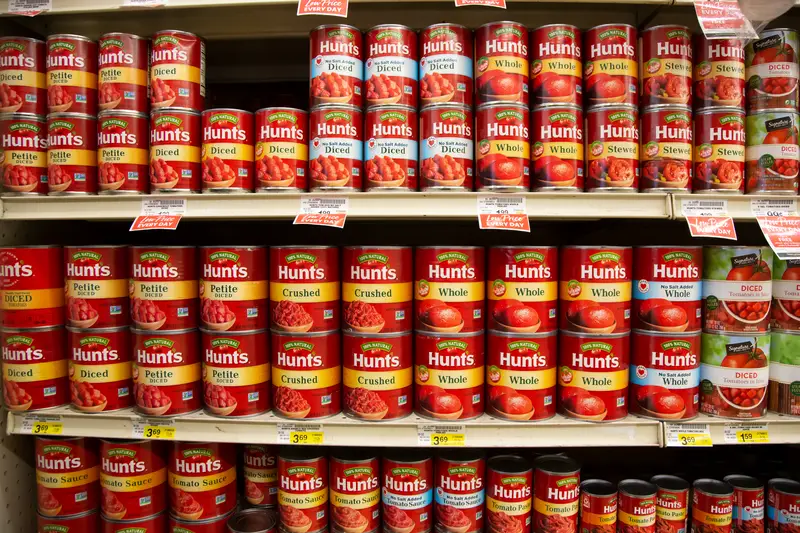
That $2.99 can of “premium” tomatoes sitting in your pantry might be the reason your homemade pasta sauce tastes bland and watery. Multiple food experts recently tested dozens of popular canned tomato brands, and the results will make you think twice about grabbing whatever’s on sale. Some of the biggest names in the grocery aisle performed so poorly that testers actually checked expiration dates, thinking the products had gone bad.
Hunt’s tomato sauce tastes like pure salt water
Hunt’s landed at the bottom of multiple taste tests, and for good reason. Their tomato sauce contains so much sodium that food experts described it as making “a pufferfish pucker.” The overwhelming saltiness completely masks any tomato taste, leaving home cooks with an unusable product that requires heavy dilution. Even worse, the consistency resembles watery soup rather than the thick, rich sauce most recipes need.
Despite Hunt’s marketing claims about using “all-natural, vine-ripened tomatoes,” the final product fails basic quality standards. Professional testers found the thin texture completely inadequate for cooking applications. The brand’s 1888 heritage and sustainable practices don’t matter much when the actual taste ruins dishes. Home cooks end up wasting money on a product that requires so much doctoring with additional ingredients that starting from scratch would be easier.
Contadina’s fake sweetness smells like chemicals
Contadina’s whole peeled tomatoes create such a concerning chemical aroma that taste testers actually double-checked expiration dates, suspecting spoilage. The artificial sweetness overwhelms any natural tomato taste, creating an unbalanced product that requires heavy seasoning adjustments. The tomatoes float in murky liquid that looks nothing like the bright, clean appearance expected from quality canned tomatoes.
The brand’s crushed tomatoes present additional problems with bitter peels that require straining, which removes valuable pulp and defeats the convenience factor. Food experts found that despite containing only natural fruit sugars, Contadina tastes unnaturally sweet. This 100-year-old company’s non-GMO and non-BPA practices can’t compensate for poor taste execution. Home cooks end up with tomatoes that need so much salt and seasoning to balance the fake sweetness that the original product becomes unrecognizable.
Signature SELECT tastes too sour for most recipes
Safeway’s store brand Signature SELECT Petite Diced Tomatoes delivers significantly higher acidity than competitors, creating an unpleasantly sour taste that dominates dishes. The bland base notes provide no balance to offset the sharp acidity, leaving home cooks with tomatoes that overpower other ingredients. At $2.09 per can, this represents particularly poor value when better alternatives cost less.
The ingredient list appears standard with tomatoes, tomato juice, sea salt, calcium chloride, and citric acid, but the execution falls short of expectations. Comprehensive testing revealed that the excessive acidity makes these tomatoes difficult to incorporate into balanced recipes without significant modification. Store brands often provide excellent value, but Signature SELECT proves that not all private labels deliver quality. The sour taste profile works against most home cooking applications where balanced acidity supports rather than dominates other ingredients.
Kroger diced tomatoes look pale and taste unripe
Kroger’s diced tomatoes disappoint with pale coloring and firm texture that suggests premature harvesting and canning. Despite claims of same-day harvest and processing, these tomatoes lack the farm-fresh taste and vibrant appearance that characterize quality canned products. The under-ripe taste profile creates an unpleasant eating experience that no amount of seasoning can fully correct.
At $1.09 for 14.5 ounces, the low price initially seems attractive, but the poor quality makes this a false economy. Professional evaluations found that Kroger’s tomatoes appeared canned before reaching proper ripeness. The pale orange color instead of rich red signals problems with the source tomatoes or processing methods. Home cooks seeking budget-friendly options can find better alternatives that don’t sacrifice taste and appearance for slightly lower prices.
Red Gold feels stringy and looks unnaturally orange
Red Gold whole peeled tomatoes suffer from overly firm, stringy texture that creates an unpleasant mouthfeel in finished dishes. The pale orange coloring lacks the vibrant red appearance that signals properly ripened tomatoes. This texture problem particularly affects smooth sauces and soups where the stringy consistency becomes noticeable and off-putting to diners.
While the $1.96 price for 28 ounces offers good value and the non-BPA liner provides packaging benefits, these advantages can’t overcome fundamental quality issues. Taste testing revealed that Red Gold tomatoes taste under-ripe, similar to other poorly ranked brands. The company’s focus on value pricing appears to come at the expense of proper tomato selection and processing. Home cooks end up with tomatoes that require additional processing steps like straining or extended cooking to achieve acceptable texture in finished recipes.
Muir Glen costs too much for average taste
Muir Glen Organic Petite Diced Tomatoes actually deliver superior taste with balanced, slightly sweet notes and moderate acidity levels. These Northern California tomatoes live up to their “sun-kissed and vine-ripened” marketing claims, providing the kind of quality home cooks expect from premium brands. The organic certification and careful sourcing show in the final product’s clean taste profile.
However, the $2.99 price tag for a 14-ounce can creates poor value when comparable or better alternatives cost significantly less. Value analysis shows that while Muir Glen offers good quality, the premium pricing isn’t justified by proportionally better performance. Home cooks paying nearly twice the price of other quality options expect exceptional results, not just above-average ones. The organic certification appeals to some shoppers, but budget-conscious families can achieve similar cooking results with less expensive alternatives that offer better price-to-performance ratios.
Good & Gather works fine but won’t impress guests
Target’s Good & Gather brand offers exceptional value at $1.89 for a 28-ounce can, delivering well-balanced sweetness and acidity that works across various cooking applications. Customer reviews consistently praise their versatility for everything from soups and chili to international dishes. The tomatoes taste properly ripened with pleasant acidity levels that support rather than dominate other recipe ingredients.
The main limitation comes when preparing dishes meant to impress dinner guests or special occasions. Customer feedback indicates these tomatoes work well as kitchen staples for everyday cooking but lack the premium quality needed for showcase recipes. One reviewer noted they “always taste ripe, sweet but with pleasant acidity,” highlighting their reliability for routine meal preparation. Home cooks seeking consistent, affordable performance for family meals will find Good & Gather perfectly adequate, but those planning impressive dinner parties might want to invest in higher-ranked alternatives.
Del Monte delivers basic quality at budget prices
Del Monte provides reliable, middle-of-the-road performance that meets basic cooking needs without standing out in any particular area. The brand combines reasonable quality with affordable pricing, making it a safe choice for home cooks who want predictable results without paying premium prices. Their tomatoes work adequately in most recipes but don’t elevate dishes beyond ordinary expectations.
Like Good & Gather, Del Monte serves everyday cooking needs effectively while falling short of premium quality standards. Professional analysis suggests these budget-friendly options work well for routine meal preparation but recommend higher-ranked brands for special occasions. The consistent availability and reasonable pricing make Del Monte a practical pantry staple for families focused on value over exceptional quality. Home cooks appreciate the predictable performance that allows for successful meal planning without surprise disappointments or flavor failures that require recipe adjustments.
What makes some canned tomatoes so much better
The best canned tomatoes balance sweetness and acidity while maintaining proper texture and vibrant color that signals quality source tomatoes. Premium brands like authentic San Marzano varieties with D.O.P. certification guarantee specific geographic sourcing and traditional processing methods. These factors create noticeable differences in final dish quality, particularly for simple preparations where tomato taste dominates.
Processing timing, tomato variety selection, and additive choices significantly impact final product quality and cooking performance. Professional testing reveals that top-performing brands excel in specific applications – some work better for long-simmered sauces while others shine in quick marinara preparations. Home cooks benefit from understanding these differences rather than assuming all canned tomatoes perform equally. The investment in quality brands pays off through better-tasting final dishes that require less seasoning adjustment and deliver more consistent results across different recipes and cooking methods.
Smart shoppers avoid the worst-performing brands that waste money and compromise recipe results. The bottom-ranked tomatoes often require so much additional seasoning and modification that starting with quality ingredients becomes more economical. Reading labels, understanding price-to-performance ratios, and choosing appropriate brands for specific cooking applications leads to better home cooking outcomes and more satisfied dinner guests.
