

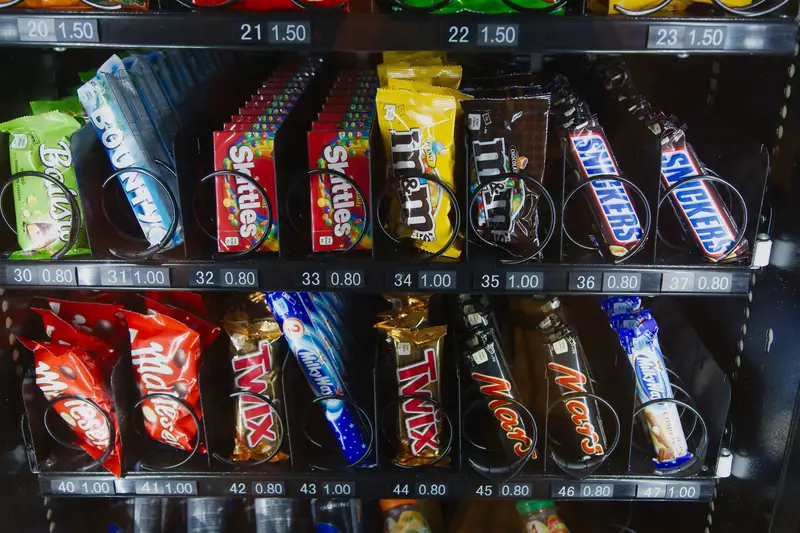
There are candy bars you buy because you actually want them, and candy bars you buy because there’s nothing else in the vending machine and you’re starving. We all know the difference. That sad, resigned reach for something you know won’t really satisfy you — that’s a specific kind of American experience.
But which candy bar sits at the absolute bottom? Which one do food critics, taste testers, and everyday shoppers agree is the worst of the worst? The answer might sting a little, because it’s not some obscure gas station reject. It’s the candy bar that built the entire industry. Let’s get into it.
Hershey’s Milk Chocolate Bar
Yeah. The OG. The one in the brown wrapper that’s been around since 1900. According to a detailed ranking by food writers, the Hershey’s Milk Chocolate Bar landed dead last. Not because it’s inedible, but because it’s boring. It’s the baseline. The default. The candy bar equivalent of a plain white t-shirt — except the white t-shirt is actually useful.
Here’s the thing about Hershey’s Milk Chocolate: it was revolutionary in 1900. Milton Hershey figured out how to mass-produce milk chocolate when it was still a luxury product. He made it cheap, he made it accessible, and he made it everywhere. But that was over 120 years ago. The chocolate world has moved on. Hershey’s hasn’t.
Food experts point to that distinctive tangy, slightly sour taste that Hershey’s has. That’s butyric acid, the same compound found in parmesan cheese and, less appetizingly, in vomit. Hershey’s uses a process called lipolysis during production that creates this flavor. Americans grew up with it, so most of us don’t notice. But put a Hershey bar next to a Cadbury or a piece of Belgian chocolate, and even casual chocolate fans can taste the difference. The Hershey bar is the blueprint for American candy bars, sure. But the blueprint isn’t always the best version of the building.
Heath Bar
If Hershey’s is boring, the Heath bar is actively unpleasant for a lot of people. One prominent food ranking called it out specifically, saying that it takes one of the worst candies — toffee — breaks it into pieces, and coats it in chocolate. That’s it. That’s the whole product.
Toffee is one of those love-it-or-hate-it things, except most people seem to hate it when it’s the star of the show. In a Butterfinger, the crunch works because there’s peanut butter flavor doing the heavy lifting. In a Heath bar, the toffee is front and center, and it tastes like burnt sugar that’s trying too hard. The chocolate coating is thin, almost an afterthought. And the texture? It gets stuck in your teeth in a way that makes you wonder if it was designed by a dentist running a side hustle.
Heath bars do have their defenders, mostly people who grew up eating them or people who love them crushed up in ice cream. But as a standalone candy bar experience, it’s consistently ranked near the bottom by critics and consumers alike. It’s been around since 1928, and at this point, it survives more on nostalgia than on merit.
Mr. Beast Bar
This one hurts the younger crowd. When MrBeast launched Feastables in 2022, the internet lost its mind. A YouTube star making his own chocolate bar? The marketing was genius. The product? Shoppers have been less than impressed.
In shopper rankings, the MrBeast bar consistently lands near the bottom of chocolate bar lists. The complaints are pretty consistent: it’s overpriced for what you get, the chocolate is waxy, and the flavors feel gimmicky rather than good. The original milk chocolate version tastes like a slightly worse version of chocolate you can get for half the price. The specialty flavors — things like Deez Nutz and Quinoa Crunch — sound fun on paper but don’t deliver.
At around $2.98 for a standard bar, you’re paying a premium for branding. And look, MrBeast is a marketing genius. But making a good candy bar is a completely different skill set than making a good YouTube video. The Feastables bars sell well because of the name, not because anyone is choosing them over a Reese’s in a blind taste test.
Tootsie Rolls (And Their Entire Product Line)
Tootsie Rolls aren’t technically a candy bar, but they show up in enough “worst candy” lists that ignoring them would be dishonest. And the problems go beyond taste. A Florida report found that Tootsie Roll Industries had four products testing high for arsenic, with the Fruit Chew Lime being the worst offender.
Even before that report, Tootsie Rolls were already sitting in the “candy you only eat on Halloween because there’s literally nothing else left” category. The texture is somewhere between chocolate and candle wax. The flavor is hard to pin down — it’s not quite chocolate, not quite caramel, not quite anything. It’s the candy equivalent of a shrug.
Tootsie Rolls have been around since 1896, making them older than Hershey bars. They were included in soldiers’ rations during World War II because they wouldn’t melt. That’s a genuine point in their favor — as survival food. As something you’d actually choose to eat for pleasure in 2024? That’s a harder argument to make.
Laffy Taffy
Dentists have a special hatred for this one. Sticky candies like Laffy Taffy are among the worst for your teeth because they cling to enamel and feed bacteria for hours after you eat them. But forget the dental angle for a second — Laffy Taffy is also just not very good.
The banana flavor tastes like banana the way that grape soda tastes like grapes — which is to say, not at all. The jokes on the wrapper peaked around 2003 and have been running on fumes ever since. And the texture goes from “too hard to chew” when it’s cold to “stuck to the roof of your mouth” when it’s warm. There’s no sweet spot. No pun intended.
The smaller Laffy Taffy pieces that come in mixed bags are tolerable in a “well, it’s free candy” sort of way. But the full-size bars? Nobody is walking into a 7-Eleven and picking a Laffy Taffy over a Snickers. That’s not a real thing that happens.
Mounds
Mounds is the coconut-and-dark-chocolate bar that Peter Paul introduced in 1920. Its sibling, Almond Joy, gets all the love because it adds almonds and uses milk chocolate. Mounds just sits there, being dense and polarizing.
The problem with Mounds is that coconut in candy form is a very specific taste that most Americans either love or despise. There’s no middle ground. And the dark chocolate coating doesn’t help — it’s not high-quality dark chocolate, it’s that slightly bitter, slightly chalky dark chocolate that tastes like it’s trying to be fancy without committing. Mounds lands on worst-candy lists with remarkable consistency, and it’s always for the same reasons: the coconut is too sweet, the chocolate is too bitter, and together they create something that feels confused about what it’s trying to be.
So What Actually Makes A Candy Bar Bad?
After looking at all these rankings and expert opinions, a pattern emerges. The worst candy bars share a few traits: they rely on a single flavor that not everyone likes (toffee, coconut, plain milk chocolate), they have texture problems (too sticky, too waxy, too hard), and they coast on name recognition instead of actually being delicious.
The best candy bars — your Snickers, your Reese’s, your Twix — layer multiple flavors and textures together. They give you something different with every bite. The worst ones are one-note, and that one note isn’t very good.
The Hershey’s Milk Chocolate Bar sitting at the very bottom of expert rankings is poetic in a way. The candy bar that made all other candy bars possible turned out to be the least interesting one of the bunch. It’s the Ford Model T of chocolate — important, historic, and something nobody actually wants to drive anymore.
Next time you’re standing in the checkout line staring at the candy display, just know that the brown wrapper isn’t your only option. It never was. We just all pretended it was good enough because we didn’t know any better. Now we do.
