

Most of us use our microwaves almost daily without thinking twice about what we’re heating up. It’s quick, it’s easy, and honestly, it’s hard to imagine life without it. But turns out, there are actually some foods the USDA and food safety experts say you should keep far away from that convenient little box. Some of these foods become safety hazards when microwaved, while others just turn into soggy, rubbery messes that’ll make you wish you’d eaten them cold instead. Here’s what you need to know before you press that start button.
Raw hot peppers turn your kitchen into a danger zone
If you’ve ever handled jalapeños and then accidentally touched your eyes, you know how painful capsaicin can be. Now imagine that burning sensation happening to your entire face, throat, and lungs all at once. That’s exactly what happens when you microwave spicy peppers. The heat releases capsaicin into the air, and when you open that microwave door, you’re basically pepper-spraying yourself and everyone else in the room. The burning compounds vaporize and create a cloud that can seriously irritate your eyes and respiratory system.
People who’ve made this mistake describe it as unleashing a stingy bomb in their homes, with everyone in nearby rooms coughing and tearing up. If you need to cook or reheat dishes with hot peppers, stick to the oven or stovetop in a well-ventilated area. Wrap them in foil and heat at 350 degrees, or slice and sauté them in a pan. Your family will thank you for not turning dinner prep into an emergency situation. Even super spicy sauces can release these irritating fumes, so it’s better to heat them traditionally on the stove.
Eggs in their shells can actually explode
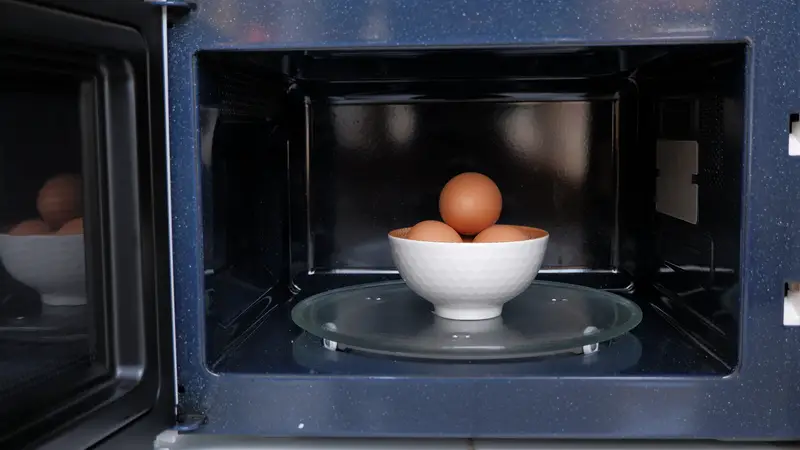
You might think boiling an egg in the microwave sounds like a time-saving hack, but it’s actually a recipe for disaster. When you microwave a whole egg in its shell, the moisture inside heats up incredibly fast and turns to steam. Since the shell is sealed tight, that steam has nowhere to escape. The pressure builds and builds until the egg can’t contain it anymore and boom—you’ve got an explosion on your hands. This isn’t just messy; it’s genuinely dangerous. If the egg explodes right when you open the microwave door, you could get hit with scalding hot egg matter and sharp shell pieces flying at your face.
Even hard-boiled eggs that have already been cooked can explode when reheated in the microwave. The USDA warns against this practice because of the serious burn risk involved. If you need to reheat a hard-boiled egg, steep it in hot water instead. For scrambled eggs and omelets, the microwave turns them into rubbery, unappetizing lumps anyway, so you’re better off reheating them gently in the oven covered with foil. If you absolutely must use the microwave for raw eggs, always pierce the yolk first with a fork to release steam, but honestly, traditional cooking methods are much safer for eggs.
Pizza loses everything that makes it good
We’ve all been there—standing in front of the fridge staring at leftover pizza and debating whether to eat it cold or warm it up. If you choose the microwave, you’re setting yourself up for disappointment. That crispy crust you loved yesterday? Gone. Instead, you get a floppy, soggy base that somehow manages to have hard edges once it cools down. The moisture from the sauce and toppings steams the crust in the enclosed microwave environment, and there’s no way for it to crisp back up. One bite of microwaved pizza instantly tells everyone exactly how you reheated it.
The texture change is so dramatic that many people prefer eating leftover pizza cold rather than dealing with microwave results. If you want your pizza to taste good again, use an air fryer at 375 degrees for a few minutes—it’ll crisp up perfectly. The oven works great too, especially if you put the slice on a wire rack. Even a cast iron skillet on the stove can bring back that crunch. With so many better options available, there’s really no reason to sacrifice your pizza to the microwave and end up with a rubbery mess.
Bread turns into rubber then cardboard
Whether it’s bagels, tortillas, sandwich bread, or croissants, microwaving any type of bread is a terrible idea. The microwave messes with the starch structure in bread in a really specific way. When bread gets zapped, the fast, uneven heat creates pockets of steam that swell up and then collapse. This disrupts the starch network and causes it to recrystallize into dense, hard spots. Meanwhile, other areas lose moisture and become tough and chewy. The process happens so quickly that your bread goes from normal to rubbery in about 30 seconds, and then within a minute of cooling down, those chewy spots turn rock hard.
Scientists call this process starch retrogradation, and it makes microwaved bread way worse than even stale bread. If you’re trying to reheat a sandwich, the bread gets scorching hot on the outside before the filling even warms up, which is incredibly frustrating. For any bread product, use a toaster, toaster oven, regular oven, or even a frying pan instead. If you’re warming crusty bread, spritz it with a little water and wrap it in foil before putting it in the oven to keep it from drying out completely.
Fried foods become soggy disasters
Got leftover fried chicken, french fries, or crispy hand pies? The microwave is their worst enemy. All that beautiful crunch you enjoyed the first time around disappears completely when you zap fried foods. What happens is the moisture that’s trapped under the crispy coating has nowhere to escape in the microwave. Instead of evaporating away like it would in an oven, that moisture just saturates the breading from the inside out. The oil also redistributes unevenly throughout the food, leaving you with greasy, limp disappointment instead of anything remotely crispy.
The same thing happens with breaded foods like fish sticks or mozzarella sticks—anything with a coating that’s supposed to be crunchy. To bring fried foods back to life, put them on a wire rack over a baking sheet and reheat them in a 300-degree oven. This allows air to circulate all around the food and gives that excess moisture somewhere to go. An air fryer also works amazingly well for this purpose. It takes a bit longer than the microwave, sure, but the difference in texture makes it completely worth the extra few minutes.
Pasta gets tough and chewy with weird textures
Leftover pasta seems like a perfect microwave candidate, but it rarely turns out well. After sitting in the fridge, pasta absorbs moisture from its sauce, which already leaves it drier than when it was fresh. Then the microwave pulls out even more moisture from those starchy noodles, making them tough and unpleasantly chewy. The heating is also incredibly uneven—you’ll have some clumps that are mushy while other parts are hard and barely warm. It’s especially bad with cream-based sauces like Alfredo or mac and cheese, where the fats separate out from the liquids and leave you with greasy pools and a curdled, broken texture.
For much better results, reheat pasta gently on the stovetop with a splash of water or milk if it’s a cream sauce. Stir it frequently to make sure everything heats evenly and the sauce comes back together smoothly. If you have plain pasta without sauce, just dip it briefly in boiling water to revive it. This method works way better than the microwave and actually brings the pasta back to something close to its original texture. The few extra minutes spent at the stove make a huge difference in how your leftovers taste.
Steak turns into expensive shoe leather
If you’ve got leftover steak, the microwave is absolutely the worst way to reheat it. That beautiful sear on the outside turns soggy and loses all its texture. Any fat on the steak heats unevenly, creating greasy, limp spots. The interior, which was probably cooked to a perfect medium-rare or medium, quickly overcooks and becomes dry and tough as the microwave drives out all those delicious juices. Thick cuts are particularly problematic because they heat so unevenly—the edges get overdone while the center stays cool. Within a minute or two, you’ve basically ruined an expensive piece of meat.
The proper way to reheat steak is to wrap it in aluminum foil and warm it slowly in a 350-degree oven. Once it’s heated through, finish it with a quick sear in a hot pan with a little oil to refresh that crusty exterior. This method takes longer but preserves the steak’s texture and keeps it juicy. Alternatively, slice the steak thinly and briefly warm the slices in a pan—thin pieces reheat much more evenly and quickly. Either way, keeping your steak out of the microwave means you’ll actually enjoy eating it a second time.
Grapes can create actual fire in your microwave
This one sounds weird because honestly, who’s microwaving grapes? But it’s worth knowing about because the results are genuinely dangerous. When grapes go in the microwave, they can create plasma—yes, actual glowing, fiery plasma. What happens is when two grapes are close together, the microwaves they absorb bounce back and forth in the tiny space between them. This creates an increasingly powerful electromagnetic field that eventually gets strong enough to supercharge the electrolytes in the grapes. When that happens, they burst out in the form of sparks and flames that can damage your microwave or even start a fire.
There are plenty of videos online showing this fiery reaction, and while it looks cool, it’s definitely not something you want happening in your kitchen. The phenomenon was even studied by physicists who confirmed how the electromagnetic field builds up between the grapes. Obviously, there’s no good reason to microwave grapes anyway—they’re perfect eaten raw, frozen as a cold snack, or cooked traditionally in recipes. But if you have kids who like to experiment, make sure they know this particular kitchen science experiment is off-limits.
Plastic containers leak chemicals into your food
Even containers labeled as microwave-safe aren’t as safe as you might think. That label only means the plastic won’t melt or warp in the microwave—it doesn’t mean chemicals won’t leach into your food. When plastic gets heated, it breaks down and releases tiny particles called microplastics and nanoplastics into whatever you’re heating up. A recent study found that billions of these particles are released into food and air during microwaving. These particles are invisible, so you have no idea they’re there, and some plastics also release chemicals like BPA and phthalates when heated.
Single-use plastics like takeout containers, yogurt cups, and butter tubs are especially bad for this, but even reusable plastic containers release these particles when microwaved. The safest bet is to transfer your food to glass or ceramic containers before heating it up. Yes, it’s an extra dish to wash, but it’s worth avoiding all those chemicals in your food. Glass and ceramic don’t leach anything into your meal, though be careful because they can get extremely hot in the microwave—sometimes even hotter than the food itself.
The microwave is incredibly useful for so many things, but knowing what to keep out of it helps you avoid ruined meals and potential safety hazards. Most of these problem foods have better reheating methods anyway that’ll give you results actually worth eating. Next time you’re about to toss something in the microwave, take a second to consider whether the oven, stovetop, or air fryer might be a better choice—your taste buds will definitely thank you for it.
