

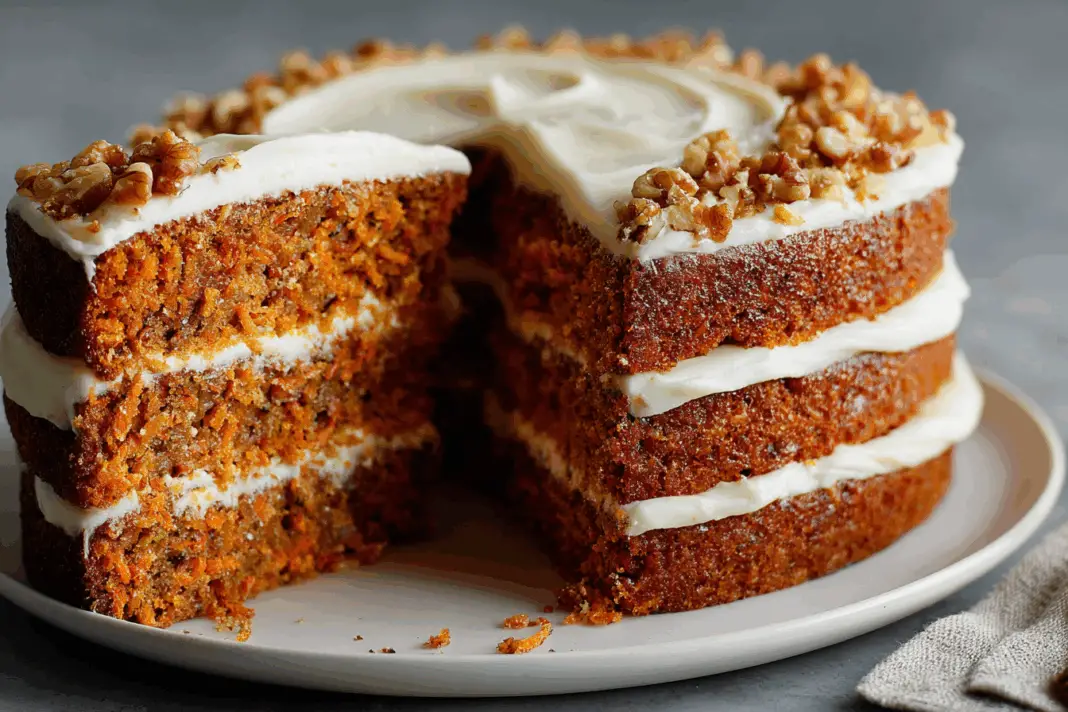
Making carrot cake from scratch might seem intimidating, but this recipe changes everything. Most people think carrot cake is just spice cake with carrots thrown in, but the perfect version balances moisture, spice, and that signature cream cheese frosting in ways that will surprise even experienced bakers. This recipe combines the best techniques from professional kitchens to create a cake that stays moist for days and actually improves with time.
Why fresh carrots make all the difference
Walk into any grocery store and those bags of pre-shredded carrots look so convenient. But using them is the fastest way to ruin an otherwise perfect carrot cake. Pre-shredded carrots are cut too coarsely and have lost most of their natural moisture during processing. They also contain anti-caking agents that prevent proper mixing with your batter. Fresh carrots contain natural sugars and oils that caramelize during baking, creating depth of flavor that bagged versions simply can’t match.
The key is using organic carrots whenever possible because they tend to have better flavor and texture than conventional ones. Peel about 5-6 large carrots and grate them using the second-largest holes on a box grater until they resemble finely shredded cheese. This creates the perfect texture that distributes evenly throughout the cake while still providing little bursts of carrot flavor in each bite.
The secret spice blend that transforms everything
Most carrot cake recipes throw in whatever spices they have on hand, but the perfect blend requires precision. Cinnamon provides warmth and sweetness, but too much overwhelms the carrot flavor. Nutmeg adds complexity and depth, while just a pinch of ground clove prevents the cake from tasting flat. Some recipes include ginger, which works beautifully, but the classic trio of cinnamon, nutmeg, and clove creates the most balanced profile.
The ratio matters more than most people realize. Two teaspoons of cinnamon, half a teaspoon of nutmeg, and just an eighth teaspoon of clove creates layers of warmth without any single spice dominating. Whisking these spices with the flour ensures even distribution throughout the batter, preventing those disappointing bites that taste like plain cake surrounded by others that are overpowering.
Oil beats butter for moisture that lasts
Using oil instead of butter might feel wrong, especially for experienced bakers who swear by butter in most cake recipes. But carrot cake is different because it already has so many competing flavors from the carrots, spices, and add-ins. Butter’s flavor gets lost in the mix, while oil provides pure moisture benefits. Oil is 100% fat compared to butter’s 80%, which means more moisture retention and a cake that stays tender for days instead of going stale overnight.
Vegetable oil or canola oil work best because they have neutral flavors that won’t compete with the spices. Some bakers successfully use melted coconut oil, but it can solidify if mixed with cold ingredients. The oil creates tenderness without making the cake too delicate to stack, which is crucial for layer cakes that need structural integrity.
Greek yogurt adds moisture without making it soggy
Many carrot cake recipes use buttermilk or regular milk, but Greek yogurt provides superior results. Its thick consistency adds moisture without making the batter too thin, which can lead to dense, heavy cakes. The acidity in Greek yogurt also reacts with the baking soda to create better rise and a more tender crumb. Plus, it adds a subtle tang that complements the sweet carrots and rich cream cheese frosting.
Use full-fat Greek yogurt for the best results, as low-fat versions don’t provide the same richness. Sour cream works as a substitute if Greek yogurt isn’t available, but Greek yogurt creates a slightly more stable structure that’s easier to work with when stacking layers. The protein content also helps the cake hold together better during cutting and serving.
The pineapple debate that divides bakers
Adding crushed pineapple to carrot cake remains one of baking’s most contentious topics. Supporters argue it adds moisture and a subtle tropical sweetness that enhances the carrots. Critics claim it waters down the carrot flavor and makes the texture too wet. The truth is that when used correctly, crushed pineapple elevates carrot cake without overwhelming it. The key is draining it properly and using the right amount.
If adding pineapple, drain it thoroughly and measure out exactly three-quarters of a cup. Any more will make the batter too wet, leading to a cake that doesn’t set properly. Some bakers soak raisins in the reserved pineapple juice for extra flavor. For purists who prefer carrot flavor alone, simply replace the pineapple with an extra quarter cup of Greek yogurt to maintain the proper moisture balance.
Perfect mixing technique prevents tough cake
Overmixing carrot cake batter is easier than most people think, especially once the flour gets added. Unlike delicate sponge cakes, carrot cake batter should be mixed just until the ingredients combine. Excessive mixing develops too much gluten, creating a tough, chewy texture instead of the tender crumb everyone wants. The presence of carrots, nuts, and other add-ins makes it tempting to mix longer, but restraint pays off.
Start by whisking the wet ingredients thoroughly, then add the dry ingredients all at once. Switch from a whisk to a rubber spatula and fold gently until just combined. The batter should look slightly lumpy with streaks of flour still visible when you add the carrots and other mix-ins. These final additions will complete the mixing process without overdeveloping the gluten.
Cake strips create perfectly even layers
Professional bakeries use cake strips to ensure even baking, and home bakers should too. These fabric strips wrap around cake pans and prevent the edges from heating too quickly, which causes domed tops and uneven texture. Without cake strips, the outside of the cake sets and browns while the center is still raw, leading to overcooked edges and undercooked middles. The strips create a more controlled baking environment.
Dampen the strips with water and wrap them around your cake pans before baking. This simple step results in flat-topped layers that stack beautifully without trimming. The even heating also prevents the frustrating problem of cake layers that are perfectly done around the edges but still gooey in the center. If you don’t have cake strips, you can make temporary ones using strips of old kitchen towels secured with safety pins.
Cream cheese frosting that won’t slide off
Nothing ruins a beautiful carrot cake like cream cheese frosting that slides off the sides or becomes too soft to hold its shape. The secret lies in getting both the cream cheese and butter to the right temperature before mixing. They should be softened but not warm, which means taking them out of the refrigerator about an hour before making frosting. Cream cheese that’s too cold won’t incorporate smoothly, while cream cheese that’s too warm makes runny frosting.
Start by beating the cream cheese alone until it’s completely smooth and free of lumps. Add the softened butter gradually and beat until well combined. The powdered sugar should be sifted to prevent lumps, and vanilla extract adds depth beyond just sweetness. If the frosting seems too soft, chill it for 30 minutes before using. If it’s too stiff, let it come to room temperature and beat again.
Assembly tips for professional-looking results
The difference between a homemade-looking carrot cake and a bakery-quality one often comes down to assembly technique. Start with completely cooled layers, preferably chilled for at least an hour wrapped in plastic wrap. This makes them easier to handle and less likely to break. Place the first layer cut-side down on your serving plate, then spread frosting evenly to the edges. Don’t skimp on frosting between layers, as this is where much of the flavor impact happens.
Apply a thin crumb coat of frosting around the entire assembled cake and chill for 20 minutes. This sets the frosting and traps any loose crumbs, allowing the final layer of frosting to go on smoothly. Professional decorators know that patience during assembly creates dramatically better results. Use an offset spatula for smooth sides and take time to make each step perfect rather than rushing through the process.
This carrot cake recipe delivers everything promised: incredible moisture that lasts for days, perfectly balanced spices, and cream cheese frosting that holds its shape. Whether making it for a special occasion or just because Tuesday needs more cake, these techniques ensure success every time. The best part is watching people’s reactions when they taste homemade carrot cake that surpasses their favorite bakery version.
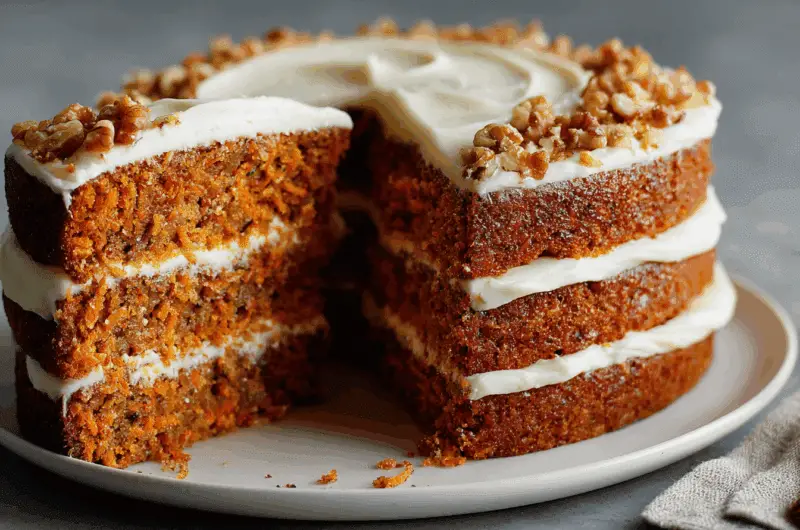
The Ultimate Carrot Cake Recipe That Never Fails
Course: Dessert12
servings1
hour40
minutes485
kcalThis incredibly moist carrot cake features perfectly balanced spices, fresh grated carrots, and rich cream cheese frosting that stays put.
Ingredients
2 1/2 cups peeled and finely grated organic carrots
2 cups all-purpose flour, spooned and leveled
2 teaspoons baking soda
1/2 teaspoon kosher salt
2 teaspoons cinnamon
1/2 teaspoon nutmeg
1/8 teaspoon ground clove
1 cup vegetable oil
3/4 cup light brown sugar, packed
3/4 cup granulated sugar
3 large eggs
2 teaspoons vanilla extract
3/4 cup full-fat Greek yogurt
16 oz cream cheese, softened
1/2 cup unsalted butter, softened
4 cups powdered sugar, sifted
1 teaspoon vanilla extract (for frosting)
1/4 cup finely chopped walnuts (optional)
Directions
- Preheat oven to 350°F and grease three 6-inch or two 8-inch round cake pans. Line the bottom with parchment paper and wrap dampened cake strips around the pans if available. Wash, peel, and grate carrots using the second-largest holes on a box grater until you have 2 1/2 cups of finely shredded carrots.
- In a large bowl, whisk together flour, baking soda, salt, cinnamon, nutmeg, and clove until evenly distributed. Set this dry mixture aside while you prepare the wet ingredients. Proper mixing of dry ingredients ensures even spice distribution throughout the cake.
- In another large bowl, whisk together both sugars and oil until well combined. Add eggs one at a time, beating well after each addition, then mix in vanilla extract. The mixture should be smooth and well incorporated before proceeding to the next step.
- Stir the grated carrots and Greek yogurt into the wet ingredients until evenly distributed. Switch to a rubber spatula and add the dry ingredients all at once. Fold gently until just combined, being careful not to overmix as this can result in a tough cake.
- Divide batter evenly between prepared pans, filling each about 2/3 full. Bake 6-inch pans for 35-40 minutes or 8-inch pans for 30-35 minutes, until a toothpick inserted in the center comes out with just a few moist crumbs. The edges should start pulling away from the pan sides when done.
- Cool cakes in pans for 15 minutes, then turn out onto wire racks to cool completely. For easier assembly, wrap cooled layers in plastic wrap and refrigerate for at least 1 hour. This chilling step makes the cakes much easier to handle and less likely to break during frosting.
- Beat cream cheese alone until completely smooth and free of lumps. Gradually add softened butter and beat until well combined and fluffy. Add sifted powdered sugar, vanilla, and a pinch of salt, beating until smooth and spreadable but not too soft.
- Place first cake layer cut-side down on serving plate and spread 1/2 to 3/4 cup frosting evenly to edges. Add remaining layers with frosting between each. Apply thin crumb coat around entire cake and chill 20 minutes. Finish with remaining frosting, smooth with offset spatula, and garnish with chopped walnuts if desired. Chill assembled cake for 1 hour before serving.
Notes
- For best results, use organic carrots and grate them fresh – pre-shredded carrots won’t provide the same moisture and flavor
- Cake strips around the pans create perfectly flat, evenly baked layers that stack beautifully
- Store covered in refrigerator for up to 5 days – the cake actually improves in flavor after the first day
- If frosting seems too soft, chill for 30 minutes before using; if too stiff, let come to room temperature and beat again
- Cake layers can be made ahead and frozen for up to 3 weeks wrapped in plastic wrap
Frequently asked questions
Q: Can I make this carrot cake without eggs?
A: Yes, you can substitute each egg with 1/4 cup unsweetened applesauce or 1 tablespoon ground flaxseed mixed with 3 tablespoons water. The texture will be slightly denser but still delicious. Let flax eggs sit for 5 minutes before using to thicken properly.
Q: How far ahead can I make this carrot cake?
A: The cake layers can be baked up to 3 days ahead and stored wrapped in plastic wrap in the refrigerator, or frozen for up to 3 weeks. The fully assembled cake actually tastes better after sitting overnight as the flavors meld together. Store the finished cake covered in the refrigerator for up to 5 days.
Q: Why did my carrot cake turn out dense and heavy?
A: Dense carrot cake usually results from overmixing the batter after adding flour, using too much flour, or overpacking the measuring cups. Make sure to spoon flour into cups and level off, then fold ingredients together just until combined. Also check that your baking soda is fresh – old leavening agents won’t provide proper rise.
Q: Can I add nuts and raisins to this recipe?
A: Absolutely! Add up to 1 cup total of chopped walnuts, pecans, and raisins to the batter after mixing in the carrots. Popular combinations include 1/2 cup walnuts with 1/2 cup raisins, or 3/4 cup pecans with 1/4 cup dried cranberries. Toss add-ins in a little flour before folding in to prevent them from sinking.
