

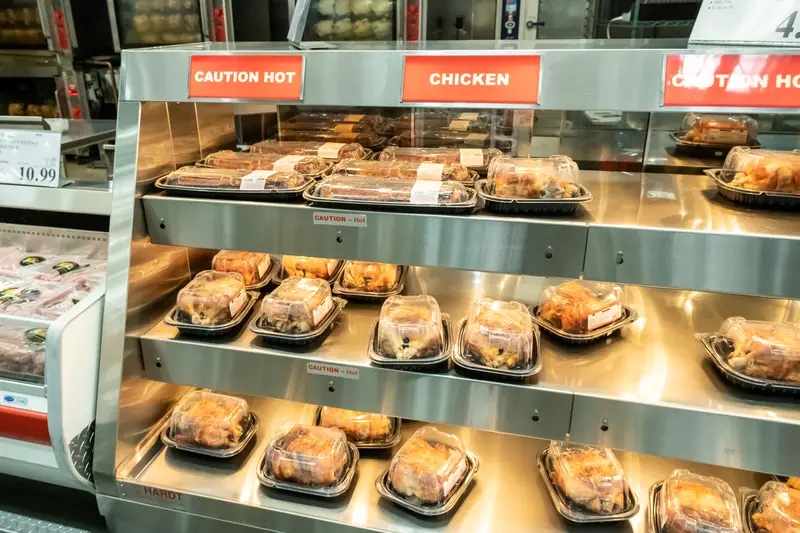
That golden-brown rotisserie chicken sitting in Costco’s warmer for $4.99 has been the same price since 2000. While everything else costs more these days, this chicken stays cheap for reasons that might surprise most shoppers. The bird that millions of people grab each week comes with secrets, shortcuts, and some complaints that reveal how warehouse stores really work.
Costco loses millions on every chicken sold
Most people assume Costco makes money on their famous chicken, but the company actually loses between $30-40 million annually on this single item. The price hasn’t budged from $4.99 in over two decades, even though inflation has made everything else more expensive. This strategy, called a loss leader, means Costco sells chicken below cost to get people through the door.
The genius behind this approach becomes clear when shoppers realize they rarely leave with just the chicken. Brand strategists explain that Costco’s real profits come from membership fees, not individual products. The cheap chicken gets people inside, where they end up buying high-margin items like snacks, wine, and those giant bags of chips that somehow always end up in the cart.
The chickens hide in the back for good reason
Ever wonder why the rotisserie chickens sit way back in the store instead of right by the entrance? Costco deliberately places them in the farthest corner to force shoppers to walk past hundreds of other products. This isn’t accidental – it’s the same reason grocery stores put milk and eggs in the back. The longer the walk, the more stuff people notice and buy.
The strategy works incredibly well because Costco members spend significantly more per cart than shoppers at regular grocery stores. Marketing experts point out that this placement nudges people to shop more, turning a simple chicken run into a much bigger shopping trip. Those extra purchases quickly make up for the money lost on each discounted bird.
They sell an incredible number of chickens yearly
The numbers behind Costco’s chicken operation are staggering. In 2023, they sold 137 million rotisserie chickens – that’s 20 million more than the previous year. To put this in perspective, that’s about 375,000 chickens sold every single day across all their warehouse locations. The demand keeps growing as more people discover this bargain dinner solution.
These massive sales figures explain why Costco invested in building their own chicken processing plants in Iowa and Nebraska. Industry sources reveal that controlling their own supply chain allows them to maintain consistent pricing and quality. The company produces about 40% of their rotisserie chickens in-house, with the rest coming from suppliers like Foster Farms in California.
Each chicken gets exactly two hours on display
Here’s something most shoppers don’t know: those chickens sitting under the heat lamps have been there for two hours or less. Once they hit the two-hour mark, Costco pulls them from the display case. This strict policy ensures customers always get relatively fresh chicken instead of something that’s been sitting around getting dry and tough all day.
The removed chickens don’t go to waste, though. Costco’s policy requires that these birds get shredded and used in other prepared foods like chicken noodle soup and chicken alfredo pasta. Smart shoppers listen for the bell that signals fresh chickens arriving – that’s when the newest, juiciest birds hit the warming display.
Some people taste chemicals in their chicken
Not everyone loves these famous chickens. Online forums are filled with complaints about a strange chemical or soapy taste, especially on the skin. Some describe it as chlorine-like, while others say it tastes like the plastic packaging. The complaints seem most common among shoppers in California, though people from other states have noticed it too.
The weird taste likely comes from phosphates injected into the chicken before cooking. Food scientists explain that phosphates help keep the meat juicy during the rotisserie process, but some people are more sensitive to this chemical compound. When too much gets added, it can create that soapy, off-putting flavor that ruins the whole meal.
The brine contains more than just salt water
Costco injects its chickens with a concentrated saline solution before cooking, but salt isn’t the only ingredient in that mixture. The brine also contains phosphates, natural flavors, and other preservatives designed to keep the meat moist and safe to eat. This injection process happens before the birds go on the rotisserie, ensuring every bite stays juicy even under those heat lamps.
The phosphate addition serves an important purpose in commercial food production. Poultry experts note that without these additives, rotisserie chickens would dry out quickly and taste terrible by the time customers buy them. However, research shows that excess phosphate can cause soapy notes, rubbery texture, and poor color – explaining why some people have bad experiences with these birds.
Different suppliers might explain taste variations
Costco sources chickens from multiple suppliers, which could explain why some people love their rotisserie chicken while others can’t stand it. The company gets birds from their own processing facilities in the Midwest as well as outside suppliers like Foster Farms on the West Coast. Each supplier might handle the preparation process slightly differently, leading to inconsistent experiences.
Geography seems to play a role in customer satisfaction. Reports suggest that shoppers in California and the West Coast are more likely to complain about chemical tastes, while those in the Midwest generally have positive experiences. This pattern aligns with the different supply sources, though Costco likely standardizes preparation methods across all suppliers to maintain consistency.
Celebrity chefs have mixed opinions about the chicken
Even famous chefs can’t agree on Costco’s rotisserie chicken. David Chang, the founder of Momofuku restaurants, called the chicken “inedible” and blamed the cocktail of chemicals for making it taste terrible, especially when cold the next day. He specifically mentioned the nitrates and other additives that make the chicken breast unpalatable for leftovers.
On the flip side, many food experts praise the chicken for its consistent quality and value. Cooking specialists point out that a properly prepared rotisserie chicken should taste roasted, briny, and tender while staying juicy despite being well-done. The fact that millions of people buy these chickens weekly suggests that most customers are satisfied with the taste and quality.
The chicken has developed a cult following online
Reddit threads about Costco’s rotisserie chicken get hundreds of comments from devoted fans sharing recipes, storage tips, and praise for this budget-friendly protein. The online community treats these chickens like a shared cultural experience, with longtime members helping newcomers understand why the $4.99 price point is such a big deal. Some people plan entire meals around these birds.
The passionate fan base extends beyond just eating the chicken straight. Costco enthusiasts share creative ways to use every part of the bird, from making soup with the bones to turning leftover meat into salads, sandwiches, and casseroles. This versatility, combined with the unbeatable price, has created a loyal following that sees these chickens as an essential part of their weekly shopping routine.
Costco’s $4.99 rotisserie chicken represents more than just a cheap dinner option – it’s a carefully calculated business strategy that works because people keep coming back. Whether someone loves or hates the taste, the chicken serves its purpose of getting shoppers into the store where they spend money on higher-margin items. For a company that makes its real profits from membership fees, keeping customers happy with loss-leader deals like this makes perfect business sense.
