

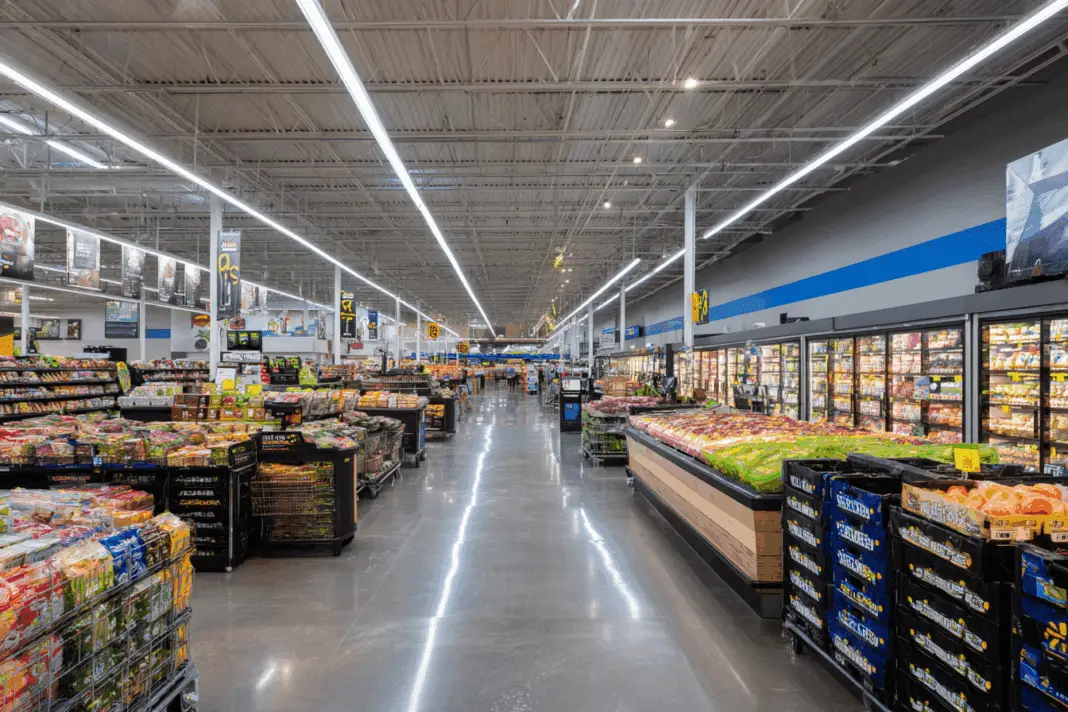
Walk into any Walmart on a Saturday afternoon and you’ll see packed aisles of people loading up their carts with groceries. The prices seem great, the selection is massive, and everything you need is under one roof. But there’s a lot happening behind those everyday low prices that most shoppers never think about. From misleading labels to questionable business practices, the way Walmart runs its grocery operation might make you think twice about where you’re spending your money. Some of these issues affect what you’re paying at checkout, while others raise serious questions about what’s actually in your cart.
Walmart controls way too much of the grocery market
In some parts of the country, Walmart isn’t just the main grocery store option. It’s basically the only option. Think about that for a second. In Bismark, North Dakota, Walmart controls 83% of the grocery market. In five different areas across the country, Walmart holds 90% or more of the market share. The most extreme example is Atchison, Kansas, where Walmart controls a staggering 95% of grocery sales. When one company has that much power in a town, they basically decide what you can buy and how much you’ll pay for it.
This isn’t just about convenience or choice. According to U.S. antitrust laws, things get problematic when a corporation controls more than 50% of a market share in any area. Walmart has blown past that limit in at least 43 major metropolitan areas around the country. What happens when the only grocery store closes or decides not to carry your favorite brand? You’re stuck. This is especially tough for people who don’t have cars or easy access to other shopping options. The lack of competition means Walmart can pretty much do whatever it wants with prices and selection.
The real cost of those low prices
Ever wonder how Walmart manages to keep prices lower than other stores? The answer isn’t pretty. Walmart’s massive size gives it incredible bargaining power with suppliers. They force these suppliers to offer deep discounts, which sounds good until you realize what happens next. Those same suppliers then have to charge smaller stores higher prices to make up for the losses. This creates a cycle where small grocery stores can’t compete and eventually shut down. Once they’re gone, entire communities lose local options and become dependent on Walmart.
The ripple effects go even further down the line. Farmers and food producers are getting squeezed harder than ever. According to research, farmers were receiving an average of just $0.15 for every dollar spent on groceries in 2019. That’s terrible for the people growing our food. FTC Commissioner Alvaro Bedoya has been investigating these effects, noting that some of the poorest people in the country end up in areas where Walmart is the only place to buy fresh food. Rural and urban populations get hit the hardest, and even when small stores try forming co-ops to compete, it’s usually not enough.
Great Value isn’t always so great
Walmart’s house brand, Great Value, seems like a smart choice when you’re trying to save money. The packaging looks nice, the products fill entire aisles, and they’re usually cheaper than name brands. But here’s the thing: Great Value products often aren’t actually the best deal out there. If you take the time to compare prices with stores like Aldi or Costco, you’ll find that their house brands frequently beat Walmart’s prices. Aldi’s house brands regularly come in lower than Great Value, and Costco’s Kirkland Signature items also offer better value in many cases.
What’s worse is that Great Value prices have shot up significantly since the pandemic. Some shoppers have noticed prices doubling on certain products. Walmart’s CEO blamed inflation, but that explanation doesn’t sit well with everyone. University of California Berkeley professor Robert Reich and Senator Elizabeth Warren have both called out Walmart for using inflation as cover for price increases that boost profits. Reich pointed out that Walmart’s net income jumped 93% to $10.5 billion toward the end of 2023. That doesn’t sound like a company barely scraping by during tough economic times.
The egg situation is a complete mess
Eggs seem like such a simple thing to buy, right? You grab a carton, check for cracks, and head to checkout. But Walmart’s egg department has been surrounded by problems for years. Back in 2016, Walmart promised to switch to selling only cage-free eggs by 2025. They sell more than 11 billion eggs every year, so this was supposed to be a huge deal. Fast forward to 2022, and they admitted they weren’t going to meet that promise. By 2024, only about 27% of Walmart eggs were actually certified as cage-free. That’s a pretty big gap between what they said and what actually happened.
The problems don’t stop there. In 2018, a customer sued Walmart claiming that eggs labeled as organic actually came from hens living indoors their entire lives. The ASPCA called these operations “faux-ganic.” PETA has gone after one of Walmart’s major egg suppliers, Trillium, after undercover investigations showed disturbing conditions for 2.4 million chickens. Workers were accused of killing hens, throwing live birds in garbage, and keeping chickens in crowded metal cages. In 2022, an avian flu outbreak at the facility killed about 2.6 million birds. This is what’s behind those cheap egg prices at Walmart.
They got caught overcharging for weighted items
You know those items that get weighed at the store, like meat and produce? You trust that the weight on the label matches what you’re actually buying, right? Well, Walmart got caught messing this up in a big way. In 2024, they settled a lawsuit for $45 million after being accused of mislabeling weights and overcharging customers on weighted grocery items. The lawsuit covered purchases made between October 2018 and January 2024. That’s a lot of years of potentially paying more than you should have for your groceries.
Walmart denied the allegations but agreed to settle anyway, saying it was “in the best interest of both parties.” Individual customers who bought weighted grocery items during that time period were eligible for payments up to $500 through a class action claim process. A website was even set up for customers to file claims or protest the settlement decision. Think about how many times you’ve bought meat or produce at Walmart without double-checking the weight. How much extra did you pay over the years? It’s impossible to know for sure, but this settlement suggests the problem was widespread and serious enough to warrant that massive payout.
The food waste problem is worse than you think
Walk behind any Walmart at the end of the day and you might be shocked at how much perfectly good food ends up in the dumpster. A 2016 investigation found that Walmart was throwing out food that hadn’t even reached its expiration date and was still cold. A former produce and bakery department manager said he threw out about a shopping cart’s worth of food every single day. Walmart claimed the food was unsafe to sell and that they donate to food banks, but employees tell a different story.
That same manager explained that imperfect fruits and vegetables would get tossed even though they were completely fine to eat. When he asked why they couldn’t donate the food to people who needed it, his manager told him that if they gave it away, people wouldn’t buy it. By 2022, reports showed that Walmart was responsible for around 383 kilotons of food waste per year. Videos continue popping up on social media showing massive amounts of discarded food from Walmart locations. Meanwhile, plenty of people struggle to afford groceries and would gladly take that slightly bruised apple or day-old bread.
That craft beer wasn’t really craft at all
Beer drinkers who like supporting small breweries got a rude awakening in 2017 when questions started popping up about Walmart’s craft beer selection. The store was selling a brand called Trouble Brewing that was supposedly from Rochester, New York. It had all the markings of a craft beer: interesting name, cool packaging, and the kind of labels you’d expect from a small local brewery. Except there was one problem. Trouble Brewing didn’t actually exist. At all. The Washington Post investigated and traced the beer to Genesee Brewing, a much larger operation known for mass-produced beers.
Walmart’s senior buyer tried to smooth things over by saying they weren’t trying to deceive anyone and that lots of products don’t identify the manufacturer on the label. But that explanation doesn’t really hold up when you’re specifically marketing something as craft beer with packaging designed to look like it came from a small independent brewery. People who buy craft beer usually do so because they want to support smaller businesses or enjoy the unique products these breweries create. Finding out you’ve been drinking mass-produced beer disguised as craft is pretty frustrating, especially when you’re paying craft beer prices for it.
The push toward automated ordering gets creepy fast
In 2024, Walmart announced plans to use artificial intelligence to predict when you’re going to run out of groceries and automatically reorder them for you. Combined with their In-Home Delivery Service, this means Walmart employees could literally come into your house, put away your groceries, and leave while you’re not even home. They’re selling this as convenience, but it raises a lot of questions. Do you really want a corporation tracking your shopping habits that closely? What if the AI orders things you don’t actually need or want?
The idea of coming home to find your shopping done and put away might sound appealing at first. But think about the bigger picture. This level of automation and data collection gives Walmart even more control over what people buy and when they buy it. You lose the ability to make spontaneous decisions about your groceries or switch things up based on what looks good that week. Plus, having strangers enter your home when you’re not there is a privacy concern that plenty of people aren’t comfortable with, no matter how convenient it might be.
What this means for your next shopping trip
Knowing all this doesn’t necessarily mean you need to stop shopping at Walmart completely. For many people, especially in areas where Walmart dominates the market, that’s not even realistic. But being aware of these issues helps you make better decisions. Check those weight labels on meat and produce. Compare prices with other stores when you can. Don’t assume Great Value is always the cheapest option. And maybe think twice before signing up for services that let Walmart track your every purchase and enter your home. Your grocery shopping habits might seem like a small thing, but they add up to something much bigger.
The next time you’re pushing your cart through those massive aisles, remember that those everyday low prices come with costs that aren’t always visible on the receipt. From the farmers getting pennies on the dollar to the small stores forced out of business to the questionable labeling practices, there’s a lot happening behind the scenes. Being an informed shopper means looking beyond the price tag and understanding what you’re really supporting with your money. Sometimes paying a bit more somewhere else is worth it, and sometimes Walmart is still your best option. The important thing is making that choice with your eyes wide open.
