

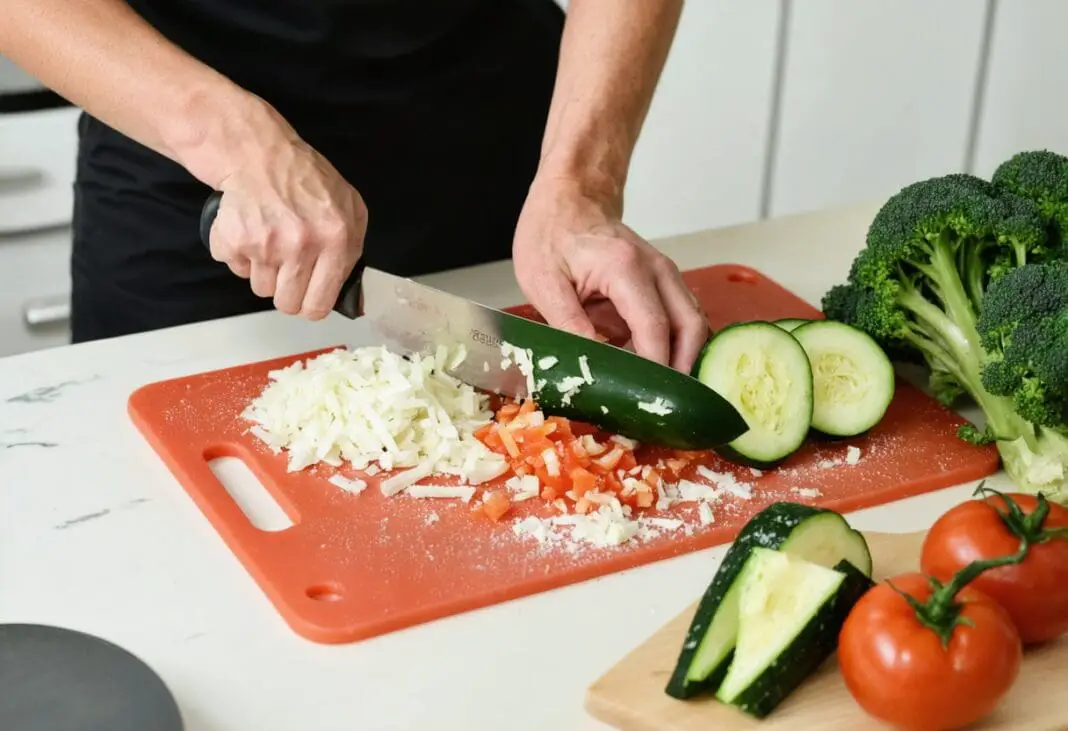
That trusty plastic cutting board sitting in your kitchen might seem harmless, but recent research reveals a disturbing secret hiding in plain sight. Every time you slice vegetables or dice onions on that familiar surface, thousands of tiny plastic particles are breaking off and mixing directly into your food. Scientists have discovered that a typical home cook creates up to 50 grams of microplastics per year from cutting boards alone – that’s equivalent to eating 10 credit cards worth of plastic annually!
Your cutting board is literally dissolving into dinner
Those knife marks crisscrossing your plastic cutting board aren’t just cosmetic damage – they’re evidence of a serious problem happening right under your nose. Each slice of your knife shaves off microscopic plastic particles that immediately stick to whatever you’re chopping. Researchers at North Dakota State University counted exactly how many plastic pieces get created during normal food prep, and the numbers are staggering.
When scientists tested regular home cooks making 500 cuts on plastic boards, they found between 1,536 and 7,680 microplastic particles clinging to the food afterward. The study showed that polyethylene boards release 1 to 14 plastic pieces per cut, while polypropylene boards shed 3 to 15 particles with each slice. Run your finger across your old cutting board right now – every groove you feel represents plastic that used to be there but has since broken off into your meals.
Restaurant-quality boards aren’t saving you
Even those thick, professional-looking plastic cutting boards that cost more money aren’t solving the problem. While polyethylene boards used in restaurants tend to be more durable than cheaper alternatives, they still shed plastic particles into food with every use. The main difference is that restaurants replace their cutting boards regularly as a business expense, something most home cooks never think to do.
Food author Adam James Pollock explains that polyethylene boards may release fewer microplastics than other plastic varieties, but they’re still far from perfect. The type of food being chopped also affects how much plastic gets released – harder vegetables and tougher cuts of meat create more friction and generate more particles. No matter how expensive or professional your plastic cutting board looks, it’s still breaking down bit by bit into your food.
Wood boards kill bacteria while plastic breeds it
The old belief that wooden cutting boards harbor dangerous bacteria turns out to be completely backwards. Scientific studies now show that bacteria like salmonella and listeria actually live longer and multiply more easily on plastic surfaces than on wood. Meanwhile, those same harmful bacteria get trapped in wood fibers within minutes and die naturally – wood essentially kills germs on contact.
Research from the University of Wisconsin found that wood can kill bacteria in as little as three minutes, while plastic cutting boards allow bacteria to thrive for days without proper sanitization. This means plastic boards present a double threat – they’re contaminating food with microplastics while simultaneously providing a breeding ground for harmful bacteria. The surface that seems easier to clean is actually harboring more germs than the natural alternative.
Microwave containers and takeout boxes make things worse
Plastic cutting boards are just one piece of a much larger puzzle flooding your kitchen with microplastics. Every time you reheat leftovers in plastic containers or order takeout in disposable packaging, you’re adding more plastic particles to your diet. Even simple actions like twisting the cap off a plastic water bottle releases microplastics directly into the liquid you’re about to drink.
Dishwasher detergent pods, plastic ice cube trays, food storage bags, and even plastic utensils all contribute to the problem. Studies have found microplastics in fish, chicken, and meat purchased at markets that use plastic cutting surfaces during preparation. The plastic contamination starts long before food reaches your kitchen and continues every time you use plastic tools to prepare meals at home.
These tiny particles accumulate in your bloodstream
Microplastics aren’t just passing through your system harmlessly – they’re building up inside your body with no known way to remove them. Scientists have discovered these plastic particles in human bloodstreams, lungs, and other organs, where they remain indefinitely. Since plastics can take hundreds or thousands of years to decompose naturally, the particles accumulating in your body aren’t going anywhere anytime soon.
A 2023 study found that patients with microplastics in their arterial plaque had higher risks of heart attack, stroke, and death compared to those without detectable plastic particles. While research is still emerging on the full health impacts, the evidence clearly shows these particles are accumulating in critical body systems and potentially causing serious problems over time.
Glass and metal storage beats plastic every time
Switching your food storage containers from plastic to glass or metal makes an immediate difference in reducing microplastic exposure. Glass containers don’t break down or leach particles into food, even when heated in the microwave. Stainless steel containers offer the same benefits with added durability for packed lunches and outdoor activities.
The initial investment in glass or metal containers pays off quickly when you consider the long-term benefits of avoiding plastic contamination. Many glass containers come with plastic lids, but the food only contacts the glass surface where it’s stored. Eco-friendly powder detergents packaged in cardboard boxes also help reduce plastic exposure compared to detergent pods wrapped in dissolving plastic films.
Bamboo cutting boards offer the best of both worlds
Bamboo cutting boards combine the natural antibacterial properties of wood with modern durability and style. They’re naturally resistant to moisture, which prevents warping and cracking that can occur with traditional hardwood boards. Bamboo also grows much faster than trees, making it an environmentally sustainable choice that doesn’t contribute to deforestation.
Unlike plastic boards that become more dangerous as they age and develop cut marks, bamboo boards actually improve with proper care. A monthly coating of olive oil helps repel water and prevents the surface from drying out and cracking. Proper maintenance involves washing with soap and water after each use, then standing the board upright to air dry completely before storing it away.
Your old plastic boards shouldn’t go in regular recycling
Before you toss that worn-out plastic cutting board in your recycling bin, check with your local facility first – most won’t accept them through regular curbside pickup. The thick plastic and embedded food particles make cutting boards difficult to process through standard recycling equipment. Some specialized recycling centers accept them, but you’ll need to call ahead to confirm.
Instead of throwing plastic boards in the trash, consider repurposing them for non-food uses around the house. They work well as protective surfaces for craft projects, gardening activities, or garage workbench tasks. Creative reuse keeps the plastic out of landfills while giving the board a second life away from your kitchen where it can’t contaminate food anymore.
Professional chefs are making the switch too
Restaurant kitchens have traditionally relied on plastic cutting boards because they seemed more sanitary and easier to replace frequently. However, growing awareness about microplastic contamination is causing many professional chefs to reconsider their equipment choices. High-end restaurants are increasingly investing in quality wooden boards that can be properly maintained and sanitized between uses.
The shift away from plastic in professional kitchens reflects a broader understanding that proper cleaning technique matters more than the cutting surface material. Food safety experts now emphasize that thorough washing with soap and hot water, followed by complete air drying, makes any cutting board safe regardless of material. The key difference is that wood naturally fights bacteria while plastic provides a breeding ground for germs and sheds particles into food.
Making the switch from plastic to wood cutting boards represents one of the easiest and most impactful changes you can make in your kitchen today. The science is clear that plastic boards contaminate food with particles that build up in your body over time, while wooden alternatives naturally kill bacteria and improve food safety. Your wallet will thank you too – a quality wooden cutting board lasts for years with basic care, unlike plastic boards that need frequent replacement as they become more dangerous with age.
