

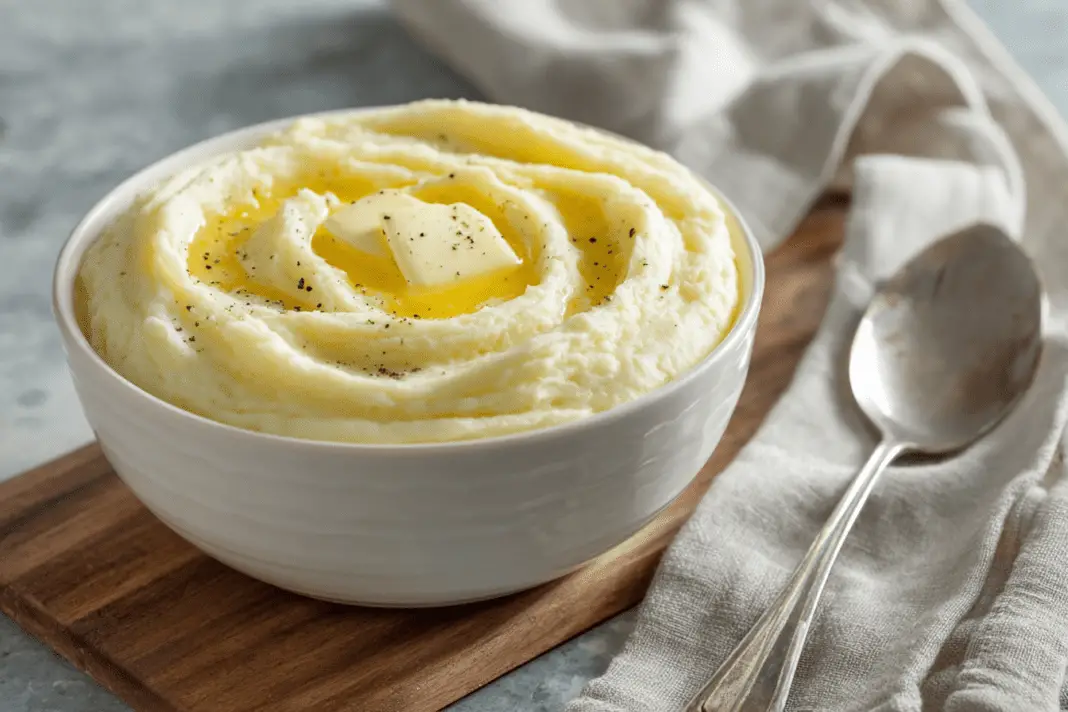
I used to think I made pretty good mashed potatoes. Russets, a pat of butter, a splash of milk, some salt. They were fine. Totally fine. And then I ate at a steakhouse in Nashville and realized I had been lying to myself for years. Those potatoes were smooth, rich, almost impossibly creamy — the kind you want to eat with a spoon straight from the bowl while pretending no one’s watching. I went home and tried to recreate them. Failed. Tried again. Failed again. Turns out, the gap between home mashed potatoes and restaurant mashed potatoes isn’t about talent or fancy equipment. It’s about a handful of specific choices that professional chefs make — and most home cooks don’t.
After testing a bunch of approaches, the one that finally cracked it for me is based on the method used by Jordan Arcuri, executive chef at Oak Steakhouse in Nashville. It’s straightforward, it doesn’t require a culinary degree, and it produces mashed potatoes that will make everything else on the plate jealous. Let me walk you through every piece of it.
It Starts With the Potato (And Most People Pick Wrong)
Not all potatoes are created equal when it comes to mashing. You want a high-starch variety — either Russets or Yukon Golds. Both are easy to find at any grocery store. Russets break down beautifully and absorb butter and cream like a sponge, which is why a lot of restaurants specifically choose them. Yukon Golds have a naturally buttery flavor and a slightly creamier texture, which makes them my personal favorite for this recipe. Chef Arcuri uses Yukons at Oak Steakhouse, and I trust the man who feeds steakhouse crowds every night.
One thing to keep in mind: pick medium-sized potatoes. Small ones are annoying to peel, and large ones tend to have more discoloration and eyes you’ll need to cut out. Medium is the sweet spot. And buy fresh potatoes — not the bag that’s been sitting in the back of your pantry for three weeks with little sprouts poking out. Restaurants use quality, fresh potatoes. That matters more than you think.
Why Cold Water Matters More Than You’d Think
Here’s a mistake almost everyone makes at home: dropping potato chunks into already-boiling water. Chef Ian Boden from The Shack in Staunton, Virginia explains why that’s a problem. When you start potatoes in cold, salted water and slowly bring them up to a simmer, the potato cooks evenly from the outside in. If you throw them into hot water, the outside gets waterlogged and mushy before the center is even cooked through. That uneven cooking leads to lumpy, weird-textured mashed potatoes no matter how well you mash them.
Cut your potatoes into roughly half-inch cubes for even cooking. This is smaller than a lot of recipes call for, but it means they’ll cook in about 10 minutes and finish at the same time. Chef Arcuri adds 2 tablespoons of salt to the cooking water, which sounds like a lot. It is a lot. But this is your main opportunity to season the potato itself, not just the outside. The water should taste noticeably salty — think pasta water. That salt gets absorbed into the starch and gives the finished potatoes flavor from the inside out.
The Secret Weapon: Confit Garlic
This is the part that separates Arcuri’s approach from the average mashed potato recipe. While the potatoes simmer, you make a quick confit garlic by gently cooking peeled garlic cloves in olive oil over low heat. Then you combine that soft, sweet, mellow garlic with butter and heavy cream in a small pot and warm it all together. The garlic flavor infuses into the fat and cream, so when you add it to the potatoes, it’s not sharp or harsh — it’s this smooth, roasty garlic richness that makes the whole thing taste luxurious.
You can absolutely make the confit garlic ahead of time. Place about 10 peeled garlic cloves in a small pot with a cup of olive oil, keep the heat low, and cook until the cloves are golden and completely soft — about 30 to 40 minutes. Store the garlic and oil in a jar in the fridge. You’ll use a few cloves for the potatoes and have the rest for spreading on bread, tossing with pasta, or adding to roasted vegetables all week.
The Butter Situation (Yes, You Need That Much)
Here’s the uncomfortable truth about restaurant mashed potatoes: they use way more butter than you do. Way more. Chef Keith Sarasin told HuffPost that the amount of salt and butter restaurants use is far beyond what most home cooks are comfortable with. The legendary French chef Joël Robuchon — named Chef of the Century in 1990 — made his famous mashed potatoes with a two-to-one ratio: 2 pounds of potatoes to 1 pound of butter. A full pound of butter. For potatoes.
Now, you don’t need to go full Robuchon. A good home ratio is about one part butter to four parts potato by weight. That’s one stick of butter (half a cup, or about 113 grams) per 2 pounds of potatoes. If you want to push it richer, go to a 1:3 ratio — that’s about a stick and a half for the same amount. That range gives you rich, creamy potatoes without the fat separating into an oily mess. The key is that the butter needs to emulsify with the starch and liquid. Too much and the emulsion breaks. Stay in the 1:4 to 1:3 zone and you’ll be golden.
Use a Ricer, Not a Masher
This is probably the single biggest equipment upgrade you can make. A potato ricer — which looks like an oversized garlic press — pushes cooked potato through tiny holes, giving you smooth, fluffy strands without overworking the starch. Chef Mark Timms of Marriott International says he loves ricing potatoes to get all the lumps out and ensure a smooth texture. A food mill works just as well.
What you absolutely should not use: a blender or food processor. These break down potato starch so aggressively that you end up with something closer to wallpaper paste than food. Even over-enthusiastic work with a hand masher can make things gluey. If you don’t own a ricer, a basic one costs about $15 at Target or Walmart and it’ll change the way your mashed potatoes turn out permanently. It’s a small, easy-to-store tool that earns its drawer space.
Drain Them Like You Mean It
Waterlogged potatoes make watery mash. Period. After your potatoes are fork-tender, drain them thoroughly. Chef Michael Werneke says a common mistake is not draining potatoes well enough after boiling. He even suggests using paper towels. An even better move — and this is an optional bonus step from Chef Boden — is to spread the drained potatoes on a baking sheet and put them in a 350°F oven for about 10 minutes. This dries them out and removes excess moisture, which means they’ll absorb more butter and cream later. More absorption equals better texture and flavor. It’s an extra step, but once you try it, you won’t skip it again.
Warm Your Dairy Before Adding It
This is another detail restaurants get right and home cooks skip. Never pour cold milk or cream into hot potatoes. Cold liquid stiffens the starches and prevents proper absorption, giving you a tighter, less creamy mash. Always warm your cream (and butter, if you haven’t already melted it) before adding it. In this recipe, that’s built in — the cream and butter simmer with the confit garlic before they ever touch the potatoes.
Variations That Actually Work
Once you nail the base recipe, there’s a lot of room to play. Fold in sharp cheddar and sliced scallions for loaded-style potatoes. Stir in cream cheese for extra tang and an even silkier texture — it’s a common steakhouse trick that adds richness and a subtle saltiness. Caramelized onions work beautifully. A little sour cream gives a nice edge. Gordon Ramsay adds a mix of English, wholegrain, and Dijon mustards to his, which sounds strange until you try it. White pepper instead of black gives a cleaner, sharper heat without the dark specks. And if you want to go completely over the top, take a page from St. Anselm steakhouse in Brooklyn and pan-fry your finished mashed potatoes in lard for a crispy exterior and fluffy interior.
A Note on Making Ahead
Restaurants don’t make mashed potatoes to order. They make them in bulk before service. Ex-chef Daniel Gritzer explains the smart way to do this: make the base mash without the cream or milk, then add hot cream just before serving. This keeps the potatoes from getting thin or breaking down while they sit. If you’re making these for Thanksgiving or a dinner party, that tip alone will save you a lot of last-minute stress.
Frequently Asked Questions
Q: Can I use Russet potatoes instead of Yukon Golds?
A: Absolutely. Russets are starchier and will give you a fluffier, lighter mash. Yukon Golds produce a denser, naturally buttery result. Both work great — it comes down to personal preference. Restaurants use both depending on the texture they’re after.
Q: Can I make these without a potato ricer?
A: Yes, but your texture won’t be as smooth. Use a hand masher and work carefully — don’t over-mash or the potatoes will get gluey. Never use a blender or food processor. A ricer is cheap and worth the investment if you make mashed potatoes more than a few times a year.
Q: How far in advance can I make mashed potatoes?
A: You can make the base (potatoes plus butter) up to two hours ahead. Keep them covered in a warm pot. Hold off on adding cream or milk until right before you serve. Reheat gently over low heat, stirring in hot cream to bring them back to the right consistency.
Q: Is the oven-drying step really necessary?
A: It’s not mandatory, but it makes a noticeable difference. Spreading drained potatoes on a baking sheet at 350°F for 10 minutes removes extra moisture so they absorb more butter and cream. If you’re short on time, just make sure to drain them extremely well and let them steam in the colander for a few minutes.
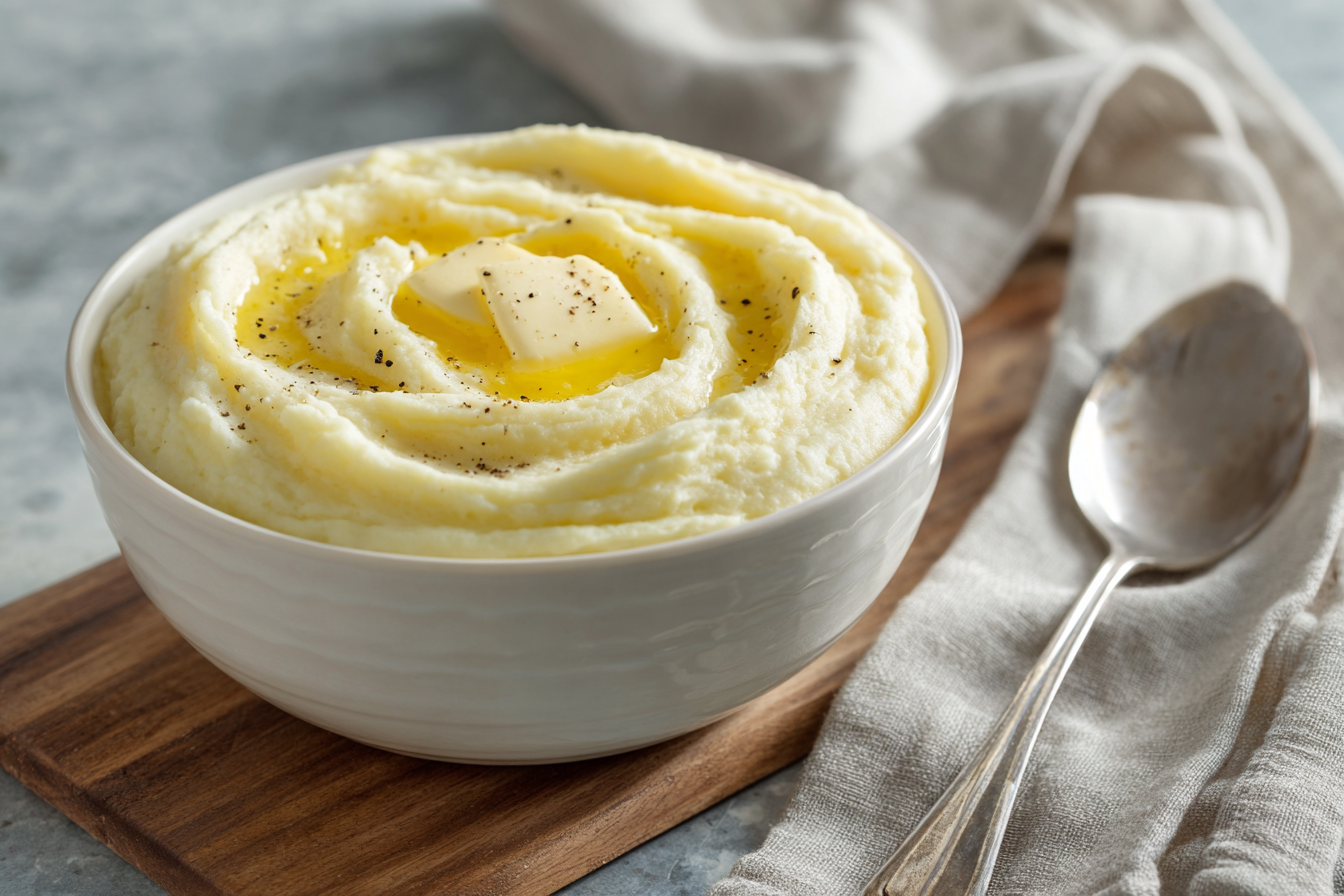
Restaurant-Style Garlic Butter Mashed Potatoes
Course: Side Dish6
servings15
minutes55
minutes380
kcalThe secret steakhouse method for impossibly creamy mashed potatoes with confit garlic, plenty of butter, and warm cream.
Ingredients
2 pounds Yukon Gold potatoes, peeled and cut into ½-inch cubes
2 tablespoons kosher salt (for the cooking water)
10 cloves garlic, peeled
1 cup olive oil (for confit garlic)
1 stick (½ cup / 113g) unsalted butter, cut into pieces
¾ cup heavy whipping cream
3-4 cloves confit garlic (from the batch above)
Kosher salt to taste
White pepper to taste (optional)
Directions
- Make the confit garlic first. Place 10 peeled garlic cloves in a small pot with 1 cup olive oil. Set over the lowest heat possible and cook for 30 to 40 minutes, until the cloves are completely soft and golden. Remove from heat and set aside. You’ll use 3-4 cloves for this recipe and can store the rest in a jar in the fridge for up to two weeks.
- Place the cubed potatoes in a large pot and cover with cold water by about an inch. Add 2 tablespoons kosher salt. Set over medium-high heat and bring to a boil, then reduce to a steady simmer. Cook for about 10 minutes, until the potatoes are fork-tender but not falling apart.
- While the potatoes cook, combine the butter, heavy cream, and 3-4 confit garlic cloves in a small saucepan. Set over medium-low heat and simmer gently until the butter is completely melted and the mixture is warm and fragrant. Don’t let it boil — just keep it hot.
- Drain the potatoes thoroughly in a colander. For even better results, spread them on a rimmed baking sheet and place in a 350°F oven for 10 minutes to dry out excess moisture. This step is optional but makes a real difference in how much butter and cream the potatoes absorb.
- Pass the warm potatoes through a potato ricer or food mill back into the original cooking pot. Work in batches — press each portion through so it falls in light, fluffy strands. Do not use a blender or food processor.
- Set the pot of riced potatoes over medium-low heat. Pour the warm butter-cream-garlic mixture through a fine mesh strainer into the potatoes (this catches any garlic pieces for a smooth result, or skip the strainer if you like garlic bits). Stir with a wooden spoon or spatula until fully combined and the potatoes look creamy and smooth.
- Taste and season with additional kosher salt and white pepper as needed. The potatoes should taste well-seasoned and rich. If they seem too thick, add a splash more warm cream and stir until you reach the consistency you want.
- Serve immediately, smoothing the top with the back of a spoon. These are best eaten right away, but if you need to hold them, keep covered on the lowest heat setting and add hot cream to loosen them up again just before serving.
Notes
- If making ahead, prepare through the ricing step and hold off on adding the cream mixture. Keep the base covered and warm, then stir in the hot cream and butter just before serving for the best texture.
- For an even richer version, increase butter to 1½ sticks (170g) for a 1:3 butter-to-potato ratio. Don’t exceed this amount or the emulsion may break and turn greasy.
- Leftover confit garlic oil is fantastic for sautéing vegetables, making salad dressing, or drizzling over roasted chicken. Store it in the fridge in a sealed jar for up to two weeks.
