

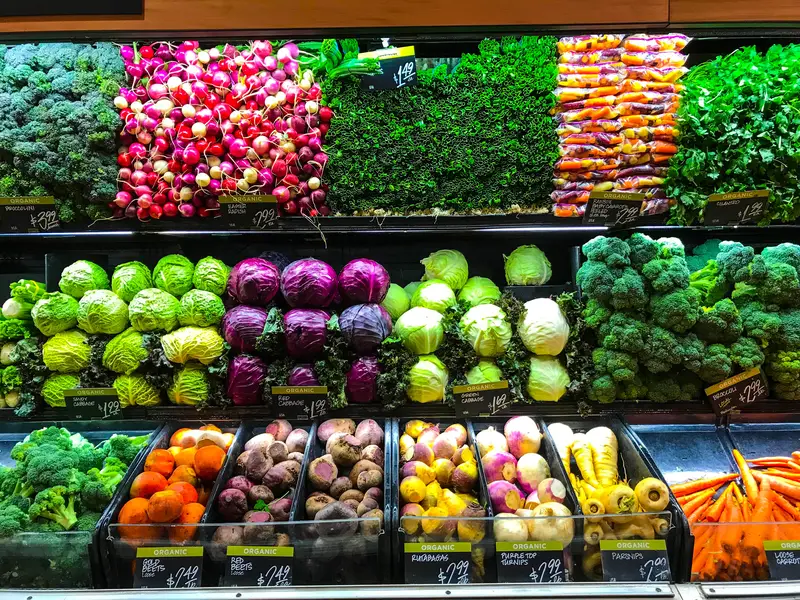
You’re standing in the produce aisle, tossing a bag of peppers into your cart without a second thought. You trust the store. You’ve been shopping here for years. But what if I told you that the place where you buy your fruits and vegetables has been caught — repeatedly — selling moldy, overripe, and mislabeled produce? And that even their own employees have blown the whistle on how bad it really is?
We’re talking about Walmart. And the evidence against their produce department isn’t just anecdotal. It comes from consumer surveys, leaked internal documents, lawsuits, and the testimony of people who actually worked there. But Walmart isn’t the only offender. Several major chains have serious produce problems that most shoppers never think about. Here’s who’s failing you, ranked from bad to absolute worst.
ACME Markets
If you live in the Mid-Atlantic region, you probably know ACME. And if you’ve been buying produce there, you might want to reconsider. Customers have described the produce department with words like “unreliable,” “severely lacking,” “nasty,” “horrible,” and “overpriced.” That’s not one disgruntled shopper — that’s a pattern of complaints across multiple locations.
What makes ACME especially frustrating is the price tag. It’s already one of the most expensive grocery chains in the country, so you’d expect better quality for what you’re paying. But the produce doesn’t match the premium pricing. You’re essentially overpaying for fruits and vegetables that wouldn’t pass inspection at a farmer’s market. If you’re going to spend that kind of money, at least get something that lasts more than two days in your fridge.
Target
Target is great for a lot of things. Throw pillows, T-shirts, random stuff you didn’t know you needed. But produce? Their fresh sections are typically tiny, crammed between the meat, cheese, and juice aisles like an afterthought. And that’s because it kind of is one. Most of what you’ll find is pre-packaged — bags of salad, pre-cut fruit, that sort of thing.
Target’s produce buyers seem to be trying to improve things, but the selection is still limited and the prices are higher than they should be. If you’re already at Target grabbing laundry detergent and a candle, fine, grab a bag of apples. But making Target your go-to for weekly produce shopping is a mistake. The inventory just isn’t there, and what is there isn’t priced to move.
Trader Joe’s
This one surprises people. Trader Joe’s is America’s favorite grocery chain in 33 states, and for good reason — their frozen foods, snacks, and specialty items are hard to beat. But their produce section? It’s a different story. Shoppers have described it as bruised, wilted, and going bad within two to three days of purchase.
One customer noted they hadn’t seen green onions in months. Others say the avocados are either rock hard or already brown inside — no in-between. There’s a running joke among Trader Joe’s fans that you shop there for everything except the fresh stuff. And honestly? That’s solid advice. Get your frozen orange chicken and cookie butter there. Buy your produce somewhere else.
Aldi
Aldi has built a cult following by offering rock-bottom prices on groceries. And for pantry staples, it delivers. But when it comes to produce, those low prices come with a catch. An alleged Aldi employee explained on Reddit that the store doesn’t buy the highest-grade produce — because if they did, the prices would go up.
Customers report strawberries molding the very next day after purchase. Bananas turn brown faster than normal. Lettuce rots within two days. Cucumbers sometimes look rotten while they’re still sitting on the shelf. The employee did offer a useful tip: if you want the best quality, go right at opening or between 12 and 2 p.m., because they toss out bad produce and meat twice daily. That’s a helpful workaround, but the fact that you need a strategy just to buy decent lettuce tells you something.
King Soopers and Kroger
King Soopers, which is owned by Kroger, earned a dismal 3.938-star average rating, making it one of America’s least favorite major grocery chains. Both Kroger and King Soopers consistently rank among the worst for customer service, and the produce departments don’t do them any favors either.
Kroger and Albertsons together dominate grocery retail in 21 states. But size doesn’t mean quality. Industry data shows a staggering $18 billion worth of food arrives at U.S. grocery stores already spoiled every year, and major chains are among the worst offenders. Large chains tend to overstock perishable items on purpose, knowing waste is built into their business model. Older produce gets buried under newer shipments, and by the time you grab that bell pepper, it might already be on its last legs.
Safeway
Safeway holds the unfortunate distinction of having one of the worst individual grocery stores in the entire country — the location on 40th Street in Washington, DC, which was named the worst grocery store overall in a study of 3,000 stores across 100 cities. Safeway claimed three of the worst 10 grocery stores nationwide.
What’s ironic is that only 48% of Walmart customers were confident in that store’s produce — but 71% of Safeway customers felt good about theirs. The perception doesn’t always match reality. Safeway’s problems seem concentrated at specific locations rather than chain-wide, but when those locations are bad, they’re really bad. If your local Safeway has reviews mentioning expired items or sketchy produce, believe them.
Walmart — The Worst of the Worst
And here we are. Walmart claimed 22 of the 50 worst-rated grocery stores in America and three spots in the bottom 10. Consumer Reports gave them some of the lowest marks for produce quality. Consumers’ Checkbook ranked Walmart dead last in the produce category. And a Facebook survey with over 500 responses had hundreds of customers singling out Walmart as the worst place to buy fruits and vegetables.
But the most damning testimony came from someone who actually ran the show. A former Walmart produce department manager said publicly: “I ran the produce department at Walmart for years. Walmart has the worst, hands down. The stuff I used to get would come off the truck with mold on it. Ridiculous.”
The problems are structural. According to The New York Times, Walmart stores simply don’t have enough staff to manage produce properly. Between 2007 and the time leaked internal documents surfaced, the average Walmart dropped from 338 workers per store down to 281. That’s 57 fewer people per location. When produce departments are short-staffed, Walmart pulls in employees from apparel, lawn care, or jewelry to cover. These are people who have no training in how to handle perishable food.
One internal note from a meeting of top Walmart managers was blunt: “Lose Trust” and “Don’t have items they are looking for — can’t find it.” They know. They’ve known for years. A Walmart food stocker told Time magazine: “The merchandise is in the store, it just can’t make the jump from the shelf in the back to the one in the front. There’s not the people to do it.”
Walmart tried cosmetic fixes — adding more space, creating an “open market” feel, grouping organic items together, putting up new signage. None of it addressed the actual freshness problem. A Walmart spokesperson responded to the low ratings by saying: “This rating is not one that we ever want to have, but it is also not indicative of the overall program.” Which is a very corporate way of saying “we know, but we don’t think it’s that bad.”
And then there are the lawsuits. In August 2025, Walmart agreed to a $5.6 million settlement in California after being accused of inflating produce weights, mislabeling bagged produce, and overcharging for clearance items. Santa Clara District Attorney Jeff Rosen put it simply: “When someone brings an item to the register to be scanned, the price must be right.” That was Walmart’s third pricing and weight settlement. In June 2024, they paid $1.64 million for illegal pricing practices at 64 New Jersey locations.
So you’re not just getting bad produce at Walmart. You might also be getting overcharged for it.
Where Should You Buy Produce Instead?
The research consistently points to a few winners. Trader Joe’s is America’s favorite grocery chain overall — just skip their produce section. Costco and Wegman’s also rank among the top chains. Regional stores tend to outperform the big national brands because they have dedicated produce staff who actually monitor quality throughout the day. Smaller, more frequently rotated displays mean fresher food and less waste.
Your best bet for fresh produce is almost always a local grocery store, a farmer’s market, or a regional chain that takes pride in its perishable departments. The mega-chains have made a deliberate choice to prioritize volume over quality. That $0.30 you save on a bag of peppers doesn’t matter when they’re mushy by Tuesday.
Stop giving your produce money to stores that don’t respect it. You deserve better peppers than that.
