

I’ll be honest: I did this for years. I’d pull a pack of chicken thighs out of the freezer at 8 a.m., drop them on the kitchen counter, and go about my day. By dinnertime, they were thawed. Easy. Efficient. And, as it turns out, genuinely risky.
Counter-thawing meat is one of those habits that gets passed down like a family recipe. Your mom did it, her mom did it, and nobody ever got sick — that you know of. But just because something has “always worked” doesn’t mean it’s safe. The science behind why this method is dangerous is pretty straightforward, and once you understand it, you’ll probably change how you handle frozen meat forever.
The Danger Zone Is Real, and It Has Nothing to Do With Kenny Loggins
Here’s the thing most people don’t think about: meat doesn’t thaw evenly. When you leave a frozen pack of ground beef on the counter, the outside warms up way faster than the inside. So while the center is still a solid block of ice, the outer layer is sitting there at room temperature — and bacteria are throwing a party.
The USDA calls the temperature range between 40°F and 140°F the “Danger Zone.” That’s the sweet spot where bacteria like Salmonella, E. coli, and Staphylococcus aureus multiply the fastest. At room temperature — around 68°F to 72°F in most American homes — bacteria can double in number every 20 minutes. Every 20 minutes. That means if you leave a pack of chicken breasts on the counter for four hours, the bacteria on the surface could have multiplied thousands of times over before you even fire up the stove.
And here’s the part that really gets people: cooking the meat to the right internal temperature will kill most of those bacteria, sure. But some bacteria produce toxins as they multiply, and those toxins don’t break down with heat. So even if you cook your steak to a perfect 145°F, the toxins left behind by Staphylococcus can still make you sick. That’s a nasty surprise nobody wants after a Tuesday night dinner.
Why Counter-Thawed Meat Tastes Worse Too
Safety aside, counter thawing also wrecks the quality of your food. When meat sits at warmer temperatures for hours, the muscle fibers break down unevenly. The outside gets mushy while the inside stays frozen. Try searing a steak that’s soft on the outside and rock-hard in the middle. You’ll get a gray, overcooked exterior and a raw, cold center. No amount of seasoning saves that.
There’s also the moisture problem. As meat thaws slowly at room temperature, it loses more liquid than it would with a controlled, slower thaw. That liquid is myoglobin — the red stuff that pools at the bottom of the package — and it carries flavor and moisture with it. Losing that moisture means your finished dish will be drier and less flavorful. Nobody’s ever looked at a dry pork chop and said, “Wow, that was worth the wait.”
The Refrigerator Method: Boring but Bulletproof
The safest way to thaw meat is in the refrigerator. Yes, it takes longer. Yes, it requires you to actually plan ahead. I know, I know — planning dinner the night before sounds like something only organized people do. But it works, and it’s the only method where you can thaw meat and then decide not to cook it that day without worrying.
A pound of ground beef or boneless chicken breasts will typically thaw in the fridge in about 24 hours. Bigger cuts — a whole chicken, a thick roast — can take two to three days. The key is that the meat stays below 40°F the entire time, which keeps it out of the Danger Zone completely. Once it’s thawed in the fridge, you’ve got another one to two days before you need to cook it. That’s a generous window that takes the pressure off.
Pro tip: put the meat on a plate or in a bowl on the lowest shelf of your fridge. Raw meat juice dripping onto your lettuce is a fast track to a bad time.
Cold Water Thawing: The Smart Shortcut
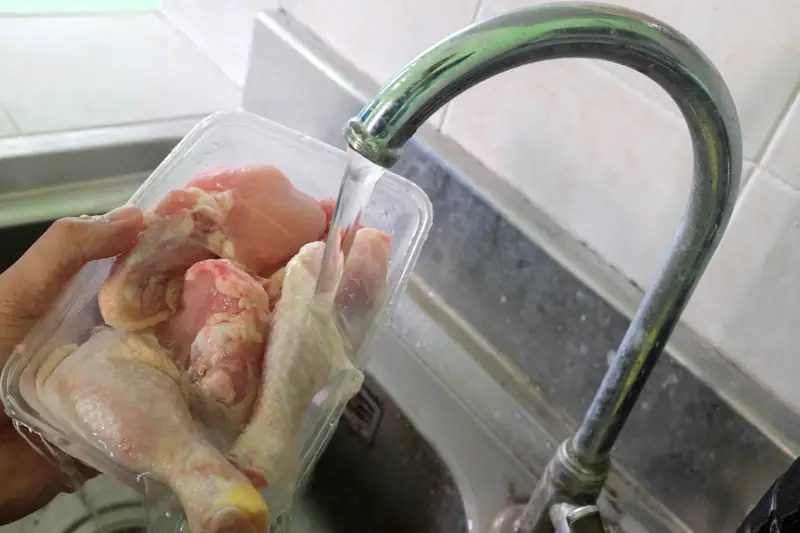
Forgot to move the chicken to the fridge last night? Cold water thawing is your best friend. Submerge the meat — still in its sealed packaging or a leak-proof zip-top bag — in a bowl of cold tap water. Change the water every 30 minutes to keep it cold. A pound of meat will thaw in about an hour this way. A three- to four-pound package might take two to three hours.
The important detail: the water must be cold. Not lukewarm, not room temperature, and definitely not hot. Cold water (around 40°F from your tap) keeps the surface of the meat cool enough to stay out of the Danger Zone while the ice crystals inside break down steadily. There’s actually an interesting discussion on online cooking forums about whether warm water is acceptable for very small, thin cuts that thaw in under an hour. The FDA apparently gives some leeway there. But for most people working with standard grocery store packages, cold water is the move.
One more thing: once you thaw meat using the cold water method, cook it immediately. Don’t put it back in the fridge and save it for tomorrow. The clock is already ticking.
The Microwave Works, but You Have to Commit
Every microwave has a defrost button. Most people have never used it, or they’ve tried it once and ended up with chicken that was cooked on the edges and frozen in the middle. Fair enough — microwaves aren’t exactly known for heating things evenly.
But the defrost function does work if you follow one rule: cook the meat immediately after microwaving it. The microwave brings parts of the meat into the Danger Zone during thawing, and some areas might even start to cook. That creates perfect conditions for bacteria if you let the meat sit. So if you microwave-thaw a pound of ground turkey at 5:30 p.m., it needs to be in a pan by 5:35. No exceptions.
Also, take the meat out of any foam trays or plastic wrap before microwaving. Those materials can warp, melt, or release chemicals when heated. Transfer the meat to a microwave-safe plate and use 50% power if your microwave lets you adjust. You’ll get more even results than blasting it on full power.
You Can Actually Cook Meat From Frozen
Here’s something a lot of people don’t realize: you can skip the thawing step entirely. The USDA says it’s perfectly safe to cook meat straight from the freezer. The catch is that it’ll take about 50% longer than cooking thawed meat. So if a thawed chicken breast takes 20 minutes in the oven, a frozen one will take about 30.
This works best for things like ground beef (break it up as it cooks in the pan), thin chicken breasts, and pork chops. It’s less ideal for a giant roast or a whole turkey — the outside will overcook long before the inside reaches a safe temperature. But for weeknight dinners when you forgot to thaw anything? It’s a lifesaver. Season the meat as it cooks, since spices won’t stick to a frozen surface. Once it starts to release moisture and the surface warms up, that’s when your seasoning will hold.
The Numbers Behind Foodborne Illness
If you’re thinking “I’ve thawed meat on the counter a hundred times and never gotten sick,” you’re probably right. But that doesn’t mean it’s safe — it means you’ve been lucky. The CDC estimates that 48 million Americans get sick from foodborne illness every year. That’s roughly 1 in 6 people. Of those, 128,000 end up in the hospital and 3,000 die. Not all of those cases come from bad thawing practices, obviously. But improper handling of raw meat is one of the most common contributors.
And here’s the frustrating part: foodborne illness symptoms often look exactly like a regular stomach bug. Nausea, cramps, diarrhea — most people just chalk it up to “something I ate” and move on without ever connecting it to the chicken they left on the counter for six hours last Tuesday. You might have gotten sick from counter-thawed meat and never even known it.
Breaking the Habit
Look, I get it. Counter thawing is easy. It requires zero effort and zero planning. That’s exactly why 70% of home cooks still do it, according to food safety surveys. We’re all busy. We’re all tired. The last thing anyone wants to think about at 10 p.m. is moving tomorrow’s dinner from the freezer to the fridge.
But the fix isn’t complicated. Set a phone reminder after dinner: “Move meat to fridge.” That’s it. Five seconds of effort buys you peace of mind and better-tasting food. If you forget, the cold water method saves you in an hour. If you really forget, cook it from frozen. There’s almost never a good reason to leave meat sitting on the counter all afternoon.
Your grandma might have done it that way for decades. But your grandma also didn’t have a smartphone that could remind her to thaw chicken. Use the tools you’ve got and stop gambling with dinner.
