

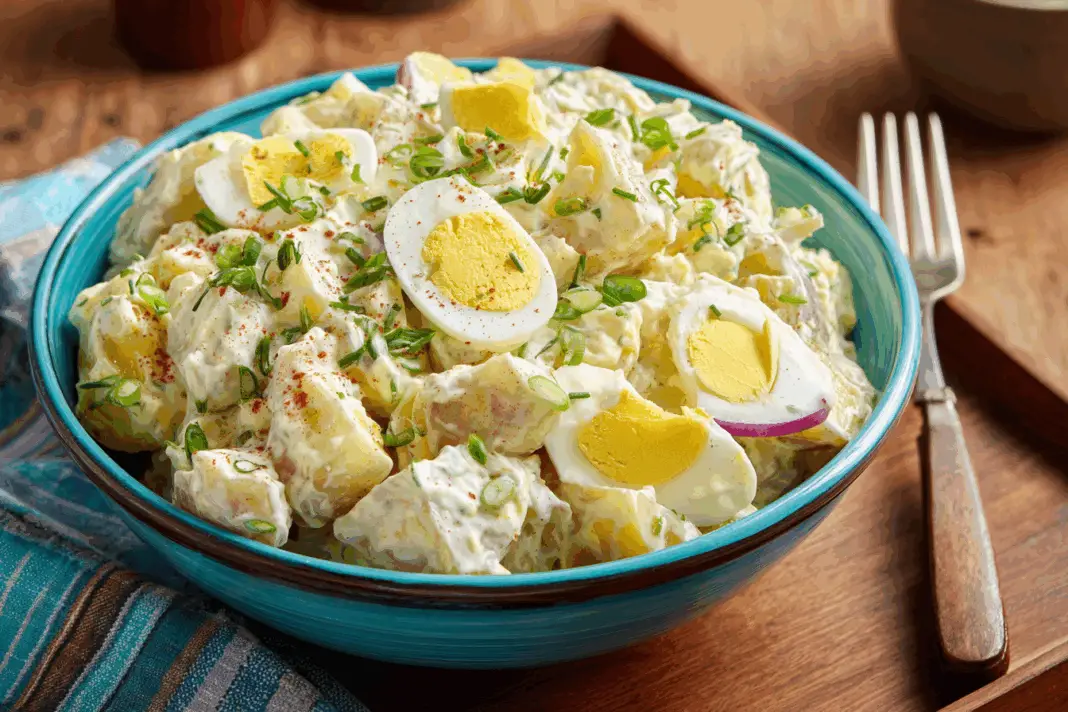
Most people think the grilled meat is the star of any backyard barbecue, but ask any seasoned pitmaster and they’ll tell you the real magic happens with the side dishes. While everyone’s focused on perfecting their brisket or ribs, the sides are quietly working behind the scenes to make or break the entire meal. Texas-style potato salad is one of those unassuming dishes that has the power to completely overshadow the main course – and once you try this version, you’ll understand why guests keep asking for the recipe long after the cookout ends.
Texas potato salad isn’t your typical mayo-heavy mess
Walk into any Texas barbecue joint and you’ll notice their potato salad looks different from what most people serve at backyard gatherings. Instead of the dense, overly creamy versions that sit heavy in your stomach, Texas-style potato salad has a lighter, more refreshing quality. The potatoes are coarsely mashed rather than diced, creating a texture that’s somehow both smooth and chunky at the same time. This technique allows the dressing to coat every bit of potato without creating that gloppy consistency that makes you reach for water after every bite.
The secret lies in how the potatoes are prepared and dressed while still warm. Texas pitmasters know that hot potatoes absorb dressing better than cold ones, creating a more integrated taste throughout the dish. The mustard-forward dressing cuts through the richness of smoked meats perfectly, while pickles add the acidic punch that keeps everything balanced. This isn’t just potato salad – it’s a carefully crafted complement to barbecue that serves a specific purpose on the plate.
The mustard makes all the difference here
While most potato salads rely heavily on mayonnaise for creaminess, Texas-style versions balance mayo with a generous amount of yellow mustard. This isn’t just for tang – mustard serves as an emulsifier that helps create a lighter, more stable dressing. The mustard also adds a subtle heat that complements smoky barbecue without competing with it. Many home cooks make the mistake of skimping on the mustard, but it should be prominent enough that you can see its yellow color throughout the salad.
The type of mustard matters too. Stick with classic yellow mustard rather than fancy Dijon or whole grain varieties. Yellow mustard has the right acidity level and mild heat that won’t overpower the other ingredients. Professional barbecue cooks often use a ratio of about two parts mayo to one part mustard, but adjust this based on your preference. The goal is a dressing that’s creamy but not heavy, with enough mustard bite to cut through rich, fatty meats.
Pickle juice does the heavy lifting for taste
The real game-changer in Texas potato salad is pickle juice. Most people toss out pickle juice without thinking twice, but it’s liquid gold for this recipe. The juice adds acidity that brightens the entire dish while providing a subtle pickle taste that’s not as aggressive as adding actual pickle chunks. It also helps thin the dressing to the perfect consistency without diluting the other components. Start with just a tablespoon or two – you can always add more, but you can’t take it back.
Don’t just grab any pickle juice from your fridge. Dill pickle juice works best because it has the right balance of vinegar, salt, and herbs. Sweet pickle juice will make your potato salad taste dessert-like, which isn’t what you want alongside barbecue. Experienced cooks often keep pickle juice specifically for recipes like this, storing it in the refrigerator for up to a month after the pickles are gone. The sodium content also helps season the potatoes from within, reducing the need for additional salt.
Russet potatoes work better than waxy varieties
Potato choice can make or break this dish, and many people automatically reach for red potatoes or fingerlings thinking they’re better for salads. While waxy potatoes hold their shape well, they don’t absorb dressing the way russet potatoes do. Russets break down slightly when mashed, creating that signature Texas texture that’s neither chunky nor completely smooth. Their starchy nature also helps them soak up the mustard-mayo dressing, creating more integrated taste in every bite.
Cook the russets until they’re tender but not falling apart – this usually takes about 15-20 minutes depending on how large you cut them. Test doneness with a fork; they should pierce easily but still hold together when lifted. Drain them thoroughly and let them cool just enough to handle safely, then mash them coarsely with a potato masher or large fork. Some people use a food processor, but that creates too smooth a texture and can make the potatoes gluey.
Temperature timing affects the final result
The biggest mistake people make with potato salad is adding the dressing to cold potatoes. Warm potatoes absorb dressing much better, creating a cohesive dish rather than potatoes sitting in puddles of mayo. Mix your dressing ingredients while the potatoes are cooking, so you’re ready to combine everything while the potatoes are still warm to the touch. This technique is what gives restaurant-quality potato salad its superior texture and integrated taste.
However, don’t add dressing to scalding hot potatoes or the mayo will separate and create an oily mess. Let them cool for about 10 minutes after draining – they should be warm but not steaming. Mix gently but thoroughly, ensuring every piece gets coated. The potato salad will continue to absorb the dressing as it cools, so it might look a bit wet initially. That’s normal and actually what you want for the best final texture.
Hard-boiled eggs add richness without heaviness
Traditional Texas potato salad often includes chopped hard-boiled eggs, which might seem unnecessary but actually serves multiple purposes. The eggs add protein and richness without making the dish heavier, while their mild taste complements rather than competes with the other ingredients. The key is not overdoing it – two or three eggs for a large batch is plenty. Chop them roughly so you get some pieces of white and some pieces of yolk distributed throughout.
Make sure your hard-boiled eggs are properly cooked with no gray ring around the yolk. Start them in cold water, bring to a rolling boil, then remove from heat and let sit for 12 minutes before transferring to ice water. Properly cooked eggs will have bright yellow yolks and tender whites that won’t turn rubbery in the salad. Add them last, folding gently to avoid mashing them into the potatoes.
Green onions provide the perfect finishing touch
The final component that elevates Texas potato salad above standard versions is fresh green onions. They add a mild onion taste that’s not as harsh as regular onions, plus they provide color contrast against the pale potatoes and eggs. Use both the white and light green parts, slicing them thin so they distribute evenly throughout the salad. The slight crunch they maintain even after mixing adds textural interest that keeps the dish from being monotonous.
Some recipes call for regular yellow onions, but they can be overpowering and harsh, especially when raw. Green onions provide just enough onion bite without overwhelming the other components. If you can’t find green onions, chives work as a substitute, though they won’t provide the same mild crunch. Add them right before serving to maintain their fresh taste and texture.
Make it ahead but save some dressing
Texas potato salad actually improves when made a few hours ahead, giving all the ingredients time to meld together. However, potatoes continue absorbing dressing as they sit, so what looks perfectly dressed initially might seem dry later. The solution is to reserve about a quarter of your dressing and add it just before serving. This refreshes the salad and ensures it looks and tastes as good as when you first made it.
Store the salad covered in the refrigerator for up to three days, though it’s best within 24 hours. Before serving, let it come to room temperature for about 30 minutes – cold potato salad doesn’t taste as good as room temperature versions. Give it a gentle stir and add that reserved dressing if needed. Taste and adjust seasoning, as chilled foods often need a bit more salt and acid to taste properly balanced.
This pairs perfectly with any grilled meat
The beauty of Texas-style potato salad lies in its versatility alongside different barbecue styles. The mustard and pickle juice provide enough acidity to cut through fatty brisket, while the creamy texture complements the char on grilled chicken or pork ribs. Unlike heavy, mayo-laden potato salads that compete with meat for richness, this version acts as a palate cleanser that makes you want to keep alternating between the protein and the side dish.
It’s also substantial enough to satisfy vegetarians at your cookout without being so heavy that it weighs people down. The combination of potatoes, eggs, and creamy dressing provides enough protein and satisfaction that it works almost like a complete meal for those not eating meat. This versatility is part of what makes it such a reliable crowd-pleaser at any gathering, regardless of what’s coming off the grill.
Texas-style potato salad proves that the best barbecue sides don’t just fill space on the plate – they enhance the entire meal. This version strikes the perfect balance between creamy comfort and bright acidity, creating a dish that people remember long after the last bite. Master this recipe and watch it become the most requested dish at every cookout you attend.
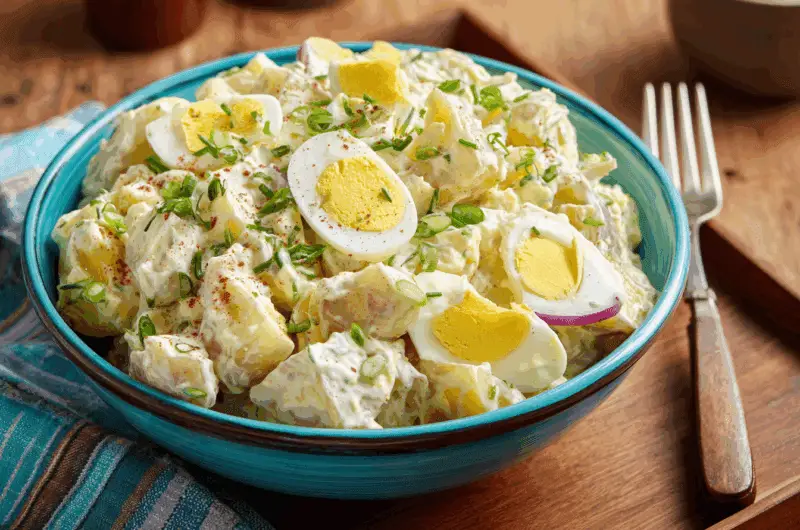
Texas-Style Potato Salad
Course: Side Dish8
servings20
minutes20
minutes245
kcalCreamy yet light potato salad with mustard-forward dressing that perfectly complements any barbecue spread.
Ingredients
3 pounds russet potatoes, peeled and cut into 2-inch chunks
3/4 cup mayonnaise
1/3 cup yellow mustard
2-3 tablespoons dill pickle juice
3 hard-boiled eggs, roughly chopped
1/3 cup chopped green onions (white and light green parts)
1 teaspoon salt, or to taste
1/2 teaspoon black pepper
1/4 teaspoon paprika for garnish
Directions
- Place the cut potatoes in a large pot and cover with cold water by about 2 inches. Add a generous pinch of salt to the water and bring to a rolling boil over medium-high heat. Cook for 15-20 minutes until the potatoes are fork-tender but not falling apart completely.
- While the potatoes cook, prepare your dressing by whisking together mayonnaise, yellow mustard, and 2 tablespoons of pickle juice in a large mixing bowl. Season with salt and pepper, then taste and adjust. Set aside until potatoes are ready.
- Drain the potatoes thoroughly in a colander and let them cool for about 10 minutes until warm but not steaming hot. Transfer the warm potatoes to the bowl with the dressing.
- Using a potato masher or large fork, coarsely mash the potatoes with the dressing, leaving some chunky pieces but ensuring most potatoes are broken down. The texture should be somewhat smooth but still have some texture throughout.
- Gently fold in the chopped hard-boiled eggs and green onions, being careful not to overmix. Taste and adjust seasoning with additional salt, pepper, or pickle juice as needed.
- Transfer the potato salad to a serving bowl and smooth the top lightly with a spoon. Cover and refrigerate for at least 2 hours to allow the components to meld together properly.
- About 30 minutes before serving, remove from refrigerator to come to room temperature. Give it a gentle stir and adjust seasoning if needed, as chilled foods often need additional salt or acid.
- Garnish with a light sprinkle of paprika just before serving. Serve alongside your favorite grilled or smoked meats for the perfect barbecue side dish.
Notes
- Reserve about 1/4 of the dressing when initially mixing and add it just before serving if the salad looks dry
- This potato salad is best made 2-4 hours ahead but can be stored covered in the refrigerator for up to 3 days
- Stick with yellow mustard rather than Dijon – the milder heat and acidity work better with barbecue
Frequently Asked Questions
Q: Can I make this potato salad without eggs?
A: Absolutely! The eggs add richness but aren’t essential to the recipe. Without them, you might want to add an extra tablespoon of mayonnaise to maintain the creamy texture. The mustard-pickle dressing combination will still provide all the tangy goodness that makes this Texas-style version special.
Q: How far in advance can I make this potato salad?
A: This salad actually improves when made 2-4 hours ahead, but it’s best within 24 hours. You can store it covered in the refrigerator for up to 3 days, though you may need to add a bit more dressing before serving as the potatoes continue absorbing moisture over time.
Q: What if I don’t have pickle juice?
A: You can substitute with white vinegar or apple cider vinegar, but start with just 1 tablespoon as these are more acidic than pickle juice. The pickle juice adds a subtle briny taste that’s hard to replicate, so if possible, grab a jar of dill pickles specifically for the juice.
Q: Why did my potato salad turn out gluey?
A: This usually happens when the potatoes are overcooked or overmixed. Cook potatoes just until fork-tender, and mash them gently by hand rather than using a food processor or electric mixer. Also make sure to let them cool slightly before adding the dressing to prevent the mayonnaise from breaking.
