

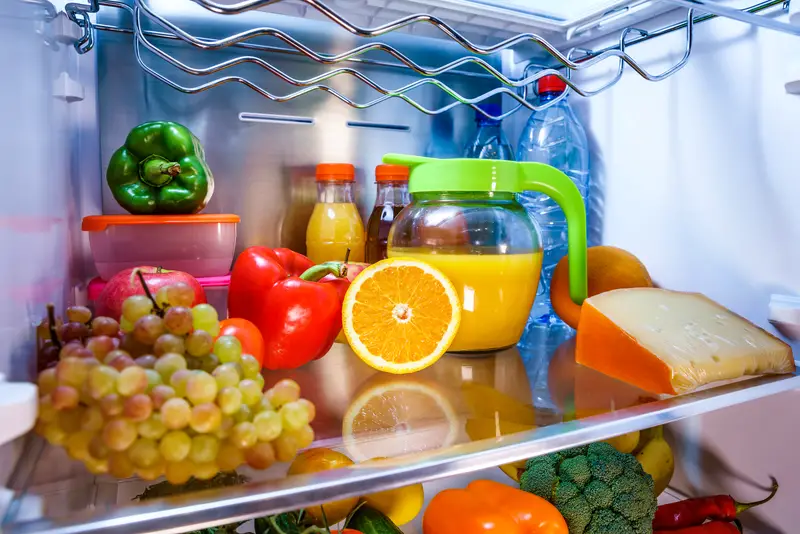
I watched my roommate in college put a perfectly green avocado into the fridge and then complain three days later that it was still hard as a rock. I watched my mom refrigerate tomatoes my entire childhood, and I genuinely thought that’s just what tomatoes tasted like — mealy, bland, kind of sad. It wasn’t until I lived on my own and left a tomato sitting on the counter by accident that I realized what I’d been missing.
Here’s the thing: we treat the refrigerator like a magic preservation box. Something comes home from the grocery store, it goes in the fridge. That’s the rule, right? Except it’s not. Some fruits actually lose flavor, texture, and quality when you chill them. You’re spending good money on produce and then ruining it the second you get home. Let’s talk about which ones need to stay out.
Bananas Have No Business Being In There
This is the big one, and somehow people still argue about it. Bananas are tropical fruit. They grew up in warm, humid conditions. Putting them in a 37°F refrigerator is like sending a Floridian to Minnesota in January with no coat. The cold breaks down the cell walls in the peel, turning it black almost overnight. And while the fruit inside might still be okay for a day or two, the texture starts going wrong fast — mushy in some spots, weirdly firm in others.
The better move is keeping bananas at room temperature, ideally on a banana hook or just sitting on the counter away from other fruit. That last part matters and I’ll explain why in a minute. If your bananas are getting too ripe before you can eat them, separate them from the bunch. Each banana releases ripening gas from the stem, and when they’re all bunched together, they speed each other up. Pull them apart and they slow down. You can also wrap the stems in plastic wrap to slow down gas release. Way better than refrigerating them.
Tomatoes Lose Everything Good About Them In The Cold
Okay, technically tomatoes are a fruit. And they might be the single worst thing you can put in a refrigerator if you care at all about how your food tastes. Cold temperatures — anything below about 50°F — shut down the enzymes that produce flavor compounds in tomatoes. Once those enzymes stop working, they don’t start back up when the tomato warms up again. The damage is permanent.
That’s why a grocery store tomato that’s been refrigerated tastes like a wet sponge compared to one straight off the vine in July. The mealy, grainy texture people associate with bad tomatoes? That’s almost always a cold storage problem, not a variety problem. A University of Florida study found that storing tomatoes at 41°F for just one week reduced volatile flavor compounds by up to 65%. That’s not a small difference. That’s most of the flavor, gone.
Keep them on the counter, stem-side down. Putting them upside down actually slows moisture loss and prevents bruising around the stem scar, which is the most vulnerable part. If you bought more than you can use in a few days, make sauce and freeze that instead. Way better solution than a cold, flavorless tomato on your sandwich.
Avocados Need The Counter Until They’re Ready
Avocados are one of those fruits where timing is everything. You’ve got maybe a 36-hour window between “not ripe yet” and “brown mush,” and people panic and throw them in the fridge to try to hit pause. But if your avocado isn’t ripe yet, refrigerating it will basically freeze the ripening process in place. It won’t get softer. It won’t develop flavor. It’ll just sit there, hard and disappointing, for a week.
Let your avocados ripen on the counter first. Once they give just slightly to gentle pressure and the little stem nub pops off easily and looks green underneath, THEN you can put them in the fridge to buy yourself an extra day or two. But only once they’re ripe. Putting an unripe avocado in the fridge is just delaying your disappointment.
Want to speed up ripening? Put the avocado in a paper bag with a banana. Both produce ethylene gas, and trapping that gas in an enclosed space accelerates the process. You can go from rock-hard to perfect in about 24 hours.
Citrus Fruits Get Weird In The Cold
Oranges, lemons, limes, grapefruits — people automatically put these in the fridge because they seem like they belong in the crisper drawer. But citrus fruits are another warm-climate crop that doesn’t love the cold. Refrigeration changes both the texture and the taste of citrus. The rind gets tough and dry, the flesh can become mealy, and the juice yield drops because cold firms everything up.
Now, here’s where it gets slightly nuanced. If you’re going to use your citrus within a week, leave it on the counter. You’ll get more juice, better flavor, and a nicer texture. If you bought a big bag of Cuties or a Costco-sized net of lemons and you know it’s going to take you two or three weeks to get through them, then fine — the fridge will extend their shelf life. But you’re trading flavor for longevity. Just know that’s the trade you’re making.
Pro tip: if you do refrigerate citrus and then want to juice it, let it come to room temperature first, or microwave it for 10-15 seconds. A room-temp lemon gives you almost twice as much juice as a cold one. Roll it on the counter under your palm before cutting it, too. That breaks up the internal membranes and releases more liquid.
Stone Fruits Turn Into Sad Mush
Peaches, plums, nectarines, apricots — the whole stone fruit family does terribly in the fridge when they’re not ripe yet. Cold storage gives them that classic problem where the outside feels soft but the inside is dry and cottony. It’s called “chilling injury” and it’s a real thing that food scientists have studied extensively. The cold disrupts normal ripening, so the fruit breaks down in the wrong order. You get textural chaos.
Leave stone fruits on the counter in a single layer (don’t stack them — they bruise easily) until they smell fragrant and give slightly when pressed. That’s when they’re ready to eat. If you can’t eat them right away at that point, then the fridge is fine for a day or two. But only after they’ve ripened on the counter. Putting a firm peach from the store directly into the fridge is how you end up throwing away peaches.
The Ethylene Gas Thing You Need To Understand
A lot of this comes back to one concept: ethylene gas. It’s a natural plant hormone that fruits release as they ripen. Some fruits produce a lot of it (bananas, avocados, apples, peaches), and some fruits are very sensitive to it (berries, grapes, leafy greens). When you store everything together, the high-ethylene fruits make everything around them ripen faster and spoil sooner.
This is why your bag of salad goes slimy three days after you bought it. It’s sitting next to apples in the crisper. This is why your strawberries mold overnight. They’re in the same drawer as peaches. Separation matters as much as temperature.
Keep your ethylene producers (bananas, avocados, apples, stone fruits, tomatoes) separate from your ethylene-sensitive items (berries, leafy greens, broccoli, cucumbers). If everything goes in the fridge, use separate drawers. Better yet, keep the producers on the counter where they belong and save your fridge space for the stuff that actually benefits from cold.
Mangoes And Papayas Follow The Same Rules
Any tropical fruit — mangoes, papayas, pineapple, kiwi — follows the same basic principle as bananas. These fruits evolved in warm climates and their ripening chemistry depends on warmth. Cold storage slows or stops the process and can cause off-flavors and weird textures. A mango that goes into the fridge too early will never reach that perfect, juicy, dripping-down-your-chin ripeness. It’ll just stay hard and slightly sour.
Counter. Room temperature. Until ripe. Then eat them or refrigerate briefly. That’s the formula for every single tropical fruit.
What Actually Belongs In The Fridge
For balance: berries (strawberries, blueberries, raspberries, blackberries) should go straight into the fridge. They’re already ripe when you buy them and they mold fast at room temperature. Grapes, same thing. Cherries, same thing. Cut fruit of any kind, fridge immediately — once you break the skin, bacteria can get in and cold slows that down.
Apples are sort of a middle ground. They’re fine on the counter for a week, but they’ll last over a month in the fridge. Your call on that one. Just remember they produce a ton of ethylene, so if they go in the fridge, keep them away from everything else.
Stop Wasting Money On Fruit You’re Ruining
Americans waste around 30-40% of their food supply, according to the USDA. Produce is the number one category of food waste in American households. A lot of that waste comes down to bad storage. You buy a beautiful peach at the farmers market, throw it in the fridge out of habit, and then toss it five days later because it tastes like cardboard. That’s not the peach’s fault.
The fix here is dead simple. Learn which fruits need the counter and which need the cold. Give them a day or two to do their thing at room temperature. Eat them when they’re actually ready. Your grocery bill will thank you, and honestly, your food will just taste better. That alone should be reason enough.
