

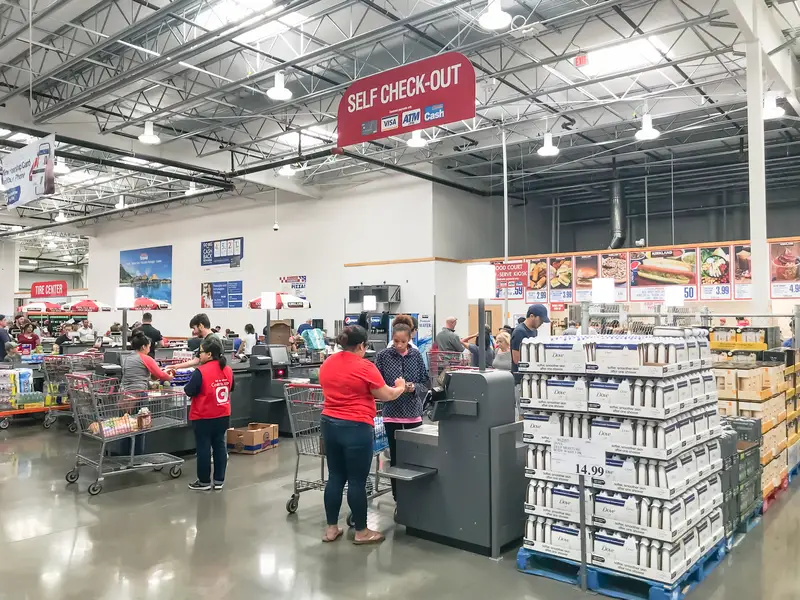
Grocery stores have been making some pretty big changes lately, and shoppers aren’t exactly thrilled about it. From disappearing checkout lanes to rearranged aisles that feel like a maze, these updates are causing more frustration than convenience. What’s supposed to make shopping easier is actually making people want to throw their reusable bags in the trash and head somewhere else. Most stores claim these changes improve the shopping experience, but anyone who’s been stuck in a 45-minute line or walked an extra mile just to grab milk knows that’s not always the case.
Self-checkout lanes are vanishing from Aldi stores
Walking into your local Aldi store used to mean quick trips through self-checkout for just a few items. Those days are over at many locations as the chain continues removing these machines entirely. Shoppers who once enjoyed scanning their own groceries now find themselves standing in regular checkout lines that can stretch halfway down the aisles. One frustrated customer reported waiting 45 minutes in line just to buy three items because their store had eliminated all self-checkout options. That’s enough time to watch an entire TV show episode while clutching a gallon of milk.
Aldi claims it’s constantly testing new checkout formats to address customer needs and improve how the stores run. The company insists that self-checkouts will stay at many locations, but that’s cold comfort if your neighborhood store isn’t one of them. An August complaint on social media revealed that customers can no longer count on Aldi for quick shopping trips anymore. The chain seems to think this change helps, but shoppers standing behind eight full carts would strongly disagree. When you just need bread and eggs, spending nearly an hour in line feels like punishment rather than progress.
Entrance and exit doors are becoming one-way only
Imagine pulling into your regular grocery store parking lot and heading toward the door closest to what you need, only to find out you can’t use it anymore. Some stores are now forcing customers to enter through one specific door and exit through another, regardless of where you parked or what you’re buying. This might sound like a minor inconvenience until you realize you’re being forced to walk the entire length of a massive store just to pick up something near the “wrong” door. One Ohio shopper with an injury described how difficult this new policy makes their shopping trips, especially when they only need a couple of items.
The real kicker? Stores are installing gates to physically prevent people from using the “exit only” door to enter. This setup clearly aims to make shoppers walk past more products, hoping they’ll toss extra items in their carts on the long trek. Elderly customers and anyone with mobility issues suffer the most from these policies. The store claims it’s about improving the shopping experience, but forcing everyone to take the scenic route through every aisle feels more like a money grab than customer service.
Store layouts keep getting completely rearranged
Remember when you could walk into your grocery store with your eyes half-closed and still find everything on your list? Those days are gone. Stores have discovered that completely rearranging their layouts forces customers to wander around searching for familiar products. What used to take 15 minutes now requires 45 because the pasta moved from aisle three to aisle nine, and the cereal somehow ended up next to the frozen foods. This isn’t accidental – it’s a deliberate strategy to increase what stores call “spontaneous purchases,” which really means tricking you into buying stuff you didn’t come for.
One shopper got so fed up with their local supermarket’s complete reorganization that they started shopping elsewhere entirely. When everything from canned goods to bread gets shuffled around, regular customers feel punished for their loyalty rather than rewarded. Stores hope confused shoppers will browse more and buy more, but the actual result is often just angry customers who take their business to competitors with more sensible layouts. Finding your favorite brand of coffee shouldn’t require a treasure map and a compass, but that’s basically what shopping has become at stores that can’t leave well enough alone.
Sam’s Club ditched traditional self-checkout entirely
Sam’s Club decided regular self-checkout wasn’t working for them and removed these stations from all their stores. Instead of scanning items at a kiosk after shopping, customers now need to use something called Scan and Go. This system requires shoppers to scan every single item with their phone as they place it in their cart while walking around the store. Sounds simple enough until you’re juggling your phone, your shopping list, screaming kids, and trying to scan a barcode on a bag of chips that won’t stay still. The whole process adds extra work to something that used to be straightforward.
The new scanning system means you’re basically doing two jobs at once – shopping and checkout – throughout your entire trip. Miss scanning one item accidentally, and you might face awkward questions at the exit. The app also needs to work perfectly every time, which anyone who’s dealt with glitchy store apps knows isn’t guaranteed. Sam’s Club clearly thinks this prevents theft better than traditional self-checkout, but regular shoppers end up paying the price in extra time and hassle. What happened to just putting items in your cart and paying for them at the end like normal people have done for decades?
Item limits are appearing at self-checkout lanes
Target rolled out a new policy limiting self-checkout to 10 items or less at thousands of stores across the country. This might sound reasonable until you realize it means anyone with a full grocery cart must use regular checkout lanes even during off-peak hours when those lanes might be understaffed. The express self-checkout concept started as a test in 200 stores but quickly expanded to over 2,000 locations. Some Walmart stores have also jumped on this trend, restricting self-checkout to 15 items or fewer. Counting items in your cart before deciding which line to join adds another annoying step to an already tedious process.
These limits supposedly speed up self-checkout for people with just a few items, but they also create confusion and frustration. Is a six-pack of soda one item or six? What about those tiny spice jars – do they really count the same as a watermelon? Shoppers now need to do mental math before choosing a checkout lane, and getting it wrong means awkwardly abandoning the self-checkout and moving to a regular lane with everyone watching. The stores claim this improves efficiency, but it mostly just creates more rules that shoppers need to remember and follow. Shopping used to be simpler before every store decided to reinvent the wheel.
Costco products are shrinking while prices stay the same
Costco’s beloved Kirkland Signature Peppermint Bark became the latest victim of shrinkflation this holiday season. Longtime customers immediately noticed the chocolate bark pieces looked noticeably thinner and more breakable than previous years. The package size dropped from 2 pounds to 1.5 pounds, but the price allegedly jumped up by five dollars to $15. That’s less product for more money, which is basically the opposite of what Costco is supposed to stand for. Photos comparing old packages to new ones clearly show the difference, with current pieces looking sad and flimsy next to the thick, substantial bark from past years.
Someone claiming to work in the Costco bakery explained that cocoa prices have skyrocketed, forcing the change. Fair enough – ingredient costs do affect product pricing. But customers still feel cheated when their favorite holiday treat shows up looking like a shadow of its former self. This isn’t the first time Costco has faced accusations of downsizing products either. Shoppers have complained about smaller croissants, thinner toilet paper, and less salsa in the jars. The warehouse club built its reputation on great value, so any hint of reducing quality while maintaining or raising prices hits especially hard with loyal members who pay annual fees for the privilege of shopping there.
Theft concerns are driving many checkout changes
While stores don’t always admit it publicly, concerns about theft play a huge role in these checkout changes. A survey found that 15 percent of self-checkout users have deliberately stolen something, and 44 percent of those thieves plan to do it again. Those numbers help explain why stores keep messing with systems that seemed to work fine for honest customers. California even passed a law requiring retailers to staff at least one employee for every two self-checkout kiosks. The goal is reducing theft, but the result is fewer self-checkout options and longer waits for everyone else.
Some Walmart locations now use AI scanners that check whether you scanned everything after using self-checkout. More than two-thirds of Americans believe self-checkouts have increased retail theft overall. Stores are caught between wanting to cut labor costs with automated checkout and dealing with the theft that comes with less supervision. Regular shoppers who never steal anything end up suffering through longer lines, more restrictions, and increased surveillance because some people can’t be trusted. It’s frustrating to be treated like a potential criminal just for wanting to buy groceries quickly and get home.
Membership programs are getting tied to checkout options
Walmart started testing a system where only Walmart+ members could use self-checkout lanes at certain locations. Imagine showing up to scan your own groceries only to discover you need to pay for a monthly subscription to do the work yourself. This takes the convenience out of self-checkout and turns it into another way to push paid memberships. Regular customers without subscriptions find themselves forced into traditional checkout lanes regardless of how few items they have or how long those lines might be. It’s like paying extra for the privilege of being your own cashier.
These membership-based checkout restrictions represent a troubling trend where basic shopping convenience becomes a premium feature. Some stores also close self-checkout during specific hours, forcing all customers through staffed registers instead. Store managers claim they’re experimenting with ways to improve checkout, but it feels more like they’re constantly looking for new ways to squeeze more money or work out of shoppers. The inconsistency makes it worse – not knowing whether self-checkout will be available when you arrive adds unnecessary stress to routine shopping trips. Whatever happened to just letting people buy their stuff and leave?
Customer service quality keeps dropping across stores
Behind all these changes lies a fundamental shift in how grocery stores view customer service. Many shoppers have noticed that asking for help now feels like an imposition rather than a normal part of shopping. Employees seem stretched too thin, rushing between tasks with no time to actually assist customers. The focus has shifted from making shopping pleasant to maximizing efficiency and profit, which often means the same thing as cutting corners on service. When stores remove self-checkout, rearrange everything, or create confusing new policies, they rarely consider how these changes affect the actual people who shop there.
One frustrated shopper pointed out that without customers, businesses fail – but stores don’t seem to remember that anymore. The attitude appears to be that shoppers will adapt to whatever changes stores make because they need groceries regardless. This works until it doesn’t. When customer service becomes such a hassle that people actively avoid certain stores, those businesses eventually pay the price. The grocery store that completely reorganized its layout lost at least one regular customer who decided shopping somewhere else was easier than relearning where everything moved. Treating loyal customers like inconveniences instead of assets is a recipe for failure, but stores keep doing it anyway.
Grocery shopping doesn’t need to be this complicated. The constant changes, restrictions, and policies that stores keep implementing rarely make life easier for actual shoppers. From disappearing self-checkout lanes to mandatory one-way doors and shrinking products, these updates create more problems than they solve. Maybe it’s time for stores to remember that happy customers who can shop quickly and easily are more valuable than elaborate systems designed to squeeze out every possible dollar. Until then, expect more frustration every time you head out to buy groceries.
