

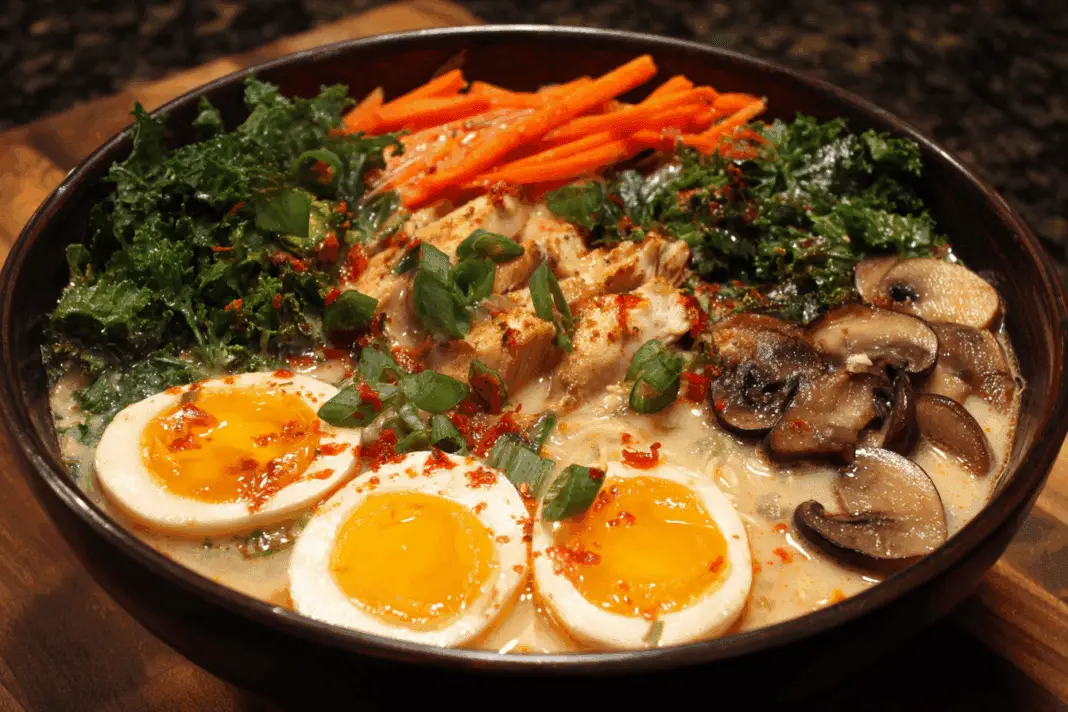
Ever wonder why restaurant ramen costs $15 a bowl when those packets at the grocery store cost fifty cents? The secret isn’t just fancy marketing – it’s actually about real ingredients, proper technique, and understanding what makes authentic ramen so special. Making restaurant-quality ramen at home might seem impossible, but with the right approach and ingredients, anyone can create bowls that rival their favorite ramen shop without spending a fortune or waiting in long lines.
Most people skip the most important ingredient in ramen
The foundation of great ramen isn’t the noodles – it’s the broth. Many home cooks focus on finding the perfect noodles while completely ignoring what makes the soup actually taste good. Real ramen broth takes restaurants up to 24 hours to make properly, simmering pork bones until they release all their rich, creamy goodness. That’s why instant packets taste so different from the real thing.
The game-changer is using a quality soup concentrate instead of trying to make broth from scratch. Professional ramen kits include concentrated broths that capture those same deep, rich flavors without the day-long cooking process. These concentrates contain meat extracts, fermented seasonings, and umami-rich ingredients like bonito and kelp that would be nearly impossible to balance correctly at home. Just add hot water and you get authentic tonkotsu broth that tastes like it simmered for hours.
Fresh vegetables make or break the entire bowl
Ramen toppings aren’t just decoration – they’re essential parts of the eating experience. Each vegetable adds a different texture and taste that balances the rich, heavy broth. Shiitake mushrooms provide earthiness, carrots add subtle sweetness, and green onions give a sharp bite that cuts through all that richness. Many people just dump whatever vegetables they have lying around, but specific choices matter.
The key is preparing vegetables properly so they don’t get mushy or overpower the broth. Shiitake mushrooms should be sliced thin and sautéed briefly to concentrate their flavor. Carrots work best when shredded rather than chunked, so they cook quickly and distribute throughout the bowl. Smart home cooks add delicate greens like kale or bok choy at the very end, letting residual heat wilt them just enough while maintaining their bright color and slight crunch.
Noodle texture separates good ramen from great ramen
The difference between soggy disappointment and perfect ramen often comes down to noodle timing and technique. Ramen noodles should have what the Japanese call “koshi” – a firm, springy bite that holds up against the hot broth. Most people either undercook them (leaving a chalky center) or overcook them (creating mushy strands that fall apart). The sweet spot is usually just three minutes in boiling liquid.
Real ramen shops use specific noodle styles for different broths, and this isn’t just tradition – it’s science. Straight, thin noodles work best with rich broths like tonkotsu because they don’t release too much starch, keeping the soup clear and clean-tasting. Thicker or wavy noodles can make the broth cloudy and change the whole character of the dish. Quality Hakata-style noodles are designed specifically for this purpose and make a noticeable difference in the final result.
Soft-boiled eggs require precise timing most people get wrong
A perfectly soft-boiled egg with a jammy yolk is the crown jewel of any ramen bowl, but getting it right consistently trips up even experienced cooks. The difference between runny whites and a rubbery yolk is literally a matter of minutes. Most people either start with hot water (which cooks unevenly) or guess at the timing, leading to inconsistent results that range from raw to hard-boiled.
The foolproof method starts with cold water and room-temperature eggs to ensure even cooking from edge to center. Bring everything to a boil together, then immediately cover and remove from heat – the residual heat does the actual cooking. Six minutes gives you slightly runny yolks, seven minutes creates the perfect jammy consistency that ramen enthusiasts love. The ice bath isn’t optional – it stops the cooking process instantly and makes peeling much easier.
Spice level should be customizable for each person
Heat tolerance varies dramatically between people, and nothing ruins a good ramen experience like making it too spicy for half the table or too mild for spice lovers. Restaurant ramen shops often let customers customize their heat level, and home cooks should do the same. Building the base soup without heat, then adding spice individually, keeps everyone happy and prevents having to start over if things get too intense.
The best approach uses a quality spice blend that adds complexity along with heat, rather than just dumping in hot sauce or random peppers. Togarashi pepper blends, like those found in authentic ramen seasonings, combine different types of peppers with other spices to create layers of heat and taste. This way, people can add as much or as little as they want without throwing off the overall balance of the soup. Some prefer just a pinch for warmth, while others want enough heat to make their eyes water.
Sesame oil transforms ordinary broth into something special
A few drops of toasted sesame oil might seem like a small detail, but it’s what separates amateur ramen from the professional stuff. This isn’t regular sesame oil from the salad dressing aisle – toasted sesame oil has a deep, nutty aroma that hits you the moment it touches hot broth. Many home cooks skip this ingredient entirely or use too much, not realizing that a little goes a very long way.
The timing matters as much as the amount when adding sesame oil. Adding it too early means the heat will cook off those delicate aromatics before anyone gets to smell them. The smart move is drizzling it directly into the serving bowls just before ladling in the hot soup, so that nutty fragrance hits everyone’s nose as they take their first bite. Experienced cooks use about half a teaspoon per bowl – enough to smell and taste without making the soup greasy or overwhelming the other ingredients.
Garlic and ginger ratios can make or break the base
Fresh garlic and ginger form the aromatic foundation that makes ramen broth smell incredible, but getting the balance right takes more thought than most people realize. Too much garlic overwhelms everything else, while too little leaves the soup tasting flat and one-dimensional. Fresh ginger adds warmth and complexity, but it can quickly turn bitter if handled incorrectly or cooked too long.
The secret is treating these ingredients differently based on their characteristics. Garlic should be minced fine and cooked just until fragrant – about thirty seconds in hot oil before it starts browning. Ginger works best when grated fresh and added early enough to infuse the oil but not so early that it burns. Many successful recipes use about five cloves of garlic to one tablespoon of fresh grated ginger, giving you that perfect balance of sharp and warm without either one taking over the show completely.
Soy sauce quality makes a bigger difference than expected
Not all soy sauce is created equal, and using the wrong type can turn your carefully crafted ramen into an overly salty mess or bland disappointment. Regular soy sauce varies dramatically in sodium content and flavor complexity between brands, with some tasting harsh and one-note while others offer deeper, more rounded flavors. The cheap stuff often contains more salt and fewer actual soybeans, which throws off the whole balance of the soup.
Low-sodium versions give home cooks much better control over the final saltiness, especially when combined with naturally salty ingredients like fish sauce and concentrated broths. Quality soy sauce should taste rich and complex on its own, not just aggressively salty. Japanese-style soy sauces tend to be lighter and cleaner-tasting than Chinese varieties, making them perfect for delicate ramen broths where you want depth without muddiness. Using about half a cup for a large pot sounds like a lot, but it gets diluted significantly by the broth and balances perfectly with the other umami ingredients.
Assembly order affects how everything tastes together
The way ramen gets put together isn’t just about presentation – different ingredients react with hot broth in different ways, and the order matters for both taste and texture. Adding delicate ingredients too early makes them soggy and lifeless, while waiting too long means they don’t warm through properly. Professional ramen shops follow specific assembly sequences that maximize how each component contributes to the final bowl.
The smart approach builds each bowl individually rather than trying to serve family-style. Start with any oils or seasonings in the bottom of the bowl, add the cooked noodles, then ladle the hot broth over everything to create that dramatic steaming effect. Sturdy vegetables like carrots and mushrooms can go in earlier, but save delicate greens, soft-boiled eggs, and green onions for the very end when they’ll stay vibrant and fresh-looking. Ramen experts know that people eat with their eyes first, and a properly assembled bowl looks as impressive as it tastes.
Creating restaurant-quality ramen at home comes down to understanding why each ingredient matters and treating them with the respect they deserve. With quality soup concentrate, proper technique, and attention to timing, anyone can make bowls that taste like they came from a professional kitchen. The best part is being able to customize everything exactly how each person likes it, from spice level to toppings, without paying restaurant prices or waiting in long lines downtown.
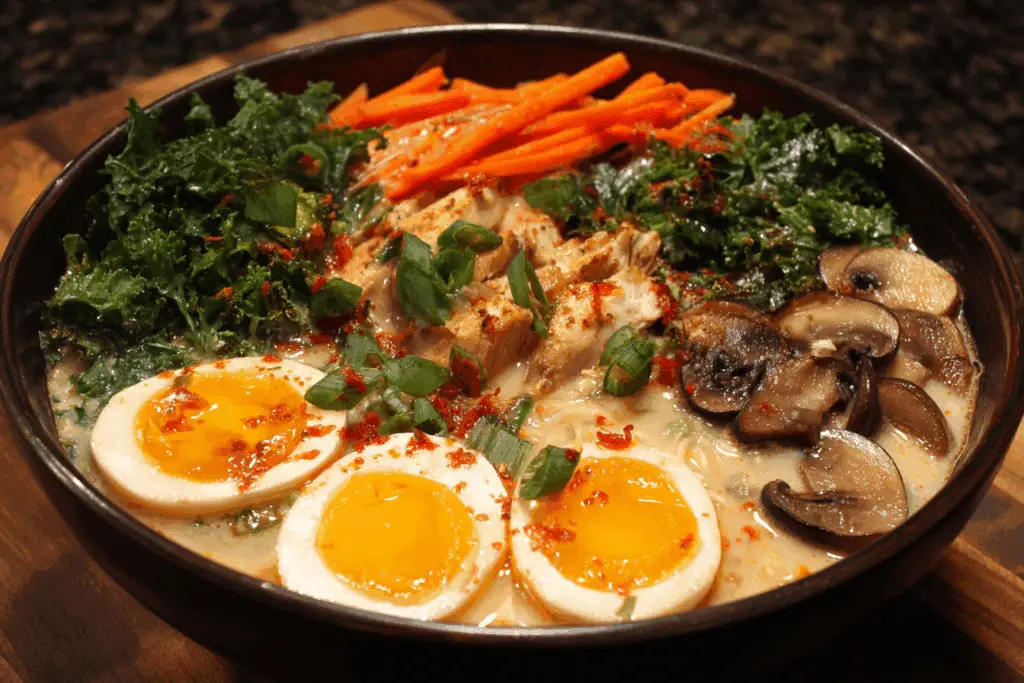
Restaurant-Style Tonkotsu Ramen Bowl
Course: Dinner4
servings10
minutes15
minutes450
kcalRich, creamy tonkotsu ramen with perfectly soft-boiled eggs and fresh vegetables that rivals any restaurant.
Ingredients
2 teaspoons toasted sesame oil
5 cloves garlic, minced
1 tablespoon freshly grated ginger
1/2 teaspoon crushed red pepper flakes
4 large carrots, shredded
8 ounces shiitake mushrooms, caps sliced thin
6-7 cups low-sodium chicken broth
1/2 cup low-sodium soy sauce
1 teaspoon fish sauce
10 ounces dried whole-grain ramen noodles
4 soft-boiled eggs, halved
2 green onions, sliced thin
1 handful kale, sliced thin
Directions
- Heat the sesame oil in a large pot over medium heat. The oil should shimmer but not smoke. Add the minced garlic, grated ginger, and crushed red pepper flakes. Stir constantly for about 30 seconds until fragrant, being careful not to let the garlic brown or it will become bitter.
- Add the shredded carrots and sliced shiitake mushrooms to the pot. Cook for 3-5 minutes, stirring occasionally, until the vegetables begin to soften and release their moisture. The mushrooms should start to look slightly golden around the edges.
- Pour in the chicken broth, soy sauce, and fish sauce. Bring the mixture to a rolling boil over high heat. The broth should be bubbling vigorously before adding the noodles to ensure they cook evenly.
- Add the ramen noodles to the boiling broth and stir gently to separate them completely. Cook for exactly 3 minutes, stirring occasionally to prevent sticking. The noodles should be tender but still have a slight firmness when bitten.
- Remove the pot from heat immediately after the 3 minutes to prevent overcooking. The residual heat will continue to warm the noodles without making them mushy.
- For the soft-boiled eggs, place 4 room temperature eggs in a small pot and cover with cold water. Bring to a boil, then immediately cover with a lid and remove from heat. Let sit for exactly 6-7 minutes for jammy yolks, then transfer to an ice bath to stop cooking.
- Divide the hot ramen and broth evenly among four large bowls, making sure each gets plenty of vegetables and noodles. Use a ladle to distribute everything fairly and maintain the hot temperature.
- Top each bowl with sliced green onions, thin kale ribbons, and halved soft-boiled eggs. Add these garnishes just before serving so they stay bright and fresh-looking. Serve immediately while the broth is steaming hot.
Notes
- For best results, use room temperature eggs when making soft-boiled eggs to ensure even cooking from edge to center
- Adjust the amount of chicken broth depending on how soupy you prefer your ramen – use less for thicker consistency
- Leftover ramen can be stored in the refrigerator for up to 2 days, but the noodles will absorb more broth and become softer
Frequently Asked Questions
Q: Can I make this ramen vegetarian?
A: Yes! Replace the chicken broth with vegetable broth and skip the fish sauce. You can add extra soy sauce or miso paste to boost the umami flavors that fish sauce normally provides.
Q: How do I prevent my ramen noodles from getting mushy?
A: The key is timing and temperature control. Cook noodles for exactly 3 minutes in rapidly boiling broth, then remove from heat immediately. Never let them sit in hot liquid longer than necessary.
Q: What can I substitute for shiitake mushrooms?
A: Cremini or baby bella mushrooms work well, though they won’t have quite the same earthy depth. Button mushrooms are okay in a pinch, but slice them thinner since they have more water content.
Q: How long will leftover ramen keep in the fridge?
A: Store components separately when possible – broth in one container, noodles in another. Combined leftovers keep for 2-3 days, but the noodles will absorb liquid and change texture significantly.
