

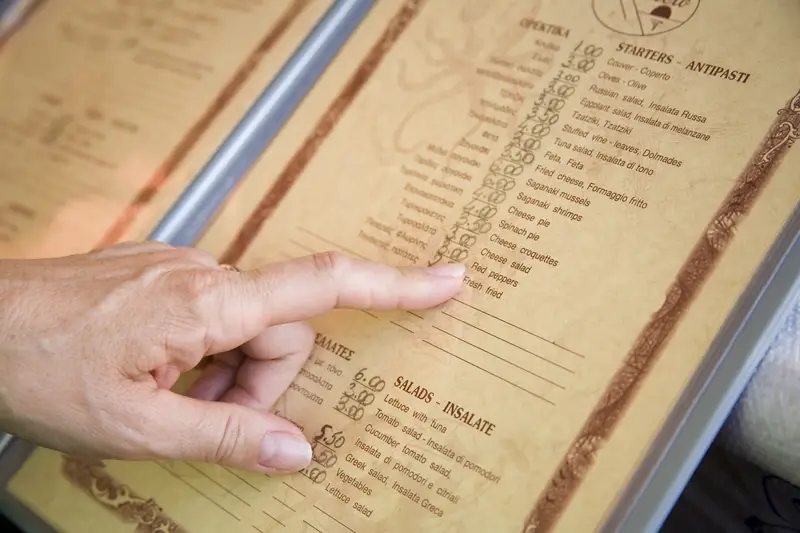
That $80 dinner bill seemed reasonable when ordering, but now staring at the receipt, something feels off. Restaurants have mastered the art of psychological manipulation, using carefully crafted tricks that make spending feel painless while maximizing their profits. From sneaky menu designs to strategic pricing tactics, these establishments know exactly how to separate diners from their hard-earned cash without raising any red flags.
Dollar signs mysteriously disappear from expensive menus
Walk into any upscale restaurant and notice how menu prices appear as simple numbers like “32” instead of “$32.00.” This isn’t just modern design aesthetics at work. Restaurants deliberately remove dollar signs because they understand something called “pain of payment” psychology. When the brain sees a dollar sign, it immediately registers money leaving the wallet, creating a small psychological sting that might make diners think twice about ordering.
Without those pesky dollar signs, prices transform from financial transactions into abstract numbers. The $65 steak becomes just “65,” feeling more like a sports jersey number than actual money. Studies show this simple trick can increase spending by 12-15% per table. Menu psychology has become so sophisticated that restaurants hire consultants specifically to design layouts that encourage higher spending without customers realizing what’s happening.
Three similar dishes create fake choices that seem reasonable
Ever notice how steakhouses always offer three similar cuts at different price points? The $28 sirloin, $42 ribeye, and $65 wagyu aren’t coincidentally priced. This strategic arrangement uses the “Goldilocks Effect” to guide diners toward the middle option, which typically carries the restaurant’s highest profit margin. Most people avoid both the cheapest option (fearing poor quality) and the most expensive (due to sticker shock), landing squarely on what feels like the sensible middle ground.
The middle choice appears reasonable by comparison, even when it’s still overpriced for what’s actually on the plate. Restaurants know that customers decide what to order in under 90 seconds, so this pricing structure capitalizes on quick decision-making. The $42 ribeye might cost the restaurant only $12 to prepare, but positioned between cheaper and premium options, diners perceive it as fair value while the restaurant banks a hefty profit.
Outrageous anchor prices make everything else look affordable
That $95 lobster special exists for one reason: making every other item on the menu seem like a bargain. Restaurants strategically place extremely high-priced items to serve as “anchors” that reset diners’ expectations about what constitutes reasonable pricing. After seeing lobster at nearly $100, suddenly the $55 salmon doesn’t feel quite so steep. This psychological anchoring effect works even when nobody actually orders the expensive anchor item.
The anchoring strategy extends beyond individual dishes to entire sections of menus. Premium seafood towers priced at $150 make regular entrees appear downright economical. Decoy dishes serve their purpose simply by existing on the menu, shifting the entire pricing landscape in the restaurant’s favor. Smart diners recognize these anchors and base their ordering decisions on actual value rather than artificial price comparisons created by menu manipulation.
Menu layouts guide eyes toward the most profitable items
Restaurants study eye-tracking patterns like military strategists studying battle plans. Most diners’ eyes follow predictable paths: center first, then upper right corner, finally scanning the rest. Knowing this, restaurants place their highest-margin items in these “premium real estate” spots where they’re most likely to be seen and ordered first. The prime rib special isn’t in the upper right corner by accident – it’s positioned there because that’s where eyes naturally land.
Menu engineering goes far beyond simple placement, incorporating visual elements like boxes, bold fonts, and color accents to draw attention to specific items. These highlighted dishes aren’t necessarily the best food or best value – they’re the most profitable for the restaurant. Visual emphasis on menu items serves a financial purpose rather than helping diners find great food. The boring-looking chicken dish buried in small print might actually be the better choice.
Fancy descriptions justify higher prices for ordinary food
“Grilled chicken” sounds basic and cheap, but “herb-crusted free-range chicken breast with roasted seasonal vegetables and garlic aioli” commands premium pricing for potentially the exact same dish. Restaurants have discovered that elaborate descriptions create perceived value in diners’ minds, making them willing to pay more for items that sound sophisticated and complex. The longer and more descriptive the name, the higher the price tag restaurants can justify.
These flowery descriptions often mask simple preparations with common ingredients. “Artisanal” bread might be the same rolls served at casual chains, and “seasonal vegetables” could be frozen mixed vegetables from a bag. Padded descriptions add perceived value without changing what actually arrives on the plate. Smart diners learn to see through the marketing language and focus on actual ingredients and preparation methods rather than getting swept up in fancy menu copy.
Strategic timing pushes diners toward expensive add-ons
Servers don’t casually mention appetizers and desserts – they’re trained to suggest these high-margin items at psychologically optimal moments. The appetizer pitch comes when diners are hungry and haven’t committed to their main course spending yet. Dessert gets pushed after the main meal when diners are relaxed and less price-conscious. These aren’t spontaneous recommendations; they’re calculated sales tactics designed to increase the total bill.
Drink upgrades follow similar patterns, with servers suggesting premium cocktails or wine pairings that can double the meal’s cost. The timing isn’t coincidental – restaurants know that additional items become impulse purchases when suggested at the right moments. Many diners arrive with a mental budget for their entree but haven’t considered the cumulative effect of appetizers, upgraded sides, premium drinks, and desserts that servers strategically introduce throughout the meal.
Portion manipulation makes expensive items seem worth the cost
Large portions create an illusion of value even when prices are inflated. A massive plate of pasta for $22 feels more reasonable than a small, elegant portion for $18, even though the ingredients might cost the restaurant the same amount. Diners psychologically equate bigger portions with better deals, allowing restaurants to charge premium prices while appearing generous. The oversized American portion standard has trained diners to expect quantity over quality.
Some restaurants deliberately serve oversized portions knowing most food will go home in takeout containers. This strategy makes diners feel they’re getting two meals for the price of one, justifying higher menu prices. Splitting meals or saving half for later has become so common that restaurants factor it into their pricing models. The massive burger that requires both hands to hold might seem like great value, but the restaurant has already calculated that most diners will be satisfied with half that amount.
Limited-time offers create false urgency around overpriced items
“Chef’s special tonight only” and “limited time seasonal menu” items carry artificial urgency that prevents diners from making rational price comparisons. These supposedly exclusive offerings often cost significantly more than regular menu items while using similar ingredients. The fear of missing out overrides price sensitivity, making diners willing to splurge on items they might normally consider too expensive. Restaurants rotate these “special” offerings to maintain the illusion of scarcity.
Many limited-time offers are actually regular preparations with minor tweaks or seasonal ingredients that don’t justify the premium pricing. The “harvest special” might be the regular chicken dish with butternut squash instead of regular vegetables, but marked up 30% for the seasonal treatment. Daily specials sometimes help restaurants use up ingredients that are near expiration, though they’re marketed as exclusive creations rather than practical solutions to food waste.
Beverage markups reach astronomical levels with minimal resistance
Restaurant beverages carry some of the highest profit margins in the food industry, yet diners rarely question these prices. A $4 soda costs the restaurant about 30 cents to serve, while alcoholic beverages can be marked up 300-500% above wholesale cost. Restaurants know that thirsty diners will order drinks almost automatically, making beverage sales some of the most reliable profit generators on every table.
The markup on coffee and specialty drinks can be even more extreme, with a $5 latte costing pennies in actual ingredients. Restaurants position beverages as essential parts of the dining experience rather than optional extras, making it feel almost rude to request just water. Skipping beverages can reduce a meal’s cost by 25-40%, but most diners never consider this simple money-saving strategy because drink ordering has become such an ingrained habit.
Understanding these psychological tricks helps diners make informed decisions rather than falling prey to carefully crafted manipulation. Restaurants will continue using these strategies because they work, but awareness gives consumers the power to spend their money more intentionally. The next restaurant visit becomes an opportunity to see these tactics in action and choose whether to play along or make decisions based on actual value and personal preferences.
