

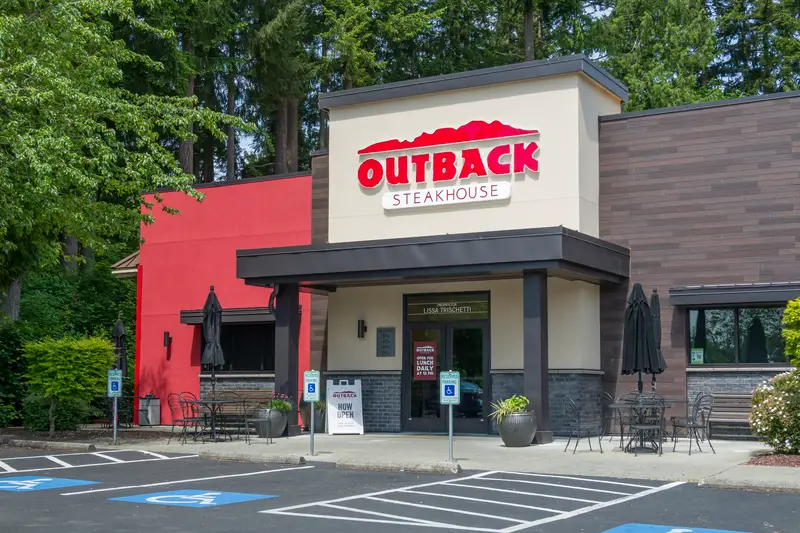
Remember when Outback Steakhouse was the place you’d go for a decent steak without spending half your paycheck? Those days might be over. The chain that once packed in families every weekend is now dealing with some pretty serious issues that go way beyond just one bad meal. From sudden restaurant closures to menu items that barely resemble what they used to be, longtime fans are noticing major changes that aren’t sitting well with anyone’s wallet or appetite.
Restaurants are closing without any warning
Walking up to your favorite Outback location only to find the doors locked and windows dark is happening more often than anyone expected. In October alone, 21 restaurants shut down across multiple states with basically no heads-up to customers. Pennsylvania, Iowa, Hawaii, Massachusetts, and California all lost locations, and more recently, the Green Brook location in New Jersey closed its doors on Route 22 after serving the community for decades. These weren’t slow, announced closures where you could grab one last Bloomin’ Onion either.
The parent company Bloomin’ Brands isn’t done yet, either. They’ve announced plans to close another 22 locations over the next four years as leases expire. That brings Outback down from about 750 restaurants a decade ago to just 670 now, and that number keeps shrinking. For regular customers who’ve been going to the same location for years, this means potentially losing their go-to spot without any chance to say goodbye. The company claims it’s all part of a turnaround strategy, but when restaurants close this suddenly, it leaves a lot of people scrambling to find somewhere else for their next steak dinner.
Menu favorites have disappeared completely
Your favorite menu item might not be there the next time you visit. Outback has been quietly removing fan favorites from their menu, and people are definitely noticing. The Steakhouse Quesadilla, Chicken Tender Platter, and several signature desserts have all vanished without explanation. For many customers, these weren’t just random menu items they ordered once in a while. They were the whole reason some folks chose Outback over other restaurants. When a chain decides to slim down their menu, they’re supposed to keep the stuff people actually want to eat.
Social media has been flooded with complaints from disappointed diners who showed up ready to order their usual meal, only to find out it doesn’t exist anymore. The Aussie Cobb Salad and Sydney Shrooms are among the casualties of this menu overhaul. What’s worse is that these changes came alongside price increases on everything else, making it feel like Outback is charging more for fewer options. Some former employees have even confirmed on social media that recipes for remaining items have changed too, so even the dishes that survived the cuts don’t taste the same anymore. That’s a double hit for loyal customers who feel like the restaurant they knew is disappearing piece by piece.
Prices have jumped almost 30 percent in five years
Looking at the bill after dinner at Outback might give you sticker shock these days. Between 2020 and 2025, menu prices have increased by an average of 29 percent across the board. That’s not just a small bump to keep up with regular costs. We’re talking about items that used to be affordable family options now costing nearly 20 bucks for things like chicken tenders and a salad. When you’re trying to feed a family of four, those price jumps add up fast and can easily push a casual dinner into the expensive category.
The price increases get even more frustrating when you factor in all the upcharges that have been added to different appetizers, main dishes, and desserts. What used to be a straightforward menu with clear prices now has you doing math to figure out what your actual total will be. Signature dishes cost significantly more than they did just a few years ago, and for many families, Outback has gone from an affordable treat to a special occasion splurge. When you combine higher prices with smaller portions and disappeared menu items, it’s no wonder people are starting to look at other restaurant options that give them more bang for their buck.
Service has gotten noticeably slower
Waiting over an hour for your food at a casual dining restaurant shouldn’t be normal, but that’s becoming a common experience at Outback. Multiple customers have reported service issues that go way beyond just being a little slow. We’re talking about having to flag down your server multiple times just to get a refill or check on your order. One reviewer on Yelp described having to continuously look for their waitress for anything they needed, which pretty much ruins the whole dining experience when you’re spending that much money on dinner.
The problems with service quality extend beyond just wait times, too. Some customers have had to argue with servers about how their steaks were cooked, with one person being told their clearly rare steak was actually medium-rare because the server claimed medium-rare means really pink. That’s not just slow service anymore, that’s staff who either don’t know what they’re doing or don’t care enough to get it right. When you’re already paying more for your meal and dealing with a stripped-down menu, the absolute least you should expect is decent service and food cooked the way you ordered it.
The way they cook steaks has completely changed
Here’s something most customers don’t know: Outback changed how they actually cook their steaks. According to former employees, the restaurants switched from traditional flat-top grills to panini-style grills with preset cooking times. Instead of a cook actively managing your steak and checking it, they now stick it in a press, hit a button for how done you want it, and wait for a timer. A well-done steak takes seven minutes in this automated system, which sounds efficient but removes the skill and attention that makes a good steakhouse steak worth ordering.
This switch to automated cooking equipment explains a lot about why steaks don’t taste the same as they used to. The whole appeal of going to a steakhouse instead of making steak at home is getting that perfect cook and char that comes from experienced grill work. When everything is done by preset timers and machines, you’re basically getting fast food quality at sit-down restaurant prices. For people who’ve been going to Outback for years specifically because they liked how the steaks were prepared, this behind-the-scenes change represents a fundamental shift in what the restaurant offers. It’s hard to justify steakhouse prices when the cooking method is closer to a George Foreman grill.
Portions are shrinking while prices go up
Shrinkflation has hit Outback hard, and customers are definitely noticing that they’re getting less food for more money. One particularly shocking example involved a cup of soup that was roughly the size of a medium apple and cost nine dollars. That’s half the portion size it used to be, according to people who’ve ordered it before. When you’re already dealing with increased prices across the menu, getting noticeably smaller portions feels like getting ripped off twice. The soup example might be extreme, but it’s not the only item that’s been downsized.
Side dishes and appetizers have also gotten smaller without any corresponding price decrease. The famous Steakhouse Mac & Cheese and other sides that used to come in generous portions now look sad and small on the plate. Multiple customers have complained about the combination of shrinking portions and rising prices making Outback feel like a bad deal compared to other options. When you can go to a competitor and get bigger portions for similar or lower prices, it makes you question why you’d keep going back to Outback. For families trying to stretch their restaurant budget, smaller portions mean either leaving hungry or ordering more food, which defeats the whole purpose of choosing what used to be an affordable option.
Quality isn’t consistent between visits anymore
Having a great meal one week and a terrible one the next at the same restaurant is incredibly frustrating. Outback customers are reporting wild inconsistencies in both food quality and service depending on when they visit. You might get a perfectly cooked steak with attentive service on Tuesday, then come back on Friday and get an overcooked mess with a server who disappears for 20 minutes at a time. For a major chain restaurant, this lack of consistency is a huge problem because the whole point of chain restaurants is knowing what to expect.
The inconsistency issues seem to vary by location too, with some Outback restaurants maintaining decent standards while others have completely fallen apart. This makes it hard to know whether your local Outback is worth visiting or not. When you’re spending 60 to 80 dollars on dinner for two people, you shouldn’t have to gamble on whether you’ll actually enjoy your meal. The unpredictability combined with higher prices means many former regulars are choosing to spend their money at restaurants where they can count on getting the same quality every single time they visit.
Restaurant interiors look tired and outdated
Walking into most Outback locations feels like stepping back into the late 1990s, and not in a fun nostalgic way. The decor and overall atmosphere haven’t been updated in years, giving many restaurants a worn-out, dated appearance. Booths with cracked vinyl, faded wall decorations, and carpets that have seen better days don’t exactly make you excited to sit down for an expensive meal. While these locations aren’t necessarily dirty, they definitely look like they’ve been neglected when it comes to basic maintenance and updates.
The tired restaurant interiors are a symptom of the company’s larger cost-cutting efforts. When businesses start struggling financially, updating decor is usually one of the first things to get pushed aside. The problem is that customers notice these things, especially when they’re being asked to pay premium prices. Nobody wants to spend 25 dollars on a steak while sitting in a booth that’s falling apart surrounded by dusty boomerang decorations. The company has announced plans to remodel all remaining locations by the end of 2028, but that’s still years away, and many customers aren’t willing to wait that long for their local restaurant to look presentable again.
The fake Australian theme feels embarrassing now
Let’s be honest about the boomerangs and kangaroo signs everywhere. Outback’s whole Australian theme was always pretty silly, but it at least felt fun and different when the chain first started. Now, decades later, the kitschy decorations and forced Aussie references just feel outdated and kind of embarrassing. The made-up Australian atmosphere doesn’t actually connect to anything real about the restaurant since they’re not using Australian beef or cooking techniques or recipes. It’s just random decorations and menu names that sound vaguely like Australian slang.
Younger customers especially seem less interested in themed restaurants that feel more like tourist traps than actual dining experiences. When you compare Outback’s approach to competitors who focus on straightforward good food and service without the gimmicks, the Australian theme looks increasingly silly. Texas Roadhouse and LongHorn Steakhouse are doing better partly because they keep things simple and focus on quality instead of relying on decorations to carry the experience. For Outback to turn things around, they might need to either fully commit to making the Australian theme actually mean something or ditch it entirely and focus on what really matters, which is serving good steaks at fair prices with decent service.
Outback Steakhouse is clearly at a crossroads where the decisions being made right now will determine whether the chain survives or slowly disappears. Between the ongoing restaurant closures, price increases, quality problems, and service issues, longtime fans are losing patience fast. The question isn’t whether these problems exist anymore, but whether the company can actually fix them before they lose the customers who’ve kept them in business for decades. Only time will tell if their turnaround strategy works or if we’re watching another casual dining chain fade away.
