

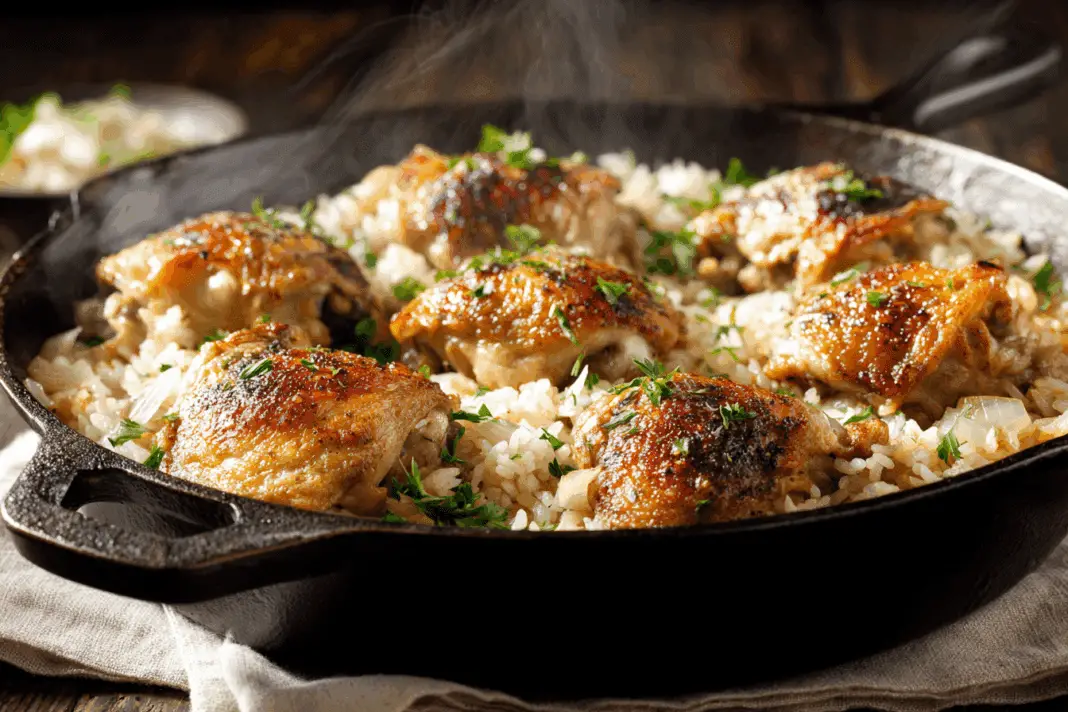
Ever stood in your kitchen at 6 PM with absolutely no idea what to make for dinner? That moment when everyone’s hungry, the day has been endless, and the last thing anyone wants is a sink full of dirty dishes. This is exactly why one pot chicken and rice became my go-to weeknight savior. It takes just 10 minutes to prep, uses ingredients most people already have, and creates only one dish to clean afterward.
Why chicken thighs work better than breasts
Most home cooks automatically reach for chicken breasts, thinking they’re the healthier or safer choice. But chicken thighs are actually the secret weapon for one pot meals. They have more fat, which means they stay juicy and tender even after the double cooking process – first searing, then steaming with the rice. Chicken breasts tend to dry out and become rubbery when cooked this way.
The fat from chicken thighs also adds incredible richness to the rice as it cooks. Budget Bytes specifically recommends boneless, skinless thighs for this reason – they release just enough fat to make the rice creamy without being greasy. Plus, chicken thighs are usually cheaper than breasts, so it’s a win-win situation for both taste and budget.
The rice type that makes or breaks this dish
Not all rice is created equal for one pot meals. Long-grain white rice like basmati or jasmine works best because the grains stay separate and don’t turn mushy. Short-grain rice gets sticky and clumpy, while instant rice becomes a soggy mess since it’s already pre-cooked. The key is choosing rice that can absorb liquid slowly while maintaining its texture.
Brown rice lovers might be tempted to substitute, but it needs different cooking times and liquid ratios. Feel Good Foodie suggests sticking with white rice for foolproof results, especially when you’re learning the technique. Once you master the basic recipe, then you can experiment with other grains like quinoa or wild rice.
The cardinal rule about lifting the lid
Here’s where most people mess up their one pot rice dishes – they can’t resist peeking under the lid. The moment you add the broth and cover the pot, that lid needs to stay put for the entire cooking time. Every time you lift it, steam escapes and the rice won’t cook evenly. Some grains will be crunchy while others turn to mush.
Think of it like opening the oven door while baking a cake – it completely disrupts the cooking process. The steam trapped under the lid is what actually cooks the rice, not just the liquid at the bottom. Professional cooks know this instinctively, but home cooks often struggle with the temptation to check on things. Trust the process and resist the urge to peek.
How to get perfectly seasoned chicken every time
Seasoning chicken properly requires more than just salt and pepper. A blend of paprika, oregano, thyme, garlic powder, and onion powder creates layers of taste that penetrate the meat. The trick is coating the raw chicken with these spices before searing, which helps create a flavorful crust that won’t wash away when you add the liquid.
Don’t skip the searing step – this is where the magic happens. Those browned bits stuck to the bottom of the pan (called fond in cooking terms) dissolve into the rice when you add the broth. This technique ensures every grain of rice gets infused with rich, meaty goodness instead of tasting bland and watery.
Vegetables that work best in one pot meals
Frozen vegetables are actually better than fresh for this recipe because they won’t overcook and turn mushy. Frozen peas and carrots hold their shape and add color without requiring any prep work. Fresh vegetables like bell peppers or zucchini can work too, but they need to be added at different times to prevent overcooking.
The key is understanding cooking times – dense vegetables like carrots need to go in early, while delicate ones like spinach should be stirred in at the very end. Many recipes stick with frozen mixed vegetables because they’re specifically processed to have similar cooking times, making the whole process foolproof for busy weeknights.
The broth versus water debate
Using broth instead of water makes a huge difference in the final dish, but it’s not always necessary. Vegetable broth adds depth without being too heavy, while chicken broth can sometimes make the dish overly rich when combined with chicken thighs. The choice often comes down to what’s already in the pantry and personal preference.
If you only have water on hand, don’t let that stop you from making this recipe. The seared chicken, sautéed onions, and spices provide plenty of taste on their own. Some cooks add a splash of soy sauce or Worcestershire sauce to water for extra umami without needing to buy specialty broths. The most important thing is getting dinner on the table, not having the perfect ingredient list.
Common mistakes that ruin the rice texture
Mushy rice is the number one complaint about one pot meals, and it usually happens because people use too much liquid or the wrong heat level. The rice should absorb all the liquid during the simmering process, leaving individual grains that are tender but not soggy. Using a heavy-bottomed pot helps distribute heat evenly and prevents burning.
Another common mistake is not letting the dish rest after cooking. Professional techniques always include a resting period where the pot sits off the heat with the lid still on. This allows the steam to finish cooking any remaining firm grains and helps the whole dish settle into the right consistency.
Storage tricks that keep leftovers tasty
Leftover chicken and rice can be tricky because rice tends to dry out in the refrigerator and become hard when reheated. The secret is adding a splash of broth or water before reheating and covering the container to create steam. Microwave reheating works fine, but stovetop reheating with a little extra liquid gives better results.
For longer storage, this dish freezes surprisingly well for up to three months. The key is letting it cool completely before freezing and using airtight containers to prevent freezer burn. Some people prefer freezing the chicken and rice in separate containers to make reheating easier, especially if family members want different portions of each component.
Equipment that makes the process easier
A heavy-bottomed Dutch oven or deep skillet is essential for even heat distribution and preventing hot spots that can burn the rice. Non-stick pans don’t work as well because you want those browned bits to stick to the bottom – that’s where all the good taste comes from. Cast iron or enameled cast iron work perfectly for this type of cooking.
The lid needs to fit tightly to trap steam properly. A loose-fitting lid will let steam escape and result in unevenly cooked rice. If your pot lid doesn’t fit snugly, you can place a piece of aluminum foil over the pot before putting the lid on. This creates a better seal and ensures consistent cooking throughout the dish.
This one pot chicken and rice recipe proves that weeknight dinners don’t have to be complicated or create a mountain of dishes. With just a few simple techniques and the right ingredients, anyone can make a satisfying meal that brings the family to the table. The best part is knowing that tomorrow night’s dinner problem is already solved with whatever leftovers remain.
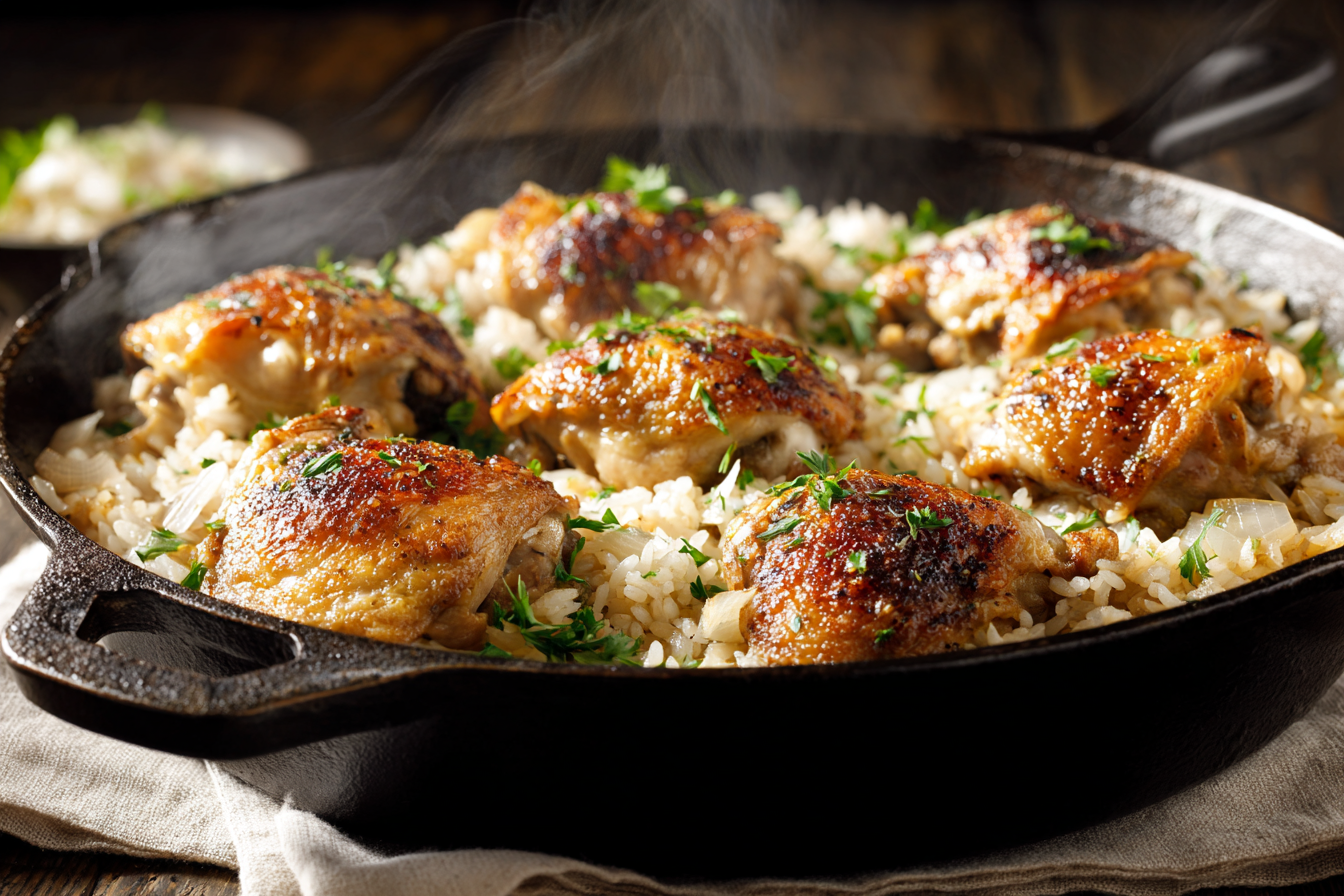
One Pot Chicken and Rice
Course: Dinner4
servings10
minutes40
minutes421
kcalThis hearty one pot meal combines tender chicken thighs with perfectly seasoned rice for an easy weeknight dinner that requires minimal cleanup.
Ingredients
2 tsp paprika
1 tsp dried oregano
1 tsp dried thyme
1/2 tsp garlic powder
1/2 tsp onion powder
1/4 tsp salt
1/4 tsp black pepper
1.25 lbs boneless, skinless chicken thighs
2 Tbsp cooking oil, divided
1 yellow onion, diced
1 cup long-grain white rice, uncooked
1.75 cups vegetable broth
1 Tbsp chopped parsley (optional)
Directions
- Combine the paprika, oregano, thyme, garlic powder, onion powder, salt, and pepper in a small bowl. Coat both sides of the chicken thighs thoroughly with the seasoning mixture, pressing gently to help the spices adhere to the meat.
- Heat 1 tablespoon of cooking oil in a deep skillet or Dutch oven over medium heat. Once the oil is hot and shimmering, swirl to coat the surface completely, then carefully add the seasoned chicken thighs. Cook for 3-4 minutes on each side until well browned and a nice crust forms. The chicken doesn’t need to be fully cooked through at this point.
- Remove the browned chicken to a clean plate and set aside. Reduce the heat to medium-low and add the remaining tablespoon of oil to the same skillet. Add the diced onion and sauté for about 5 minutes, stirring occasionally, until the onion becomes soft and translucent. The moisture from the onion will help dissolve any browned bits stuck to the bottom of the pan.
- Add the uncooked rice to the skillet with the onions and continue to sauté for 1-2 minutes, stirring constantly. Listen for the rice to start crackling and popping slightly, which means it’s toasting properly. This step adds extra depth to the rice’s taste.
- Pour the vegetable broth into the skillet and stir briefly to dissolve any remaining browned bits from the bottom of the pan. Return the chicken thighs to the skillet, arranging them on top of the rice mixture. The liquid should just barely cover the rice.
- Place a tight-fitting lid on the skillet and turn the heat up to medium-high. Allow the broth to come to a full, rolling boil, which should take 3-5 minutes. You’ll hear bubbling sounds and may see steam escaping around the edges of the lid.
- Once boiling, immediately reduce the heat to low and let the chicken and rice simmer for exactly 20 minutes. Do not lift the lid or stir during this time – the steam trapped inside is what cooks the rice properly. Resist the temptation to peek, as this will disrupt the cooking process.
- After 20 minutes, turn off the heat completely but leave the lid on for an additional 5 minutes to let the dish rest. This resting period allows the steam to finish cooking any remaining firm rice grains. Finally, remove the lid and fluff the rice around the chicken with a fork. Garnish with chopped parsley if desired and serve immediately.
Notes
- Use boneless, skinless chicken thighs instead of breasts for the juiciest results. The fat content keeps them tender during the double cooking process.
- Don’t lift the lid once you add the broth and start simmering. This is crucial for even cooking and proper rice texture.
- Check your rice package instructions as different brands may need slight adjustments to liquid ratios. If rice seems too dry, add a splash more broth next time.
- Leftovers keep in the refrigerator for 3-4 days. Add a splash of broth when reheating to restore moisture.
Frequently asked questions
Q: Can I use chicken breasts instead of thighs?
A: Yes, but chicken breasts tend to dry out more easily with this cooking method. If using breasts, cut them into smaller pieces and reduce the initial searing time to prevent overcooking. Thighs are recommended for the best results.
Q: What if my rice is still crunchy after the cooking time?
A: Add 2-3 tablespoons more broth or water, cover again, and simmer for 5 more minutes. Different rice brands and altitudes can affect cooking times. Let it rest for the full 5 minutes after cooking as well.
Q: Can I make this recipe in advance?
A: This dish is best served fresh, but you can prep the ingredients ahead of time. Season the chicken and dice the onion in the morning, then cook everything when ready. Reheated rice tends to lose some texture.
Q: What vegetables can I add to this recipe?
A: Frozen peas and carrots work great added with the broth. For fresh vegetables, add hearty ones like bell peppers with the onions, and delicate greens like spinach right at the end of cooking.
