

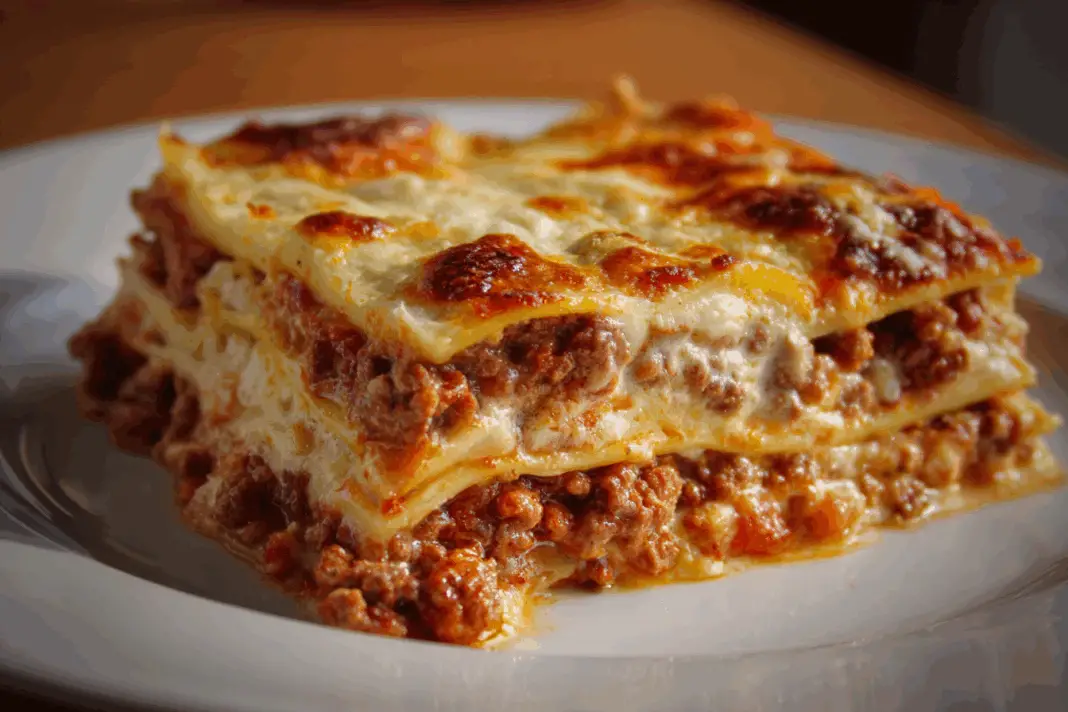
Traditional Italian grandmothers are probably spinning in their graves right now. A New York City restaurant’s version of Nonna’s lasagna has gone completely viral on TikTok, and it’s causing quite the stir among Italian food purists. This isn’t your typical ricotta-heavy American lasagna – it’s a stripped-down, authentic approach that’s making people question everything they thought they knew about this classic dish.
Mark’s Off Madison makes lasagna without ricotta cheese
Most Americans expect lasagna to be loaded with ricotta cheese, but this viral recipe throws that expectation out the window. The lasagna from Mark’s Off Madison in NYC has gained massive attention precisely because it skips the ricotta entirely. Instead, it relies on a rich béchamel sauce mixed directly into the meat sauce, creating layers that are creamy without the typical cottage cheese-like texture that many people associate with lasagna.
This approach actually aligns more closely with traditional Northern Italian lasagna recipes, where béchamel is the standard creamy component. The viral video shows layers of pasta, meat sauce enhanced with béchamel, and a final topping of cheese. The result is a lasagna that’s incredibly rich and cohesive, with each bite delivering intense meat and tomato notes without the mild, grainy interruption of ricotta cheese.
Heavy cream gets mixed directly into the bolognese sauce
The technique that’s really catching people’s attention involves incorporating heavy cream directly into the meat sauce rather than creating separate layers. This method creates an incredibly luxurious texture that coats every strand of pasta and piece of meat. The cream doesn’t just sit on top or create distinct white layers – it becomes part of the sauce itself, turning the traditional tomato-based bolognese into something much richer and more indulgent.
Many home cooks are discovering that this technique actually makes the lasagna easier to slice and serve. The cream-enriched sauce holds together better than traditional layered approaches, preventing the common problem of lasagna falling apart when cut. Food enthusiasts are praising how this method creates a more cohesive dish where every forkful contains the same ratio of meat, sauce, and pasta.
The meat sauce contains proper mirepoix vegetables
A true bolognese sauce isn’t just ground meat and tomatoes thrown together. This viral recipe emphasizes the importance of mirepoix – the classic combination of diced onions, carrots, and celery that forms the aromatic base of the sauce. These vegetables are cooked down until they’re completely soft and almost melted into the sauce, providing depth and complexity that most home cooks skip when they’re in a hurry.
The vegetables aren’t just thrown in as an afterthought – they’re properly sweated and caramelized before the meat is added. This technique builds layers of umami that make the final dish taste like it’s been simmering for hours. The carrots add a subtle sweetness that balances the acidity of the tomatoes, while the celery provides an earthy backdrop that most people can’t identify but definitely notice when it’s missing.
Fresh pasta sheets work better than dried lasagna noodles
The difference between using fresh pasta sheets and boxed dried lasagna noodles is immediately apparent in both texture and taste. Fresh pasta has a more tender bite and absorbs the sauce differently, creating a more integrated final dish. The thinner profile of fresh pasta also means more layers can fit in the same pan, giving each serving more of that satisfying layered structure that makes lasagna so appealing.
Fresh pasta doesn’t require the same pre-cooking that dried noodles do, which means less chance of overcooking and ending up with mushy layers. Italian cooking techniques emphasize using fresh pasta whenever possible, and this viral recipe demonstrates why. The pasta maintains its structure while still being tender enough to cut cleanly with a fork.
Proper cheese selection makes or breaks the dish
While this lasagna skips ricotta, it doesn’t skimp on cheese entirely. The key is using the right types of cheese in the right amounts. A combination of freshly grated Parmigiano-Reggiano and mozzarella provides both the sharp, nutty notes and the melty texture that people expect from lasagna. The Parmigiano-Reggiano should be grated fresh, not bought pre-grated, as the texture and melting properties are significantly different.
The mozzarella used should be low-moisture to prevent the lasagna from becoming watery. Fresh mozzarella contains too much water and will make the final dish soggy, regardless of how well the other components are prepared. The cheese is applied strategically – not just dumped on top, but distributed throughout the layers to ensure every bite has the right amount of creamy, stretchy texture.
Resting time after baking is absolutely critical
The biggest mistake most people make with lasagna is cutting into it immediately after removing it from the oven. This viral recipe emphasizes letting the lasagna rest for at least 15-20 minutes after baking. During this time, the sauces set up, the cheese firms slightly, and all the layers settle into their final structure. Cutting too early results in a soupy mess that slides apart on the plate.
This resting period also allows the internal temperature to even out, preventing those scalding hot pockets that burn the roof of your mouth. The lasagna will still be plenty hot after resting – in fact, it will hold its heat for quite a while thanks to the dense layers and ceramic baking dish. Professional kitchens often prepare lasagna hours ahead and let it rest, then reheat individual portions as needed.
The baking dish size affects cooking time dramatically
Using the wrong size baking dish can completely ruin even a perfectly prepared lasagna. A dish that’s too large will result in thin layers that dry out and overcook. A dish that’s too small will create layers that are too thick, leading to uneven cooking where the edges are done but the center is still cold. The ideal dish creates layers that are about an inch thick when all components are assembled.
Glass and ceramic dishes cook differently than metal ones, affecting both the cooking time and the final texture of the bottom layer. Glass dishes heat more slowly but retain heat longer, while metal pans heat quickly but can create hot spots. Most experienced cooks prefer ceramic or enameled cast iron for lasagna because these materials provide even heat distribution and look good enough to serve directly from the oven.
Assembly order prevents soggy bottom layers
The order in which ingredients are layered makes a significant difference in the final texture. Starting with a thin layer of sauce on the bottom of the dish prevents the pasta from sticking, but too much sauce will make the bottom layer soggy. The sequence should be: thin sauce layer, pasta, meat sauce, cheese, then repeat. The top layer should always end with cheese to create that golden, bubbly surface.
Each layer should be spread evenly to the edges of the dish, ensuring consistent cooking throughout. Gaps or thin spots will cook faster and can burn, while thick spots may remain undercooked. Using an offset spatula or the back of a large spoon helps distribute each layer evenly. The final assembled lasagna should be level across the top, not mounded in the center.
Temperature control during baking prevents burning
Most ovens have hot spots and temperature variations that can cause parts of the lasagna to cook faster than others. Starting at a higher temperature (around 375°F) for the first 20 minutes helps set the structure, then reducing to 350°F prevents the top from burning before the center is heated through. Covering with foil for part of the cooking time protects the top layer while allowing the interior to cook properly.
The internal temperature should reach 165°F in the center before the lasagna is considered done. A meat thermometer inserted into the center should come out hot to the touch. If the top is browning too quickly but the center isn’t hot enough, tent with foil and continue baking. The total cooking time can vary significantly based on the thickness of the layers and the specific oven being used.
This viral take on Nonna’s lasagna proves that sometimes the old ways really are the best ways. By focusing on proper technique rather than just loading up on cheese, this recipe creates a more sophisticated and satisfying dish that actually tastes more Italian than most American versions. The next time someone serves ricotta-heavy lasagna, they might just find themselves missing this cleaner, more intense approach.
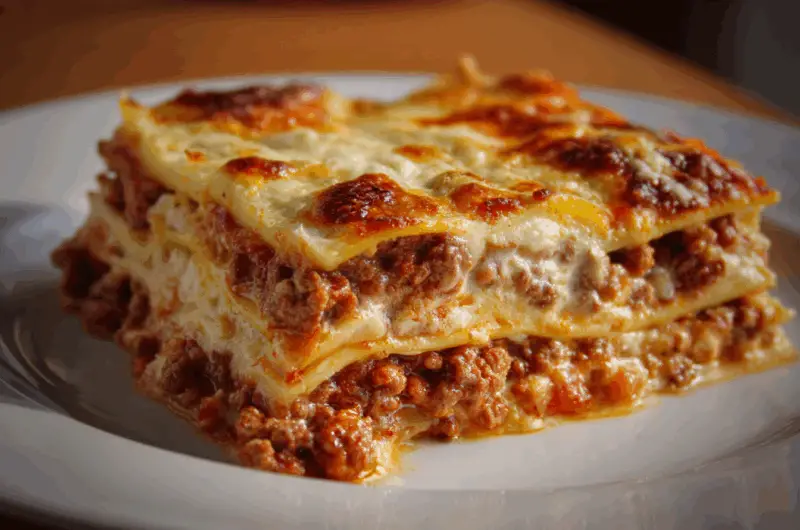
Nonna’s Viral Lasagna Recipe
Course: Dinner8
servings45
minutes1
hour450
kcalThis authentic Italian lasagna skips the ricotta and uses béchamel mixed into the meat sauce for incredibly rich layers.
Ingredients
1 pound ground beef
1/2 pound ground pork
1 large onion, finely diced
2 carrots, finely diced
2 celery stalks, finely diced
28 oz crushed tomatoes
1 cup heavy cream
1 pound fresh lasagna sheets
2 cups grated Parmigiano-Reggiano cheese
Directions
- Heat olive oil in a large heavy-bottomed pot over medium heat. Add the diced onion, carrots, and celery, cooking until softened and lightly caramelized, about 8-10 minutes. This mirepoix base is crucial for building deep umami notes in the sauce.
- Add the ground beef and pork to the pot, breaking it up with a wooden spoon. Cook until the meat is well-browned and no pink remains, about 10-12 minutes. The meat should develop a deep brown color for maximum depth of flavor.
- Stir in the crushed tomatoes and bring the mixture to a gentle simmer. Reduce heat to low and let the sauce cook slowly for 45 minutes, stirring occasionally. The sauce should reduce and thicken significantly during this time.
- Remove the sauce from heat and slowly stir in the heavy cream until completely incorporated. The sauce should become rich and creamy with no streaks of cream visible. Season with salt and pepper to taste.
- Preheat oven to 375°F. Spread a thin layer of the meat sauce on the bottom of a 9×13 inch baking dish to prevent sticking. This base layer should just barely cover the bottom of the dish.
- Layer the fresh pasta sheets over the sauce, slightly overlapping the edges. Spread one-third of the remaining meat sauce over the pasta, then sprinkle with one-quarter of the Parmigiano-Reggiano. Repeat layering twice more, ending with pasta and cheese on top.
- Cover tightly with foil and bake for 40 minutes. Remove foil and continue baking for 15-20 minutes until the top is golden brown and the edges are bubbling vigorously. The internal temperature should reach 165°F.
- Remove from oven and let rest for 20 minutes before cutting. This resting time allows the layers to set up properly and prevents the lasagna from falling apart when served. Cut into squares and serve immediately while still hot.
Notes
- Fresh pasta sheets work best, but if using dried lasagna noodles, cook them just until al dente before assembling
- The heavy cream must be stirred in off the heat to prevent curdling
- Lasagna can be assembled up to 24 hours ahead and refrigerated before baking – add 10-15 minutes to cooking time if baking from cold
Frequently Asked Questions
Q: Can I use ricotta cheese in this recipe if I prefer it?
A: While you can add ricotta, it will change the authentic character of this viral recipe. The beauty of this version is how the cream-enriched meat sauce creates cohesive layers without the grainy texture that ricotta can sometimes provide.
Q: What’s the best way to reheat leftover lasagna?
A: Cover individual portions with foil and reheat in a 350°F oven for 15-20 minutes, or microwave on medium power for 2-3 minutes. Avoid high heat which can make the pasta tough and create hot spots.
Q: Can I freeze this lasagna before or after baking?
A: Yes, you can freeze it either way. Unbaked lasagna can be frozen for up to 3 months – thaw completely before baking and add 15-20 minutes to the cooking time. Baked lasagna freezes well too and can be reheated from frozen.
Q: Why does my lasagna always turn out watery?
A: The most common causes are using fresh mozzarella (too much water content), not cooking the meat sauce long enough to reduce properly, or cutting into the lasagna before it has rested and set up after baking.
