

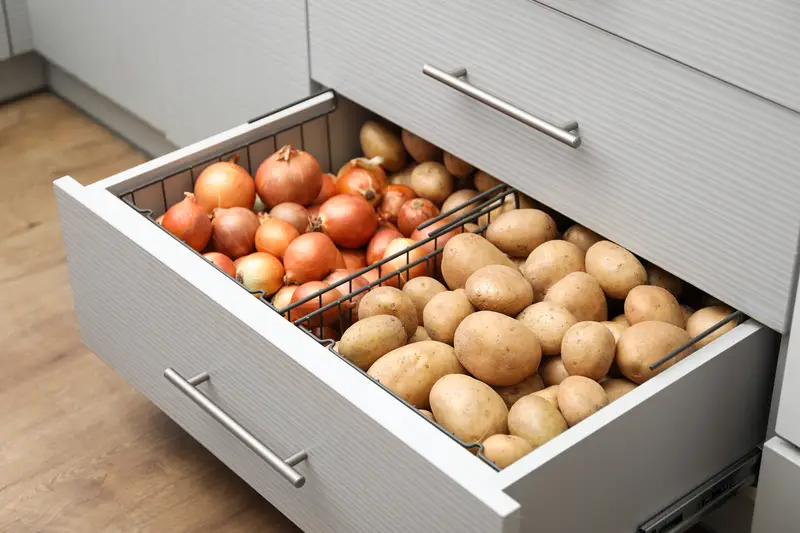
You reach into your pantry for potatoes to make dinner, and what do you find? Weird sprouts growing everywhere, soft spots, or worse—a smell that makes you instantly regret opening that cabinet. It happens to all of us, and usually it’s because we’ve been storing our potatoes next to the wrong foods. Potatoes are picky about their neighbors, and certain foods will make them go bad way faster than they should. Here’s what you need to keep far away from your potato stash if you want them to last.
Onions and potatoes make terrible roommates
It seems like a smart idea to keep onions and potatoes together since they’re both vegetables that don’t need refrigeration. But these two actually hate each other when it comes to storage. Onions release gases and moisture that make potatoes sprout faster and develop those creepy little eyes all over them. Before you know it, your perfectly good potatoes look like something out of a science experiment. The problem is that both vegetables release ethylene gas and moisture that speed up each other’s spoiling process, which means you’re basically throwing money away every time you store them together.
Even if they’re on different shelves in the same pantry, they might still be too close. The gases can travel several feet, so that potato bin right below your onion basket is still causing problems. Food storage experts recommend keeping them in completely separate areas of your kitchen if possible. If you’ve got limited space, try storing one in the pantry and the other in a completely different room. Your potatoes will thank you by lasting weeks longer instead of sprouting after just a few days.
That fruit bowl is killing your potatoes
Apples, bananas, and other fruits sitting near your potatoes are secretly ruining them. These fruits are major producers of ethylene gas, which acts like a ripening hormone for everything around them. When potatoes get exposed to this gas, they start sprouting and can develop bitter tastes that make your meals less enjoyable. That innocent fruit bowl on top of the fridge or sitting on the counter near your potato basket is basically a potato-destroying machine. Even if the fruit and potatoes aren’t touching, the gas still affects them if they’re in the same area.
This problem gets even worse in smaller kitchens where everything is crammed together. The ethylene gas from just a few apples or bananas can make your potatoes sprout and spoil way faster than normal, which means more trips to the grocery store and more money wasted. If you’ve ever wondered why your potatoes sometimes taste a bit off even though they look fine, that nearby fruit might be the hidden culprit. The simple fix is keeping your fruit bowl in a completely different part of your kitchen, preferably as far from your potatoes as possible.
Garlic speeds up potato spoilage too
Just like onions, garlic is another kitchen staple that ruins potatoes when stored nearby. Garlic releases similar gases that trigger sprouting in potatoes, cutting their storage life way shorter than it should be. That little mesh bag of garlic bulbs sitting next to your potatoes might look harmless, but it’s actually causing chemical reactions that make your potatoes go bad faster. When potatoes start sprouting early, you end up throwing them out or cutting away big chunks, which is wasteful and annoying when you’re trying to make dinner.
The gases from garlic can affect potatoes even through paper or mesh bags, so keeping them in their original packaging isn’t enough protection. For best results, store garlic and potatoes in completely different areas of your kitchen. If you’re tight on space, you can keep garlic at moderate temperatures in a dry, well-ventilated spot that’s nowhere near your potatoes. This way both will last longer and taste better when you actually need to use them. Some people even use dedicated garlic keepers with lids to contain those strong gases and smells.
Tomatoes and potatoes don’t mix in storage
It might surprise you that tomatoes and potatoes make terrible storage partners, especially since they’re related plant species in the nightshade family. But being botanical cousins doesn’t make them good neighbors in your pantry. Tomatoes give off moisture and ethylene gas that make potatoes sprout faster and can even affect their taste. Both vegetables contain compounds that can intensify when they’re stored together, which means your potatoes might develop weird off-flavors or spoil more quickly than they normally would. Nobody wants bitter-tasting potatoes ruining their mashed potatoes or fries.
Other nightshade family members like eggplants can also cause problems when stored with potatoes. These vegetables can increase solanine levels in potatoes, which is the naturally occurring compound that makes potatoes turn green when exposed to light. Higher solanine levels can make you sick if you eat enough of it, so it’s not just about taste or shelf life. The easy fix is keeping tomatoes, eggplants, and potatoes in different storage areas. Your tomatoes will be happier at room temperature anyway since refrigeration makes them taste like cardboard.
One bad potato ruins the whole bunch
When potatoes start to rot, they release compounds and moisture that make nearby healthy potatoes go bad faster. It’s like a domino effect where one rotten potato can destroy your entire stash. If you’ve ever bought a bag of potatoes and found most of them going bad at once, chances are one started the process and infected the others. This is why checking your potato supply regularly and removing any that show signs of decay is super important. Waiting until you actually need potatoes to discover they’re all ruined is frustrating and means ordering takeout instead.
Rotting potatoes don’t just affect other potatoes—they can release gases that are actually harmful if you breathe them in large amounts, especially in poorly ventilated spaces like closets or basement storage. These gases can also make nearby foods spoil faster. The rule here is simple: check your potato supply often, and if you spot any with soft spots, mold, or a bad smell, get them out immediately. One rotten potato isn’t worth sacrificing the whole batch. Storing potatoes in smaller quantities rather than one huge bag makes it easier to spot problem potatoes before they ruin everything.
Heat sources near potatoes cause problems
That cabinet next to your oven or the counter space by your toaster might seem convenient for storing potatoes, but the warmth from these appliances is quietly destroying them. Heat speeds up the aging process in potatoes and makes them sprout or go soft way before they should. Even your refrigerator produces heat from its motor, which can affect potatoes stored too close to it. The oven, stovetop, toaster, coffee maker, and other heat-producing appliances all create warm zones that are terrible for potato storage. Even slight temperature increases can dramatically cut potato shelf life.
The ideal temperature for potato storage is between 45 and 55 degrees, which is cooler than most kitchens. When potatoes are kept near heat sources, they easily exceed this range and start falling apart faster. If you’ve noticed your potatoes don’t last as long as they should, check if they’re near any heat-producing appliances or in a warm corner of your kitchen. Moving them to a cooler spot like a basement or the coolest part of your pantry can add weeks to their storage life. Just remember not to refrigerate them—that’s too cold and makes them taste weird and turn dark when cooked.
Light exposure turns potatoes green and bitter
Leaving potatoes on the counter or storing them in clear containers might seem convenient, but light exposure is terrible for them. When potatoes are exposed to light, they produce chlorophyll which turns them green and increases their solanine content. That green color isn’t just ugly—it’s a warning sign that the potato has developed compounds that taste bitter and can make you feel sick if you eat too much. Those green patches you sometimes see on potatoes mean you need to cut those parts away before cooking, which wastes food and time.
Many people store potatoes in clear plastic bags or glass jars on the counter without realizing that even regular kitchen lighting is enough to trigger greening. To avoid this problem, always store potatoes in a dark place or in containers that block all light. Paper bags, cloth bags, or dedicated potato storage bins with solid walls all work well. Even a simple cardboard box beats leaving them exposed. If you’ve ever noticed that store-bought potatoes last longer than ones you brought home and left on the counter, light exposure difference is likely why. Keeping them in the dark helps them stay fresh and taste better when you’re ready to cook them.
The refrigerator ruins potato taste and texture
It seems logical to put potatoes in the fridge to keep them fresh longer, but this common mistake actually ruins them. The cold temperature of your refrigerator triggers a process where the potato’s starch converts to sugar. This makes them taste weirdly sweet when cooked and causes them to darken too quickly when you fry them. If you’ve ever made hash browns or french fries that turned an ugly dark brown color while cooking, refrigerator storage might be the reason. Nobody wants sweet-tasting fries or potatoes that look burnt when they’re not.
Beyond taste and appearance issues, refrigerated potatoes develop a gritty texture that’s unpleasant to eat. The ideal temperature for potato storage is between 45 and 50 degrees, which is warmer than your fridge but cooler than your kitchen. If you don’t have a cool basement or cellar, a dark corner of your pantry still beats the refrigerator. Some people use dedicated root vegetable storage bins in the coolest part of their home, which helps maintain the right temperature and darkness without refrigeration. Just remember that once you’ve cooked potatoes, leftovers should go in the fridge—this rule only applies to raw potatoes.
Plastic bags trap moisture and ruin potatoes
Those plastic bags from the grocery store might seem fine for potato storage, but they’re actually trapping moisture that makes potatoes rot faster. Potatoes need air circulation to stay fresh, and sealed plastic bags create a humid environment where mold and bacteria grow easily. If you’ve ever opened a bag of potatoes to find them wet, slimy, or smelling funky, trapped moisture is the problem. This happens because potatoes naturally release moisture, and when that moisture can’t escape, it creates the perfect conditions for spoilage. It’s gross and wasteful, especially when you were planning to use those potatoes for dinner.
Instead of plastic bags, store potatoes in paper bags, mesh bags, or cardboard boxes that allow air to circulate. These breathable materials let excess moisture escape while still protecting potatoes from light. Some people poke holes in plastic bags if that’s all they have, but switching to paper or mesh is better. You can even use a basket or bin with ventilation holes designed specifically for root vegetable storage. Proper air circulation is key to keeping potatoes fresh for weeks instead of days. Once you make this simple switch, you’ll notice your potatoes staying firm and fresh much longer than they used to.
Storing potatoes properly doesn’t have to be complicated once you know what to avoid. Keep them away from onions, garlic, fruits, and other ethylene producers that speed up spoilage. Store them in a cool, dark, well-ventilated place away from heat sources and light. Skip the refrigerator and plastic bags, and always remove any spoiling potatoes quickly before they ruin the rest. With these simple changes, you’ll stop wasting money on potatoes that go bad before you can use them.
