

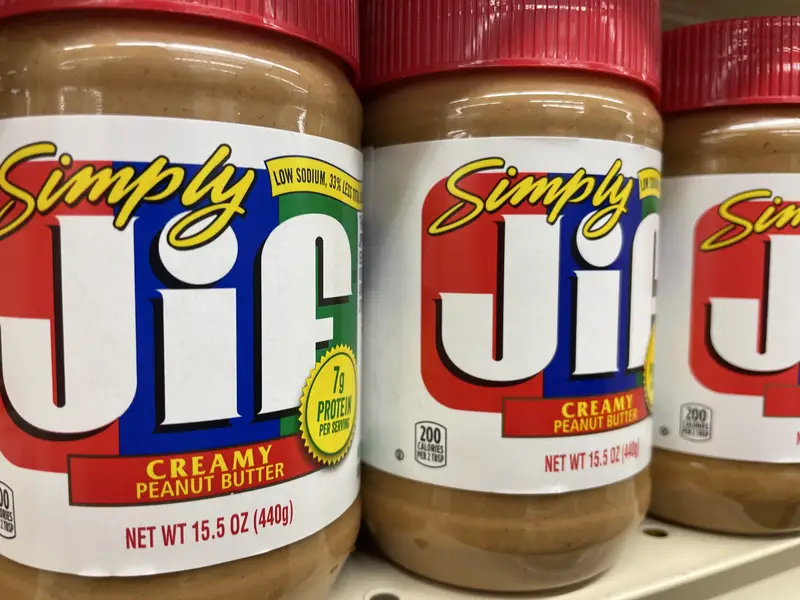
Open the cupboard directly above your stove and there is a decent chance the peanut butter is sitting in there, wedged between the cooking oil and a box of spaghetti. It is the handiest shelf in the kitchen. It is also warm every single time you cook dinner, and warm is the one thing a jar of peanut butter cannot shrug off. Heat is what turns a fresh, roasted-nut flavor into something bitter and paint-like, and the cabinet over the range gets more of it than anywhere else you could possibly put the jar.
The Spot To Avoid Is Right Above The Burners
Peanut butter is roughly 50 percent fat, and fat reacts with oxygen. That reaction, lipid oxidation, is what eventually makes the jar taste stale and then flat-out bad. Temperature is the biggest lever on how fast it happens. A study of natural peanut butter in the Journal of Food Science and Technology found that at room temperature, around 77 degrees Fahrenheit, it held its oxidative stability for only about four weeks, and 95 degrees was no better. The same product kept at 50 degrees showed no real loss for about 12 weeks.
Now think about what the shelf above a range actually experiences. Burners running, the oven on at 375, steam rising off a pasta pot, then everything cooling down again. That cabinet swings warm and cool several times a week. Natural jars separate faster in that heat too. The jar is not going to explode or grow anything dramatic. It is just going to taste worse, sooner, and you will blame the brand instead of the shelf.
The Other Warm Corners People Forget About
The stove is the obvious offender, but it is not the only one. Cabinets above the refrigerator catch the warm air the fridge pushes out, and any cupboard sitting next to an oven or over a dishwasher gets the same treatment. A pantry shelf away from appliances and direct sunlight is the better place for the jar, opened or not.
A sunny counter is its own trap. Light speeds oxidation right alongside heat, so the jar you leave out next to the toaster because the kids use it every morning is aging faster than the one in the cupboard. Same story for a glass canister on a windowsill. If a spot gets afternoon sun, it is not a storage spot.
One more thing worth knowing: peanut butter picks up smells. A jar parked next to onions or garlic for months can start tasting like its neighbors, which is a weird way to ruin a sandwich.
Why The Jar Lasts So Long In The First Place
Peanut butter is less than 2 percent water. That dryness is the whole reason a jar can sit in a cupboard for months and still be perfectly fine. Its water activity usually sits around 0.2 to 0.3, far too low for the kind of spoilage that hits moist foods. Nothing much is growing in there.
What does happen is the oil going stale, and the signs are easy to catch. Fresh peanut butter smells nutty and a little sweet. Old peanut butter smells sharp and chemical, the comparison people reach for is paint or crayons or old cardboard. The taste turns bitter or metallic. The color darkens from its original tan, and the texture can dry out and go crumbly instead of creamy. Mold is rare given how little moisture is in the jar, but fuzzy growth of any kind means the jar goes in the trash.
Jif And Skippy Belong In The Pantry, Not The Fridge
If your cart usually holds Jif, Skippy or Peter Pan, you have conventional peanut butter, and it does not need the refrigerator. Those brands are built with hydrogenated vegetable oil, which binds the peanut oil to the solids so nothing separates. Chill it and it turns stiff and hard to spread, which is reason enough to leave it in the cupboard.
The USDA FoodKeeper database puts an opened jar of conventional peanut butter at 2 to 3 months at room temperature, and unopened jars at 6 to 24 months in the pantry. Keep the lid screwed down tight between uses and put it on a shelf that stays cool and dark. That is the entire job.
Worth noting if you read labels: the FDA removed partially hydrogenated oil as an allowed stabilizer from the legal definition of peanut butter in a rule that took effect on December 22, 2023. Only fully hydrogenated oil is permitted now. And by U.S. law, anything sold as peanut butter has to be at least 90 percent peanuts, and its fat is capped at 55 percent.
Natural Peanut Butter Is The One That Needs The Fridge
A jar of just peanuts and salt has no stabilizers doing cleanup duty, so the oil rises and the clock runs faster. Left open in a warm cupboard, natural peanut butter only holds its flavor for about a month before it starts tasting stale. Move it to the refrigerator and you are looking at about four months of good eating. Cold does two jobs at once: it thickens the oil so the jar stops separating, and it slows the chemical breakdown that causes those bitter off-flavors. The USDA FoodKeeper app recommends finishing an opened jar of natural peanut butter within 4 months when it is kept chilled.
Stir before you chill, not after. Cold peanut butter does not want to be mixed, and a jar that went into the fridge separated will stay separated in two stubborn layers.
That Oil On Top Is Not Spoilage
Plenty of people toss a perfectly good jar because of the oil slick. Separation in natural peanut butter is just gravity doing its thing: heavy peanut solids sink, light oil floats. Warmth makes the oil thinner so it rises faster, which is another reason the stove cabinet is a bad address. Stir it back in and the texture comes right back.
The thing to check is the smell of that oil. Normal separation smells like peanuts. If the oil on top smells sharp or bitter, the jar has actually turned, and no amount of stirring fixes that.
The Date On The Lid Is Not A Deadline
Federal law does not require expiration dates on any food except infant formula. The “Best if Used By” stamp on a peanut butter jar is the manufacturer’s guess at when flavor and texture start sliding, nothing more. USDA guidance says foods that show no signs of spoilage “should be wholesome and may be sold, purchased, donated and consumed beyond the labeled ‘Best if Used By’ date.”
Commercial peanut butter can run 6 to 24 months unopened in the pantry and 2 to 3 months after opening. Natural varieties last several months unopened and about a month once the seal is broken at room temperature, stretching to about 4 months in the fridge. Those are quality windows, not cutoffs. Your nose outranks the stamp every time.
Three Tricks That Make Natural Peanut Butter Tolerable
Flip the jar upside down if you insist on keeping it in the cupboard. Oil rises, so when the jar is inverted the oil has to travel up through the solids. Turn it right side up before you open it and the oil is already distributed, which saves you the wrestling match with a butter knife. Make sure the lid is on tight first, obviously.
For fridge storage, dump the whole jar into a mixing bowl the day you buy it. Whip it with a fork, a hand mixer or a food processor until the oil and solids are one thing again, scoop it back into the jar, and put it straight in the refrigerator. The cold sets the mixture and you never stir again.
If chilled peanut butter is too stiff to spread, scoop what you need into a small microwave-safe dish and zap it for 5 to 10 seconds. It softens right back up without warming the rest of the jar. Use a clean, dry utensil every time, too. Crumbs and moisture from a knife that just hit toast are how an otherwise dry jar picks up problems.
Where The Jar Should Actually Live
Pick a cupboard on the far side of the kitchen from the range, below counter height if you have the space, away from the dishwasher vent and out of the sun. That is the whole system. If you buy conventional, it stays there until the jar is empty. If you buy natural, it gets one good stir and then it lives in the fridge.
Moving one jar six feet is not a dramatic kitchen upgrade. But it is the difference between peanut butter that still tastes like roasted peanuts in month three and peanut butter that tastes like the inside of a paint can, and it costs you nothing but the walk across the room.
