

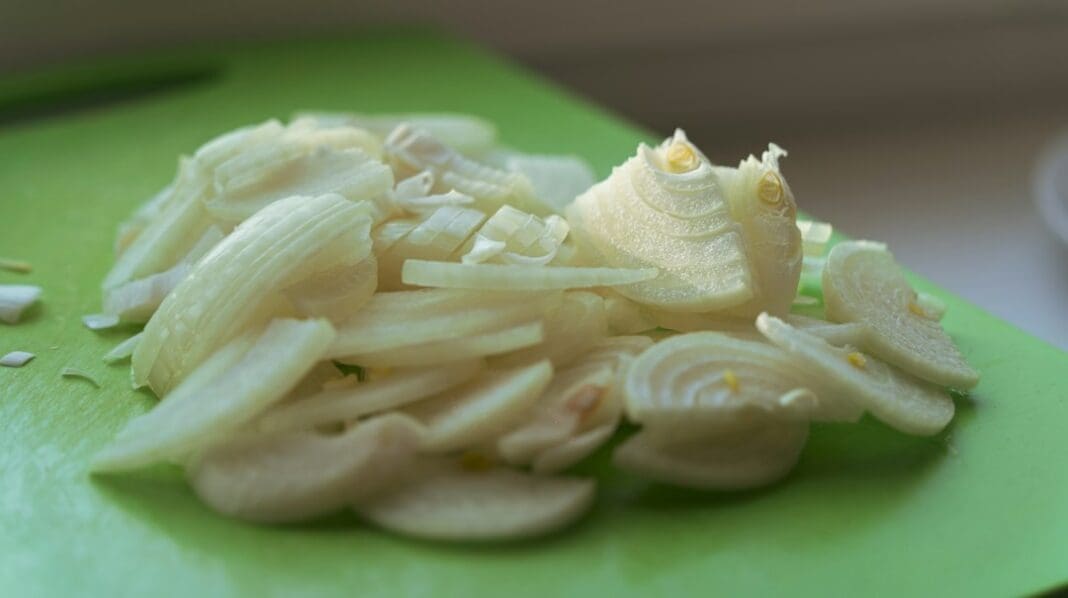
Half an onion sits on the cutting board after dinner, and somebody in the house always has a theory about what to do with it. Drop it in a bowl of water. Rub the cut face with salt. Wrap it in foil and shove it behind the milk.
The water bowl is the one to stop doing tonight. Sliced onions were kept two days submerged in water and two days sealed in zipper-lock bags, then tasted against onions sliced that minute. The water batch lost.
Onions kept in water were “unanimously deemed to be most odorous with the sharpest flavor,” according to the test by America’s Test Kitchen. The bowl of water does the exact opposite of what everybody claims it does.
Water Spreads The Burn Around
The reason is mechanical, not mystical. Water moves enzymes called alliinases across every cut surface of the onion, and those enzymes crank out more thiosulfinates, the compounds behind an onion’s sharp smell and bite. Soaking a cut onion gives the reaction a highway. Two days in a bowl and you get something sharper and smellier than a freshly cut onion.
Rinsing is still useful, just at the other end of the process. A quick rinse right before the onion hits the salad washes thiosulfinates off the surface, which is the actual way to tame raw onion. Rinse at the start and you have marinated it in its own sharpness. Leave a halved onion in water long enough and it turns brown and swells, and the water goes brown with it.
Leaving It On The Counter Under A Bowl
A cut onion on the counter sits in the 40 to 140 degree danger zone from the moment you slice it. The CDC says cut produce belongs in the fridge within two hours. If the kitchen is above 90 degrees because the oven has been running all afternoon, the limit drops to one hour.
The habit of leaving half an onion on the board overnight, upside down, with a cereal bowl over it, is the single most common version of this. The onion dries out, the surface goes leathery, and you end up cutting a quarter inch off the face before you can use it anyway.
Loose Wrap And Foil Are Not A Seal
Foil and parchment folded loosely over the top are a blanket, not a lid. Loose plastic wrap is barely better, though wrap pressed tight against the cut face does the job, and a cracked lid or a warped takeout container cuts the safe window shorter than the numbers on any chart.
Any airtight option keeps the onion fresh, and for blocking odor a glass container with a locking lid is the safest bet. If a bag is all you have, the fix is to squeeze the air out, seal it, then seal a second bag around the first one. Double-bagging sounds like overkill until the butter starts tasting like French onion dip.
Parking It Next To The Butter
Cut onions give off sulfuric compounds that travel through refrigerator air and settle into whatever is porous and uncovered. Butter, soft cheese and open dairy are especially quick to pick it up. That is how a stick of butter ends up flavoring your toast like last night’s burger.
Giving the onion its own shelf, away from the butter dish and the hunk of unwrapped cheddar, costs nothing.
Dicing The Whole Thing Before You Need It
Surface area is the clock. A halved onion wrapped tight or sealed in a container held up for as long as two weeks in America’s Test Kitchen’s testing, though by then it was better cooked than raw. Dice or chop the same onion and it softens and loses flavor faster, often within a few days. Every knife cut is another face exposed to air, and smaller pieces simply hit the end of the line sooner.
Meal preppers who dice a bag of onions on Sunday for the whole week are fighting that math. Cut what the recipe needs, store the remaining half intact, and dice the rest the night you actually want it. Toss any bruised or soft pieces rather than packing them in with the good ones, because they drag everything else down with them.
Washing It Before It Goes In
Rinsing chopped onion and then packing it damp into a container is a mistake people make with the best intentions. Wash before use, not before storage. Extra water sitting on cut surfaces is the same problem as the soaking bowl, just in smaller doses.
If condensation is already an issue in your fridge, a dry paper towel laid inside the container will pull up excess moisture without soaking the pieces. A paper towel wrapped around the onion by itself, though, is not storage. It has no seal and no barrier.
Treating Whole Onions Like Cut Ones
Whole, unpeeled onions do not belong in the refrigerator. They soak up moisture and turn soft and mushy, which wrecks both the texture and the flavor. They want a cool, dry, ventilated spot at 45 to 55 degrees, in a mesh bag or an open basket. Under ideal cold, dry conditions, storage onions can hold for one to eight months depending on variety, and in a cool pantry most keep for a month or two.
Keep them away from potatoes. Potatoes give off moisture that pushes onions toward spoiling faster, according to the National Onion Association, and the two sitting in the same bin is one of the oldest bad habits in American kitchens. Once an onion is peeled, the rules flip: a peeled whole onion goes in the fridge at 40 degrees or below. Sweet onions hold more water, so they run out of road sooner than regular storage onions.
Freezing It And Expecting Crunch
Freezing works, with one condition: the onion is never going in a salad again. Ice crystals break down the cell walls, so thawed onion comes out soft and limp. Raw frozen pieces stay usable for three to six months and are fine in soups, stews, stir-fries, casseroles, braises and sauces. Blanching is optional: Colorado State University Extension says chopped onion can go straight into the freezer, or be blanched for a minute and a half first.
Dumping a pound of chopped onion into one bag gives you a frozen brick. Spread the pieces in a single layer on a parchment-lined sheet pan, freeze them solid, then transfer to a freezer bag so you can scoop out a handful without thawing the lot.
Pushing Past Day Ten
Seven to ten days is the upper limit for cut onions in an airtight container at 40 degrees or below, the figure the National Onion Association gives. Cooked onions are a shorter story at three to five days, and they should be in a sealed container within two hours of coming off the stove.
Three signals mean it goes in the bin: a slimy film or dark spots on the cut face, a sour or fermented smell that reads different from normal onion pungency, and a soft, wet, mushy texture. Fuzzy white, blue or green growth is an automatic toss, and with a cut onion, do not try to trim around it. Toss the whole piece.
The Overnight Onion Rumor
Someone in your family has forwarded the post claiming a chopped onion turns poisonous if you keep it overnight. It gets reshared every couple of years and it is not true. A 2019 fact-check rated it false, and the storage window published by the National Onion Association has sat at seven to ten days the whole time.
Cutting an onion the night before and cooking it the next day is normal kitchen work. The method is what matters, and the forwarded post never mentions method.
What To Do With The Half Onion Instead
A wide-mouth glass jar with a rubber-gasket lid is the best tool for this, and an inexpensive one will last the rest of your life. Put the half onion in whole, clamp it shut, set it toward the back of the fridge where the temperature holds steady at 40 degrees or below, and use it inside a week. A good zipper-lock bag with the air pressed out works just as well if you would rather bag than jar.
Vacuum sealing can buy a little more time, but it means buying a machine plus a steady supply of bags. That math works for someone prepping in volume. For the rest of us, the glass jar wins on price and performance, and the bowl of water goes down the drain.
