

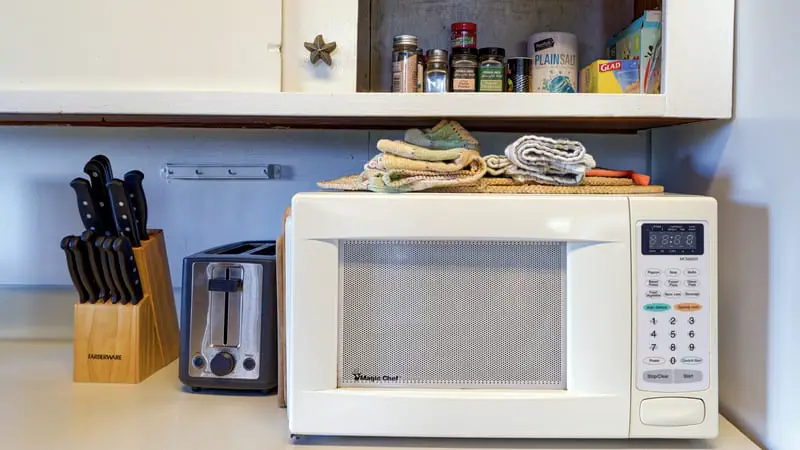
Ninety seconds on high, a clean glass mug, and a spoonful of instant coffee sitting on the counter waiting to go in. The water comes out looking completely still. No bubbles, no steam curling off the top, nothing that says it is anywhere near boiling. That stillness is the problem. Water heated in a microwave can climb past its boiling point without ever bubbling, and the moment you jostle the cup or drop that coffee in, it can erupt out of the mug and onto your hand, arm, or face.
Physicists call it superheating, and it is not a rare freak event. The Food and Drug Administration has warned about it, citing reports of serious burns and scalds to people’s hands and faces from water that erupted out of a cup after being overheated in a microwave.
The water does not look like boiling water. That is exactly why people get hurt. Normal hot water shows a little movement or small bubbles forming around the edge of the cup. Water that sits dead still after a long run in the microwave is the one to be careful with.
One Degree Over The Line Is Enough To Do Damage
The numbers on this are startling. According to a University of New South Wales physics page on superheating, one liter of water heated to 101°C without boiling at normal pressure is sitting in an unstable state, and it can suddenly produce about 3 liters of steam.
One degree over the line. That is all it takes. And because that steam forms inside the body of the water rather than at the surface, it does not drift politely upward the way it does off a pot on the stove. It shoves the water out of the container, fast.
Sometimes the trigger is as small as lifting the cup out of the oven or setting it down on the counter. The water had nowhere to release that energy while it was sitting still, so it releases it all at once when something finally disturbs it.
A Kettle Physically Cannot Pull This Off
Your stove and your electric kettle heat water from one direction. The hot metal starts bubbles right where it touches the water, and those bubbles stir the whole pot, giving you the visual you have trusted your whole life: bubbles rolling to the surface right as it hits boiling. Microwaves do not work that way at all. They hit the water from every direction at once, exciting the molecules so they flip back and forth billions of times a second, and the jostling between neighbors turns into heat.
There is no hot spot on the bottom of the cup kicking off bubbles. Hot spots form in some parts of the cup while other parts stay cooler, and the surface never breaks.
There is a second difference most people never think about. In a kettle or a saucepan, the metal is hotter than the water, so bubbles start forming right on that hot surface. In a microwave, the water ends up hotter than the container it is sitting in. The vessel gives the water no help whatsoever.
Your Nicest Mug Is The Worst One For This Job
Bubbles need somewhere to start. Scientists call those spots nucleation sites, and they are nothing more than tiny imperfections: scratches, pits, specks, rough patches. A brand new glass or glazed ceramic mug with no cracks in the glazing and no scouring marks is smooth almost down to the molecular scale, which means the water has nowhere to form a single bubble.
So the pristine mug your aunt gave you is the risky one. The beat-up one at the back of the cabinet, the one with the scratched interior and the ring stain you gave up on, is actually the better choice. Those scuffs make the surface craggy enough for bubbles to form and for the water to boil the way it is supposed to.
The microwave also heats the water directly while barely warming the mug, so the cup stays cooler than what is inside it. Smooth walls plus a cool container is the exact recipe for a cup of water that is hotter than it looks.
The Spoonful Of Instant Coffee Is The Detonator
Here is the sequence that gets people burned. You heat plain water in a clean cup, pull it out, and stir in hot chocolate mix or a spoonful of instant coffee. All that granulated powder hits the water at once and gives it thousands of places to start boiling in the same instant. The result, as Washington State University puts it, is a violent eruption of boiling water out of the cup.
Same thing with a tea bag. Same thing with a spoon. The disturbance is the trigger, and the stronger the disturbance, the bigger the eruption.
Flip the order and you take most of the risk off the table. Put the sugar, the coffee crystals, or the cocoa mix in before the water goes in the microwave, not after. Those particles sit there the whole time giving bubbles somewhere to form, so the water boils normally instead of quietly loading up.
A Wooden Chopstick Solves Almost All Of It
The fix costs nothing. Drop a non-metal object with a rough surface into the cup before you start the microwave. A wooden chopstick, a coffee stirrer, a popsicle stick, a wooden skewer, an ice cream stick. The grain in the wood gives bubbles a place to form and gather, and the water heats and boils like it would in a pot.
Make it wood or plastic rated for microwave use, not metal. Metal has no business in a microwave at all, and that includes mugs with metallic paint or gold trim on the rim.
Leave real headspace in the cup, too. A mug filled to the brim has nowhere to put an eruption except over the side and onto whatever is holding it.
Short Bursts Beat One Long Run
Overcooking is the other half of the problem. Water is far more likely to superheat when it runs longer than it needs to, which is why the single worst habit is punching in two minutes and walking away. Heat it in short bursts instead, and stir before you start and again partway through so the heat spreads out.
Appliance makers put warnings about this in their owner’s manuals, along with recommended heating times for liquids, and the FDA’s first tip is to follow them. Nobody reads them. They are worth two minutes of your life, because the right time for the amount of water you are heating is the single number that matters most.
When the timer stops, do not reach straight in. Let it stand in the oven for a short while, the way manuals suggest. Then tap the outside of the container a few times with something long and solid while it is still inside the oven, keeping your hand out of there. If it is going to erupt, it erupts against the inside of the microwave instead of against you. And keep your face well away from the open door and the cup, because standing over a mug of superheated water is how burns end up on faces instead of hands.
Water Is Not The Only Thing That Blows Up In There
Plain water gets the headlines because it is the most common version, but it has company. Tea, coffee, tomato sauce, and hard-boiled eggs all go off in the microwave under the right conditions. Anyone who has reheated a bowl of marinara without a cover already knows what the inside of the oven looks like afterward.
Sauce at least warns you. It spits, it spatters, it makes noise. Plain water gives you nothing until the second you touch it, which is what makes it the sneakiest thing in the appliance.
Faster Ways To Get Hot Water Anyway
An electric kettle exists for exactly this and does the job better, and most come with automatic shutoff and boil-dry protection built in. A hot water dispenser does the same. Either one takes the entire superheating question off the table because the water boils the way it is supposed to.
No kettle, no dispenser, just a stove? Three tricks make it quick. Heat only as much water as you actually need, since a smaller amount boils faster. Use a wide pot or pan so the water sits in a thin layer. Put the lid on and leave it on, which traps the heat instead of letting it drift out of the pan.
That combination gets you to a rolling boil faster than most people expect, and you can see it happening.
The Verdict
Plain water in a smooth clean mug, nothing added, heated as long as the timer will go, is the one microwave habit worth breaking outright. Every element of that setup is working toward a cup that looks calm and is not.
If the microwave at the office is your only option, you can still use it. Chopstick in the cup, coffee or cocoa mix stirred in before heating rather than after, short bursts instead of one long blast, a tap on the side of the mug before you reach for it, and your face nowhere near the door. Do those five things and you take most of the danger out of it.
If there is a kettle in the house, use the kettle. It is usually faster (in a Department of Energy test, a kettle heated a cup of water in about a minute and a half against about four minutes in the microwave), it tells you when it is done, and it will not hand you a cup of secretly superheated water.
