

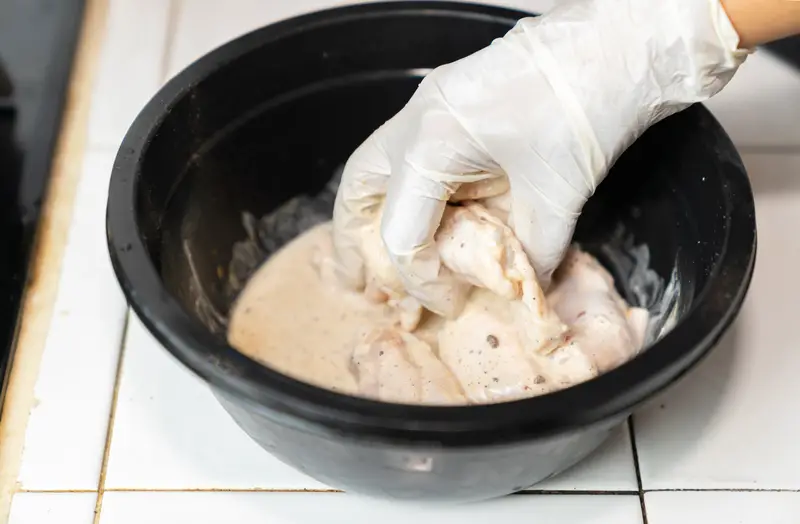
You pull a pack of chicken out of the fridge, grab whatever marinade you’ve got going — soy sauce, lemon juice, yogurt, maybe that teriyaki bottle from Costco — and drop it all into a zip-lock bag. Done. Except maybe not. Because there’s something almost nobody checks before they start marinating, and it can wreck the texture, compromise the safety, and straight-up ruin what should have been a perfectly good dinner.
I’m talking about checking the condition of the chicken itself. Not just the expiration date, though sure, do that too. I mean the moisture level, the packaging liquid, whether the chicken has already been pre-brined, and a handful of other things that change how a marinade interacts with the meat. Get this wrong and you end up with mushy, salty, or straight-up unsafe chicken. Let’s get into it.
Most Store-Bought Chicken Is Already Brined (And Nobody Reads The Label)
Here’s what trips people up: a huge percentage of chicken sold at American grocery stores — think Tyson, Perdue, store brands at Walmart, Kroger, Publix — has already been injected with or soaked in a sodium solution. The label will say something like “contains up to 15% retained water” or “enhanced with a solution of water, salt, and sodium phosphate.” That is a brine. Your chicken has already been marinated, in a sense.
So when you dump that chicken into a salty teriyaki marinade or a soy-sauce-heavy Korean BBQ situation, you’re double-salting it. The result is chicken that tastes like the ocean and has a weird, almost rubbery chew to it. Nobody wants that. Before you marinate anything, flip the package over and read the fine print. If it’s been enhanced with a solution, you need to cut way back on salt in your marinade — or skip the marinade entirely and just season lightly.
Pat It Dry Or Your Marinade Won’t Do Anything
Open a package of chicken thighs and what do you see? A pool of pinkish liquid sitting at the bottom of the tray. That’s mostly water mixed with a protein called myoglobin. It’s not blood, despite what it looks like. But it is a problem if you’re trying to marinate.
That extra liquid dilutes your marinade. You mix up this perfect combination of garlic, olive oil, citrus, and spices, and then the chicken’s packaging liquid waters it all down. The flavors don’t penetrate as well. The surface stays slippery instead of absorbing anything useful. Take 30 seconds and pat the chicken dry with paper towels before it goes into the bowl or bag. This single step makes a noticeable difference in how flavorful the end result is. Seasoning with salt in advance and letting the chicken sit uncovered in the fridge for up to 24 hours can also help dry the surface and improve the final texture.
Check The Thickness — Uneven Pieces Mean Uneven Flavor
Chicken breasts are ridiculous. One end is an inch thick, the other end is practically paper-thin. When you marinate a piece like that, the thin part absorbs way more acid and salt than the thick part. The thin part gets mushy and the thick part stays bland. You’ve just created the worst-of-both-worlds chicken.
Before the chicken hits the marinade, make the pieces uniform. Butterfly thick breasts, or pound them out between plastic wrap until they’re an even thickness — about three-quarters of an inch is a good target. This ensures the marinade does its job evenly. It also means the chicken cooks evenly, which is a whole other battle people lose constantly. If you’re working with chicken for kebabs, cut the pieces into roughly the same size cubes. One-inch to inch-and-a-half cubes work great and pick up marinade quickly.
Your Marinade Might Be Too Acidic For Long Soaks
This is the mistake that actually grosses people out once they understand what’s happening. Acidic marinades — anything with lemon juice, lime juice, vinegar, wine, or tomato — start to chemically “cook” the surface of the chicken. It’s similar to what happens when you make ceviche with raw fish. The acid denatures the proteins.
Leave chicken in a highly acidic marinade for more than two hours, and the outside starts breaking down. It gets this chalky, mealy texture that no amount of grilling can fix. Even worse, over-marinated meat can actually become a food safety concern because the broken-down surface becomes a better environment for bacteria. If your marinade is heavy on acid, keep it to 30 minutes to 2 hours max. If you want to go longer — like overnight — use a marinade built around oil, herbs, and spices with only a splash of acid.
Always Marinate In The Fridge, Never On The Counter
This sounds obvious, but I’ve seen it enough times to know it needs saying. People pull the chicken out, dump it in the marinade, and leave it on the counter while they go do something else. Maybe they figure they’ll get back to it in 20 minutes. Then an hour passes. Then two.
Raw chicken sitting between 40°F and 140°F — the USDA’s “danger zone” — is a bacteria factory. Salmonella, campylobacter, all the hits. The marinade doesn’t protect you from this. Acid doesn’t kill bacteria at the concentrations you’d find in a home marinade. Always marinate chicken in the refrigerator, in a sealed container or zip-lock bag. And if you want to use the leftover marinade as a sauce, you need to boil it hard for several minutes first. Don’t just pour raw-chicken-juice on your finished plate. That’s how you spend the next 48 hours regretting every life choice from a bathroom floor.
Check For Skin — It Blocks The Marinade Completely
Skin-on chicken thighs are wonderful things. Crispy skin, juicy meat, relatively cheap. But if you’re marinating skin-on chicken, you’re mostly marinating the outside of the skin, not the meat. Chicken skin is basically a waterproof jacket. Flavors can’t pass through it in any meaningful way during a typical marinade window.
If you want marinated flavor on skin-on pieces, you’ve got two options. One: peel back the skin, rub the marinade directly on the meat underneath, then put the skin back in place. Two: score the skin with a sharp knife in a crosshatch pattern so the liquid can seep through. Either way, don’t just toss skin-on drums and thighs in a bag and expect miracles. The skin is doing its job — keeping moisture out just as much as keeping moisture in.
Frozen Chicken Needs To Be Fully Thawed First
Some people toss frozen chicken into a marinade thinking it’ll thaw and absorb flavor at the same time. Two birds, one stone. Except it doesn’t work that way. When chicken is frozen, the surface is basically ice. The marinade sits on top of it doing nothing. As it slowly thaws, water leaches out of the meat and dilutes everything — same problem as not patting it dry, but ten times worse.
You also run into the safety issue again. The outside of the chicken thaws and sits in the danger zone while the inside is still a block of ice. By the time the center is thawed, the outside has been at a risky temperature for too long. Always thaw chicken completely in the fridge first — which takes about 24 hours for a full pack of breasts or thighs — then pat it dry, then marinate. Yes, it takes planning. That’s cooking.
Skip The Rinse — The CDC Literally Tells You Not To
While we’re talking about what to check before marinating, let’s kill this one: do not rinse your chicken under the tap. I know, I know — plenty of people grew up watching their parents do it. Plenty of people still swear by it. But the CDC explicitly says not to rinse raw chicken because tiny water droplets — loaded with bacteria — splash onto your sink, your countertop, nearby dishes, and anything else within a couple of feet. You can’t see it happening, but it is.
Cooking chicken to 165°F kills the bacteria. Rinsing doesn’t. So patting dry with paper towels, then tossing those paper towels straight in the trash, is the move. Check this box before you even think about the marinade.
Use The Right Container — Metal Bowls And Acid Don’t Mix
If your marinade has citrus, vinegar, or wine, don’t marinate in a metal bowl — especially aluminum or unlined copper. The acid reacts with the metal and can give the chicken a metallic taste. It can also discolor the surface of the bowl. Glass, ceramic, food-safe plastic, or zip-lock bags are all better choices.
Zip-lock bags are honestly the best option for most home cooks. You can squeeze out all the air so the chicken is completely surrounded by marinade, and cleanup is tossing the bag in the trash. No scrubbing a bowl that smells like garlic for three days. Lay the bag flat in the fridge on a sheet pan — that way, if the bag leaks, you don’t end up with raw chicken marinade dripping onto your leftover pasta on the shelf below.
The Quick Version
Before you marinate any chicken: read the label for pre-brining. Pat it dry. Make the pieces even. Check your marinade’s acid level and set a timer accordingly. Keep it in the fridge. Don’t rinse the chicken. Use a non-reactive container. Make sure it’s fully thawed. And if there’s skin, work around it or through it.
None of this is hard. It takes maybe two extra minutes. But those two minutes are the difference between chicken that’s actually flavorful, safe, and has the right texture — and chicken that’s a sad, salty, rubbery disappointment. And honestly, life’s too short for disappointing chicken.
