

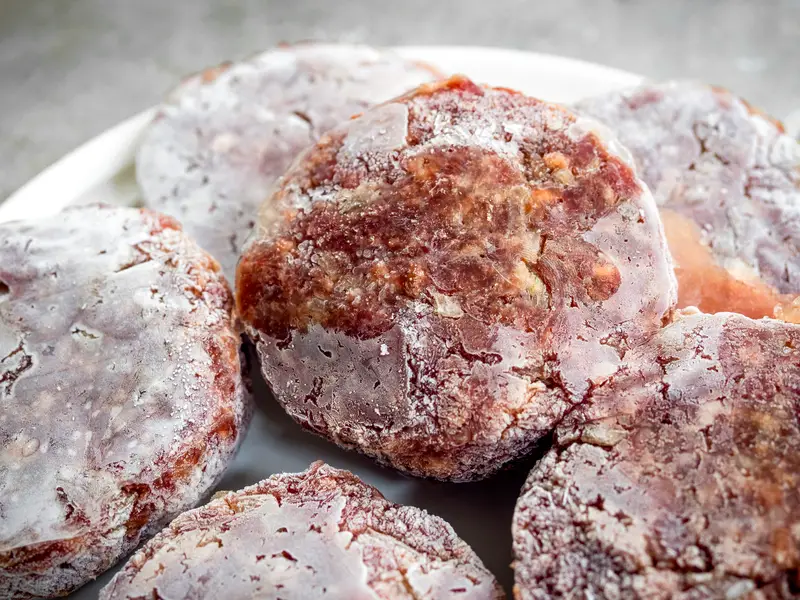
I used to buy those big family packs of ground beef at Costco, tear the plastic off, shove the whole tray into the freezer, and call it a day. Months later, I’d pull out a frozen brick that looked like it had been dipped in gray cement. The edges were dried out, the color was wrong, and when I finally cooked it, the texture was off — almost grainy, with that weird freezer taste that no amount of taco seasoning can hide.
Turns out, I was doing it wrong. And if you’re tossing ground beef straight into the freezer in the styrofoam tray from the grocery store, you’re doing it wrong too. There’s a simple step — actually, a few of them — that separates people who freeze ground beef well from people who end up throwing money in the trash.
Repackage It Before It Goes in the Freezer
Here’s the thing nobody tells you at the meat counter: the packaging your ground beef comes in from the store is designed for display and short-term storage. It is not designed for the freezer. That plastic wrap stretched over a styrofoam tray? It’s porous. Air gets in. Moisture gets out. And that’s exactly how you end up with freezer burn — those dry, discolored patches that make your meat taste like cardboard.
Before you freeze ground beef, you need to repackage it in something airtight. Freezer paper, heavy-duty aluminum foil, vacuum-sealed bags, or even good quality freezer-grade zip-top bags with the air pressed out. The goal is to create a barrier between the meat and the dry, cold air circulating in your freezer. That barrier is the whole game.
If you have a vacuum sealer, use it. If you don’t, press a zip-top bag flat with the meat inside and squeeze out every last pocket of air before sealing. Wrap it tight. Think of it like tucking the beef in for a long winter nap — the less air exposure, the better it’ll be when it wakes up.
Flatten It Into Thin Slabs
This is the trick that changed how I deal with ground beef forever, and it’s so stupidly simple I’m almost embarrassed I didn’t think of it sooner. When you put your ground beef into a freezer bag, don’t just drop a mound of it in there. Press it flat. Like, really flat — about half an inch thick.
Why? Two reasons. First, flat packages stack neatly in the freezer. You can lay them on top of each other like books on a shelf instead of dealing with awkward lumps rolling around between the frozen peas and the ice cream. Second — and this is the big one — flat ground beef thaws in a fraction of the time. A thick ball of frozen beef can take a full day to thaw in the fridge. A flat slab? You’re looking at a few hours. Some people report getting it thawed enough to cook in under 30 minutes using cold water.
That means no more forgetting to pull the meat out the night before and scrambling at 5 PM when the kids are hungry. A flat pack of frozen ground beef can go from freezer to pan in a reasonable amount of time.
Portion It Out Before Freezing
Here’s another mistake I see people make all the time: freezing a three-pound block of ground beef because they don’t want to deal with separating it. Then they thaw the whole thing to use one pound, and now they’ve got two pounds of thawed raw beef they either need to cook immediately or throw away. You cannot safely refreeze raw ground beef that’s already been thawed.
So portion it. If your recipes typically call for a pound, freeze it in one-pound packages. If you’re cooking for one or two people and usually only need half a pound, freeze it in half-pound portions. Spend the five extra minutes when you get home from the store, and future-you will be grateful every single time.
If you really want to be organized, use a Sharpie to write the date and weight on each bag. Ground beef is safe indefinitely in the freezer from a food safety standpoint, but the quality starts dropping off after about four months. After that, it’s still technically fine to eat, but you’ll notice the difference.
Score Lines Into the Flat Pack
This one’s a bonus move for the people who like cooking smart. After you flatten your ground beef in the bag, take a chopstick, a butter knife, or even the edge of a ruler and press lines into the meat through the bag. Divide it into quarters or thirds.
When the meat freezes, those score lines become break points. Need half the package? Snap it along the line. It breaks cleanly, you put the rest back in the freezer, and you haven’t thawed a single gram more than you need. It’s the kind of thing that sounds fussy until you do it once and realize how much easier everything gets.
Consider Browning It First
If you already know you’re going to use the ground beef in something like spaghetti sauce, chili, tacos, or casseroles, there’s a strong argument for cooking it before freezing. Brown the beef, drain the fat, let it cool completely, and then pack it into freezer bags.
Pre-cooked ground beef thaws even faster than raw, and on a busy weeknight, you can dump it straight into a pot of simmering sauce without any extra steps. You’ve basically given yourself a head start on dinner. Some home cooks batch-cook five or six pounds of ground beef on a Sunday and freeze it in individual portions for the whole week. That’s meal prep without the matching containers and the Instagram post.
The one thing to remember: if you freeze it raw, use it right away after thawing. Don’t let it hang out in the fridge for three days. Thaw it and cook it. That’s the rule.
Your Freezer Type Actually Matters
Not all freezers treat your meat the same way. If you have a frost-free freezer — which most modern refrigerator-freezer combos are — the appliance periodically cycles its temperature to prevent frost buildup. That cycling means the air inside is constantly shifting, which dries out food faster. It’s convenient because you never have to defrost the freezer, but your ground beef pays the price.
A deep freezer or chest freezer that isn’t frost-free maintains a more consistent temperature. Meat stored in one of those can last much longer without losing quality. If you’re someone who buys in bulk — especially when ground beef goes on sale at Walmart, Kroger, or wherever you shop — a chest freezer is a worthwhile investment. You can usually find a decent one for under $200, and it pays for itself fast when you’re buying those $3.99-per-pound sale packs instead of paying $6.49 at full price.
How to Tell if Your Frozen Ground Beef Has Gone Bad
Frozen ground beef that’s been in the freezer too long or wasn’t packaged well will tell you. Look for large ice crystals inside the packaging — not a light frost, but thick, chunky ice. That means moisture has been leaving the meat and refreezing on the surface. The meat itself might look grayish-brown instead of the deep red or pink you’d expect. It might feel dry or papery on the outside edges.
Once you thaw it, give it the smell test. Fresh ground beef has a mild, slightly metallic scent. If it smells sour, tangy, or just off, toss it. No recipe is going to save meat that’s turned.
And here’s something that confuses a lot of people: ground beef turning brown doesn’t automatically mean it’s bad. Myoglobin, the protein that gives beef its red color, changes shade when exposed to air. A little browning is normal and harmless. But if the entire surface is gray and the smell is wrong, that’s your answer.
The Right Way to Thaw It
You’ve done everything right: portioned, flattened, wrapped tight, labeled. Don’t ruin it by thawing on the counter. Ground beef sitting at room temperature is a bacteria party. The outside hits the danger zone (40°F to 140°F) long before the inside has thawed, and that’s where things like E. coli and salmonella get comfortable.
The safest method is thawing in the refrigerator. Put the frozen pack on a plate or in a bowl to catch any drips, stick it on the bottom shelf, and give it time. For those flat packs you made, a few hours should do it.
In a hurry? Submerge the sealed bag in cold water, changing the water every 30 minutes. You can also use the defrost setting on your microwave, but watch it like a hawk — microwaves have a habit of partially cooking the edges while the center stays frozen solid.
Stop Wasting Money in Your Freezer
Americans throw away a staggering amount of food every year, and a lot of it comes straight out of the freezer. Meat that got buried, forgotten, and freezer-burned beyond recognition. Ground beef is one of the most commonly wasted proteins because it’s cheap enough that people don’t think twice about tossing a grayish lump they’re not sure about.
All of this is preventable. Repackage properly. Flatten it. Portion it. Label it. These aren’t complicated steps. They take maybe ten minutes when you get home from the store, and they save you from throwing money away three months from now when you find a mystery package in the back of the freezer that looks like it survived an ice age.
Ground beef is one of the most versatile things in any kitchen. Treat it right before it goes into the freezer, and it’ll treat you right when it comes back out.
