

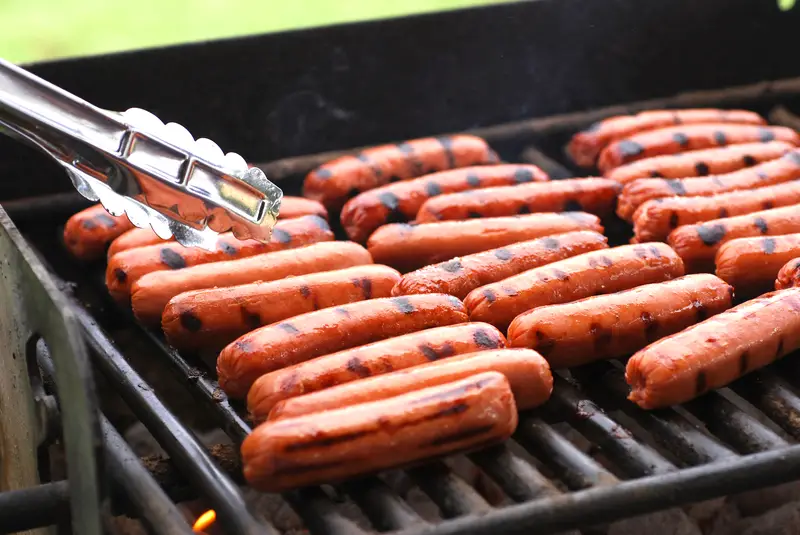
Most people think throwing hot dogs on the grill is the best way to cook them. It makes sense, right? Grilling adds those pretty char marks and gives everything that smoky taste. But here’s something that might surprise you: according to professional chefs who actually make hot dogs for a living, grilling is one of the worst methods. In fact, one chef who earned the nickname “Hot Dog Boyfriend” for his expertise says he never grills them anymore. What’s the problem with grilling, and what should you do instead?
Grilling dries out hot dogs faster than you think
When you put a hot dog directly on grill grates, the high heat immediately starts evaporating the moisture inside. Hot dogs already have a relatively thin casing, and the direct flame or hot metal strips away that juiciness within minutes. What you end up with is a hot dog that looks great on the outside with those classic grill marks, but bites dry and tough. The outside gets crusty before the inside has a chance to warm through properly, creating an uneven texture that’s not what anyone wants.
Chef Fred Maurer, who worked at Dickson’s Farmstand Meats in New York and now serves as Executive Chef at NoMad Diner, puts it plainly. According to him, grilling is basically a fast track to a dried-out hot dog. The intense, direct heat works against everything that makes a hot dog good. Instead of keeping all that savory moisture locked inside where it belongs, grilling forces it out. Those nice-looking char marks come at a real cost to the eating experience, leaving you with something that needs way more condiments than necessary just to make it edible.
Boiling makes hot dogs bland and waterlogged instead
Some people think boiling is the solution to the grilling problem. After all, you’re surrounding the hot dog with moisture, so it can’t dry out, right? Well, yes and no. While boiling does prevent the drying issue, it creates a different set of problems. When you drop a hot dog into boiling water, it just sits there getting heated through without developing any interesting texture or browning. The result is a hot dog that’s uniformly warm but completely lacking in any contrast between the outside and inside.
Even worse, boiling can actually make the hot dog taste more watered down. The casing doesn’t get a chance to crisp up at all, staying flabby and soft. There’s no caramelization happening, which means you’re missing out on all those deeper, richer tastes that develop when proteins and sugars react to heat. A boiled hot dog is better than a dried-out grilled one, sure, but it’s still pretty boring. It’s like the plain oatmeal of hot dog cooking methods. It gets the job done but doesn’t add anything special to the experience.
Microwaving creates rubbery hot dogs nobody wants to eat
We’ve all been there. You’re in a hurry, and the microwave seems like the obvious choice. Just wrap the hot dog in a paper towel, zap it for 30 seconds, and you’re done. But microwaving might actually be worse than grilling when it comes to texture. The microwave heats food by making water molecules vibrate rapidly, which sounds fine in theory. In practice, it means the hot dog heats unevenly, with some spots scalding hot while others stay cool. The casing often becomes tough and rubbery, almost chewy in a bad way.
Plus, there’s zero opportunity for any browning or crisping. The hot dog comes out looking exactly like it went in, just warmer and somehow less appetizing. The texture throughout is uniform in the worst possible way, with that distinctive rubbery quality that makes every bite feel the same. If you absolutely must use the microwave because you have no other options, at least poke a few holes in the hot dog first to let steam escape. But honestly, even an extra five minutes to use a better method is worth it.
The butter griddling method changes everything about hot dogs
So what’s the right way? Chef Maurer swears by griddling hot dogs in butter, and once you understand the method, it makes perfect sense. Start by splitting the hot dog lengthwise down the center. This creates a flat surface that can make direct contact with the pan, allowing for even browning. Heat up a pan or griddle over medium-high heat until it’s hot enough that butter immediately starts to sizzle when you add it. Drop in about a tablespoon of butter and let it melt and bubble.
Place the split hot dog cut-side down into that bubbling butter. Press it gently into the pan so the entire split surface makes contact with the butter and heat. Let it cook for about three minutes until it develops a deep golden-brown color with crispy edges. Then flip the hot dog to the rounded side and cook for another minute or two, adding another dollop of butter to the pan. The result is a hot dog that’s crispy and caramelized on the inside while staying juicy throughout. The butter adds richness without making things greasy.
Splitting the hot dog creates better surface contact
The splitting step is really important and not just for getting a flat surface. When you split the hot dog lengthwise, you expose the interior to direct heat, which means it can brown and caramelize. This is where all the good stuff happens. The natural sugars and proteins in the meat react to the heat and butter, creating complex tastes that you simply can’t get from cooking the outside of an intact hot dog. That Maillard reaction is what makes the difference between an okay hot dog and a legitimately delicious one.
Splitting also ensures the hot dog cooks faster and more evenly. Instead of trying to heat through a round cylinder where the middle takes forever to warm up, you have two flatter pieces that cook through quickly. The edges get particularly crispy and almost lacy where they’ve been in contact with the hot butter, while the center stays tender and juicy. Some people worry that splitting will make the hot dog dry out, but the opposite is true. Because it cooks faster, less moisture has time to escape overall.
Using another pan as a weight helps even browning
Here’s a pro trick that takes the butter griddling method to the next level. Once you’ve placed your split hot dog in the pan cut-side down, take another pan and place it on top of the hot dog to weigh it down. This ensures that every bit of that cut surface makes solid contact with the hot pan and butter. Without the weight, the hot dog might curl up a bit as it cooks, leaving some spots barely touching the pan while others press firmly against it.
The weighted pan creates even pressure across the entire surface, which means even browning and crisping. You’ll get a consistent golden-brown color from one end to the other instead of random dark spots mixed with pale areas. It also speeds up the cooking time slightly because you’re maximizing heat transfer. If you don’t have a second pan handy, a heat-safe plate or even a spatula that you press down with works too. The key is just maintaining that contact between the hot dog and the cooking surface throughout those crucial first few minutes.
Toast your buns in the leftover butter for maximum taste
After you’ve cooked your hot dogs, don’t clean that pan yet. There’s still butter in there along with all the browned bits and rendered fat from the hot dogs themselves. This is liquid gold for toasting your buns. Split your hot dog buns and place them cut-side down in the still-warm pan. Let them soak up that butter while developing their own crispy, golden crust. The buns will pick up some of those meaty, caramelized bits stuck to the pan, adding another layer of richness.
Toasted buns are also structurally superior to soft, untoasted ones. They hold up better against condiments and don’t get soggy as quickly. The crispy surface creates a barrier that keeps moisture from immediately soaking through, which means your hot dog stays intact longer as you eat it. Plus, warm toasted buns just taste better than room-temperature soft ones. The contrast between the crispy, buttery bun and the juicy hot dog inside makes every bite more interesting. It takes an extra 30 seconds and transforms the entire eating experience.
Simple toppings work best with butter griddled hot dogs
When you’ve gone through the effort of properly cooking your hot dog, you don’t want to bury it under a mountain of toppings. Chef Maurer recommends keeping things simple so the hot dog itself can shine. At NoMad Diner, he tops his butter-griddled hot dogs with just Kewpie mayo and crispy shallots. That’s it. The Japanese mayo adds creaminess and a slight tang, while the fried shallots provide crunch and a mild onion taste that doesn’t overpower everything else.
This minimalist approach makes sense when you think about it. The butter griddling method creates so much richness and depth that you don’t need to cover it up. A properly cooked hot dog has its own character that deserves attention. That said, classic toppings like good mustard, sauerkraut, or relish all work great too. The key is choosing toppings that complement rather than compete. Skip the heavy chili or thick cheese sauce that might make sense on a blander boiled hot dog. Let the hot dog be the star.
The hot dog quality matters more with better cooking methods
Here’s something interesting about cooking hot dogs properly. When you grill or microwave them, the cooking method is so harsh that it doesn’t matter much what quality hot dog you start with. Everything ends up dried out or rubbery anyway. But when you use the butter griddling method, the quality of your hot dog becomes much more noticeable. A good all-beef hot dog with natural casing will taste significantly better than a basic supermarket variety when both are cooked with care.
This doesn’t mean you need to buy expensive boutique hot dogs for every meal. Regular hot dogs from any grocery store will still taste better when butter griddled than when grilled. But if you’re already taking the time to cook them right, it might be worth trying some higher-quality options to see the difference. Natural casing hot dogs in particular benefit from this method because the casing gets wonderfully crispy while the inside stays juicy. The contrast between the snappy casing and tender interior is something you just can’t achieve with other cooking methods.
The next time you’re making hot dogs, skip the grill and break out a pan instead. The butter griddling method takes about the same amount of time as grilling but produces results that are miles better. Split them down the middle, cook them in butter until they’re golden and crispy, and keep the toppings simple. You’ll end up with hot dogs that are juicy inside with a caramelized, crispy surface that adds real depth. Even if you’ve been grilling hot dogs your whole life, this method is worth trying at least once.
