

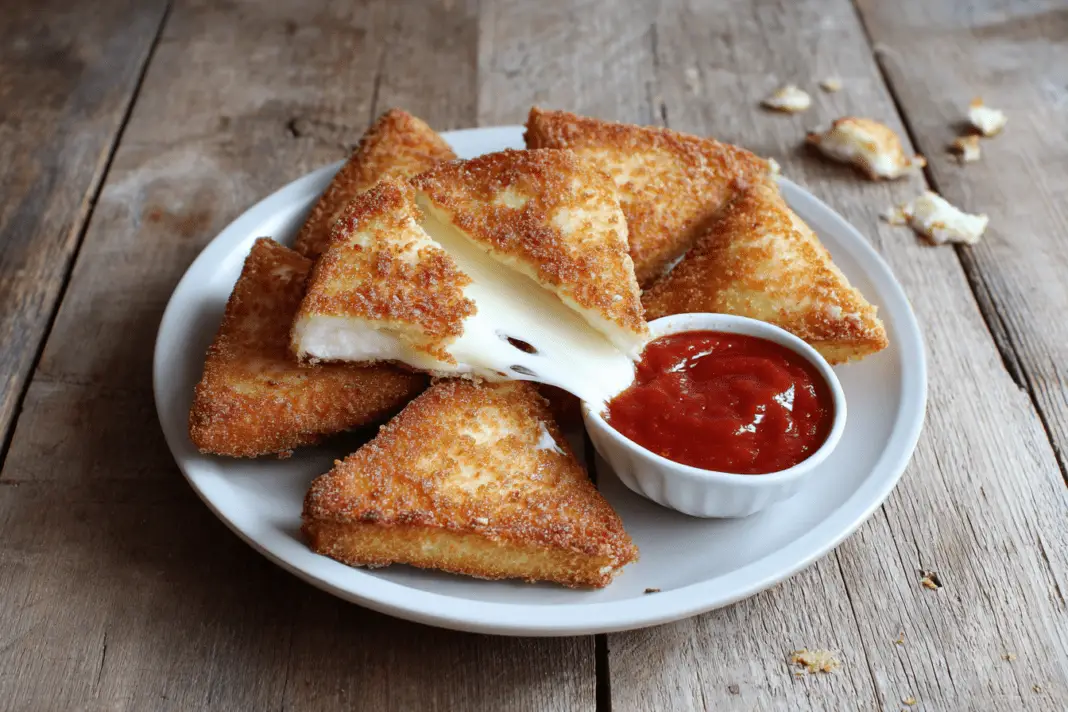
I want you to forget everything you know about grilled cheese for the next few minutes. Forget the Kraft singles. Forget the Wonder Bread. Forget the pat of butter melting in a nonstick pan while you stand there in your socks at 11 p.m. I love that sandwich too. But there’s something happening in Italy that makes our version look like it’s barely trying.
It’s called mozzarella in carrozza, which translates to “mozzarella in a carriage.” The name alone should tell you that Italians take their cheese sandwiches more seriously than we do. This is a sandwich where the mozzarella is tucked between crustless white bread, the whole thing gets dipped in flour and then egg, and instead of getting gently toasted in a skillet — it gets fried. Properly fried. In oil. Until the outside is shatteringly crisp and the inside is nothing but molten, stretchy cheese. It’s the kind of thing you eat once and then spend the rest of the week thinking about.
Where This Sandwich Comes From
Mozzarella in carrozza is a Southern Italian creation, rooted in the Campania region — think Naples, Sorrento, the Amalfi Coast. Some food historians trace it back to the Middle Ages, though nobody can pin down an exact date. What we do know is that it was born from poverty and practicality: families needed to use up stale bread and old mozzarella that was past its prime. So they wrapped the cheese in bread, coated it, and fried it. Waste nothing. Make it delicious. That’s Italian cooking in two sentences.
The name might also come from the shape of the original sandwich. According to traditional accounts, the bread slices were originally cut round, so the finished sandwich resembled the wheels of a horse-drawn carriage. Food writer Emiko Davies has also pointed out that the stretchy melted mozzarella pulling apart looks like the reins of a carriage. Either way, it’s a much better name than “grilled cheese.”
Why It Works Better Than You’d Expect
The reason mozzarella in carrozza hits different from a regular grilled cheese comes down to the coating. When you dip the sandwich in flour and then egg, you’re basically creating a seal around the whole thing. That seal does two jobs: it gets incredibly crispy when it hits the hot oil, and it traps all the moisture and meltiness of the cheese inside. You end up with a contrast that a butter-griddled American grilled cheese simply can’t match — an audibly crunchy shell giving way to an almost liquid center of pure melted mozzarella.
It’s the same principle behind mozzarella sticks, if you think about it. But this is better, because you’ve got more cheese-to-coating ratio and the bread adds a soft, pillowy layer between the crunch and the melt. It’s a sandwich and a fried appetizer at the same time.
The Ingredients Are Almost Embarrassingly Simple
Here’s what you need: white sandwich bread, fresh mozzarella, all-purpose flour, eggs, milk, and oil for frying. That’s it. You probably have most of this in your kitchen right now. The whole thing is a budget-friendly pantry recipe, which makes sense given its humble origins.
For the bread, plain white sandwich bread is traditional and works great. Nothing fancy — Pepperidge Farm, Sara Lee, store brand, whatever you’ve got. You want to cut the crusts off. I know that feels wasteful, but the crusts don’t seal properly and they’ll let cheese leak out during frying. Save them for breadcrumbs or feed them to the birds.
For the cheese, fresh mozzarella is the move. The kind that comes in a ball packed in water, usually near the deli section. Here’s the critical detail though: you need to slice it and let it drain. Ideally, put it on a paper towel-lined plate in the fridge overnight. Fresh mozzarella holds a lot of liquid, and if you skip this step, that moisture will turn to steam when it hits the oil and you’ll get splattering, soggy bread, and sadness. If you can find buffalo mozzarella (sometimes labeled “mozzarella di bufala”), that’s the traditional Neapolitan choice and it tastes incredible. But regular fresh mozzarella works perfectly.
How To Actually Make It
Start by slicing your drained mozzarella into pieces about a quarter-inch thick. Lay them on your crustless bread, making sure the cheese doesn’t hang over the edges at all. Any exposed cheese will melt out into the oil and make a mess. Press the second slice of bread on top firmly. Then cut each sandwich diagonally into triangles — this gives you a better bread-to-cheese ratio on the edges and makes them easier to handle.
Set up your dredging station: one shallow bowl with flour, and another with eggs beaten together with a splash of milk. Take each triangle, coat it in flour on all sides — including the edges — then dip it in the egg mixture, again making sure every surface is covered. That full coating is what keeps the cheese contained and creates the golden crust you’re after.
Pour enough sunflower oil (or any neutral oil — vegetable, canola, peanut) into a heavy pan so it comes about a quarter inch up the sides. Some recipes call for the oil to come up halfway on the sandwich, which gives you more even browning. Heat it to about 340°F. If you don’t have a thermometer, drop a tiny bit of the egg mixture into the oil — it should sizzle immediately but not violently.
Fry the sandwiches a couple at a time. Don’t crowd the pan or the oil temperature will drop. Cook for about 2-3 minutes per side until they’re deep golden brown, then flip carefully. When they’re done, transfer them to a plate lined with paper towels and let them drain for a couple of minutes. This part matters — if you eat them straight from the oil, you’ll burn your mouth and the outside will be greasy instead of crisp.
Variations That Are Worth Trying
The classic Neapolitan version is just cheese and bread — nothing else. And honestly, there’s something beautiful about that simplicity. But if you travel to Rome or Venice, you’ll find versions with anchovies and pancetta tucked inside. The anchovies especially are worth trying if you’re not squeamish — a single anchovy fillet per sandwich adds a salty, savory depth that makes the sweet mozzarella pop.
Prosciutto is another popular addition. A thin layer between the cheese and bread gives you a little meaty richness. Sun-dried tomatoes or roasted red peppers can go in there too. And if you want to go fully American-Italian hybrid, serve them alongside warm marinara sauce for dipping, like overgrown mozzarella sticks. It’s not traditional, but it’s hard to argue with.
Some people also like to add a second cheese — a little grated pecorino or parmesan mixed in with the mozzarella gives you a sharper, more complex flavor without changing the texture much.
Common Mistakes That Will Ruin It
The biggest one is not draining the mozzarella. I said it already, but I’ll say it again because it matters that much. Wet cheese plus hot oil equals a dangerous, splattery disaster. Pat it dry. Let it sit overnight if you can. At minimum, give it 30 minutes on paper towels.
Second mistake: oil too hot. If you crank the heat, the coating will burn dark brown before the cheese inside has time to melt. You want a moderate, steady temperature — around 340°F. This is not a fast-food deep fryer situation. Think of it as a patient, even fry.
Third: leaving cheese hanging over the bread edges. Seal those sandwiches tight. Press the bread together firmly. If mozzarella peeks out, it melts directly into the oil and burns onto the surface of the sandwich. Not pretty.
Fourth: skipping the flour step and going straight to egg. The flour gives the egg something to cling to. Without it, the egg slides right off the bread and you get a patchy, uneven coating. Flour first, then egg. Every time.
How This Compares To American Grilled Cheese
I’m not here to trash the American grilled cheese. I’ve eaten hundreds of them and I’ll eat hundreds more. But mozzarella in carrozza is a fundamentally different experience. An American grilled cheese is comfort food — soft, warm, familiar. Mozzarella in carrozza is an event. The crunch is louder. The cheese pull is longer. The whole thing feels more indulgent, more deliberate, more like something you’d order at a restaurant and then try to recreate at home.
The cooking method is what separates them most. American grilled cheese gets cooked on a griddle or in a skillet with butter, low and slow. The Italian version gets submerged in oil at a specific temperature, so the heat is hitting all surfaces at once. It’s the difference between toasting and frying — and frying wins when it comes to texture.
The other thing is the cheese itself. Processed American cheese melts into a smooth, uniform layer because it’s designed to do that. Fresh mozzarella melts into strings and pools and stretches. It tastes like actual milk, slightly sweet, slightly tangy. It’s a completely different flavor profile, and once you’ve had it this way, a Kraft single starts to feel like a compromise.
Frequently Asked Questions
Q: Can I use low-moisture mozzarella instead of fresh?
A: You can, but the result won’t be the same. Low-moisture mozzarella (the kind you’d put on pizza) melts fine but doesn’t have the same creamy, stretchy quality that makes this sandwich special. Fresh mozzarella is worth the extra dollar or two. Just make sure you drain it well before using it.
Q: What oil should I use for frying?
A: Any neutral oil with a high smoke point works. Sunflower, vegetable, canola, or peanut oil are all good choices. Avoid olive oil for frying — it has a lower smoke point and will start to smoke before the oil is hot enough. Save the olive oil for drizzling on top if you want.
Q: Can I make these ahead of time?
A: You can assemble and coat the sandwiches up to an hour before frying. Keep them on a parchment-lined tray in the fridge. Don’t fry them ahead though — they’re best eaten within a few minutes of coming out of the oil. Reheated, they lose the crunch that makes them worth making in the first place.
Q: Can I bake these instead of frying?
A: Technically yes, but you’d be making a different sandwich at that point. The frying is what creates the signature crispy coating. If you bake them, you’ll get something closer to a regular toasted sandwich. It’ll still taste good, but it won’t be mozzarella in carrozza.
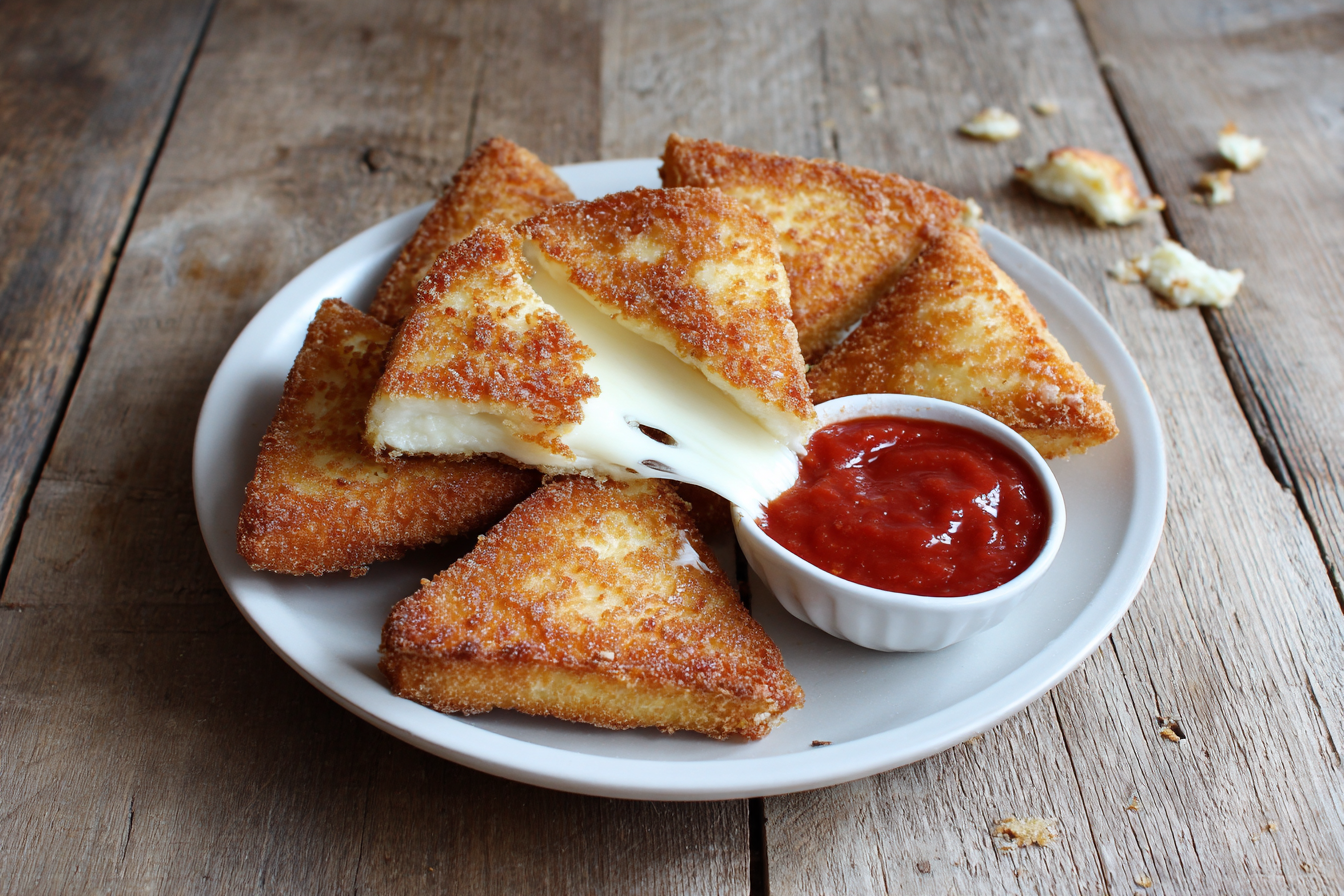
Mozzarella in Carrozza (Italian Fried Mozzarella Sandwiches)
Course: Lunch4
sandwiches15
minutes10
minutes380
kcalCrispy, golden fried sandwiches stuffed with stretchy melted mozzarella — Italy’s answer to grilled cheese that will ruin you for the regular kind.
Ingredients
8 slices white sandwich bread, crusts removed
8 oz fresh mozzarella, sliced 1/4 inch thick and drained overnight
1 cup all-purpose flour
3 large eggs
1/4 cup whole milk
Sunflower or vegetable oil for frying (about 2 cups)
1/2 teaspoon kosher salt
Optional: anchovy fillets or thin slices of prosciutto
Optional: warm marinara sauce for dipping
Directions
- Slice the fresh mozzarella into pieces about 1/4 inch thick and lay them on a paper towel-lined plate. Refrigerate uncovered for at least 30 minutes, or ideally overnight, to remove excess moisture. Pat dry with fresh paper towels before assembling.
- Remove the crusts from all 8 slices of bread. Divide the mozzarella slices evenly among 4 bread slices, keeping the cheese within the edges so none hangs over. If using anchovies or prosciutto, lay them on top of the cheese now.
- Top each with the remaining bread slices and press down firmly to seal. Cut each sandwich diagonally to create triangles. Press the edges together again after cutting to make sure they’re well sealed.
- Set up your dredging station with two shallow bowls. Place the flour in one bowl. In the second bowl, whisk together the eggs, milk, and salt until smooth and well combined.
- Dip each triangle into the flour, coating all surfaces including the edges. Shake off any excess flour, then dip into the egg mixture, making sure every surface is fully coated. Set the coated triangles on a parchment-lined tray.
- Pour enough oil into a heavy-bottomed skillet or saucepan so it reaches about 1/4 to 1/2 inch up the sides. Heat over medium heat until the oil reaches 340°F. If you don’t have a thermometer, drop a small bit of egg mixture into the oil — it should sizzle immediately without smoking.
- Fry the sandwiches 2-3 at a time, being careful not to crowd the pan. Cook for 2-3 minutes per side until deep golden brown, then carefully flip with a spatula or tongs. The cheese should be fully melted by the time both sides are golden.
- Transfer the finished sandwiches to a plate lined with paper towels and let them drain for 2-3 minutes before serving. This lets the excess oil absorb and allows the cheese to set just slightly so it doesn’t all pour out in the first bite. Serve with warm marinara for dipping if desired.
Notes
- Draining the mozzarella is the most important step. Excess moisture causes dangerous oil splatter and soggy bread. Don’t skip it — even 30 minutes on paper towels helps significantly.
- The flour coating must come before the egg. Without flour, the egg won’t stick properly and you’ll get an uneven, patchy crust that lets cheese escape during frying.
- These are best served within 5 minutes of frying. They don’t reheat well — the coating loses its crispness — so plan to eat them right away.
