

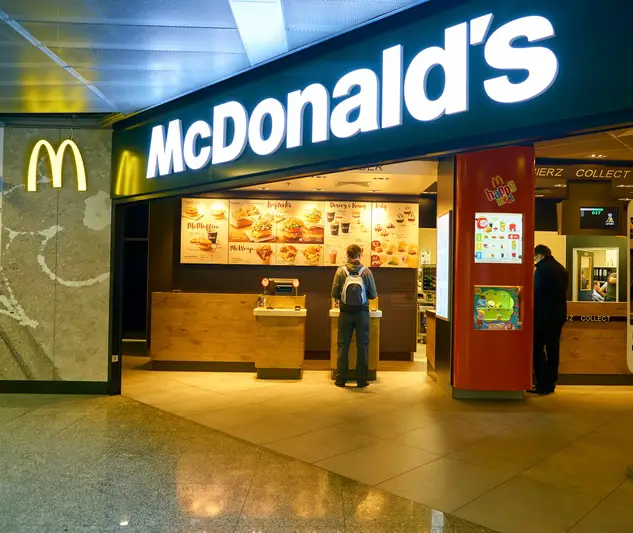
McDonald’s has been making some bold moves lately, and not all of them have worked out as planned. The fast-food giant recently announced the creation of a new Restaurant Experience Team that promises to bring big changes to locations across the country. From failed menu experiments to ambitious expansion plans, here’s what McDonald’s has been up to and what it means for your next trip through those golden arches.
CosMc’s experiment crashed and burned within months
Remember when McDonald’s launched that weird alien-themed drink shop called CosMc’s? The company thought they could compete with Starbucks by creating a beverage-focused spinoff named after some obscure 1980s McDonaldland character. They opened the first location in Bolingbrook, Illinois, with plans to expand to 10 locations by 2025, serving cold-brew coffee, iced lattes, and quirky items like blueberry-lemon sundaes and something called the Creamy Avocado Tomatillo Sandwich.
By May 2025, McDonald’s shut down all CosMc’s test locations after just a few months of operation. Customers weren’t impressed with the disjointed menu offerings and drive-thru-only focus. The whole concept felt forced and disconnected from what people actually wanted. One person on Reddit called it “another blunder by McDonald’s executives,” saying the entire management team seemed like clowns. The failure shows that even McDonald’s can’t just slap their name on any concept and expect it to work.
All-day breakfast disappeared and never came back
Back in 2015, McDonald’s finally gave people what they wanted: Egg McMuffins and hash browns available all day long. Sales jumped immediately, and customers were thrilled to grab breakfast items during lunch or dinner hours. It seemed like a permanent win for everyone who ever craved hotcakes at 3 PM or wanted a sausage McMuffin after work.
Then March 2020 hit, and McDonald’s shelved all-day breakfast, supposedly as a temporary measure to simplify kitchen operations during the pandemic. But “temporary” turned into permanent, and now most locations stop serving breakfast items at 11 AM or earlier. McDonald’s employees have explained that while all-day breakfast boosted sales, it also made everything more complicated and slowed down service during busy periods. Still, plenty of customers remain frustrated that they can’t get their breakfast fix whenever they want it.
Cinnamon Melts vanished despite having devoted fans
Around 2007, McDonald’s introduced these amazing little cinnamon rolls called Cinnamon Melts that were basically mini versions of what you’d get at Cinnabon. They were warm, gooey, and perfect with morning coffee. People loved them, and they seemed like the kind of treat that would stick around forever on the breakfast menu.
By 2017, McDonald’s had quietly removed Cinnamon Melts from most locations due to high production costs, low sales numbers, and complicated preparation requirements. They needed special packaging for the icing, which slowed down kitchen efficiency. Despite an online petition with over 18,000 signatures demanding their return, McDonald’s management has ignored the pleas. Years later, people are still complaining about their disappearance on social media and begging for them to come back.
Fish McBites lasted only a few months
In early 2013, McDonald’s tried to capitalize on the chicken nugget trend by creating Fish McBites – basically fish nuggets made from the same pollock used in their Filet-O-Fish sandwich. They marketed it as a limited-time offering for Lent, hoping to attract customers who wanted a non-meat option that was also kid-friendly enough for Happy Meals.
The fish nuggets disappeared after just a few months, despite considerable marketing investment. Customer reviews were brutal, with people complaining that the nuggets had no taste and a weird texture. The failure was so complete that years later, some people on Reddit joke that there’s “seemingly no evidence of them ever existing.” While the regular Filet-O-Fish sandwich remains popular worldwide, Fish McBites proved that not every menu item can be turned into nugget form.
Big N’ Tasty got too big for McDonald’s kitchens
The Big N’ Tasty started in California in 1996 and went national by 2001, featuring a quarter-pound beef patty with lettuce, tomato, onions, and pickles on a sesame seed bun. For a while, it was a Dollar Menu staple that gave customers a substantial burger for a great price. Many people have fond memories of getting a filling meal for just one dollar.
McDonald’s quietly discontinued the Big N’ Tasty in most U.S. locations by 2011, explaining that the burger’s large size created logistical problems in their kitchens. The company said keeping it as a regular menu item would interfere with their ability to cook other special-offer burgers for limited-time promotions. Nostalgia for this burger runs deep, with people still wondering online whatever happened to their favorite dollar burger and sharing memories of when fast food was more affordable.
Restaurant redesigns made everything look depressing
Remember when McDonald’s restaurants were bright, colorful, and fun? In the mid-2000s, McDonald’s began overhauling their iconic red-and-yellow buildings, replacing the vibrant plastic interiors with darker colors, wood fixtures, and sleek furnishings. The company wanted to create a more sophisticated image to attract adult customers who found the old decor too childish or garish.
Many customers feel the redesign stripped away the brand’s charm and family-friendly atmosphere. People complain on social media that the new restaurants look “sterile” and “eerily similar” to each other. One commenter asked, “When did McDonald’s go from a happy, fun-loving child to a depressed, midlife-crisis adult?” The makeover may have achieved some strategic goals, but it also created a disconnect with loyal customers who miss the playful aesthetics that made McDonald’s feel special.
McAfrika burger created a public relations nightmare
In 2002, McDonald’s Norway launched the McAfrika, a pita-style sandwich filled with beef, cheese, and vegetables that was supposed to evoke African cuisine. The timing couldn’t have been worse – the launch happened during a severe famine in Africa that was affecting 12 million people. Humanitarian groups immediately condemned the campaign as tone-deaf and incredibly insensitive.
McDonald’s acknowledged the appearance of insensitivity but didn’t immediately pull the McAfrika from Norwegian menus. They offered to let aid organizations place donation boxes in their restaurants, but this wasn’t enough to stop the criticism. Incredibly, McDonald’s Australia tried to launch a similarly named McAfrica burger in 2008 during the Olympic Games, though it didn’t generate the same level of outrage. The McAfrika remains one of the biggest marketing mistakes in fast-food history.
New menu items are coming faster than ever
McDonald’s has created a new Restaurant Experience Team that’s supposed to speed up how quickly new menu items get from the research stage into actual restaurants. CEO Chris Kempczinski used the example of upgrading their signature burgers, which took years to complete. The company wants to cut down that timeline significantly and get new products to customers much faster.
The focus will be on creating new drinks and desserts, with Charlie Newberger leading the effort to develop products that might help win back customers. Kempczinski pointed out that having an energy drink or refresher could prevent customers from going to McDonald’s for food but then heading next door for their beverage. They’re also working on bringing back the Snack Wrap and expanding their chicken offerings, with plans to add another point of chicken market share by the end of 2026.
Massive expansion plans include 900 new restaurants
McDonald’s has announced plans to open 900 new restaurants in the United States by 2027, growing from 43,500 locations today to 50,000. This represents almost 7% growth in their current presence across the country. The company will also hire up to 375,000 people just this summer to support this expansion effort.
However, not everything is going smoothly with their partnerships. The collaboration with Krispy Kreme, which started in March 2025 and brought donuts to 2,400 McDonald’s locations, has been paused during the second quarter of 2025. This decision comes at a time when McDonald’s reported a 3.6% drop in sales in the first quarter, making strategic partnerships even more important. The expansion plans show McDonald’s confidence in growth, but the Krispy Kreme pause suggests they’re being more cautious about new ventures.
McDonald’s track record shows that big changes don’t always work out as planned, but the company keeps trying new things to stay relevant. Whether it’s failed spinoff chains, discontinued menu items, or ambitious expansion plans, McDonald’s continues to evolve in ways that sometimes surprise and frustrate customers. The upcoming changes promise to bring faster innovation and more locations, though only time will tell if these moves will be more successful than some of their past experiments.
